
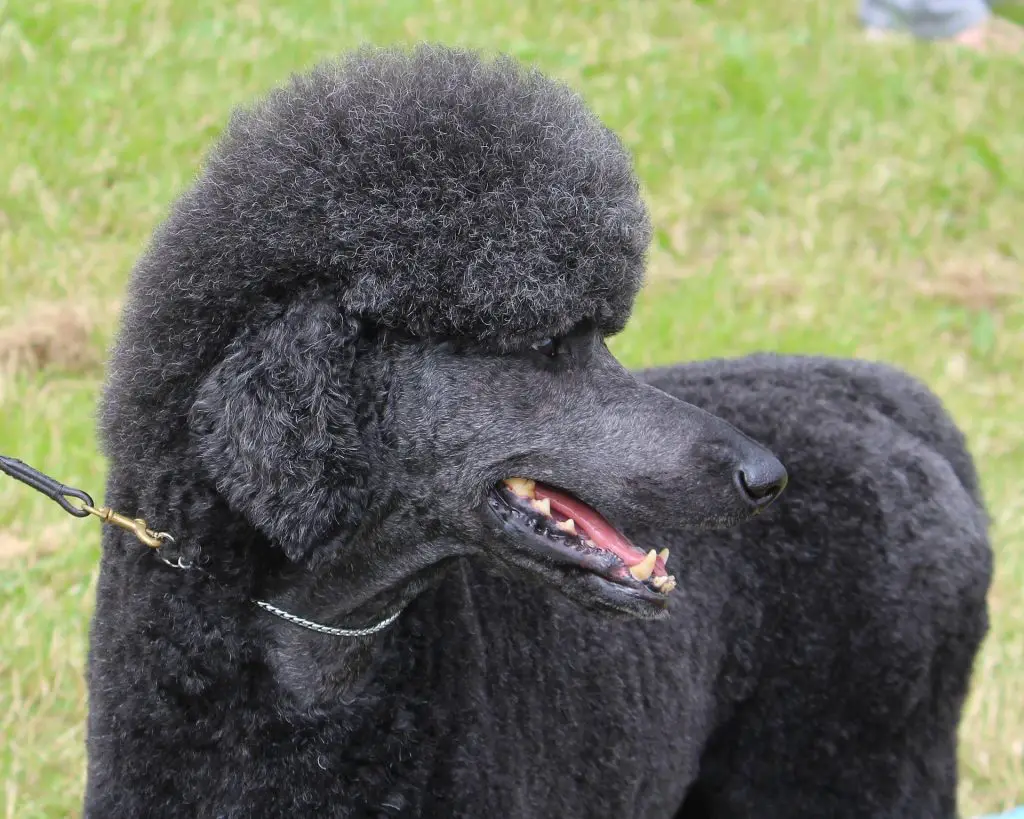
There is a distinct, almost regal presence to a solid black Poodle trotting down the street. However, behind that striking silhouette lies a complex world of genetics, sun-bleaching chemistry, and tactile grooming challenges that most generic pet guides completely ignore.
A true Black Poodle has a solid black coat produced by dominant eumelanin pigment genes. They are not rare, but rather one of the breed’s most foundational and genetically stable colors. While their dense curls can physically sun-bleach to a rusty auburn, true blacks do not genetically fade, and they possess the exact same high intelligence and temperament as any other Poodle.
In the world of canine genetics, black is a foundational color across all poodle types, yet it comes with unique maintenance realities. This guide serves to unpack the specific physics of a black coat—from hidden tear stains to the truth about color fading—so you can properly manage the “ink-black” standard.
1. Are Black Poodles Rare?
Black Poodles are not rare—they are one of the most common and genetically stable Poodle colors available today.
If you spend time looking at modern Instagram feeds or breeder advertisements, you might assume that reds, apricots, and merle Poodles are the default, making black seem somewhat elusive. This is an illusion driven by trend cycles. Breeders often charge a premium for “fad” colors, pushing black to the background of breed marketing. However, genetically speaking, black is a dominant trait. The American Kennel Club (AKC) official Poodle breed standard recognizes solid black as one of the original, foundational colors of the breed. It is deeply embedded in the historical bloodlines of the Toy, Miniature, and Standard sizes.
2. Black Poodle Genetics Explained
To understand why your dog looks the way it does, you have to look under the hood at the cellular level. As a researcher, I find the actual mechanics of coat expression fascinating, primarily because it operates like an overlapping paint system.
What Causes a Black Coat in Poodles?
The color of a Poodle’s coat is determined by a pigment called eumelanin, which defaults to black. According to the UC Davis Veterinary Genetics Laboratory, the expression of this solid black pigment is controlled primarily by the K Locus (dominant black) and the B Locus. It is the genetic equivalent of painting a wall with dark primer—it covers whatever else is hiding underneath.
Table 1: The Genetic Blueprint of a True Black Poodle
| Genetic Marker | Function | Impact on the Black Coat |
| K Locus (Dominant Black) | Determines if the coat is solid. | Must have at least one ‘K’ allele to be solid black rather than patterned. |
| B Locus (Brown/Black) | Dictates the color of eumelanin. | Must be dominant ‘B’ to stay black. Recessive ‘bb’ turns the dog chocolate brown. |
| G Locus (Greying) | Progressive fading gene. | Must be recessive ‘gg’. If a dominant ‘G’ is present, the black will fade to silver. |
Can Two Non-Black Poodles Produce Black Puppies?
The short answer is yes, but it depends on hidden recessive genes. If two brown Poodles are bred, they cannot produce a black puppy, because brown requires two recessive “b” genes. However, two silver or blue Poodles carrying the dominant black gene (but altered by a fading gene) can absolutely throw a jet-black puppy if the genetic dice roll correctly.
Differences Between True Black and Diluted Black
A “true black” Poodle has dense, uniform eumelanin distribution. Diluted blacks—classified as blue, silver, and gray—are born looking black but carry a progressive greying gene (the G Locus mentioned above). This gene acts like a slow-moving eraser, gradually reducing the pigment density in the hair shaft over a period of years.
3. Do Black Poodles Fade or Change Color?
Some Black Poodles may fade slightly due to genetics, sun exposure, or aging, but true black Poodles typically retain a deep, consistent coat color.
Causes of Fading: The “Sun Bleach” Chemistry
If your black Poodle spends all day in the summer sun, their coat isn’t genetically fading; it is physically burning. UV light breaks down the melanin in the hair shaft, oxidizing it and turning the tips a distinct, rusty auburn. A study published in Veterinary Dermatology details how prolonged UV exposure degrades structural proteins and pigments in canine hair.
I observed this firsthand with my own Standard Poodle, Angus. Angus had an ink-black, glorious coat. After spending long July afternoons patrolling the yard, the topknot and the tips of his ears would develop a slight auburn “rust” tinge. It wasn’t a genetic failure; it was simple sun-bleaching. Once autumn rolled around and he got a fresh clip, the damaged hair was removed, and the deep black returned.
Grizzling vs. Genetic Clearing
Competitors often confuse genetic clearing (fading to silver) with “grizzling.” Grizzling happens when a black dog develops scattered, coarse white hairs throughout the coat. This is not a color change; it is usually the result of aging or physical trauma to the hair follicle. If your Poodle gets a scratch from a branch, the scar tissue will often grow back a bright, glaring white hair against the black canvas.
Black vs. Blue vs. Silver Poodles
If you buy a black puppy, how do you know it won’t turn silver? Check the face when the breeder shaves it at 4 to 6 weeks old. A true black puppy will have black hair growing back on the muzzle. A silver puppy will have a platinum-colored face by 6 weeks old, even if its body still looks pitch black.
4. Black Poodle Puppies vs Adults
How to Tell if a Puppy Will Stay Black
Beyond checking the shaved muzzle, you need to look at the roots. Part the puppy’s hair all the way to the skin. If the base of the hair shaft is lighter than the tip, the dog carries a fading gene. You also need to look at the skin pigmentation. True blacks have deeply pigmented, almost charcoal-colored skin, especially visible on the belly.
Coat Changes Over Time
All Poodles go through a coat change around 9 to 14 months of age. The soft, wispy puppy fluff sheds out, and the dense, curly adult coat pushes through. During this transition, a black Poodle might temporarily look dull or slightly matte. This is because the dead puppy hair gets trapped in the new curls, creating a dusty appearance.
5. Black Poodle Appearance & Characteristics
Coat Texture
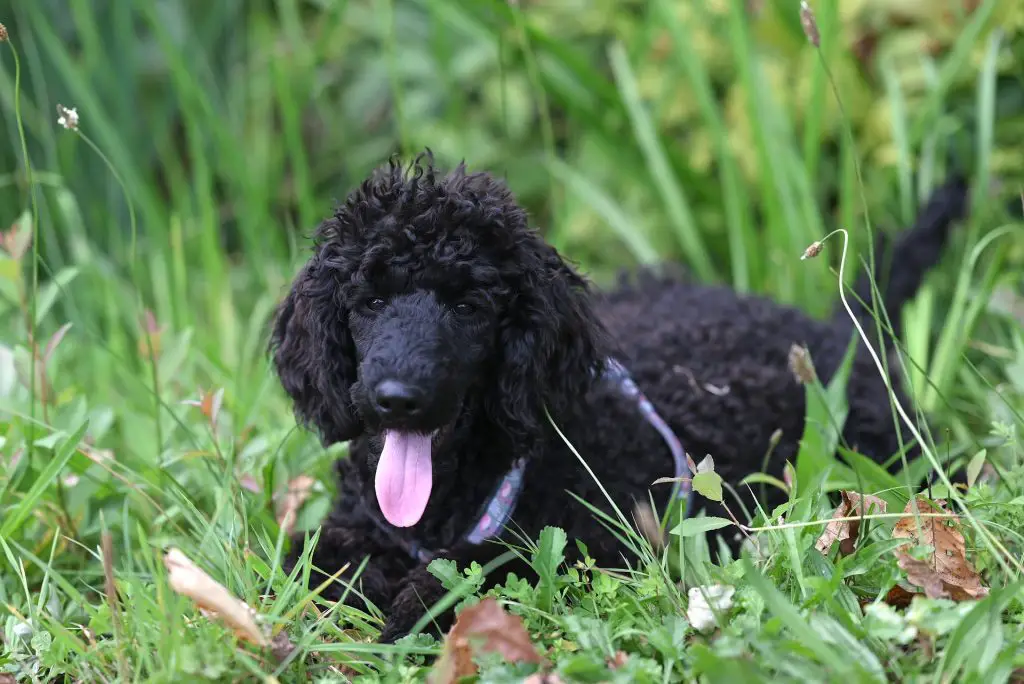
The adult black Poodle coat is dense, curly, and famously non-shedding (more accurately, low-dander and low-shedding). Because black absorbs light rather than reflecting it, the coat can sometimes appear less “fluffy” and more tightly coiled than a white Poodle’s coat, even if the texture is identical.
Skin Pigmentation
A structurally sound black Poodle must have black “points.” This means the nose, eye rims, lips, and paw pads must be solid black. A black Poodle with a liver (brown) nose is genetically a brown dog that has misfired, which is considered a fault in the breed standard.
Eye Color
The eyes should be a very dark, deep brown. Light-colored eyes (like yellow or hazel) on a black coat give the dog a harsh, piercing expression, which breeders actively try to avoid.
Photography and “Black Dog Syndrome”
Here is a frustrating reality: black Poodles are notoriously difficult to photograph. In low light, they turn into a featureless black void. You cannot easily read their facial expressions—a slight raise of the eyebrow or a subtle side-eye is lost in the shadows. To get a good photo, you have to position them in direct natural sunlight, or they end up looking like a vague, curly silhouette.
Grooming Impact on Appearance
How you clip the dog changes the perceived color. A dog shaved close to the skin (like a kennel clip) will reflect light differently than a dog in a long, scissored lamb clip. Shorter hair often looks deeper and shinier, whereas long hair is more susceptible to trapping dust and looking dull.
6. Do Black Poodles Have Different Temperaments?
No, coat color does not affect a Poodle’s temperament. Black Poodles have the exact same intelligence, energy, and personality traits as all Poodles.
People love to assign personality traits to colors. You’ll hear myths that red Poodles are “spicy,” white Poodles are “neurotic,” and black Poodles are “aggressive.” This is entirely folklore. A study published in ScienceDirect confirmed that coat color in purebred dogs has zero correlation with brain chemistry, reactivity, or trainability. Any behavioral differences you see in a black Poodle come from their specific breeding lines, their socialization, and their environment—never the color of their hair.
7. Grooming a Black Poodle (Color-Specific Tips)
How to Maintain a Deep Black Coat
If you want to prevent that auburn “rust” from sun-bleaching, you have to treat the coat like you would human color-treated hair. This means using color-depositing shampoos (which usually have a blue or purple base to neutralize red tones) and UV-protectant conditioning sprays if the dog is going to be outside all day.
The Danger of “Hidden” Tear Stains
This is a critical gap that most owners miss. On a white Poodle, you can see the red, rusty streaks of porphyrin (tear staining) running down the face immediately. On a black Poodle, the dark coat acts as perfect camouflage. The danger here is that the face stays damp, and because you can’t see the stain, you ignore it. This creates a breeding ground for bacterial yeast infections. If your Poodle’s face smells like old gym socks or corn chips (“Frito face”), they have a hidden yeast infection. You must wipe a black Poodle’s eyes daily, even if they look clean.
Best Grooming Practices
I learned early on with Angus that grooming a black Standard Poodle is an exercise in sensory deprivation. Because you can’t visually spot a mat forming in their ink-black armpits or groin, you have to learn to groom entirely by touch and sound. You brush until the slicker brush glides silently; if you hear a specific “snagging” sound, you’ve hit a tangle you couldn’t see.
Common Grooming Challenges
Black coats are dust magnets. If your dog rolls in the dirt, plays on a dusty floor, or deals with dry winter air, they will look like they’ve been lightly dusted in powdered sugar. While white dogs show mud, black dogs show dander and dust. A quick wipe-down with a damp chamois cloth or a light spritz of conditioning spray will cut the static and restore the shine.
8. Do Black Poodles Get Hotter?
Black Poodles can absorb more heat than lighter-colored dogs, but their dense coat also provides vital insulation. Proper grooming, hydration, and shade are more important than coat color alone.
It is basic thermodynamics: black absorbs the full spectrum of light, turning it into heat. If a white Poodle and a black Poodle are standing in the sun, the surface temperature of the black Poodle’s coat will be significantly higher. However, the thick curls trap a layer of air against the skin, acting as insulation that prevents that surface heat from immediately penetrating the body. Keep them clipped reasonably short in the summer, provide plenty of water, and avoid walking them on hot asphalt.
9. Health Considerations in Black Poodles
Are Black Poodles Healthier?
There is no direct genetic link between the K Locus (black coat) and overall health. A black Poodle is not inherently healthier or sicker than a white or apricot Poodle.
Breed-Specific Health Issues
Regardless of color, Poodles are susceptible to specific hereditary conditions. According to the VCA Animal Hospitals guide on Poodle health, you must monitor for Hip Dysplasia, Sebaceous Adenitis (a skin condition), and Addison’s disease.
Coat and Skin Health
One minor advantage of owning a black Poodle is early detection of skin issues. If a black dog develops dry skin, dandruff, or a flaking condition like Sebaceous Adenitis, the white flakes are immediately visible against the dark coat, prompting owners to seek veterinary care much faster than owners of lighter-colored dogs.
10. Black Poodle Sizes
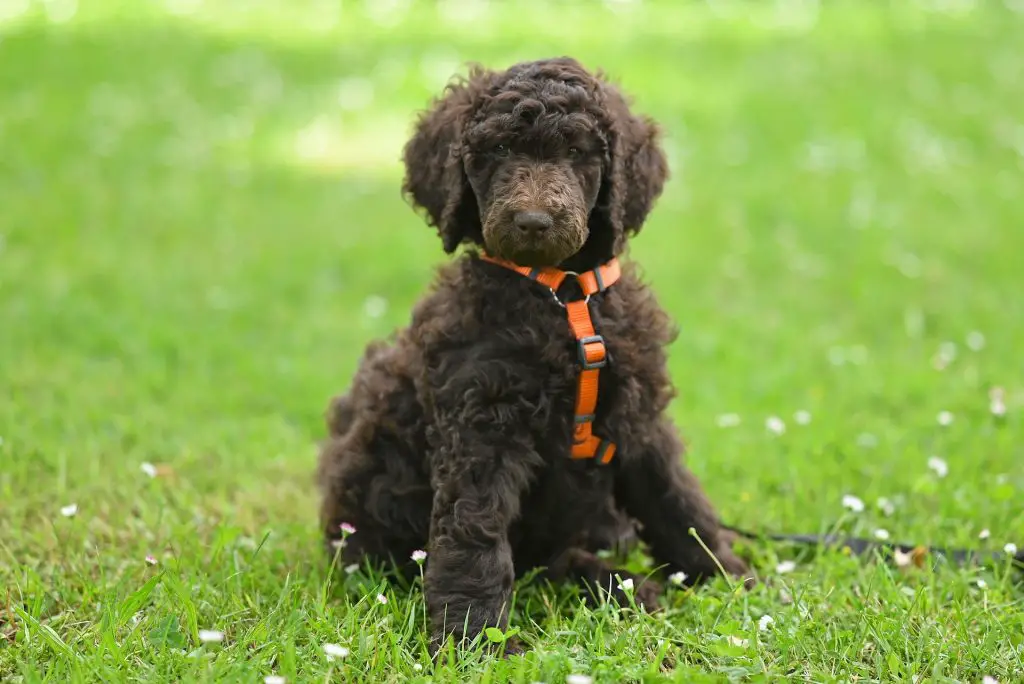
The black coat appears in all three official AKC sizes detailed in my poodle types guide. Does the color affect the size? No. A black Standard will grow to the same dimensions as a brown Standard, provided the genetics of the parents align.
Table 2: Poodle Size Overview
| Type | Average Weight | Height (at the shoulder) |
| Toy Poodle | 4 – 6 lbs | Under 10 inches |
| Miniature Poodle | 10 – 15 lbs | 10 to 15 inches |
| Standard Poodle | 40 – 70 lbs | Over 15 inches |
11. Pros and Cons of Black Poodles
Owning a black Poodle is deeply rewarding, but it comes with a specific set of visual and maintenance realities.
Table 3: The Realities of the Black Coat
| Pros | Cons |
| Classic Appearance: A sleek, striking look that never goes out of style. | Shows Dust Easily: Dander and household dust are highly visible. |
| Hides Tear Stains (Visually): You won’t see the ugly red streaks. | Hidden Tear Stains (Health): You must check for yeast manually. |
| Widely Available: Genetically common and easier to find. | Heat Absorption: The coat gets physically hotter in direct sunlight. |
| Skin Issue Detection: Dandruff is immediately apparent. | Harder to Photograph: Facial expressions are lost in low light. |
12. Black Poodle vs Other Poodle Colors
Black vs. White Poodles
The ultimate contrast. White Poodles show every speck of mud, grass stains, and salivary staining around the mouth. Black Poodles hide the mud and the stains, but highlight dry skin and dust.
Black vs. Red/Apricot
Red and apricot Poodles are notorious for the “fading gene.” The vast majority of red puppies will fade to a light peach by the time they are three years old. Black is incredibly stable by comparison; aside from minor sun-bleaching, a black puppy will remain a black adult.
Black vs. Blue/Silver
Blue and silver are simply faded versions of black. A silver puppy clears to a platinum color within the first year, while a blue Poodle may take up to three years to fully clear into a dark, slate gray.
13. Choosing a Black Poodle Puppy
What to Look For
When evaluating a litter, look for the “true black” indicators. The nose, eye rims, and paw pads should be solid, unblemished black. The coat should be uniform from the root to the tip. If the puppy has scattered white hairs on the chest or toes, these are called “mismarks.” While perfectly fine for a pet, they may expand slightly as the dog grows.
Questions to Ask Breeders
Do not ask, “Will the puppy fade?” Instead, ask the breeder for the color history of the pedigree. Ask to see photos of the sire and dam at age three. If the parents have held a deep, inky black color into adulthood, your puppy has a very high probability of doing the same.
14. Cost of a Black Poodle
Purchase Price
Because black is genetically dominant and relatively common, you will rarely see a “color premium” attached to a black puppy. Unethical breeders often charge massive markups for Red Poodles, merles, or particolors, labeling them as “rare.” A well-bred black Standard Poodle from health-tested parents typically costs between $1,500 and $3,000, depending on your geographic market.
Grooming Costs
The lifetime maintenance cost is identical to any other color. You must factor in professional grooming every 4 to 6 weeks, which can range from $70 to $150 per session depending on the size of the dog and the complexity of the clip.
15. Common Myths About Black Poodles
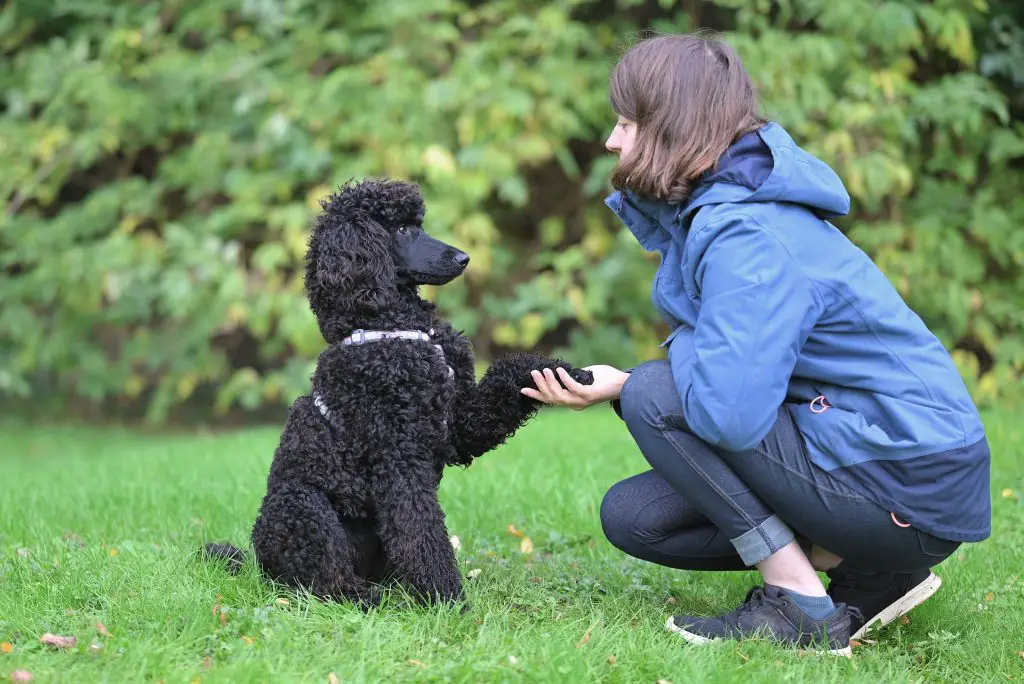
There is a strange, persistent psychology surrounding black dogs.
- “Black Poodles are more aggressive.” Entirely false. This stems from the fact that black dogs’ facial expressions are harder to read, leading some people to misinterpret their body language.
- “Black dogs are harder to train.” False. Intelligence is breed-specific, not color-specific.
- “Black coats always fade.” False. While they can sun-bleach, true blacks do not genetically fade to silver.
The ASPCA and animal welfare organizations have extensively documented “Black Dog Syndrome”—a phenomenon where black shelter dogs are historically passed over for adoption because they don’t photograph well or appear more “intimidating” in dark kennels. Don’t let a lighting issue deter you from an exceptional companion.
16. FAQ
Do black Poodles stay black?
Yes, a genetically true black Poodle will stay black its entire life. However, they can suffer from “sun bleaching,” where UV exposure turns the tips of the hair a rusty auburn.
Are black Poodles rare?
No. Black is a dominant gene and is one of the most common, historically standard colors in the Poodle breed.
Do black Poodles get hotter?
Yes, dark colors absorb more heat from sunlight. However, their dense, curly coat also insulates the skin from direct heat. It is vital to provide shade and water during the summer.
Are black Poodles more aggressive?
No. Coat color has absolutely zero impact on a dog’s brain chemistry, aggression, or temperament.
How do you keep a black Poodle’s coat shiny?
Regular brushing to distribute natural oils, utilizing color-depositing shampoos to neutralize red tones, and applying UV-protectant conditioning sprays if the dog spends a lot of time outdoors.
17. Conclusion
A black Poodle is a masterpiece of canine genetics. They offer a striking, classic aesthetic combined with the devastating intelligence and athleticism that the breed is famous for. Remember that color does not equal temperament. Whether you choose black, white, or apricot, you are getting a dog that thrives on training, human connection, and mental stimulation.
The primary commitment to a black Poodle lies in proactive care: learning to groom by touch when you can’t rely on your eyes, applying UV protection during the summer, and routinely checking for those invisible tear stains. If you can manage the grooming realities, you will be rewarded with a dog whose regal, ink-black presence commands attention wherever they go.
Medical & Veterinary Disclaimer: PoodleReport.com is an informational resource for Poodle owners and enthusiasts. We are not veterinarians. The content on this website is not a substitute for professional veterinary care, diagnosis, or treatment. Always seek the advice of your veterinarian with any questions you may have regarding your pet’s medical condition, diet, or overall health.