
Disclaimer: The information provided on PoodleReport.com is for educational purposes only and does not constitute veterinary medical advice; always consult your vet before changing your dog’s diet. Additionally, this post contains affiliate links. As an Amazon Associate, and other affiliate advertising programs, I earn from qualifying purchases at no extra cost to you.
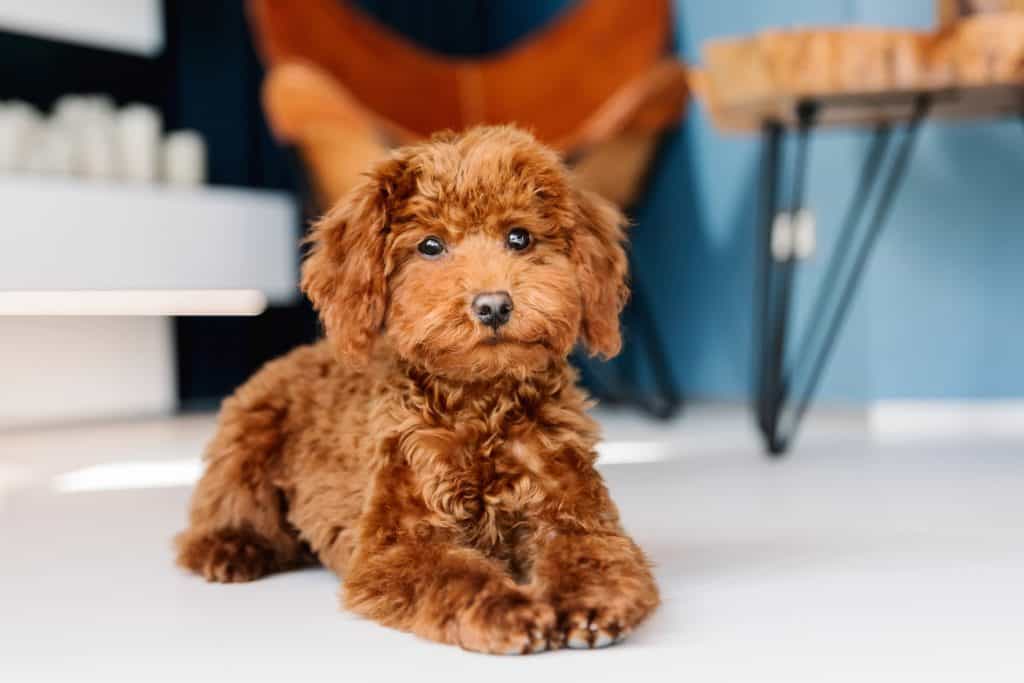
For the uninitiated, a Red Poodle is often mistaken for a highly-groomed teddy bear or a particularly vibrant mahogany sunset. For the researcher, however, this coat is a fascinating case study in selective pigmentation and the elusive “Rufus” modifier. While the visual impact is undeniable, the biological blueprint behind that luster is far more complex than a simple color choice at a breeder’s office.
What is a Red Poodle? A Red Poodle is a purebred variety defined by a rare mahogany or deep crimson coat, a result of the “Rufus” modifier gene acting on base apricot or brown pheomelanin pigments. To meet elite breed standards, they must possess black “points” (nose, eye rims, and paws) rather than liver. While born with intense color, most reds experience a genetic “clearing” or fading process by age two, typically shifting toward a lighter sunset or dark apricot hue.
Navigating the “Red Poodle” market requires sifting through anecdotal fluff to find the clinical truth. Much of my own relentless dive into understanding the various Poodle types was catalyzed by my late Standard Poodle, Angus—who, despite having a black coat, possessed the exact same demanding intellect.
This guide audits everything from genomic clearing timelines to the specific metabolic requirements of the breed. If you are considering adding one of these striking athletes to your home, here is the data-driven dossier you need to make an informed decision for your family and move past the mahogany exterior into the “Poodle Brain.”
Red Poodles: Attributes at a Glance
| Attribute | Detail |
|---|---|
| Kid-Friendly | Yes |
| Grooming | High Maintenance |
| Hypoallergenic | Yes |
| Train-ability | Easy (with Negotiation) |
| Temperament | Affectionate, Alert, Intelligent, Loyal |
| Shedding | Low |
| Life Span | 12 – 15 Years |
1. The Genetics of A Red Poodle
Red is a less common color seen within the poodle family, but why is that? This comes down to the genetic components present within the dog. Every animal, including humans, has genes—those microscopic, high-stakes instruction manuals that make us who we are.
Data from Canine Pigment Intensity Research confirms that genes contain the code for hair color or eye color expressed in a living thing. Within the gene, there are components called alleles. These are variants of the genetic sequences that are passed down to us, and which determine if your hair color is brown or blonde.
Dominant and Recessive Alleles
Because there are a variety of colors that can be seen within the coloring of a Poodle, there are multiple alleles of the genes that are factored in. To add to this complexity, there are dominant and recessive alleles. This means that if a dominant allele gets paired with a recessive allele, the dominant allele will be the color to appear. If we take a black poodle and breed it with a black poodle, the most likely outcome of the color in the baby Poodle’s coat is black.
This is because of how the alleles are interacting. Black is the dominant color in both the female and the male, the pup is going to have those dominant alleles passed to them. However, because recessive alleles may be present, it is possible for the pup is born with a gray coat. This can only occur if both recessive alleles are given from each parent to the pup.
2. Red Poodle Coat Coloring and the Science of Fading
The coloring of a Poodle comes from the mixing of two base colors. (Base colors are simply a solid color that hasn’t been diluted; black, white, cream, etc.) When a Red Poodle is firstborn, its coat can either be deep or light red.
The intensity and opacity of this color can change with age. A darker color can come in as the coat begins to develop fully. However, over time, it is typical to see the coats of a Red Poodle begin to lighten—a fascinating variable when comparing different Poodle types. This is due to factors such as age and light exposure—essentially a form of cosmetic entropy.
Understanding the “Clearing” Process
Red Poodles are usually born bright red and begin fading at around six weeks of age. Most Red poodles “fade” or “clear” to a different color as an adult. The final color, and how long it takes to achieve it, varies greatly but most often occurs by the age of two.
Guidelines from the Poodle Club of America explain that this clearing process is a standard genetic trait within the breed. Unlike silvers or blues, which undergo a genetic “clearing” to a new color, reds simply lose the intensity of their original pheomelanin pigment. As red poodles get older into their senior years, it is common for them to have a darker red coat that can even look slightly brown.
3. The Visual Spectrum: Red vs. Apricot vs. Brown
To the untrained eye, distinguishing between a dark apricot, a fading red, and a light brown poodle can be difficult. However, from a research perspective, the differences are found in the “points” and the pigment saturation. A true Red Poodle is a result of high concentrations of pheomelanin, while a Brown Poodle relies on eumelanin.
Pigment and Point Differentiation
| Color Variety | Genetic Pigment | Required Point Color | Distinguishing Modifier |
|---|---|---|---|
| Red | Pheomelanin | Black (Preferred) | Rufus Modifier Gene |
| Apricot | Pheomelanin | Black | Lack of Modifier Intensity |
| Brown | Eumelanin | Liver (Brown) | b/b Allele Interaction |
The definitive test is the color of the nose and eye rims. According to the United Kennel Club (UKC) Breed Standards, a Red Poodle should ideally possess black points. If the dog has liver (brown) points, it is genetically a Brown Poodle, regardless of how “red” the coat appears. Apricot poodles, meanwhile, share the same genetics as reds but lack the modifier genes that intensify the hue into a deep mahogany.
4. Physical Characteristics of a Red Poodle

Poodles have been a very popular breed of dog for years for many reasons, including their thick and wavy hair. When red poodles first appeared on the scene in 1980—a breakthrough pioneered by breeders like Ilse Konig—owners and breeders alike instantly fell in love with this beautiful and stunning new coat color. A red poodle will possess copper a red-colored coat and black:
- Eyes (or very dark brown)
- Gums
- Noses
- Points
- Under Paws
Registry Preferences
While liver points (brownish nose and eye rims) are acceptable in some registries, black points are highly preferred for red poodles in the United States. They share many of the same traits as your typical poodle, they just have a bonus of a very unique red coat.
5. Red Poodle Temperament
In behavioral circles, Red Poodles are classified as “Velcro dogs”—in practical terms, professional, highly affectionate stalkers. They are profoundly loyal but often form a single-person attachment, reserving their highest obedience for one specific household member.
Observational trends show females typically campaign for constant lap space, while males are usually content to maintain a close visual perimeter. Regardless of sex, expect a curly auburn shadow auditing your every move.
Cognitive Engagement Needs
Red Poodles are active, lovable, and extremely easy to train. Like traditional poodles, These dogs make great family pets and are great for families with children when properly trained. Research on Canine Cognitive Abilities highlights that their high level of intelligence requires consistent engagement.
Red Poodles are typically larger dogs that can be very strong and fast. There have been some cases where Red Poodles have trouble adjusting to children. However, breeders typically will not breed dogs with undesirable traits.
6. Training a Red Poodle
Because Red Poodles are such an excitable breed, it can be difficult to keep them engaged long enough to help them to learn the commands you try to teach. These dogs are highly intelligent which is partly why they can be difficult to teach new things. However, once you’ve discovered different ways to keep your dog engaged, it only takes less than five repetitions (in most cases) for them to understand the command.
Establishing Name Recognition and House Training
If you’re new to training, the most important thing to establish with your Poodle is his name. Just like a teenager will ignore their parents unless spoken to by name (and even then it’s a struggle), the same holds true for the Poodle.
Teaching your Poodle his name will build a positive association between themselves and the name that you have given to them. Be sure to reinforce the behaviors you want to last. If your dog tinkles outside, give him a treat. Doing this on a continuous basis teaches your Poodle he is doing the right thing.
7. A Red Poodle’s Diet
New owners need to be concerned about what food their Poodle has been eating when they bring their new dog home. It is vitally important that you continue to feed the same food that was provided by the breeder or shelter, at least initially. Over time, you can slowly integrate foods you want them to eat into their diet.
Sensitivity and Feeding Schedules
Be careful of what store-bought brands you purchase for your poodle. A Poodle’s stomach is very sensitive, so even the most mundane food has the potential to produce an upset stomach. Upset stomachs in dogs mean vomit, which means you may end up staying up all night experiencing what I call “gastric regret”—an ordeal my late Poodle, Angus, put me through more than once. There are a lot of foods that can make your precious poodle sick, so be careful of what you buy and introduce these foods gradually.
8. Exercising Your Red Poodle
Giving your Poodle the room he needs to exercise and play is vitally important. Red Poodles need to get a walk almost every day because it helps them to get not only physical exercise but also the mental stimulation they need as well. Additionally, it is very important to consider providing activities that challenge their brains too.
Exercise Requirements by Size
Red Poodles do require a lot of exercise, as they were originally bred to work. Exercise will help dissuade your dog from acting out as they will not be as likely to be hyper with the proper amount of physical activity. Red Poodles typically love to swim, jump and run. The amount of exercise Poodles require each day is determined by their size.
A Standard Poodle usually needs more exercise than smaller varieties, about 60-90 minutes a day on average. A miniature or Toy Poodle requires about 60 minutes of exercise broken up into two 30 minute sessions each day.
9. Maintenance: Grooming and Coat Care
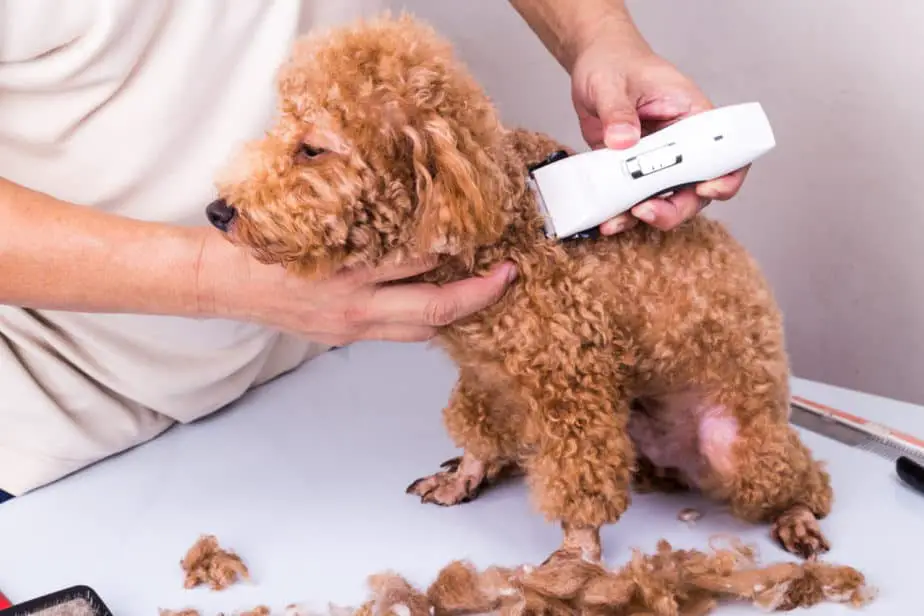
Managing a Poodle’s coat is less of a pet care chore and more of a part-time job in structural engineering. Because Poodles possess hair rather than fur, they lack the traditional shedding cycle found in most breeds.
Instead, their curls grow continuously in a single-layer structure. While this makes them a hypoallergenic favorite, it also means that without a professional groom every 3 to 6 weeks, you aren’t just looking at a “shaggy” dog—you’re looking at a high-risk scenario for matting.
Red Poodles offer a slight tactical advantage in the “pigment camouflage” department. Their mahogany locks hide dirt and outdoor debris significantly better than white or cream varieties. However, a researcher should never let this visual trickery lead to a lack of diligence. Regular grooming is essential to prevent the hair from felting close to the skin, which can trap moisture and lead to hidden dermatological issues.
Home Grooming Best Practices
While you might leave the precision clipping to the professionals, your “homework” between appointments is critical for long-term coat health. Establishing a clinical-grade routine at home will save both your dog’s skin and your groomer’s sanity.
- The “Line Brushing” Protocol: Brushing the surface of a Poodle’s coat is a common amateur mistake. You must use a slicker brush and metal comb to reach the base of the hair shaft, ensuring no tangles are hiding near the skin.
- pH-Balanced Cleansing: Poodle skin is notoriously sensitive to chemical imbalances. When bathing at home, skip the generic grocery store brands and opt for a formula specifically engineered for canine hair.
- The Argan Oil Advantage: Utilizing a high-quality Argan Dog Shampoo is highly recommended for Red Poodles. Argan oil provides the essential fatty acids needed to strengthen the hair shaft, remove tangles, and provide the necessary “lift” for a fluffy, professional-looking finish. It also helps the coat dry significantly faster, which is a major win for high-energy dogs who have better things to do than sit under a dryer.
10. Red Poodle Cost and Financial Realities
Breeding a Red Poodle is a difficult and expensive process. The typical range of standard poodles (not a red poodle) is between $600-$1,500. For a miniature or toy poodle, the average price range begins at $1,000 and climbs to $2,000. This means that the cost for a Red Poodle is going to be even higher. The average cost of a Red Standard Poodle puppy is about $3,000 when purchased from a reputable breeder. Red Miniature and Teacup Poodles usually cost $4,000 for a new puppy but can fetch up to $5,000 when properly registered.
Lifetime Ownership Investment
Raising a Red Poodle puppy takes a lot more time, effort, and money than the typical adult Poodle. As a result of the significant investment Red Poodle owners incur over the life of their dog, choosing the right breeder or rescue and having good health insurance for your dog is extremely important.
11. Choosing a Breeder: The Red Flag Checklist
When sourcing a rare color like red, the “Researcher” approach requires vetting the breeder beyond their Instagram photos. Because red is in high demand, it often attracts unethical breeding practices. To ensure you are getting a healthy animal, perform a Genetics Audit on your chosen breeder using these criteria:
- OFA Clearances: Can they provide clinical certificates for hips, eyes, and thyroid?
- Health Registry Verification: Does the breeder list their dogs on the Poodle Health Registry (PHR), which tracks inherited diseases?
- The “Color-Only” Trap: If a breeder only breeds for red and ignores temperament or structural health, that is a significant red flag.
- Genetic Diversity Research: Look for breeders who discuss Canine Pigment Research and how they manage the genetic bottleneck of rare colors.
12. Red Poodle Breeders and Rescues
The best way to find a Red Poodle is by looking to: Trusted, good quality breeders, Dog Shelters, and Local Dog Rescues. While I believe rescuing a Red Poodle from a shelter or rescue is preferable to purchasing from a breeder, there are some really great, reputable breeders out there, so whichever makes you feel more comfortable is just fine.
Quality Red Poodle Breeders and Resources
| NAME | TYPE | LOCATION | WEBSITE |
|---|---|---|---|
| RedTeddy Pup | Breeder | Ancram, NY | redteddypup.com |
| Darla’s Dark Red Standards | Breeder | Weeki Wachee, FL | darlasdarkredstandardpoodles.com |
| Texas Red Toy Poodles | Breeder | Dallas, TX | texasredtoypoodles.com |
| Ammaliante Red Standards | Breeder | San Diego, CA | poodlesource.com |
| Versatility In Poodles | Registry | Worldwide | vipoodle.org |
13. How Big Do Red Poodles Get?
Red Poodles come in three main sizes: Toy, Miniature, and Standard. The AKC Poodle Standard provides the official height and weight requirements for these categories.
| Variety | Weight | Height |
|---|---|---|
| Red Toy Poodles | 6-9 Pounds | Under 10 Inches |
| Red Miniature Poodles | 15-17 Pounds | 11-15 Inches |
| Red Standard Poodles | 45-70 Pounds | Over 15 Inches |
14. Are Red Poodles Healthy Dogs?

Red Poodles are generally very healthy dogs. However, experimental breeding to produce this distinctive red coat color has made these dogs more susceptible to birth defects and other genetic disorders. Data from the Orthopedic Foundation for Animals (OFA) shows that regular screening is vital for identifying these risks early.
Common health problems include Gastric dilation, Hip dysplasia, and Idiopathic epilepsy. Red Poodles are also prone to specific skin conditions like Sebaceous Adenitis, which affects the skin’s oil glands.
15. How Long do Red Poodles Typically Live?
The average life expectancy for red poodles is between 12 to 15 years. However, a Poodle’s size, overall health, and living environment can all affect a Poodle’s actual lifespan—biological variables that often reward the most diligent of researchers.
Data from AVMA Veterinary Care Guidelines suggests that preventative health measures and a balanced diet are key to longevity. This long lifespan makes the Red Poodle a great long-term companion for you and your family—assuming you are prepared for a 15-year tenure of being systematically outsmarted by your own pet
16. Bio-Nutritional Support for Red Pigmentation
As a researcher, it is important to note that diet can subtly influence the vibrancy of the red coat. While you cannot stop the genetic fading process, you can support melanogenesis through proper nutrition.
Essential Amino Acids for Coat Health
Studies into Hair Pigmentation suggest that specific amino acids, such as Tyrosine and Phenylalanine, are precursors to the production of pheomelanin. Ensuring your red poodle has a diet rich in these proteins, along with Zinc and Copper, can help the coat maintain its luster as the dog matures—essentially ensuring their internal bio-paint shop has all the premium supplies it needs to fight the inevitable fading of time
17. Red Poodle FAQ’S
Are red poodles more aggressive? No, their temperament is generally the same as other poodle colors—intelligent, loyal, and energetic.
Why are red poodles more expensive? Their cost is higher due to the rarity of the color and the specific genetic pairings required to produce a stable red coat.
How do I stop my red poodle’s coat from fading? While you cannot stop genetic fading, you can minimize environmental fading by limiting prolonged direct sun exposure and using high-quality shampoos.
Is a red poodle right for an apartment? Yes, especially the Toy and Miniature varieties. However, Standard Red Poodles also adapt well to apartment living as long as they receive adequate daily exercise.
18. Conclusion: The Researcher’s Final Audit
Owning a red poodle is effectively like holding a piece of living, breathing art—specifically, art that likely has a PhD in emotional manipulation and a very high-speed data processor for a brain. While the Rufus gene is responsible for that striking mahogany luster, it is the Poodle’s uncanny intelligence and “Velcro” loyalty that will define your daily life.
Striking the right balance between the biochemistry of their unique coat and the practicalities of a high-energy, high-IQ breed is the hallmark of a responsible owner. Whether you are bringing home a sunset-colored Toy for apartment living or a copper Standard for rural adventures, the research remains clear: the Poodle’s brilliant mind is the real headline, while that gorgeous red coat is simply a very striking, high-pigment bonus.
Medical & Veterinary Disclaimer: PoodleReport.com is an informational resource for Poodle owners and enthusiasts. We are not veterinarians. The content on this website is not a substitute for professional veterinary care, diagnosis, or treatment. Always seek the advice of your veterinarian with any questions you may have regarding your pet’s medical condition, diet, or overall health.