
Disclaimer: The information provided on PoodleReport.com is for educational purposes only and does not constitute veterinary medical advice; always consult your vet before changing your dog’s diet. Additionally, this post contains affiliate links. As an Amazon Associate, and other affiliate advertising programs, I earn from qualifying purchases at no extra cost to you.
Let’s be honest: at a distance, telling a Toy Poodle from a Miniature looks like splitting hairs—or, more accurately, splitting curls. But as someone who spends way too much time sifting through canine data, I can tell you the variables between these two sizes aren’t just about the tape measure. They dictate your entire daily rhythm, from how you walk through your living room to how often you’ll be visiting the vet.
What is the difference between a Toy and Miniature Poodle?
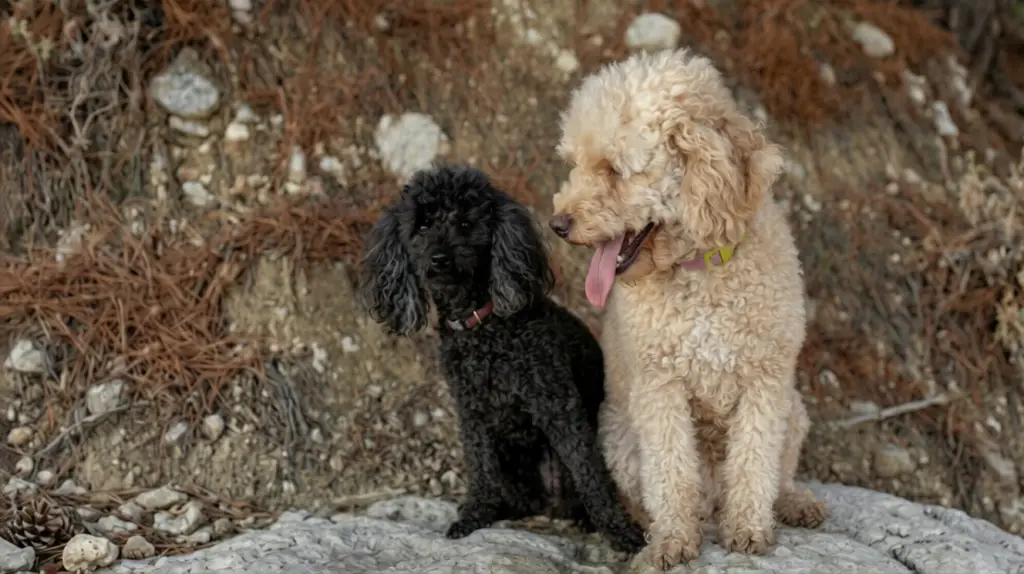
The primary difference between a Toy and Miniature Poodle is their physical scale and skeletal durability. According to AKC standards, Toy Poodles stand under 10 inches tall and weigh 4–8 pounds. Miniature Poodles stand 10–15 inches tall and weigh 10–15 pounds. While both share the same high intelligence, Toys are significantly more fragile and dependent, whereas Minis possess the “grit” and endurance for an active, multi-pet household.
Before we get into the weeds with metabolic needs and bone density, you have to know the hard lines. According to the AKC Poodle Breed Standards, these measurements aren’t just suggestions—they are strict cutoffs. Choosing between these specific poodle types means deciding if you want a delicate, ultra-portable lap-dweller or a small-scale athlete with a sturdier frame.
Toy vs Miniature Poodle at a Glance
Here is the raw data. No fluff, just the side-by-side variables that will actually affect your lifestyle.
| Category | Toy Poodle | Miniature Poodle |
| Height | Under 10 inches | 10–15 inches |
| Weight | 4–8 lbs | 10–15 lbs |
| Overall Size Feel | Very small, delicate | Small but sturdy |
| Temperament | Affectionate, more dependent | Confident, slightly more independent |
| Energy Level | Moderate (short bursts) | Moderate–high (more endurance) |
| Exercise Needs | 20–30 minutes daily | 30–60 minutes daily |
| Trainability | Extremely high | Extremely high |
| Focus & Sensitivity | More sensitive, can be clingy | More resilient, adaptable |
| Barking Tendency | Higher (more alert/reactive) | Moderate |
| Good With Kids | Better with older, gentle kids | Better with most families |
| Fragility Risk | High (easily injured) | Low–moderate |
| Apartment Living | Excellent fit | Very good fit |
| Travel & Portability | Very easy to carry/travel | Still easy, but less portable |
| Grooming Needs | High (same as all poodles) | High (same as all poodles) |
| Health Considerations | Dental issues, fragility | Joint stress (less common) |
| Lifespan | 14–18 years | 13–16 years |
| Best For | Lap dog owners, small spaces | Active owners, families |
| Biggest Challenge | Fragility, separation anxiety | Meeting exercise needs |
Size Differences & The “Teacup” Trap
Numbers on a page are one thing, but the real-world “feel” is another. A 6-pound Toy Poodle is essentially an avian-boned creature. You have to develop a constant downward-facing peripheral vision just to keep from stepping on them. The Miniature? It’s a “real” dog in terms of structural integrity. It can jump off the sofa or handle a clumsy pat without giving the owner a heart attack. If you are still sifting through the clinical nuances, a comprehensive poodle types guide can help clear up the structural confusion between these sizes.
The Danger of the Teacup Scam
The catch for many prospective owners is the predatory marketing of “Teacup” Poodles. You’ll see breeders charging a massive premium for these ultra-tiny variations, but, I have to be blunt: Teacups do not exist as an official breed. They are usually just undersized Toys, often bred specifically for growth-stunting defects.
Data from the AVMA Small Animal Health Guidelines shows that breeding dogs under the 4-pound mark is a recipe for open fontanels, fragile digestive systems, and heart failure. If someone is selling a “Teacup,” they are selling you a biological risk, not a rare status symbol.
Temperament: The Dependent vs. The Bold
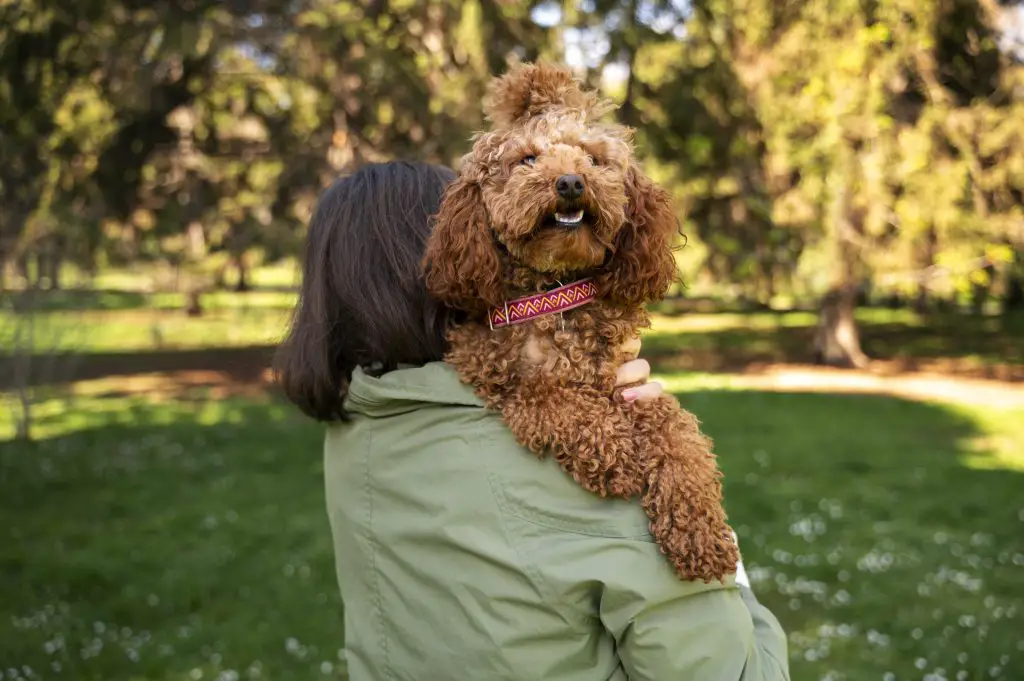
Both sizes share the infamous “Poodle Brain”—a cognitive processor that is always working. However, their physical mass changes how they see the world and how they interact with you.
Velcro Tendencies vs. Social Confidence
Toys know they are vulnerable in a giant world. That vulnerability makes them professional stalkers; they want to be fused to your leg or tucked into your lap at all times. They form intense, singular attachments that can border on obsessive.
Miniature Poodles, having a bit more physical confidence, are bolder. They are perfectly happy to investigate a weird noise in the kitchen solo or sleep on the other side of the couch. They are deeply affectionate, but far less emotionally needy.
Vocalization and Environmental Sensitivity
Here is the thing most guides leave out: the noise factor. Because Toy Poodles are small, their biological alarm system is dialed to “Maximum Sensitivity.”
The Alert-Bark Defense Mechanism
A leaf blowing past the window is an event worth narrating to the whole house. According to clinical insights on Barking in Dogs, this behavior is often “alarm barking” or “territorial barking” used as a survival-based communication tool.
In Toy Poodles, this is a preemptive defense mechanism—they can’t physically neutralize a threat, so they announce it to the “pack” (you). Miniature Poodles possess a much higher stimulus threshold; they will tell you when a guest is at the door, but they usually won’t feel the need to comment on every passing squirrel.
Energy Levels & Exercise Needs
Poodles are athletes in fancy coats, regardless of the size. Don’t let the grooming fool you into thinking they are couch ornaments.
Physical Stamina vs. Mental Load
- The Toy Poodle operates on “burst energy.” A 20-minute walk and some indoor fetch are usually enough to drain their batteries. They are the masters of the living-room “zoomie.”
- The Miniature Poodle possesses real endurance. They need 45 to 60 minutes of sustained physical activity.
The real danger isn’t physical boredom, though—it’s the mental load. If you don’t give a Poodle a job (puzzle toys, training drills), they will find one. Usually, that job involves redecorating your baseboards or developing an obsessive barking habit.
Trainability & Intelligence
They are both scary smart, but their “learning style” differs based on their emotional resilience.
Sensitivity and the Learning Curve
The Toy Poodle is a “sensitive soul.” If your training environment is chaotic or your voice is too stern, they will shut down. They require a very soft, positive-reinforcement approach. The Miniature is a powerhouse. They have a blend of high IQ and physical grit that makes them dominant in advanced training. If you want to do competitive agility or serious scent work, the Miniature’s focus and physical dexterity make them the clear winner over the more environmentally sensitive Toy.
8.0 Health Differences: Fragility vs. Structure
My late Poodle, Angus, was a Standard. He was a tank—robust enough to handle a rough hike or a clumsy stumble without a second thought. When you scale down to the smaller poodle types, that structural safety net essentially disappears.
Structural Vulnerabilities
Miniatures are generally sound, though they do face higher risks of joint stress like luxating patellas (slipping kneecaps). Toy Poodles, however, face significant challenges purely due to their shrunken anatomy. Their radius and ulna (forearm bones) are incredibly thin—sometimes compared to a pencil—meaning a simple fall from a chair can result in a complex fracture.
Their tiny jaws mean their 42 adult teeth are jammed in like a crowded elevator. Clinical data in Veterinary Dentistry confirms that if you don’t brush a Toy’s teeth daily, you are looking at extractions and periodontal disease by middle age.
Nutritional Needs & Metabolic Risks

This is a massive gap in owner education: a Toy Poodle isn’t just a Mini that eats less. They have a lightning-fast metabolism because their high surface-area-to-volume ratio causes them to lose body heat rapidly.
The Metabolic Blueprint: Toy vs. Miniature
Here is how the internal “engine” of these two sizes compares at a biological level.
| Metabolic Feature | Toy Poodle | Miniature Poodle |
| Metabolic Rate | Ultra-High (Burns calories rapidly) | Moderate-High (More stable) |
| Hypoglycemia Risk | High (Critical as puppies) | Low to Moderate |
| Meal Frequency | 3–4 small meals daily | 2 standard meals daily |
| Energy Storage | Minimal fat/glycogen reserves | Moderate reserves |
| Temp. Regulation | Poor (Prone to shivering/heat loss) | Good (More muscle mass/insulation) |
| Feeding Protocol | Merck Veterinary Manual High-density small breed formula | Standard balanced nutrition |
Fueling a High-Speed Metabolism
Toys are prone to hypoglycemia (dangerously low blood sugar), especially as puppies. If a Toy skips a meal, they can crash into lethargy or seizures within hours. Minis are much more stable and can thrive on a standard twice-a-day feeding schedule.
Grooming & Maintenance
The Poodle coat is a part-time job in structural engineering. It is hair, not fur, and it grows continuously. Whether you have a 5-pound Toy or a 15-pound Mini, you are signing up for professional grooming every 4 to 6 weeks. My late Standard, Angus, was a massive 60-pound canvas of curls; brushing him was a weekend commitment that required serious stamina. By comparison, these smaller variations are a sprint, but the technical requirements remain identical.
Coat Science and Mechanical Upkeep
The process involves “line-brushing” at home—brushing from the skin out to prevent “felting” at the base. If you only brush the top layer, the hair near the skin will mat into a painful, solid mass. You also have to clean the hair inside the ear canal to prevent moisture from causing infections.
For the science nerds, Canine Coat Genetics explains why this non-shedding hair is so mechanically demanding. The only real difference between the sizes is the total surface area you have to cover. While line-brushing Angus might have taken an hour of focused labor, a Toy typically takes 10 minutes and a Mini takes 20.
However, don’t let the smaller footprint fool you—the professional grooming requirements for a Mini or Toy are just as rigorous as they were for a Standard. The challenge isn’t the clock; it’s the precision required to maintain that “Poodle Brain” dignity.
Living Environment: Which Fits Your Lifestyle?
Best for Apartments
The Toy Poodle wins on space efficiency; they can get a full cardio workout in a 600-square-foot hallway. However, if your building has paper-thin walls, the Toy’s tendency to alert-bark at every elevator chime can cause neighbor friction.
Best for Families with Kids
The Miniature Poodle wins definitively. Small children are naturally clumsy. A Toy Poodle is far too fragile to survive a toddler’s accidental trip or a heavy-handed hug. Minis have the skeletal sturdiness to handle family life safely.
Best for Active Owners
The Miniature Poodle takes the crown. If you want a dog to accompany you on moderate hikes or beach walks, the Mini has the cardiovascular endurance and leg length. A Toy will end up being carried after the first mile of a trek.
Cost Differences & Financial Realities
While a smaller dog consumes less food, Toys are actually more expensive up front.
Upfront Premiums and Ongoing Costs
Breeding Toy Poodles is a high-risk endeavor; they have very small litters and frequently require expensive C-sections. Expect to pay between $2,500 and $4,000 for a well-bred Toy. However, remember the long-term math: the grooming bills over a 15-year lifespan will eventually dwarf the purchase price for both sizes.
The Decision Framework: Which Poodle Wins?
Choose a Toy Poodle if you:
- Want an intensely devoted, portable lap dog that acts as your shadow.
- Live in a small, quiet space and don’t mind alert-barking.
- Have a low-impact lifestyle and prefer indoor play.
- Do not have toddlers or large, boisterous dogs in the home.
Choose a Miniature Poodle if you:
- Want an active, robust companion for outdoor adventures.
- Live in an active household with children or other pets.
- Desire a dog with the focus and stamina for advanced training or sports.
- Want the legendary Poodle intelligence without the high-stakes skeletal fragility.
Common Owner Mistakes When Choosing
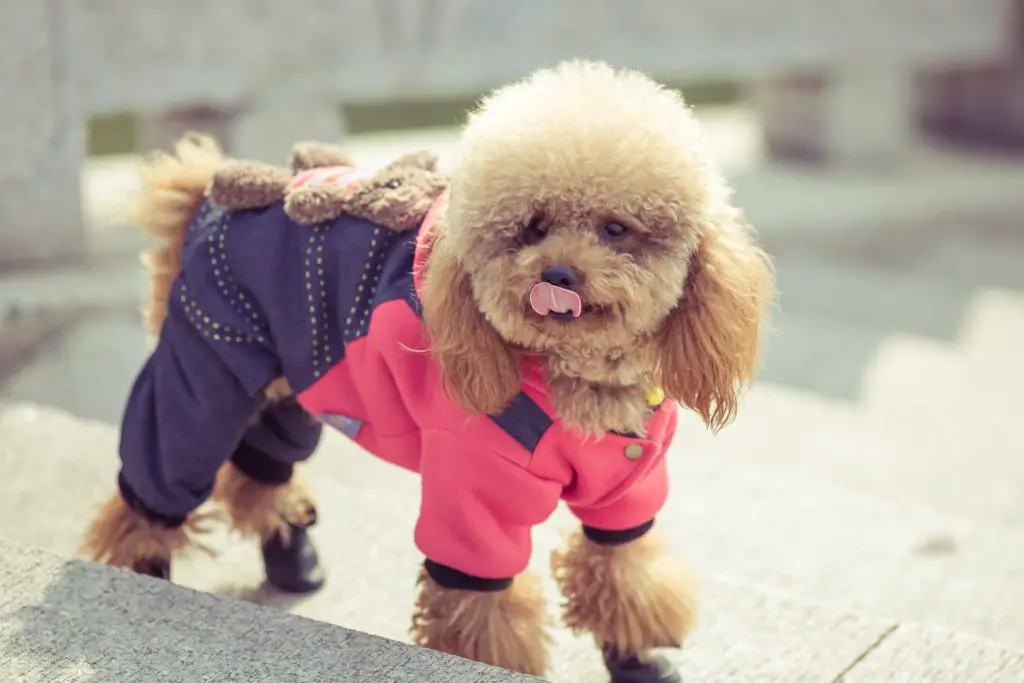
The most frequent error I see in the research is selecting based purely on the “toy-like” aesthetics.
Personality Over Aesthetics
Treating a Toy Poodle like a stuffed animal—carrying them everywhere and failing to provide rules—leads to “Small Dog Syndrome.” This isn’t a breed trait; it’s a learned behavior where a brilliant dog becomes an anxious tyrant. Similarly, don’t buy a Mini if you are a couch potato.
They need a job. Whether it weighs 6 pounds or 15, you must respect the “Poodle Brain” inside. Failure to provide mental stimulation, as outlined in UC Davis Behavior Guidelines, is the fastest way to turn a companion into a household headache.
15.0 FAQ Section
Are Miniature Poodles calmer than Toys?
Usually, yes. Their larger size gives them more physical confidence, meaning they have a higher threshold for environmental noise and are less likely to react to every minor stimulus.
Do Toy Poodles get along with big dogs?
It is highly risky. Even a friendly “paw swipe” from a larger dog can snap a Toy Poodle’s leg. If you have big dogs, the Miniature is a much safer, sturdier choice.
Which size is easier to potty train?
The Miniature Poodle. Toy breeds have bladders the size of a walnut and a faster metabolism. They need to go out much more frequently, making the training process slower and more demanding for the owner.
Can I leave my Poodle alone while I work?
Poodles of all sizes are prone to separation anxiety because they are so intelligent and social. Toys tend to struggle with this more intensely. If you work long hours, you will need a dog walker or a day-care strategy.
16.0 Conclusion: The Researcher’s Final Audit
Deciding between a Toy and a Miniature Poodle isn’t just about the size of your sofa. It is a trade-off between portability and durability. With a Toy, you get an ultra-portable, intensely devoted companion, but you inherit extreme physical fragility and a bit more “noise.”
With a Miniature, you get the balanced athlete—a dog that maintains the Poodle’s legendary wit while providing enough physical grit to survive a real-world, active family environment.The research is clear: both are brilliant, but they live at different speeds. Pick the one that matches your daily rhythm, and prepare for 15 years of being outsmarted by a dog that knows exactly how to get what it wants.
Medical & Veterinary Disclaimer: PoodleReport.com is an informational resource for Poodle owners and enthusiasts. We are not veterinarians. The content on this website is not a substitute for professional veterinary care, diagnosis, or treatment. Always seek the advice of your veterinarian with any questions you may have regarding your pet’s medical condition, diet, or overall health.