
Disclaimer: The information provided on PoodleReport.com is for educational purposes only and does not constitute veterinary medical advice; always consult your vet before changing your dog’s diet. Additionally, this post contains affiliate links. As an Amazon Associate, and other affiliate advertising programs, I earn from qualifying purchases at no extra cost to you.
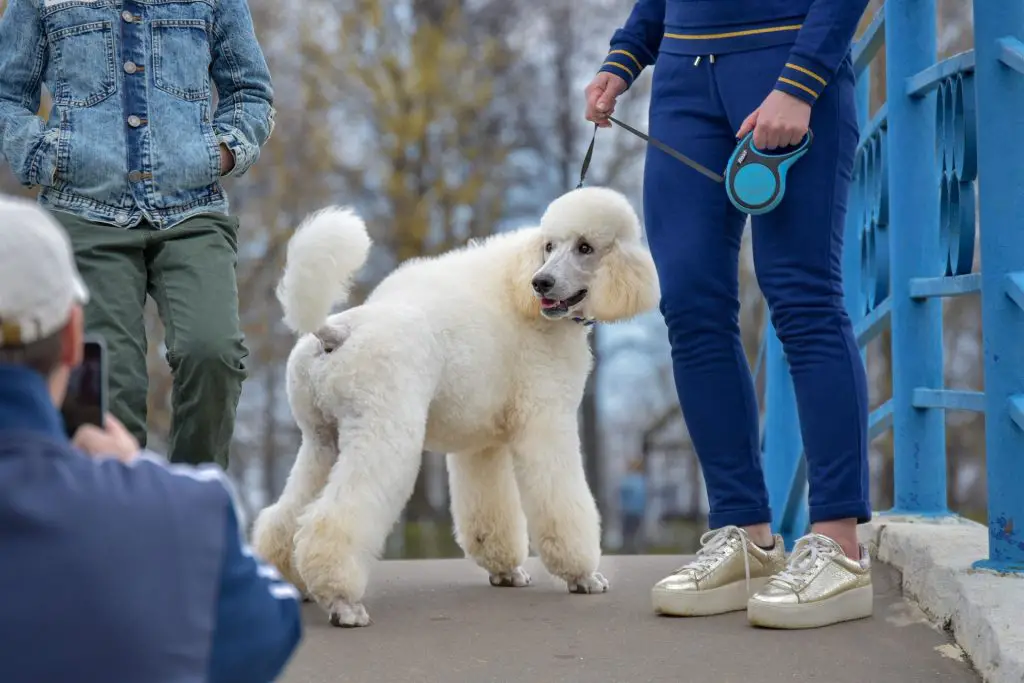
The Standard Poodle is often victimized by its own public image. While the general public sees a high-fashion show dog with a topiary-style haircut, researchers and breed enthusiasts see a rugged, high-drive water retriever with the cognitive capacity of a preschooler. To the uninitiated, they are decorative accessories; to those who know them, they are versatile athletes that happened to be adopted by royalty because of their dignified bearing and uncanny problem-solving skills.
The Standard Poodle is the largest Poodle variety, originally bred as a versatile water retriever in Germany. Known for its extreme intelligence, athletic build, and hypoallergenic, low-shedding coat, it is one of the world’s most capable working breeds. Standard Poodles typically weigh between 45 and 70 pounds, stand over 15 inches tall at the shoulder, and excel in high-stakes training, active family life, and competitive canine sports.
While their appearance suggests a life of luxury, the reality of Poodle ownership is intensely active. These dogs are cognitive athletes that thrive when fully integrated into daily human activities. If you are exploring the different Poodle types to find the right fit for your lifestyle, the Standard is arguably the most versatile member of the gundog group, offering a unique blend of power and grace.
1. Standard Poodle at a Glance
Before diving into the technical details of the breed’s biology and care requirements, it is helpful to look at the high-level metrics that define the Standard. This breed isn’t just a “larger version” of a Toy Poodle; it is a structurally distinct athlete with a high-octane biological engine. The Standard is the original iteration of the breed; the Miniature and Toy varieties were later engineered to serve as lapdogs or truffle hunters. In a research-driven environment, we categorize this breed not by its aesthetics, but by its “Work-to-Rest” ratio, which is significantly higher than most companion breeds.
Quick Reference Metrics
| Category | Standard Poodle Specification |
| Average Life Span | 10–18 Years |
| Intelligence Rank | #2 Worldwide (behind Border Collie) |
| Energy Level | High (Requires 60–90 mins daily) |
| Shedding Level | Minimal / Hypoallergenic |
| Breed Group | Non-Sporting (AKC) / Gundog (UK) |
| Trainability | Exceptional / High Eagerness to Please |
| Prey Drive | Moderate to High (Retriever Roots) |
| Social Requirement | Very High (Prone to “Velcro” behavior) |
2. What is a Standard Poodle?
The Standard Poodle is the foundation of the Poodle breed, predating the smaller varieties by several centuries. Despite the modern association with French aristocracy, the American Kennel Club notes that the breed likely originated in Germany as a “Pudel,” a name derived from the word for “puddling” or splashing in water. While many are familiar with the three sizes, my comprehensive Poodle types guide breaks down the nuances that separate the Standard from its smaller counterparts.
Historical Engineering of the Breed
In my observational research regarding breed history, I’ve found that the “fancy” Continental clip was never about aesthetics; it was a piece of functional engineering. The hair was left long over the joints and vital organs to prevent hypothermia in freezing water, while the rest was shaved to reduce drag during swimming.
The gundog history is also responsible for the Poodle’s “soft mouth.” Like Labradors, Poodles were bred to retrieve ducks without damaging the carcass. This requires a high level of bite inhibition and an innate willingness to hand over objects to a human partner. Today, the Poodle Club of America maintains the standard that emphasizes a dog that is “active, intelligent, and elegant,” but beneath that elegance is a hardy athlete capable of traversing rough terrain and swimming in ice-cold currents.
3. Standard Poodle vs. Doodles: The Predictability Factor
In the current market, many owners cross-shop the Standard Poodle with “Doodle” hybrids. However, from a research perspective, the Standard Poodle offers a level of genetic and behavioral predictability that hybrids cannot match. When you choose a Standard Poodle, you are selecting a dog with a stabilized temperament and a guaranteed coat type.
Genetic Stability vs. Hybrid Variation
Doodles are often “genetic wildcards.” Because they are crossbreeds, there is no guarantee that an F1 or F2 hybrid will be hypoallergenic or low-shedding. In contrast, the Standard Poodle has a closed registry and a “fixed” coat type. By sticking with the Standard, you ensure that the health clearances and structural integrity of the dog are backed by generations of data.
Poodles possess a legendary “off switch” that many high-drive hybrids lack. A well-bred Standard knows when the “work day” is over and can settle quietly in the home, whereas many Doodle crosses exhibit a frantic, unsettled energy because their lineage lacks the same behavioral refinement. Standard Poodles are the sophisticated choice for owners who value consistency in both health and work ethic.
4. Size, Weight, and Growth Windows
The Standard Poodle is the only variety that weighs in as a large-breed dog. Unlike the Toys or Miniatures, which finish growing by 9 months, the Standard takes significantly longer to reach skeletal maturity. According to the Orthopedic Foundation for Animals, large breeds require a slower growth rate to ensure their joints and growth plates develop correctly.
Growth Plate Management
If a Standard Poodle grows too fast—often due to high-calorie puppy food or over-supplementation—it increases the risk of developmental orthopedic diseases like hip dysplasia. Most Standards reach their adult height by 12 months, but they will “fill out” and gain muscle mass until they are nearly two years old.
| Category | Range (Average) |
| Adult Weight (Male) | 45–70 lbs |
| Adult Weight (Female) | 40–50 lbs |
| Adult Height | 15–24+ inches |
| Full Maturity Window | 18–24 months |
It is critical for owners to avoid high-impact jumping or long runs on concrete until the growth plates have fully closed, usually around the 18-month mark. For a large Poodle, the “second growth spurt” often occurs around 14 months, where they finally add the chest depth and shoulder muscle that gives them their powerful silhouette.
5. Crucial Puppy Development Milestones
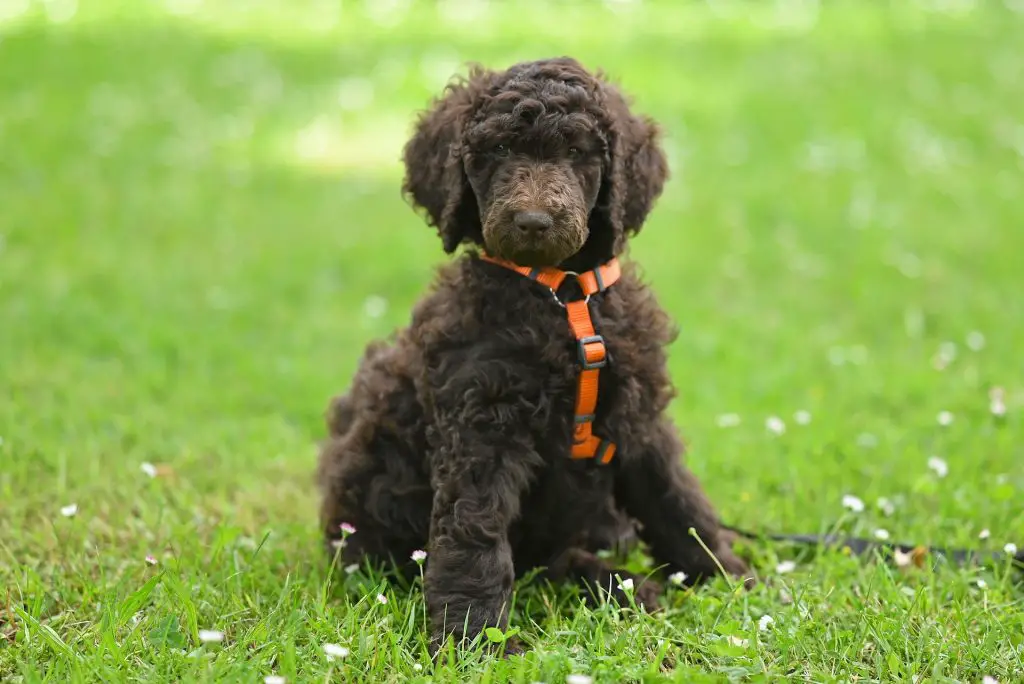
Owning a Poodle puppy is a fast-paced journey through several cognitive phases. Because they learn so quickly, they are just as likely to learn “bad” habits as “good” ones if left to their own devices.
2–4 Months: The Scholar Phase
This is the peak window for socialization. They are intellectually curious and learn commands almost instantly. However, this is also the “shark phase.” Poodle puppies are notoriously mouthy. This behavior is rooted in their retrieving heritage; they want to use their mouths to explore and carry objects. Diversion to appropriate toys is essential here.
Adolescent Flight (6–10 Months)
Like teenagers, Poodles in this phase may begin testing boundaries. They might suddenly develop “selective hearing” when called. From a behavioral science perspective, this is a surge of hormones and independence. Consistent, positive reinforcement is the only way through this “teenage” era without damaging the bond.
6. Temperament and the Scholar-Athlete Psychology
If a Golden Retriever is the friendly class clown, the Standard Poodle is the valedictorian who also happens to be a varsity track star. Their temperament is characterized by “alert intelligence.” They aren’t just listening to your commands; they are analyzing your tone, body language, and intent.
The “Social Audit” Concept
Standards are often described as “velcro dogs,” but they are also remarkably perceptive. They perform what I call a “social audit” of a room. They don’t run up to every stranger like a Labrador; instead, they observe, analyze, and decide who is worth their time. This isn’t shyness; it’s a high level of discernment.
This emotional depth makes them surprisingly sensitive to household stress. If there is tension in the home, the Poodle is often the first to notice, manifesting that stress through pacing or “pestering” behaviors. Their cognitive load is high; they need a “mission” every day. If you don’t give them a job to do, they will invent one.
7. Show Lines vs. Working and Field Lines
Not all Standard Poodles are built for the same purpose. Within the breed, there is a distinct split between “Show” lines and “Working” or “Field” lines. This distinction affects everything from bone density to prey drive.
- Show Lines: These dogs prioritize the elegant, refined silhouette and the specific head shape required by the breed standard. They are often slightly calmer and are excellent candidates for therapy work.
- Working/Field Lines: These dogs often have a stockier build, shorter ears, and a much higher prey drive. They are bred for the field—hunting, tracking, and dock diving.
Knowing which line your dog comes from is the first step in successful ownership. My late Standard, Angus, was from a lineage that prioritized a high-drive work ethic, which meant his need for mental stimulation was non-negotiable. If you buy a working-line Poodle for a sedentary life, you are inviting chaos into your home.
8. Grooming Mechanics and Coat Biology
Grooming a Standard Poodle is not optional; it is a clinical requirement for the dog’s health. Their coat is actually hair, not fur, which means it grows continuously in what is known as the Anagen growth phase. This makes them excellent for allergy sufferers, but it also means the hair can become a felted mess within weeks if neglected.
The 9-Month Coat Transition Crisis
Owners must be prepared for the “coat change” that happens between 9 and 14 months. This is when the soft puppy hair is replaced by the stiff, curly adult coat. During this window, the two textures tangle together at the skin, creating a matting crisis that often forces a total shave-down.
The RSPCA on grooming emphasizes that professional grooming every 6 weeks is the baseline for preventing skin infections. You must master “line brushing”—brushing all the way to the skin rather than just skating over the top of the curls. Additionally, Poodle ears often grow hair deep in the canal, which requires regular “plucking” to prevent moisture buildup and chronic infections.
9. Genetic Health and Structural Risks
While the Standard Poodle is a hardy breed, their deep-chested anatomy and genetic lineage predispose them to specific medical conditions.
Bloat (GDV): The #1 Killer
Gastric Dilation and Volvulus is when the stomach fills with gas and twists. As the Merck Veterinary Manual explains, this is an immediate surgical emergency. Beyond “stomach tacking,” owners should prevent vigorous exercise for 60 minutes before and after meals.
Addison’s Disease and Sebaceous Adenitis
Addison’s is a hormonal disorder prevalent in the breed. VCA Hospitals on Addison’s Disease notes that it can look like general lethargy or digestive upset. Another condition to watch for is Sebaceous Adenitis (SA), an inflammatory disease that destroys the skin’s oil glands, leading to hair loss and crusty skin.
Essential DNA Testing
Responsible breeders use specific DNA panels to screen for:
- vWD1 (von Willebrand’s Disease): A blood clotting disorder.
- NEwS (Neonatal Encephalopathy with Seizures): A fatal brain disorder.
- Hip Dysplasia: Tested via OFA (Orthopedic Foundation for Animals) or PennHIP to ensure joint stability. You can learn more about these markers at the Embark Poodle Health portal.
10. Service Dog Suitability and Cognitive Versatility
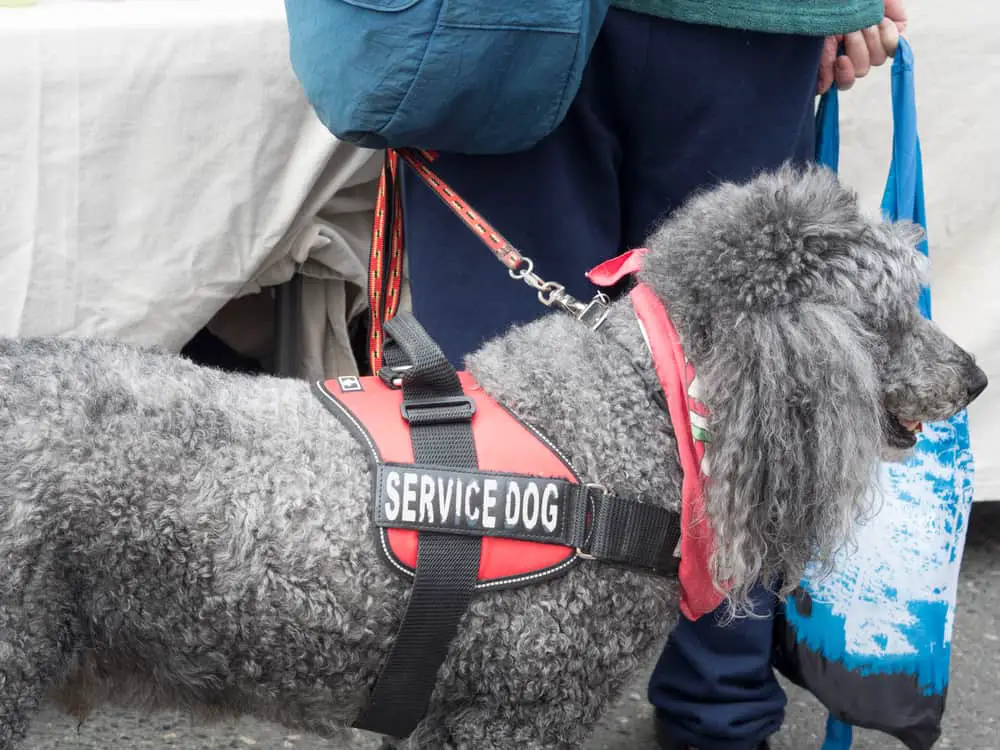
Standard Poodles are currently considered the “gold standard” for psychiatric and mobility service work. Their “intuitive” nature allows them to sense a handler’s cortisol shift or an impending panic attack before it even manifests.
Why They Excel in Public Access
Unlike some high-drive breeds that become overwhelmed in public settings, a well-trained Poodle maintains its focus under pressure. Their “paws-on” approach to interaction makes them excellent for bracing or guiding. They are often preferred over Labradors in specialized service fields because they are “thinking” dogs; they can often anticipate a handler’s need before a command is even given. This versatility is why they are frequently used in therapy work—they have a natural ability to mirror the emotional state of the people around them.
11. Physical and Mental Exercise Requirements
A 30-minute walk around the block is an insult to a Standard Poodle. These are high-energy dogs that require 60–90 minutes of vigorous activity daily. However, the exercise must be balanced between physical and cognitive loads.
- Physical Load: Running, hiking, or swimming. Because they have webbed feet, dock diving is an incredible way to exercise them without straining their joints.
- Mental Load: Scent work is particularly effective for Poodles. Hiding treats or toys and forcing them to use their nose engages the “hunting” part of their brain, which is often more exhausting than a two-mile run.
- The “Off Switch”: A well-exercised Poodle has a fantastic “off switch” indoors. They will lounge gracefully for hours once their quota of work has been met.
12. Training Curriculum and The Poodle Mindset
Training a Standard Poodle is a joy, provided you are consistent. They are ranked as the #2 most intelligent dog breed, surpassed only by the Border Collie. They learn new commands in as few as five repetitions.
Avoiding the “Poodle Sulk”
The Association of Professional Dog Trainers recommends positive reinforcement and varied training sessions. Poodles are emotionally sensitive; harsh corrections can lead to the “Poodle Sulk,” where the dog shuts down or refuses to engage. They require a “Scholar’s Curriculum”—think agility, dock diving, or therapy dog work. If you repeat the same “Sit” and “Stay” 50 times, the Poodle will get bored and start experimenting with “wrong” answers.
13. Standard Poodles in the Family Dynamic
Standard Poodles are exceptional family companions for active households. They are generally patient and gentle with children, though they are large enough to accidentally knock over a toddler during a “zoomie” session. Unlike some high-drive breeds, the Poodle is highly social and thrives on being “part of the pack.”
Managing Prey Drive with Other Pets
For households with other pets, the Poodle’s high prey drive means they should be introduced to cats and small animals slowly. Because they were bred to hunt birds, a running cat can trigger a chase instinct. However, their intelligence makes them one of the easiest breeds to train for “peaceful coexistence.” If your family is gone for 10 hours a day and the dog is relegated to a crate, the Poodle will suffer.
14. Behavioral Differences: Male vs. Female
There is a saying in the Poodle world: “Females love you, but males are in love with you.” While every dog is an individual, there are some biological and behavioral trends noted by The Kennel Club (UK).
- Males: Usually larger (60–70 lbs), often more “goofy” and eager to please. They tend to stay in a “puppy-like” state of mind longer and are generally more emotionally needy.
- Females: Often mature faster, can be slightly more independent, and may be more “bossy” in a multi-dog household. They are often the “matriarchs” of the home.
- The Consensus: Personality is largely determined by lineage and socialization rather than gender. Both make excellent pets if their biological needs are met.
15. Managing Separation Anxiety and Independence

The downside of the Poodle’s extreme intelligence and bonding capacity is a high risk for separation anxiety. From a researcher’s perspective, this breed possesses a “high social requirement” that makes being left alone for long periods difficult.
They are prone to “anticipatory anxiety”—they learn the cues that you are leaving (grabbing keys, putting on shoes) and begin to stress before you even walk out the door. The American Veterinary Medical Association suggests that behavior modification and “independence training” from puppyhood are essential. Use “interactive crates” where the dog only gets their favorite puzzle toy inside. This isn’t a breed that does well in an “empty nest” if the owners are constantly traveling—a logistical reality that often differs when comparing the Standard vs. Miniature Poodle.
16. FAQ (PAA Section)
Are Standard Poodles hypoallergenic?
Yes, they are considered hypoallergenic because they have hair rather than fur, which reduces the amount of dander released into the environment. However, no dog is 100% allergy-free.
Do Standard Poodles bark a lot?
They are “alert barkers.” They will tell you if someone is at the door, but they shouldn’t bark incessantly unless they are bored, under-exercised, or suffering from anxiety.
How often do they need to go to the groomer?
A professional groomer should see a Standard Poodle every 4 to 8 weeks, depending on the length of the coat you choose to maintain.
Are they good for first-time owners?
Only if the owner is prepared for the mental and financial commitment. Between professional grooming costs and the need for daily high-level exercise, they are “high-maintenance.”
Can they live in an apartment?
Yes, as long as the owner provides at least 90 minutes of outdoor exercise. A Poodle is very calm indoors if their needs are met elsewhere.
What is the best food for a Standard Poodle?
They thrive on a high-protein, large-breed formula. According to Whole Dog Journal, avoiding fillers and monitoring calorie intake is essential to manage deep-chest health risks.
Do they shed at all?
Technically, they shed very little. The hair that does fall out usually gets trapped in the surrounding curls, which is why they mat so easily if not brushed.
How smart are they really?
They are consistently ranked in the top 3 for working intelligence. They can solve puzzles, learn names of hundreds of toys, and anticipate human needs.
Are they aggressive?
No, aggression is not a breed trait. They are generally social and polite. Any aggression is usually a result of poor breeding or lack of socialization.
What is a “Clear” or “Fading” coat?
Many Poodles carry a “fading gene.” A puppy born deep black may “clear” to a charcoal or silver by age two. This is a natural genetic process.
Do they like water?
Most do! They were literally bred to be “water dogs.” Their paws are often slightly webbed, making them powerful swimmers.
Should I get a rescue or a breeder?
Reputable breeders provide health clearances for hips and eyes. Rescues provide a second chance for dogs. Both are valid paths. Check the Journal of the American Animal Hospital Association for more on breed-specific health registries.
17. Conclusion: The Scholar-Athlete Balance
Ultimately, owning a Standard Poodle is a study in balance. You are not just buying a pet; you are enrolling a highly perceptive scholar-athlete into your family. They offer a unique combination of extreme athleticism and profound emotional depth, but they do not tolerate being a “passive” part of the household.
If you can provide the rigorous physical activity they crave and the complex mental puzzles they require to stay sane, the Standard Poodle is arguably the most rewarding companion in the canine world. They will watch you, learn from you, and occasionally outsmart you. For the right owner, that isn’t a drawback—it’s the very reason the breed remains the ultimate standard of versatility.
Medical & Veterinary Disclaimer: PoodleReport.com is an informational resource for Poodle owners and enthusiasts. We are not veterinarians. The content on this website is not a substitute for professional veterinary care, diagnosis, or treatment. Always seek the advice of your veterinarian with any questions you may have regarding your pet’s medical condition, diet, or overall health.