
Disclaimer: The information provided on PoodleReport.com is for educational purposes only and does not constitute veterinary medical advice; always consult your vet before changing your dog’s diet. Additionally, this post contains affiliate links. As an Amazon Associate, and other affiliate advertising programs, I earn from qualifying purchases at no extra cost to you.
There is a specific, almost architectural beauty to a well-bred Apricot Poodle. Often described by the uninitiated as “a darker cream” or “a lighter red,” the apricot coat is actually a masterclass in the complexity of phaeomelanin—the pigment responsible for the red-to-yellow spectrum in canines. As a researcher who has spent decades analyzing the intersection of canine behavior and phenotype, I’ve found that this shade remains the most misunderstood in the Poodle world.
What is an Apricot Poodle?
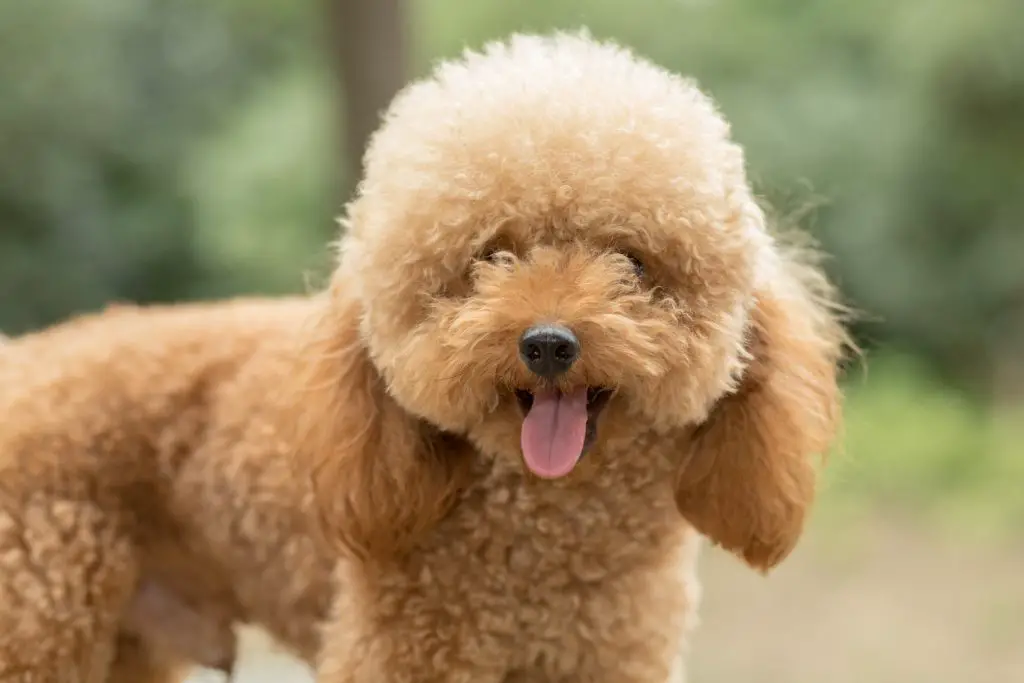
Apricot Poodles range in color from pale peach to deep gold, a shade driven by the recessive red e/e genotype and phaeomelanin pigment. Most puppies undergo a genetic process called “clearing,” which causes their dark, saturated coat to fade into a lighter adult shade by age three. Predicting the final adult color is challenging because it relies on specific intensity alleles, making the Apricot Poodle a unique variety that is genetically destined to change as it matures.
The transition of an apricot coat is a complex chemical dance that defies the simpler pigment trajectories seen in darker varieties. Unlike my late Standard Poodle, Angus—who was jet black and remained saturated without fading—the apricot phenotype is inherently volatile. You can see how these varied phenotypes compare in our poodle types guide, but for now, we will dissect the current genomic standards to explain why your sunset-colored puppy is genetically destined to change.
2. How Genes Create Apricot Color
To understand the apricot coat, you have to look at the Melanocortin 1 Receptor (MC1R). In poodles, the apricot shade is dictated by the recessive red e/e genotype at the E Locus. This specific genetic sequence acts as a biological switch. It permanently disables the production of eumelanin (black/brown pigment) within the hair follicle. Even if your Poodle carries the “hidden” blueprint for a jet-black coat at the B or K loci, the e/e status acts as a gatekeeper—only phaeomelanin gets through.
The Chemistry of Phaeomelanin
Phaeomelanin is chemically distinct from its darker cousin, eumelanin. It is a cysteine-rich polymer that produces yellow, orange, and red hues. In an apricot Poodle, these granules are distributed throughout the hair cortex in a specific density. Unlike eumelanin, which is structurally “tougher” and more resistant to light, phaeomelanin is highly susceptible to environmental degradation. This is why you’ll often see an apricot Poodle whose coat looks vibrant near the skin but “crunchy” and pale at the tips. The outer layers are literally oxidizing in the sun.
The Role of the Hair Cortex
The hair shaft of a Poodle is a complex structure. The apricot pigment is housed primarily within the cortex, the thickest layer of the hair. When we talk about “saturation,” we are essentially measuring the volume of phaeomelanin granules packed into that keratinized cortex. Research from the UC Davis Veterinary Genetics Laboratory shows this isn’t a single-gene outcome. It’s a complex interplay between that e/e foundation and various “intensity modifiers” that dictate exactly how much pigment is actually synthesized.
3. The Science of Color Intensity
We’ve moved past the “Rufus Gene” folklore that dominated 1990s breeding circles. The 2026 genomic reality centers on the Intensity (I) Locus. Current data identifies the KITLG gene as the primary volume knob for phaeomelanin. In apricot poodles, we’re looking for a moderate copy number of these intensity alleles.
Copy Number Variation (CNV)
The science of “Intensity” is actually a numbers game. Dogs with a high number of copies of the KITLG variant produce high levels of phaeomelanin, resulting in a Red Poodle. Those with fewer copies produce less, resulting in a Cream or White. Apricot is the “Goldilocks” zone—a medium intensity that is notoriously hard to stabilize. Because the I Locus is polygenic, breeding two perfect apricots can still result in a litter with a massive spectrum of shades. You’re essentially fighting a biological tendency toward dilution.
The “Dosage Effect” in Breeding
When I look at pedigree data, I often see what I call the “Dosage Effect.” If a breeder consistently matches dogs with medium KITLG counts, they might maintain the apricot shade for a generation, but without the “anchor” of a high-intensity red ancestor, the line almost always drifts toward cream. This is why “non-fading” apricot poodles are the unicorns of the canine world. They have enough intensity to resist the clearing gene longer than their peers, but they are still genetically distinct from the deep mahogany reds.
4. Comparing Apricot, Red, and Cream
The line between these shades is often just a subjective human label. In the lab, these three colors are just different points on one saturation line. A “Red” Poodle is an apricot on overdrive; a “Cream” is an apricot with the pigment significantly thinned out. You can browse more poodle types and colors to see where these fall in the broader breed spectrum.
Table 1: The Phaeomelanin Intensity Spectrum
| Phenotype | Genetic Intensity (I Locus) | Pigment Concentration | Stability Profile |
| Red | High | Maximum Saturated | High Fading Potential |
| Apricot | Moderate | Balanced Gold | Variable Clearing |
| Cream | Low | Diluted Yellow | High Stability |
Classification Errors
This gradient creates chaos during registration. Puppies get registered as “Red” because they have that neonatal “glow,” only to be re-classified as “Apricot” by eighteen months. The AKC Poodle Breed Standards allow for this spectrum, but technically, the only difference is the concentration of phaeomelanin per square micrometer of hair.
Differences by Poodle Size
Interestingly, the “clearing” gene seems to be expressed differently across size varieties. In my research, Standard Poodles tend to clear more evenly across the body. In contrast, Toy and Miniature varieties often retain “spots” of deeper apricot on their ears and hocks while the body clears to cream. This suggests that there may be secondary modifiers linked to size-related growth hormones that affect how the follicle manages pigment as it ages.
5. When Poodles Change Color
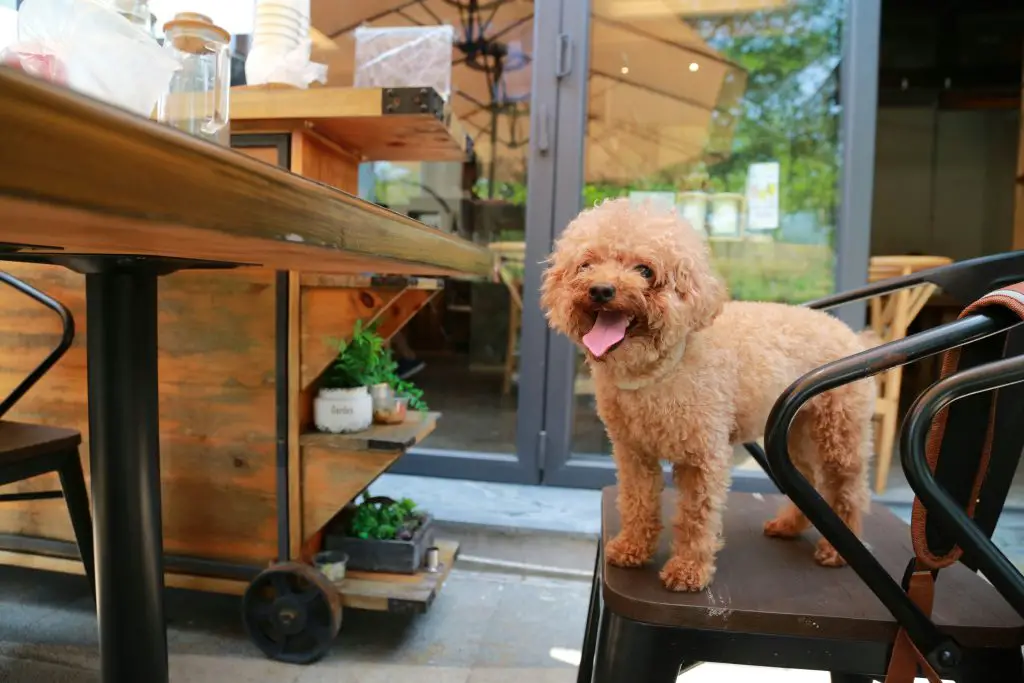
“Clearing” isn’t the same as fading from the sun. It’s a systemic, genetically programmed reduction in pigment production. As a poodle matures, the melanocytes in the hair follicle just slow down.
The Hormonal Trigger
Around the 12-month mark, a Poodle undergoes a significant hormonal shift as it reaches sexual maturity. This shift often acts as a catalyst for the “clearing” gene. You’ll notice the puppy coat—which was thick and soft—starts to be replaced by a coarser adult coat that carries less phaeomelanin.
Table 2: The Developmental Clearing Roadmap
| Life Stage | Observed Shade Change | Biological Mechanism |
| 0–6 Months | Deep Neonatal Saturated | Maximum Phaeomelanin Synthesis |
| 6–18 Months | “Flaming” / Patchy Shifts | Follicular Transition to Adult Hair |
| 18–36 Months | Terminal Shade Reach | Pigment Stabilization (Clearing Ends) |
6. How to Predict Future Color
Want a crystal ball? Look at the ears. Pigment concentration is always highest at the ears and tail. This is because these areas have a slightly different vascular structure that seems to support denser melanocyte activity. If a puppy’s ears are only a tiny bit darker than its body, it’s going to clear to a very pale cream. If those ears are a deep, burnt orange, the dog has a much better shot at keeping its apricot shade.
Root-to-Tip Analysis
For a clinical check, do a Root-to-Tip Analysis. Part the hair at the shoulder under natural light. If the hair coming out of the skin is noticeably lighter than the tip, the “clearing” process is already active. This is a red flag for those seeking a “dark” adult dog. You can cross-reference these variations with The Royal Kennel Club (UK) Breed Standards for a global perspective on shade stability.
The Guard Hair Indicator
Examine the primary “guard hairs” emerging along the spine. These coarse follicles typically express pigment reduction significantly faster than the secondary undercoat. If these emerging hairs appear white or translucent, it serves as a leading clinical indicator that the phenotype is destined for a major clearing event, eventually transitioning toward its lighter adult shade.
7. Why Some Puppies Have Black Masks
Even though apricot poodles are e/e (recessive red), they can still inherit the E^m allele—the black “Melanistic Mask.” This is one of the biggest points of confusion for new owners. In apricots, this often looks like a “sooty” or “shadowed” muzzle on an 8-week-old puppy.
The Genetic Tug-of-War
While the e/e status prevents the body from making black hair, the E^m allele can occasionally “leak” black pigment into the facial hair and tail tips of young puppies. It’s a temporary genetic artifact. As the dog clears, that black masking usually recedes. The e/e foundation eventually wins the battle in the hair, leaving only the black pigment in the skin (the “points”). That dark puppy muzzle usually vanishes by the first birthday, leaving behind a clean, golden face.
Mask Retention
In very rare cases, if the dog also carries certain “Agouti” modifiers, a faint shadow may remain around the muzzle. However, for a show-quality apricot, the goal is a maskless, warm facial tone with jet-black leather on the nose and eye rims.
8. Sun Fading vs. Genetic Clearing
We have to distinguish between Chemical Fading and Genetic Clearing. Phaeomelanin is chemically fragile—it’s the “ginger” of the dog world. High-intensity UV radiation breaks the covalent bonds in the pigment molecules, causing the hair to “bleach.” That’s an external, environmental problem.
The Physics of UV Bleaching
When photons from sunlight hit phaeomelanin granules, they trigger a chemical reaction that effectively “strips” the color. This is why an apricot Poodle’s top layers are often three shades lighter than the hair protected near the belly. Conversely, my black Standard Poodle, Angus, had a eumelanin-rich coat that remained stable and resistant to this type of solar oxidation. While UV-filtering sprays can slow external fading, they cannot halt the internal genetic clock.
Genetic Clearing
Genetic Clearing is internal. It’s a form of “melanocyte exhaustion” or dormancy where the cells simply stop producing pigment at the same density. No spray on earth can stop the genetic clearing programmed into the DNA. If the clearing gene is there, the dog will lighten even if it spends its entire life in a windowless room.
9. Diet and Coat Pigment

Phaeomelanin synthesis starts with L-Tyrosine. This amino acid is the primary precursor for all melanin. Inside the follicle, tyrosine is converted by the enzyme tyrosinase into the actual color you see. This is where modern research provides a genuine edge for owners.
The Importance of Copper
Tyrosinase needs copper to function. Without it, the conversion fails, and you get a “washed-out” look or even “rusting” (a brownish, dull discoloration). According to the Merck Veterinary Manual, copper is a vital co-factor. However, over-supplementing won’t make a light dog dark—it will just risk copper storage disease. You are aiming for nutritional equilibrium, not a pigment overdose.
Salivary Staining
Apricot Poodles often develop “red staining” on paws and muzzles—this is salivary porphyrin, not a genetic color shift. These rusty patches clash significantly with the golden phenotype. While mineral-balanced diets may modulate output, management relies on hygiene and treating the allergies that cause excessive licking. Keeping the coat dry is the most effective way to prevent the oxidation that causes this discoloration.
10. Why Poodle Noses Turn Pink
Apricots are notorious for “Snow Nose.” This is when the black nose fades to pink or brown in the winter. It’s a purely biochemical quirk: the tyrosinase enzyme is thermolabile (temperature-sensitive).
Enzyme Kinetics
In the cold, the enzyme’s efficiency drops, and pigment production in the nose leather stalls. According to VCA Animal Hospitals, this isn’t a medical issue. It usually reverses when the weather warms up and the enzyme regains its structural integrity. It’s just more noticeable on apricots because the contrast is so sharp compared to a black Poodle where a slight fade is invisible.
For a clinical check, do a Root-to-Tip Analysis. Part the hair at the shoulder under natural light. If the hair coming out of the skin is noticeably lighter than the tip, the “clearing” process is already active. This is a red flag for those seeking a “dark” adult dog. You can cross-reference these variations with The Royal Kennel Club (UK) Breed Standards for a global perspective on shade stability.
11. Grooming and Preventing Mats
The “matting transition” (usually between months 9 and 14) is a biological nightmare. The soft puppy hair is being pushed out by coarser adult hair. On an apricot, this texture is often finer and more “cottony” than a black Poodle’s coat.
The Hooking Phenomenon
Under a microscope, puppy hair is smoother. Adult hair has a more pronounced cuticle scale. During the coat change, these new, “hooked” scales grab onto the dead, shedding puppy hair. If you don’t mechanically remove that hair via “line-brushing,” it will lock up into felt-like mats at the skin level. This is why many owners end up with a “shaved” poodle at the 1-year mark.
Advanced Grooming Strategy
Get a Chris Christensen Big G slicker brush. The long pins are non-negotiable for reaching the skin during that 10-month “coat blow.” Also, using a high-velocity dryer after a bath is a researcher’s secret weapon—the force of the air literally “blows out” the dead hair before it can tangle. Check the Poodle Club of America for more on managing these specific textures.
12. Health and Ethical Breeding
“Color-chasing” is a researcher’s red flag. When breeders prioritize a specific apricot shade over everything else, they narrow the gene pool, spiking the Coefficient of Inbreeding (COI). High COI means higher risks for autoimmune issues.
The Cost of Perfect Color
I’ve analyzed pedigrees where breeders have doubled down on a single sire known for “non-fading” apricots. The result? Great color, but a spike in Sebaceous Adenitis (SA) and Addison’s Disease. Before you buy, check the OFA (Orthopedic Foundation for Animals) database. A researcher-minded owner looks for a low COI (ideally under 10% over 10 generations) and full health clearances. This is the ultimate expression of EEAT in the poodle world—prioritizing data over aesthetics.
13. Color Myths and Temperament

I’ll be blunt: there is zero peer-reviewed evidence that apricot poodles are “more hyper” or “less intelligent.” The idea that the e/e genotype is linked to neurology is a myth.
Understanding Pleiotropy
Pleiotropy is when one gene affects multiple traits. While some breeds have color-linked deafness (like the piebald gene in Dalmatians), the recessive red gene in Poodles is not pleiotropic for behavior. Temperament is about lineage and socialization. If an apricot dog is hyper, it’s because of its parents’ genetics and the breeder’s choices, not its pigment.
14. Pros and Cons
Table 3: Apricot Poodle Ownership Profile
| Factor | Advantage | Challenge |
| Visibility | Safety win in low-light environments | Facial tear stains are visible |
| Maintenance | Hides light household dust well | Needs aggressive “line-brushing” |
| Aesthetics | That unique “sunset” glow | Unpredictable genetic clearing |
16. FAQ
Do apricot Poodles fade?
Yes. Almost 100% of them “clear” by age three. It’s a genetic process discussed in the Journal of Heredity.
How do I know if my puppy will stay apricot?
Check the ears and the roots. Deeply saturated ear pigment is your best indicator of adult color retention.
Is an apricot Poodle rarer than a Red Poodle?
“Red” has higher demand, but a true, non-fading apricot is arguably harder to breed because it requires a very precise genetic “copy number” balance.
Why is my apricot Poodle’s hair turning white in some spots?
Usually, it’s just the “guard hairs” clearing faster than the undercoat. It can also be from local skin trauma or “aging” of the follicle.
Does apricot color affect health?
No. The e/e genotype doesn’t carry any specific health defects. Health is about the pedigree and health testing, not the color.
What is the best food for an apricot poodle?
Anything that meets AAFCO standards and has chelated minerals. Copper and Zinc are the “engines” behind your dog’s pigment synthesis.
Conclusion
Owning an Apricot Poodle is a commitment to a biological magic trick—an evolution from sunset gold to a sophisticated peach. As a researcher, I’ve found that the most satisfied owners view “clearing” as a maturation process rather than a defect.
To navigate this transition successfully, respect the KITLG gene’s influence, prioritize OFA data over neonatal aesthetics, and master the slicker brush before the 10-month coat change begins. The color will inevitably lift, but your standard of care must remain absolute.
Medical & Veterinary Disclaimer: PoodleReport.com is an informational resource for Poodle owners and enthusiasts. We are not veterinarians. The content on this website is not a substitute for professional veterinary care, diagnosis, or treatment. Always seek the advice of your veterinarian with any questions you may have regarding your pet’s medical condition, diet, or overall health.