

Disclaimer: The information provided on PoodleReport.com is for educational purposes only and does not constitute veterinary medical advice; always consult your vet before changing your dog’s diet. Additionally, this post contains affiliate links. As an Amazon Associate, and other affiliate advertising programs, I earn from qualifying purchases at no extra cost to you.
The “Merle” pattern is undeniably captivating, turning heads at dog parks in 2026 with a coat that looks more like a dappled piece of Carrara marble than a traditional canine. As a digital researcher focused on the high-IQ world of these elegant dogs, I find the sudden popularity of “marbled” coats fascinating—if not a little biologically suspicious. Before you fall for the “rare color” marketing, we need to examine the M-locus to see if this pattern is a genuine evolution or a clever genetic party crasher. So, can a Poodle be Merle?
The Merle pattern is not a naturally occurring trait in the Poodle genome, meaning its presence indicates an outcross to another breed somewhere in the dog’s lineage. While these coats are visually striking, the American Kennel Club (AKC) does not recognize Merle as a purebred color because the gene was historically absent from the breed’s DNA. For owners who prioritize breed purity and neurological stability, a Merle Poodle is technically classified as a hybrid rather than a purebred dog.
Before you empty your wallet for those striking blue eyes, let’s put on our researcher hats and examine the DNA reality, the health risks hidden beneath the spots, and why the official record books treat this pattern like an uninvited guest.
1. Poodle Genetics: Is the Merle Gene Naturally Occurring?
In the world of canine aesthetics, the “Merle” pattern is an undeniable showstopper. Characterized by mottled patches of pigment, it creates a marbled effect that often commands a premium price tag. However, I must lead with a hard genetic truth: the Merle gene was simply not on the Poodle’s original evolutionary guest list.
1.1. The PMEL Gene and Outcrossing
The pattern is caused by a mutation in the PMEL gene (the M-locus). Unlike breeds where this is standard issue—like the Australian Shepherd or the Great Dane—the Poodle’s ancestral DNA lacks this mutation entirely. Research confirms that for a Poodle to exhibit this pattern, an outcross to another breed must have occurred somewhere in the lineage. It is an aftermarket paint job, not a factory original.
1.2. The Legacy of Solid Colors
My late companion, Angus, was a solid black Poodle—a classic, textbook representation of the breed’s stable, single-color history. Historically, Poodles were bred for uniform density and color to aid in water retrieval and social standing. While Merle Poodles are visually stunning, they are a modern modification grafted onto a very old family tree.
Whether you are analyzing a marble-coated Standard or a pocket-sized Miniature, it is important to remember that a Poodle is more than just its pigment. The biological and behavioral expectations shift significantly depending on the frame of the dog.
2. AKC Registration and the Purebred Poodle Standard
The American Kennel Club is the strict guardian of breed purity, and their stance on the Merle pattern is refreshingly blunt. The AKC Poodle Breed Standard requires the coat to be an even, solid color at the skin. While you may occasionally see Merle Poodles registered with the AKC, it is almost always the result of highly creative paperwork rather than actual breed acceptance.
2.1. The “Other” Color Category
Breeders often register these dogs by selecting “Color: Other” or creatively misidentifying them as “Blue” or “Gray” to bypass automated registration blocks. This creates a rather ironic “Purebred Paradox” where a dog holds the official paperwork but lacks the genetic purity of the breed itself.
2.2. Official Recognition Status (2026)
| Registry / Organization | Recognition Status | Breeding Recommendation |
| AKC (USA) | Disqualified from Conformation | Discouraged for show stock |
| UKC (USA) | Not Recognized | High-risk category |
| FCI (International) | Explicitly Disqualified | Strictly prohibited |
| CKC (Canada) | Not Recognized | Not recommended |
3. The Health Risks of Merle Breeding
The Merle gene doesn’t just act as a bleach for the coat; it meddles with the very way pigment cells (melanocytes) migrate during a puppy’s development in the womb. This gene is dominant, meaning a dog only needs one copy to show off the pattern (heterozygous).
3.1. The Dominant Inheritance Pattern
Because it is a dominant trait, you cannot simply “hide” a visible Merle. However, the genetic stakes go from interesting to dangerous when two Merle parents are paired. This results in “Double Merles” (homozygous), which often suffer from a complete lack of pigment in critical sensory areas.
3.2. Genetic Breeding Outcomes
According to veterinary literature detailed by the [suspicious link removed], these careless breeding outcomes frequently result in sensory impairments that require a high-intervention lifestyle from the owner.
| Parent A Genotype | Parent B Genotype | Resulting Puppy Population | Sensory Health Risk |
| Solid (mm) | Merle (Mm) | 50% Solid, 50% Merle | Minimal |
| Merle (Mm) | Merle (Mm) | 25% Solid, 50% Merle, 25% Double Merle | Critical (Deaf/Blind) |
| Cryptic (Mc) | Merle (Mm) | Variable Risk of Double Merle | High (Unpredictable) |
4. Somatic Mutations and Progressive Graying
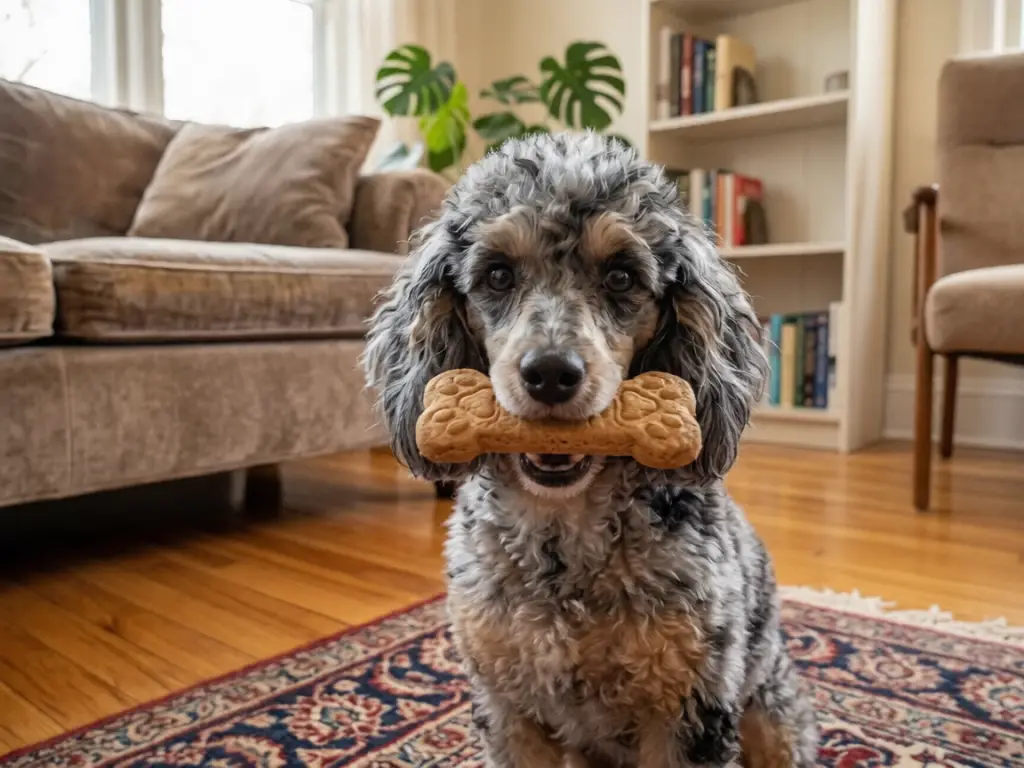
A common point of confusion in the Poodle community is the sudden appearance of “patchy” coats that look like Merle but are genetically entirely distinct. This is often just a somatic mutation—a localized genetic “glitch” where Mother Nature simply pressed the wrong button during fetal development.
4.1. Non-Hereditary “Glitches”
Unlike the hereditary Merle gene, a somatic mutation is non-transmissible. The dog may have an exotic, “merle-looking” patch of hair, but their offspring will be boringly solid. These localized changes are cosmetic and do not carry the sensory health baggage associated with the M-locus.
4.2. Progressive Graying and “Clearing”
Furthermore, Poodles are famous for “clearing” or fading. A Black Poodle transitioning to Silver (a metabolic process governed by the KIT gene) can look awkwardly mottled or uneven during the shift. I’ve seen misinformed owners proudly boast that they have a “Ghost Merle” when, in reality, they just have a Poodle undergoing a standard, albeit blotchy, metabolic coat change.
Navigating the nuances of breed standards and international sizing variations requires a detailed look at the registry data. For a more granular exploration of how these sizes differ across global kennel clubs, refer to my 2026 comprehensive Poodle types guide.
5. How Pigment Migration Affects Hearing and Vision
One of the most underserved topics in canine genetics is the biological link between pigment and the nervous system. During embryonic development, melanocytes migrate from the neural crest to the skin, eyes, and inner ear. In Merle dogs—and especially Double Merles—this migration fails, meaning the cells essentially get lost on their daily commute.
5.1. Auditory Health and the Stria Vascularis
When these cells fail to reach the inner ear, the stria vascularis does not develop properly. This tissue is responsible for maintaining the health of the cochlea; without it, the hearing apparatus effectively dies within weeks of birth. This physiological failure is why white-headed Merles are at such an incredibly high risk for congenital deafness.
5.2. The Ocular and Cognitive Gap
From a researcher’s perspective, this creates a frustrating “Cognitive Gap.” By prioritizing a broken pigment path just to get an exotic coat, breeders inadvertently sacrifice the neurological stability and environmental confidence that the Poodle is celebrated for. This failure in the developmental process can result in dogs that are highly reactive, proving that beauty sometimes comes at the cost of a steady nervous system.
6. Understanding Cryptic Merles and “Hidden” Carriers
Perhaps the most dangerous element of this trend is the Cryptic Merle. These are dogs that carry the Merle mutation but appear to be entirely solid-colored. They may have a tiny, unnoticeable patch of lighter fur, or show absolutely no visual signs at all, operating as undercover agents in the gene pool.
6.1. Genotype vs. Phenotype
Without genetic testing from a certified facility like the Orthopedic Foundation for Animals (OFA), a breeder might accidentally pair two Merles, fully believing one to be a solid. This “blind breeding” is a game of genetic Russian roulette and is the primary cause of accidental Double Merle litters.
6.2. The Necessity of DNA Panels
In 2026, relying solely on visual inspection (phenotype) is considered an irresponsible breeding practice. Comprehensive DNA panels are the only definitive way to ensure that a “solid” dog isn’t actually a hidden carrier of the M-locus waiting to surprise everyone.
7. Health Red Flags for Owners of Merle Poodles
If you are currently caring for a Merle Poodle, your observational research must include regular checks of their sensory and physical health. Unlike a standard Poodle who navigates life with the confidence of an honor roll student, a Merle dog may face unique physiological hurdles.
7.1. Sensory and Ocular Indicators
- Startle Reflex Absence: If your puppy doesn’t react to sharp, sudden noises, immediate BAER hearing testing is required.
- Pupillary Abnormalities: Watch for centeredness in the pupils (corectopia) or abnormally small eye globes (microphthalmia).
- Night Blindness: Hesitation to move in low-light environments may indicate ocular failures tied to the M-locus.
7.2. UV and Skin Sensitivity
- Butterfly Nose: Pink spotting on the nose or eyelids isn’t just cute; it significantly increases the risk of squamous cell carcinoma.
- Nystagmus: Rapid, involuntary eye movement can be a sign of deeper neurological issues related to pigment migration failure.
8. Navigating the Market: Price and Pedigree Myths
In my ongoing analysis of the market, I consistently see well-meaning owners fall for the same marketing traps when navigating the “Exotic Poodle” landscape.
8.1. The “Rare Color” Premium
A common mistake is paying the “Rare Color” premium. Breeders often charge three times the standard price for a Merle, meaning you are essentially emptying your wallet for a genetic typo that is technically a disqualification in the eyes of breed preservationists.
8.2. Health and Eligibility Comparison
| Characteristic | Solid Poodle (Classic) | Single Merle (Mm) | Double Merle (MM) |
| Hearing Loss | Rare (Hereditary) | Low Risk | Very High Risk |
| Vision Impairment | Low (Age-related) | Moderate Risk | Severe / Blindness |
| UV Sensitivity | Low | Moderate | Extreme |
| AKC Eligibility | Fully Eligible | Disqualified (Pattern) | Disqualified (Pattern) |
8.3. Merle vs. Parti
Another pitfall is assuming Merle is the same as “Parti.” They are genetically distinct; a Parti Poodle (white with solid patches) is a recognized, ancient pattern with no associated sensory risks. Always verify the genetic lineage before committing to a unique pattern to ensure you aren’t buying a health crisis disguised as a trend.
9. Grooming and Coat Maintenance for Merle Poodles
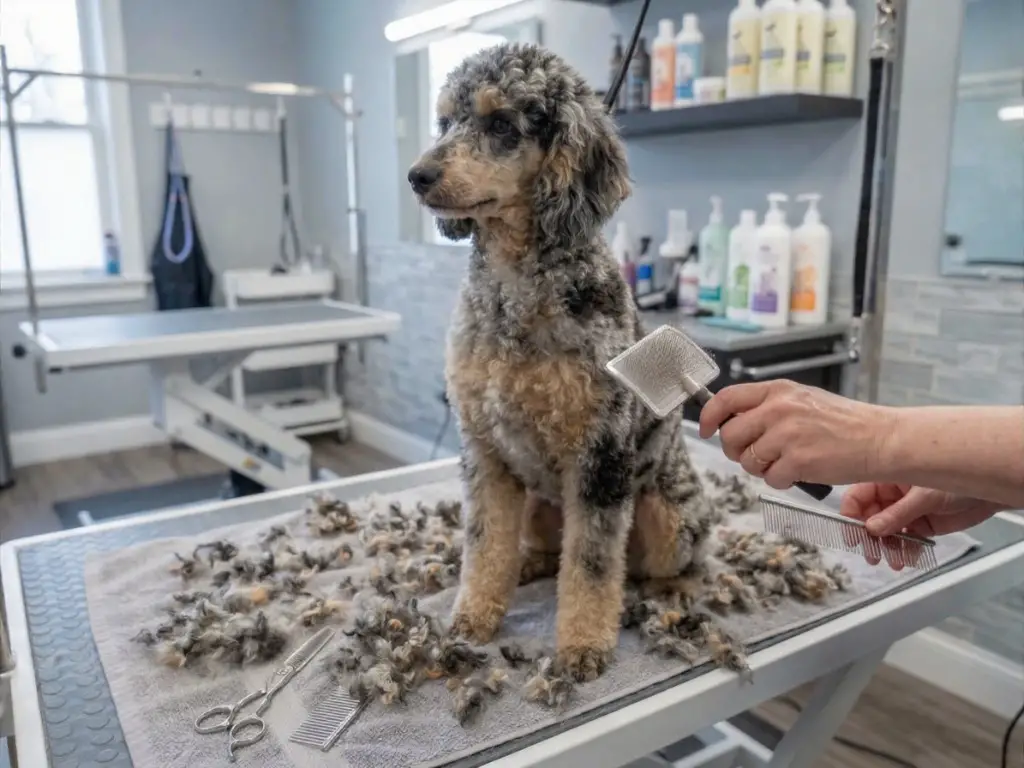
Regardless of the genetics behind it, the Poodle coat requires a rigorous maintenance schedule. Whether you are managing a solid black Poodle like Angus or a striking Merle, finding the right brushing style is essential for preventing painful mats.
9.1. Visual Texture and Maintenance
The Merle pattern visually hides mats much more easily than a solid coat, providing a masterful optical illusion. This means you must be meticulously diligent with your line-brushing. A “busy” coat can easily disguise the early, painful stages of felting near the skin.
9.2. Skin Health During Grooming
For Poodles sporting a “butterfly nose” or localized white patches, skin sensitivity is a legitimate medical concern. Because these unpigmented areas lack a natural defensive barrier against the elements, I highly recommend coordinating with your groomer to use hypoallergenic products specifically in these reactive zones.
10. FAQ: The Merle Poodle Files
- Are Merle Poodles purebred? Technically, no. The Merle gene does not exist in the original Poodle genome. Its presence is essentially a genetic receipt proving that an outcross to another breed occurred somewhere in the dog’s family tree.
- How much should a Merle Poodle cost? While breeders often charge a massive “rare color” premium—sometimes upwards of $4,000—you are essentially paying extra for a coat pattern that breed preservationists consider a disqualifying fault. Remember, a higher price tag does not equal a healthier dog.
- Are Merle Poodles hypoallergenic? Yes, assuming they have inherited the signature single-layer, curly coat of the Poodle. The Merle gene dictates pigment, not fur texture, so they generally retain the low-dander qualities that make the breed allergy-friendly.
- What is a “Double Merle” and why is it dangerous? A Double Merle is the result of breeding two Merle dogs together. This genetic game of roulette has a 25% chance of producing puppies with severe pigment loss in their eyes and inner ears, leading to extremely high rates of congenital deafness and blindness.
- Why does the AKC disqualify Merle Poodles? The American Kennel Club strictly requires Poodle coats to be an even, solid color at the skin. The Merle pattern is an aftermarket trait associated with significant sensory health risks that directly contradict the organization’s goal of preserving breed health and stability.
- Do Merle Poodles fade or change color? Like many Poodles, a Merle can carry the progressive graying gene. This means their dark patches may fade or “clear” into a lighter silver or gray as they age, making their marbled pattern look significantly less dramatic by their second birthday.
- Is Merle the same as a Dapple Poodle? “Dapple” is simply the terminology used for the Merle gene in Dachshunds. In the Poodle world, the scientifically accurate term is Merle.
- What is a Cryptic Merle? A Cryptic Merle is a dog that carries the Merle mutation but shows absolutely no visual signs of it on their coat. They operate as undercover agents in the gene pool, making DNA testing mandatory to avoid accidentally breeding them with another Merle.
11. Conclusion: Intelligence Over Aesthetics
In the grand synthesis of Poodle research, the Merle pattern remains a fascinating, albeit controversial, chapter. While the aesthetic appeal of a marbled coat is undeniable, we must objectively weigh that beauty against the genetic and ethical costs. As a breed defined by its high-IQ problem-solving skills and stable metabolic profile, the Poodle’s greatest asset is its brain—not its M-locus.
A purebred Poodle represents a centuries-old lineage of neurological and physical stability. When we introduce outcrossed genes simply for the sake of an exotic look, we risk blurring the very traits that make this breed the “Einstein in curls” we know and love. For the researcher and the dedicated owner alike, the goal should always be a dog that is as healthy as it is smart.
Medical & Veterinary Disclaimer: PoodleReport.com is an informational resource for Poodle owners and enthusiasts. We are not veterinarians. The content on this website is not a substitute for professional veterinary care, diagnosis, or treatment. Always seek the advice of your veterinarian with any questions you may have regarding your pet’s medical condition, diet, or overall health.