

Disclaimer: The information provided on PoodleReport.com is for educational purposes only and does not constitute veterinary medical advice; always consult your vet before changing your dog’s diet. Additionally, this post contains affiliate links. As an Amazon Associate, and other affiliate advertising programs, I earn from qualifying purchases at no extra cost to you.
If you look at a Poodle today, you likely see a regal animal destined for a velvet sofa. The reality is far muddier. The “frou-frou” reputation is a historical injustice to an animal that was fundamentally engineered for the swamp.
What were Standard, Miniature, and Toy Poodles bred for?
Standard Poodles were bred in Germany as waterfowl retrievers, Miniature Poodles were developed for truffle hunting and woodland agility, and Toy Poodles were bred as companion dogs for European nobility. These distinct original roles continue to dictate their modern energy levels, intelligence, and behavioral quirks today.
We are looking at a single breed that has been functionally splintered into three distinct job descriptions over the centuries. This guide strips away the show-ring glamour to look at the behavioral hardwiring of the Poodle, explaining how a dog built for freezing lakes ended up in the laps of Renaissance royalty—and what that means for your living room today.
1. The Core Breakdown: Three Sizes, Three Jobs
To understand the breed’s modern behavior, you have to look at the original blueprints. While they share the exact same genetic framework, human intervention selectively downsized the Poodle to fill very specific occupational voids over the course of several centuries.
The Timeline of Purposeful Sizing
Canine historians agree that the Standard Poodle is the ancient bedrock of the breed, existing in its recognizable form since at least the 15th century. But as human society evolved from agrarian survival to specialized trades and, eventually, aristocratic leisure, the demand for dogs shifted. A massive, high-energy retriever was incredibly useful for feeding a family by hunting ducks, but it was entirely impractical for an urban merchant or a Parisian nobleman.
This necessity birthed a multi-generational breeding project. By selecting the smallest, healthiest Standard Poodles and pairing them together, breeders successfully shrank the dog without losing the “software”—the remarkable canine intelligence that made the breed so famous.
Poodle Purpose & Modern Impact
| Poodle Type | Original Purpose | Modern Behavioral Impact |
| Standard | Water retrieving | Highly athletic, task-driven, requires heavy mental stimulation |
| Miniature | Truffle hunting | Hyper-alert, agile, strong scent drive, adaptable to city living |
| Toy | Nobility companion | Deeply social, constant attachment, highly emotionally intelligent |
The Constant Variable: Unyielding Intelligence
What makes the Poodle unique among breeds that have been scaled down is that their working drive was never fully bred out. Whether they weigh 50 pounds or 5 pounds, their cognitive capacity remains remarkably uniform. They do not realize they have been downsized. This is why you will frequently see a Toy Poodle attempting to “guard” a household with the exact same intensity as a Standard Poodle retrieving a fallen bird. The hardware changed; the operating system did not.
2. Geographic Origins: The “French” Myth
Before we can break down the specific sizes and their jobs, we have to clear up the geography. The Poodle is not, historically speaking, a French invention. The breed originated in the marshlands of Germany.
The Etymology of the Swamp
The very name of the breed is a dead giveaway to its origins. The English word “Poodle” comes from the German word Pudelhund or Pudel. This is derived from the low German verb pudeln, which literally translates to “to splash in water” or “to puddle.” They were, quite simply, “splashing dogs.”
When the breed was eventually brought across the border into France, the French recognized the animal’s supreme utility. In France, the breed was traditionally called the Caniche. This term is derived from chien canard, which means “duck dog.” Even the French nomenclature points directly back to the freezing swamps and the bird hunt.
The Geopolitical Shift of the Breed
So, how did a rugged German duck dog become the international symbol of French elegance? It was a matter of royal branding. French nobility became utterly fascinated with the breed’s extreme intelligence. Because Poodles could learn complex tricks faster than almost any other breed, they became a staple of French circuses, traveling gypsy caravans, and eventually, the royal courts of King Louis XVI.
The French essentially acted as the ultimate PR firm for the breed, standardizing the sizes we recognize today and refining the grooming styles. However, the foundational genetics are purely German working-dog stock. According to the Fédération Cynologique Internationale (FCI), the world’s governing body of dog breeds, the Poodle’s official country of origin remains Germany, and its working standard is deeply rooted in this athletic European history.
3. What Were Standard Poodles Originally Bred For?
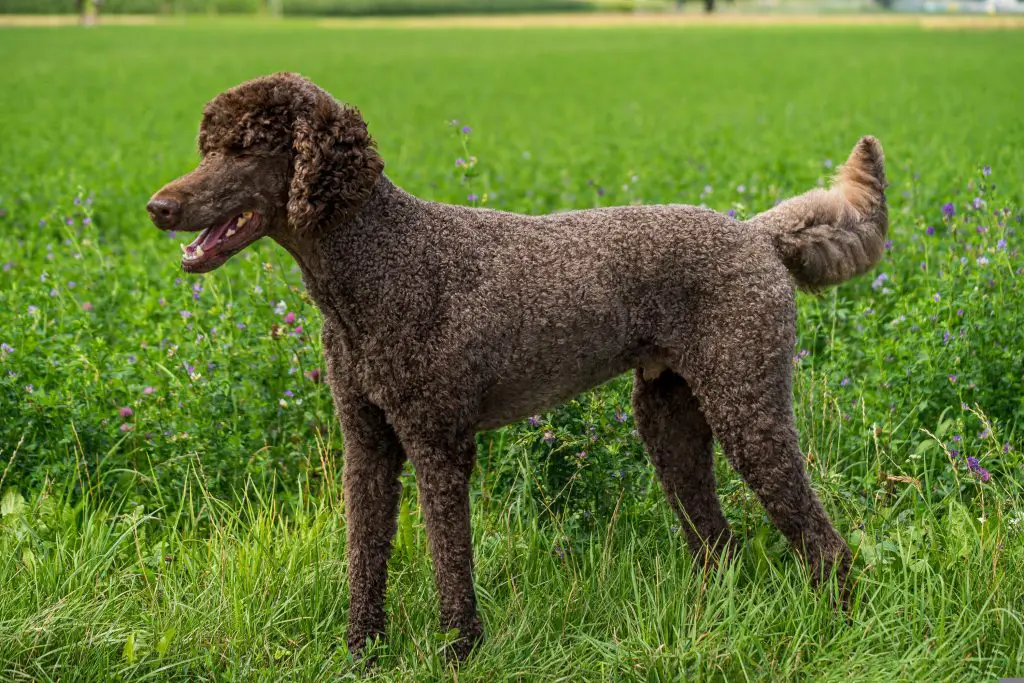
The Standard Poodle was the original template. Long before they were dodging agility poles at the Westminster Dog Show, they were dodging ice floes in Central Europe. Standard Poodles were bred to be the ultimate water retrievers, acting as the primary canine motor for duck and bird hunters.
The Mechanics of Waterfowl Retrieval
A duck hunter in the 15th century faced a logistical nightmare: shooting a bird over a freezing lake meant someone had to go in and get it. They needed a dog that possessed elite stamina, a “soft mouth” (to carry the game back without puncturing the meat with its teeth), and the raw intelligence to follow complex, multi-step hand signals from across a misty body of water.
The Standard Poodle was the perfect solution. The American Kennel Club (AKC) notes that the Standard Poodle’s physiology is custom-built for this environment. Their ribcage is uniquely deep and expansive (often referred to as a “barrel chest”), allowing for maximum lung capacity during long, arduous swims against river currents. Furthermore, their toes are heavily webbed, providing superior propulsion in the water compared to land-specific hunting breeds.
The Truth Behind the Poodle Haircut (Functional Wetsuits)
One of the most profound misunderstandings of the breed involves the iconic “Poodle Clip.” To the modern eye, the shaved rear ends and puffed-up ankles look like a ridiculous fashion statement. In reality, those pompoms are a 400-year-old tactical wetsuit.
Hunters quickly realized that a fully coated Poodle would become waterlogged. The dense, curly hair would absorb so much water that it would physically drag the dog under the surface, leading to exhaustion and drowning. However, if the hunter shaved the dog completely bald to reduce drag, the freezing water would shock the dog’s system, leading to hypothermia, joint lock, and rheumatism.
The solution was a highly utilitarian compromise. Hunters sheared the hindquarters to reduce drag and increase swimming speed, but they deliberately left thick “puffs” of hair over the vital organs (the chest and heart) and the major joints (hips, knees, and ankles) to protect them from the cold. The ribbon tied into the topknot? That was simply so the hunter could spot their specific dog in murky water. The Poodle Club of America strictly maintains these historical clips in modern conformation shows specifically to honor and preserve the breed’s rugged working-class roots.
Modern Behavioral Quirks: The Displaced Worker
That marsh-hunting DNA doesn’t vanish just because the dog lives in a suburban cul-de-sac with a manicured lawn. The instinct to seek, retrieve, and analyze environments is hardwired into their neural pathways.
My late Standard Poodle, Angus, was a textbook example of this displaced working drive. Angus possessed a relentless, almost obsessive need to carry objects—pillows, socks, TV remotes—around the house. He would greet guests at the door with a tennis ball in his mouth, pacing the hallway in a figure-eight. This wasn’t just a cute quirk; it was an unemployed retriever desperate for a job.
Standards are highly analytical, visually mapping a room the way they would map a hunting field. Veterinary experts at the Texas A&M College of Veterinary Medicine emphasize that without adequate “jobs,” daily enrichment, or physical exertion to combat boredom, this retained working energy frequently metabolizes into destructive anxiety.
4. What Were Miniature Poodles Bred For?
As the Poodle’s reputation for supreme intelligence spread across Europe, humans realized that a massive, 60-pound water dog wasn’t practical for every environment. A dense woodland required a different type of canine architecture. Thus, the Miniature Poodle was developed.
The Truffle Hunting Niche
Miniature Poodles were bred to be smaller, agile working dogs, with a specific focus on truffle hunting in the dense forests of France, Spain, and Italy. Truffles are highly prized, subterranean fungi that grow near the roots of certain trees. They are a culinary delicacy, and historically, they commanded a massive price.
Traditionally, hunters used pigs to sniff out these truffles. Pigs have an excellent sense of smell, but they have one fatal flaw for the truffle hunter: pigs love to eat truffles. The hunter would have to physically fight a 300-pound pig to secure the fungus.
The Miniature Poodle offered the perfect solution. Breeders took the Standard Poodle and scaled it down until it was perfectly sized for the woods. The Miniature had an elite nose capable of detecting the fungus underground. Their smaller, lighter paws wouldn’t crush the delicate truffles once they started digging. Most importantly, because of their high trainability and eagerness to please their human masters, they could be easily taught to “alert” the hunter and step back, rather than eating the profit.
The United Kennel Club (UKC) recognizes this enduring scent drive of the Miniature Poodle, which is why they still excel so heavily in modern scent work, barn hunts, and tracking competitions today.
Modern Behavioral Traits: The Woodland Sentinel
Because they were bred to navigate dense underbrush and react to faint scents, Miniature Poodles possess a unique behavioral profile that differs slightly from the Standard.
- Hyper-alertness: They are highly observant and quick to sound the alarm if something is out of place in their environment. They make excellent, if sometimes noisy, watchdogs.
- Agility and Speed: They thrive in tight spaces. They are incredibly nimble, which makes them absolute powerhouses in modern agility courses. They excel in urban environments where a Standard might feel cramped.
- Slightly More Reactive: Because they were bred to react quickly to stimuli in dense woods, Miniatures can be slightly more “jumpy” or reactive to sudden sounds or movements than the more stoic Standard Poodle.
5. What Were Toy Poodles Bred For?
By the time the Renaissance was in full swing, the Poodle had successfully infiltrated the highest levels of European nobility. The aristocracy loved the breed’s intelligence but had absolutely no desire to go duck hunting in a freezing swamp or dig in the dirt for fungi. They wanted the Poodle’s brain in a package small enough to carry.
Renaissance “Sleeve Dogs” and Royal Status
The Toy Poodle was selectively bred not for retrieving or hunting, but explicitly for companionship and status. They were the ultimate luxury item of the 17th and 18th centuries.
The elite classes valued them for their highly affectionate nature and their hypoallergenic coats, which didn’t leave dog hair all over expensive silk gowns. Toy Poodles were often referred to as “sleeve dogs.” European nobles would literally carry these tiny dogs inside the oversized, billowy sleeves of their garments. This served a dual purpose: it showed off their wealth, and the dogs acted as living, breathing hand warmers in the drafty, poorly insulated castles of the era.
Beyond the royal courts, Toy Poodles also became the darlings of the traveling circus. Because they were incredibly inexpensive to feed due to their size, and possessed the cognitive ability to learn routines walking on their hind legs or performing card tricks, they became highly sought-after performers.
Modern Behavioral Traits: The Constant Companion
While they didn’t retrieve ducks, Toy Poodles retained the Standard Poodle’s terrifyingly high IQ. According to cognitive research presented to the American Psychological Association, Poodles consistently rank among the smartest dogs in the world, regardless of their size.
However, this intelligence, combined with their history as lap dogs and constant companions, makes their modern psychology incredibly complex.
- Deep Human Attachment: Toy Poodles are classic constant companions. They demand physical proximity to their owners. If you leave the room, they follow.
- Mental Over Physical Demands: They prefer mental stimulation over grueling physical endurance. A 30-minute walk is great, but a 15-minute puzzle toy session tires their brains out more effectively.
- Separation Anxiety: Because their historical role literally required them to be attached to a human’s sleeve, they are highly susceptible to separation anxiety and stress when left alone for long periods. They are not independent yard dogs.
6. Why Were Poodles Bred in Different Sizes?

When looking at the history of the breed, a common question arises: Why not just invent a new breed for companionship instead of shrinking a hunting dog? The answer lies in the Poodle’s unique, almost perfect genetic foundation.
The Allure of the Hypoallergenic Brain
Humans required the Poodle’s specific combination of traits—unmatched intelligence, high trainability, and a low-shedding coat—in wildly different environments. No other breed offered this exact trifecta.
Larger dogs were necessary for the physically demanding task of swimming through icy currents. Medium dogs were needed to navigate thorny woodland underbrush. Small dogs were required for indoor companionship in wealthy estates where cleanliness was paramount.
As noted by genetic researchers at the Tufts University Cummings School of Veterinary Medicine, selective breeding for size is relatively straightforward when the genetic baseline of the breed is exceptionally strong. Breeders were able to manipulate the physical dimensions of the dog—shrinking the skeletal structure generation by generation—without losing the core behavioral “software” or the non-shedding coat that made the breed so desirable in the first place.
Maintaining Proportions
It is vital to note that a properly bred Toy Poodle is not a dwarf dog. Unlike breeds such as Dachshunds or Corgis, which feature achondroplasia (shortened limbs on a normal-sized body), the Toy and Miniature Poodles were bred to be perfect, scaled-down replicas of the Standard. Their proportions, stride, and structural angles are meant to be identical to the 60-pound original, just in a miniaturized format.
7. Which Poodle Size Came First?
There is absolutely no debate among canine historians on this point: the Standard Poodle was the original size. It is the genetic bedrock of the entire breed lineage.
The Miniature and Toy Poodles were developed centuries later. The downsizing process was slow and deliberate. Breeders would take the smallest, healthiest Standard Poodles from a litter and pair them with other small Standards. Over generations, this reduced the breed’s stature to the Miniature size. Once the Miniature was established and stabilized for truffle hunting, the process was repeated by pairing the smallest Miniatures together to eventually create the Toy size to meet the demands of the French aristocracy.
8. How Breeding Purpose Affects Behavior Today
A Poodle’s original job description remains the most accurate predictor of its modern temperament. You cannot erase centuries of genetic coding just by putting a dog in a modern apartment.
The Epigenetics of the Working Dog
Behavioral traits like retrieving, scenting, and human attachment were selected for over hundreds of generations. These traits are literally written into the dog’s DNA. This means that when you bring a Poodle into your home, you are bringing in a specific set of programmed behaviors.
Behavioral Comparison Matrix
| Trait | Standard (Retriever) | Miniature (Scenter) | Toy (Companion) |
| Energy Level | Very High | Medium-High | Medium |
| Trainability | Extremely High | Very High | High |
| Independence | Moderate | Moderate-Low | Very Low |
| Social Needs | Moderate | Moderate | Extremely High |
The American Veterinary Medical Association (AVMA) consistently advises prospective owners to evaluate a breed’s historical purpose before bringing them home. A bored working dog often becomes a behavioral liability. If a Standard Poodle is not given a task, it will invent one, and you will likely not appreciate their choice of “work” (which often involves shredding upholstery or herding your children).
9. Choosing the Right Poodle Based on Its Original Purpose
Because their historical jobs vary so wildly, matching the right size Poodle to your life is critical. You must align your lifestyle with what the dog was originally built to do.
The Standard: For the Active Adventurer
Choose a Standard Poodle if you live an active, outdoorsy lifestyle. If you want a dog that can hike five miles, act as a tireless swimming partner at the lake, or participate in high-level agility, dock-diving, and obedience sports, the Standard is your match. They require an owner who understands that mental and physical exhaustion is a daily requirement, not a weekend hobby.
The Miniature: The Adaptable Middleground
Choose a Miniature Poodle if you have a moderately active lifestyle or live in a city environment. You want a dog that is sturdy enough for a long neighborhood walk or a trip to the local park, but is content to sleep on the sofa afterward. They are incredibly adaptable, making them excellent family pets for households that want a “real dog” that doesn’t take up the entire backseat of the car.
The Toy: The Dedicated Companion
Choose a Toy Poodle if you work from home, are retired, or have a lifestyle where the dog can be with you almost constantly. You want an affectionate companion and have the time to dedicate to their significant emotional needs. They are portable, empathetic, and strictly indoor companions who thrive on being the center of your universe.
If you are still weighing your options and want to explore the distinct quirks of each variation further, you can browse my complete archive on the different Poodle types to help narrow down your decision.
10. Do Poodle Sizes Have Different Temperaments?
Yes. While all Poodles share a baseline of extreme intelligence, a low-shedding coat, and high trainability, their temperaments diverge along the lines of their historical occupations.
The Standard tends to be the most stoic and independent. They are task-driven and approach life with the seriousness of a blue-collar worker clocking in for a shift.
The Miniature is usually the most energetic, alert, and curious. Because of their history in the woods, they are constantly scanning their environment, which can sometimes translate to a higher prey drive for small animals like squirrels or neighborhood cats.
The Toy is the most emotionally sensitive. They are people-focused and often act more like a shadow than an independent pet. They are deeply attuned to their owner’s moods, making them incredibly intuitive, but also prone to neurotic behaviors if their environment is chaotic.
11. Are All Poodles the Same Breed?
From a genetic and registry standpoint, yes, Standard, Miniature, and Toy Poodles are exactly the same breed. They are not different breeds in the way a Labrador Retriever and a Golden Retriever are different.
They share the exact same breed standard as outlined by kennel clubs worldwide. They share the same coat type, the same physical proportions, and the same underlying genetic markers. They are classified separately in dog shows purely by their height at the shoulder, not by any distinct genetic divergence. For a closer look at the exact height and weight specifications that separate them, check out my comprehensive Poodle types guide.
If a Miniature Poodle grows an inch over the official height limit, it doesn’t become a new breed; it simply becomes an oversized Miniature or is classified into the Standard category depending on the specific registry rules.
12. Common Misconceptions About Poodle Breeding
Because of their flamboyant show clips and heavy presence in pop culture, Poodle history is full of myths. As a researcher, these are the four most common fallacies I encounter that do a disservice to the breed:
Myth 1: “Toy Poodles are less intelligent than Standards.”
False. Toy Poodles possess the exact same problem-solving capabilities as the Standard. The confusion arises because Toys apply their intelligence differently—usually to manipulate their owners into giving them extra treats or lap time, rather than figuring out how to retrieve a duck.
Myth 2: “Miniature Poodles were always just household pets.”
False. As discussed, they were rugged, agile working dogs navigating the thorny underbrush of European forests. They are tough, resilient animals.
Myth 3: “Standard Poodles are aggressive hunters.”
False. They are retrievers. They were bred specifically to gently return game to the hunter without damaging it. This is why they generally have very “soft mouths” and exceptionally low human aggression. The Purina Breed Library highlights this gentle retrieving nature as a key trait of their immense sociability and safety around families.
Myth 4: “Poodles are ‘girly’ dogs.”
False. This modern stereotype completely ignores history. Standard Poodles were favored by military commanders for centuries. Prince Rupert of the Rhine famously took his Poodle, Boye, into battle during the English Civil War. They are rugged, athletic animals wrapped in a curly coat.
13. The Evolution Into Modern Family Dogs
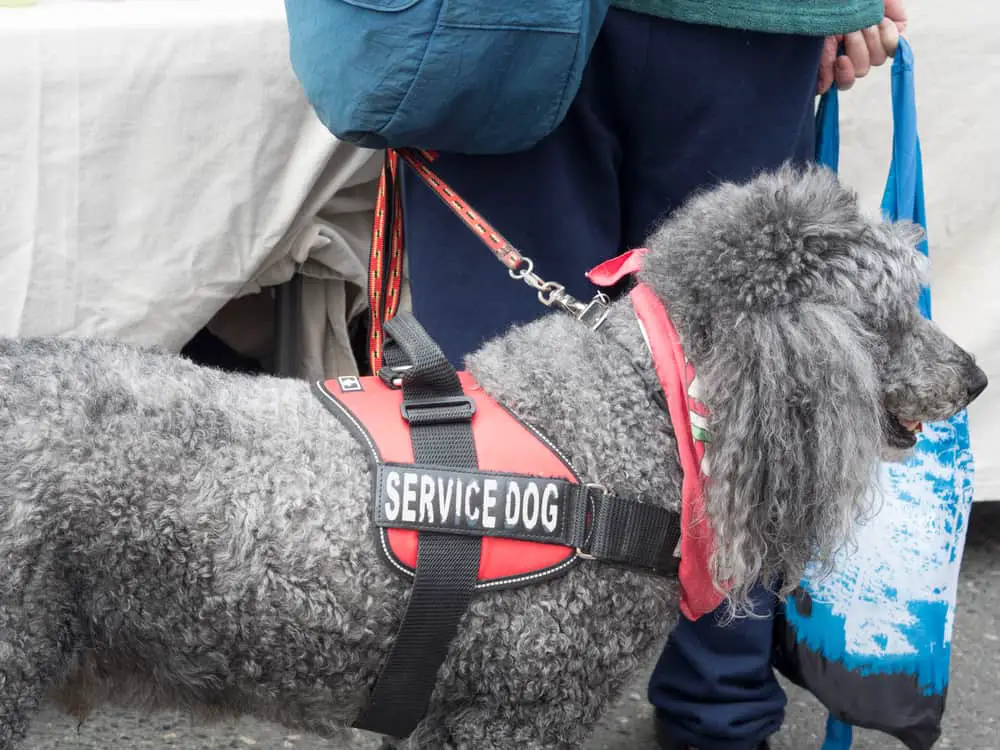
As the necessity for retrieving ducks and hunting truffles sharply declined in the late 19th and 20th centuries, the Poodle faced an occupational crisis. Fortunately, their unparalleled intelligence allowed them to pivot. Today, their primary “job” is navigating the complexities of human emotion and utility.
The Rise of the Service Dog
Because Poodles are “canine polymaths”—meaning they are capable of learning complex, multi-step routines that would cause other breeds to shut down in frustration—they are highly sought after for modern service and medical work.
From acting as psychiatric support animals for veterans to serving as highly tuned diabetic alert dogs, organizations operating under the umbrella of Assistance Dogs International (ADI) frequently utilize Poodles. They perfectly combine the working drive and focus of a German retriever with a hypoallergenic coat that makes public access much easier.
The “Doodle” Phenomenon
You cannot discuss the modern evolution of the Poodle without addressing the “Doodle” craze. The explosion of Labradoodles, Goldendoodles, and Bernadoodles is a testament to the power of Poodle genetics. Breeders of these mixes are almost entirely chasing the Poodle’s traits: the non-shedding coat, the high intelligence, and the long lifespan.
While the mixed breeds are incredibly popular, purists (and researchers) often point out that if you want the intelligence of a retriever without the shedding, the original Standard Poodle already perfected that formula 400 years ago. They traded the freezing swamp for the service vest and the suburban living room, but the elite intelligence remains exactly the same.
14. Frequently Asked Questions: Poodle Origins
Can Poodles still hunt today?
Absolutely. Many Standard Poodles retain a massive retrieving instinct and a profound love of water. There is a growing movement of hunters who are successfully returning the Standard Poodle to the field for waterfowl retrieval.
Why are Poodles so intelligent?
They were engineered for complex working roles. A duck hunter needed a dog that could sit quietly in a freezing boat for hours, watch a bird fall from the sky, memorize its location, and then navigate a river via complex hand signals. That requires elite problem-solving skills.
Are Miniature Poodles easier to train than Standards?
Both are highly trainable. However, Miniature Poodles can be slightly more reactive and distracted by scents due to their truffle-hunting lineage. Standards tend to have a slightly longer attention span for repetitive tasks.
Do Toy Poodles need less exercise?
Physically, yes—their little legs mean a 30-minute walk goes a long way. Mentally, no. They still possess a working dog’s brain and require daily puzzle toys, training games, or trick sessions to stave off destructive boredom.
Why do Poodles act differently by size?
Because each size was bred to fill a different occupational niche. When you breed for specific traits over hundreds of years—stamina for the Standard, scent work for the Miniature, and lap-sitting for the Toy—you inevitably shape their fundamental temperament.
15. Conclusion: From the Swamp to the Sofa
Ultimately, understanding what Poodles were bred for is the ultimate cheat code to unlocking their behavior. They are not, and never were, just ornamental showpieces. Underneath the intricate haircuts and the refined, aristocratic reputation beats the heart of a blue-collar worker.
Whether you have a Standard pacing your living room like my old Angus analyzing a duck blind, a Miniature cataloging every faint scent in your backyard, or a Toy demanding to be your permanent shadow, you are living with a masterclass in purposeful genetics. By acknowledging these working-class roots, you can stop treating them like delicate accessories and start engaging the brilliant, capable athletes they were always engineered to be.
Medical & Veterinary Disclaimer: PoodleReport.com is an informational resource for Poodle owners and enthusiasts. We are not veterinarians. The content on this website is not a substitute for professional veterinary care, diagnosis, or treatment. Always seek the advice of your veterinarian with any questions you may have regarding your pet’s medical condition, diet, or overall health.