
Disclaimer: The information provided on PoodleReport.com is for educational purposes only and does not constitute veterinary medical advice; always consult your vet before changing your dog’s diet. Additionally, this post contains affiliate links. As an Amazon Associate, and other affiliate advertising programs, I earn from qualifying purchases at no extra cost to you.
Bringing home your very first dog is an incredible milestone. It is easy to see why Poodle mixes (often called “Doodles”) are consistently at the top of a beginner’s wish list. The promise of a friendly, low-shedding, teddy-bear-like companion is highly appealing.
However, the reality of the modern designer dog market is far more complex than a simple “hypoallergenic” label. As we dig into the data behind these popular crosses, it becomes clear that selecting the right mix requires looking past the cute exterior and understanding the engine running underneath.
Choosing a hybrid requires more than just picking a cute face. You can browse my entire Poodle mix category for deep-dive research into specific breed health, grooming requirements, and behavioral traits
Poodle Intelligence vs. Companion Genetics
My deep dive into canine cognition and genetics actually started with my own Standard Poodle, Angus. Angus was fiercely intelligent, and living with him required a level of daily mental negotiation and structured training that caught me off guard in the early days. He was a profound thinker.
When you take the sharp, analytical brain of a Poodle and mix it with another breed, the results can be wildly unpredictable. If a breeder mixes that Poodle intelligence with a high-drive working or herding dog, the resulting puppy can easily overwhelm a first-time owner who was simply looking for a relaxed weekend companion.
Why “Companion Genetics” Matter
Not all Poodle mixes are created equal, and assuming they are all easygoing family pets is a common novice mistake. The secret to a successful first-time ownership experience is specifically seeking out companion genetics rather than working genetics.
Guidelines from Embark consistently emphasize that choosing a dog whose genetic drives match your actual lifestyle—rather than just an aesthetic—is the most critical step in preventing behavioral burnout.
In this guide, we will cut through the marketing hype to reveal:
- The most forgiving, beginner-friendly Poodle crosses.
- The hidden realities of hybrid separation anxiety and grooming.
- The high-octane working mixes that first-time owners should actively avoid.
The 3 Easiest Poodle Mixes for First-Time Owners
When evaluating the vast landscape of designer dogs, the golden rule for a beginner is to look for companion genetics. The easiest dogs to train and integrate into a chaotic modern lifestyle are those bred specifically to sit on laps and provide comfort.
When you mix the high intelligence of a Poodle with the incredibly eager-to-please nature of a dedicated companion breed, you get a puppy that is highly forgiving of a first-time owner’s inevitable training mistakes. Here are the top three Poodle mixes that consistently offer the softest landing for novices:
1. The Cavapoo (Cavalier King Charles Spaniel x Poodle)
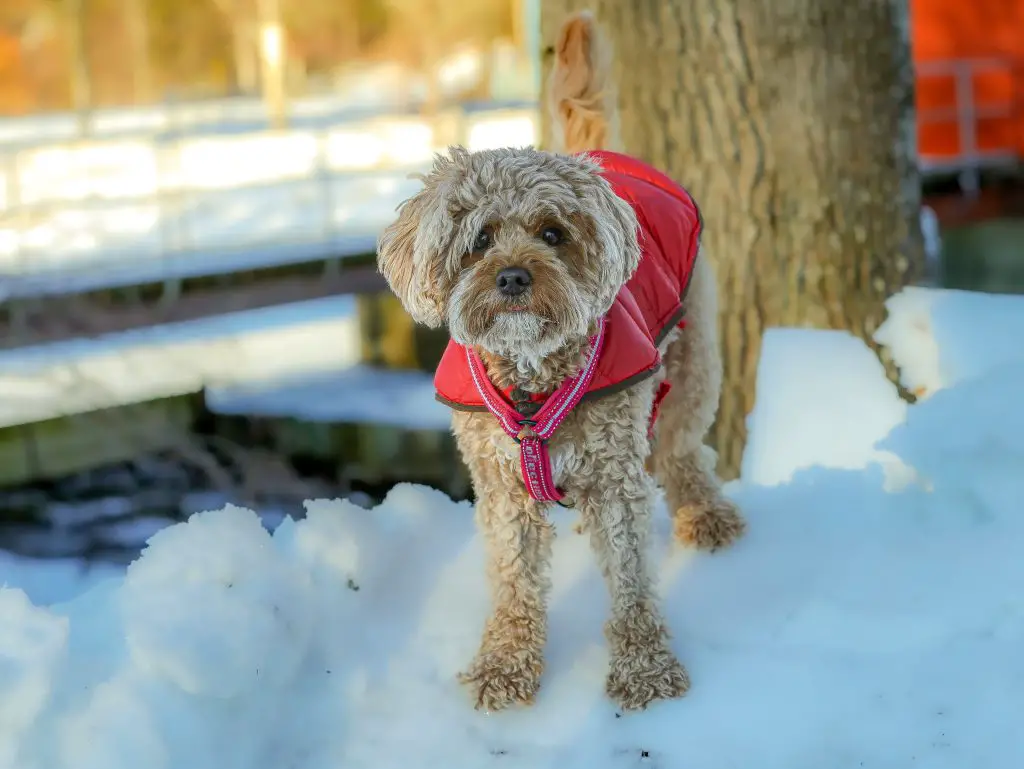
The Cavapoo is arguably the most highly recommended mix for a household looking for a gentle, low-intensity companion.
- The Temperament: The Cavalier King Charles Spaniel brings a sweet, uniquely affectionate temperament that heavily dilutes the Poodle’s high alertness.
- The Beginner Benefit: They are incredibly intuitive and typically lack a high prey drive, making them excellent candidates for households with young children or other pets.
2. The Maltipoo (Maltese x Poodle)

For apartment dwellers or those with limited physical space, the Maltipoo is a standout choice.
- The Size Predictability: Because they are typically bred using Toy Poodles, their adult size is highly predictable, rarely exceeding 15 pounds.
- The Beginner Benefit: The Maltese lineage provides a deeply affectionate, slightly playful nature that doesn’t require miles of daily running. A short walk and some indoor training games are usually enough to keep a Maltipoo satisfied.
3. The Cockapoo (Cocker Spaniel x Poodle)
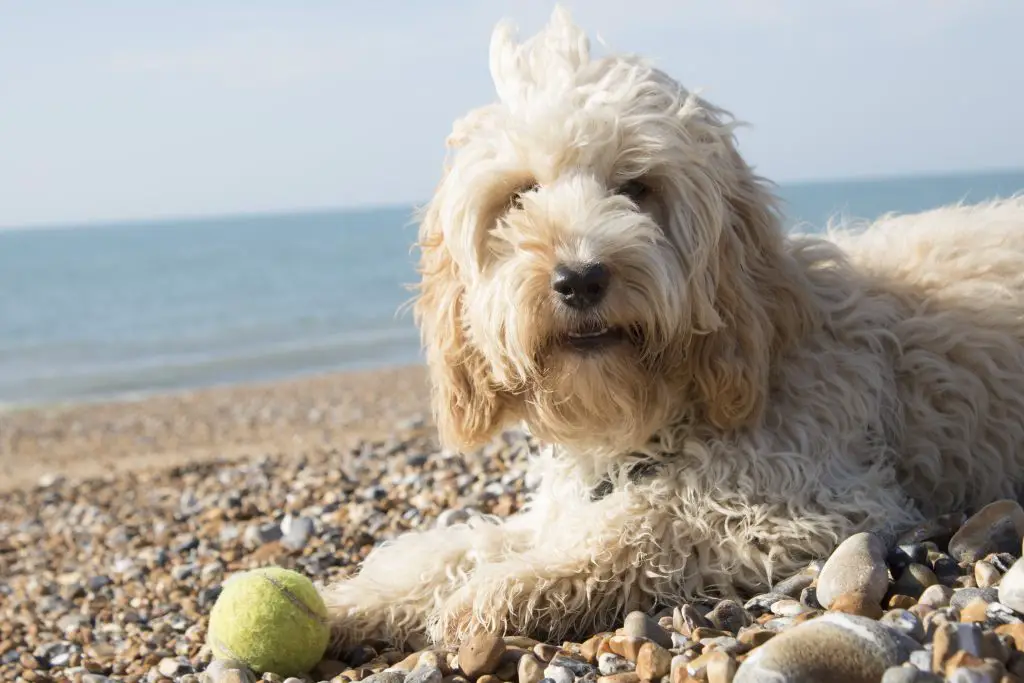
As one of the oldest and most established hybrid lines, the Cockapoo offers a bit more structural sturdiness than the Maltipoo, making them great for moderately active families.
- The Temperament: The Cocker Spaniel adds a joyful, sturdy exuberance to the mix. While they have a slightly higher energy baseline than a Cavapoo, they remain fiercely eager to please.
- The Beginner Benefit: They respond beautifully to positive reinforcement. For background on the foundational traits of the Cocker Spaniel side, resources like the American Kennel Club (AKC) offer great insight into their historical temperament.
The Beginner Scorecard
| Poodle Mix | Primary Companion Traits | Average Adult Weight | Baseline Energy Level | Novice Training Forgiveness |
| Cavapoo (Cavalier King Charles x Poodle) | Gentle, highly intuitive, affectionate | 12 – 25 lbs | Low to Moderate | High: Very adaptable and bounces back easily from beginner mistakes. |
| Maltipoo (Maltese x Poodle) | Playful, lap-dog mentality, sensitive | 8 – 15 lbs | Low | High: Extremely eager to please and highly responsive to positive tone. |
| Cockapoo (Cocker Spaniel x Poodle) | Joyful, sturdy, deeply loyal | 15 – 30 lbs | Moderate | Moderate-High: Smart and capable, though slightly more easily distracted outdoors. |
Note: While these three mixes offer the easiest behavioral transition for first-time owners, their hybrid coats all require strict, daily brushing routines to prevent severe matting.
The “Companion Curse”: Managing Separation Anxiety
While smaller crosses like the Cavapoo or Maltipoo are incredibly forgiving for beginners, that intense loyalty comes with a hidden behavioral cost. As a researcher examining breed behaviors, I often refer to this as the “companion curse.”
The exact genetic trait that makes these dogs perfect for a novice—their overwhelming desire to be attached to their humans—makes them highly susceptible to severe separation anxiety. Because they were bred exclusively to be lap dogs, they completely lack the independent “off-switch” found in working breeds.
Why Separation Anxiety Hits First-Time Owners Hard
When left alone, a companion Doodle doesn’t just get bored; they often experience genuine panic. A first-time owner who works eight to ten hours a day outside the home will struggle massively with this dynamic. Common signs of distress include:
- Incessant vocalization (barking or whining) the moment you leave.
- Destructive chewing near exit points (doors and windows).
- Pacing and an inability to settle in a crate.
How to Prevent the Panic
These companion mixes require slow, deliberate desensitization to being alone right from puppyhood. Before bringing one of these dogs into a busy household, it is critical to review separation anxiety protocols from behavioral authorities like the American Veterinary Society of Animal Behavior (AVSAB) to ensure you have the time required to build the dog’s solo confidence.
The “Middle Ground” Mixes: Goldendoodles and Labradoodles
If you want a dog that can handle weekend hiking but still possesses a relatively eager-to-please temperament, the Goldendoodle and Labradoodle sit firmly in the “middle ground” for first-time owners.
Both the Golden Retriever and the Labrador Retriever are “sporting breeds” known for their high biddability—the scientific term for a dog’s willingness to take direction from a human handler. However, the learning curve for a beginner jumps significantly here due to their sheer physical size and energy.
The Goldendoodle (Golden Retriever x Poodle)
The Goldendoodle is the “social butterfly” of the Poodle mix world. They typically inherit the Golden Retriever’s famously goofy and gentle nature, making them highly tolerant of busy households.
- The Beginner Challenge: Goldendoodles are prone to “happy-hyper” behavior. Without early training, their enthusiasm can lead to jumping on guests or knock-over accidents with small children.
- The Reward: They are arguably the most motivated by human praise, making them a joy to train if you can keep their focus.
The Labradoodle (Labrador Retriever x Poodle)

Labradoodles are often slightly more “intense” than their Golden cousins. They were originally bred with a working purpose in mind, and that drive remains present in many modern lines.
- The Beginner Challenge: Labradoodles frequently inherit the Labrador’s notorious “vacuum cleaner” appetite. This makes them highly prone to scavenging and ingesting dangerous foreign objects like socks or rocks.
- The Reward: They are exceptionally athletic and hardy. For an active first-time owner who wants a running partner, a Labradoodle is a top-tier choice.
Critical Considerations for Large Hybrids
Before committing to a Retriever-based mix, first-time owners must prepare for two specific realities:
- The Physics of Power: A novice making leash-training mistakes with a 15-pound Maltipoo is a minor inconvenience. Making those same mistakes with a 70-pound Labradoodle results in being physically dragged down the street.
- Nutritional Management: Managing a large, high-energy hybrid requires a commitment to strict environmental management and structured feeding. For guidance on the specific exercise demands of large-breed dogs, resources from the American Animal Hospital Association (AAHA) provide excellent, science-backed baselines for new owners.
If you’re still narrowing down your options, my definitive guide to the 50 best Poodle mixes compares the temperaments and sizes of every popular crossbreed currently on the market.
The 6-to-10 Month “Coat Blow” Crisis
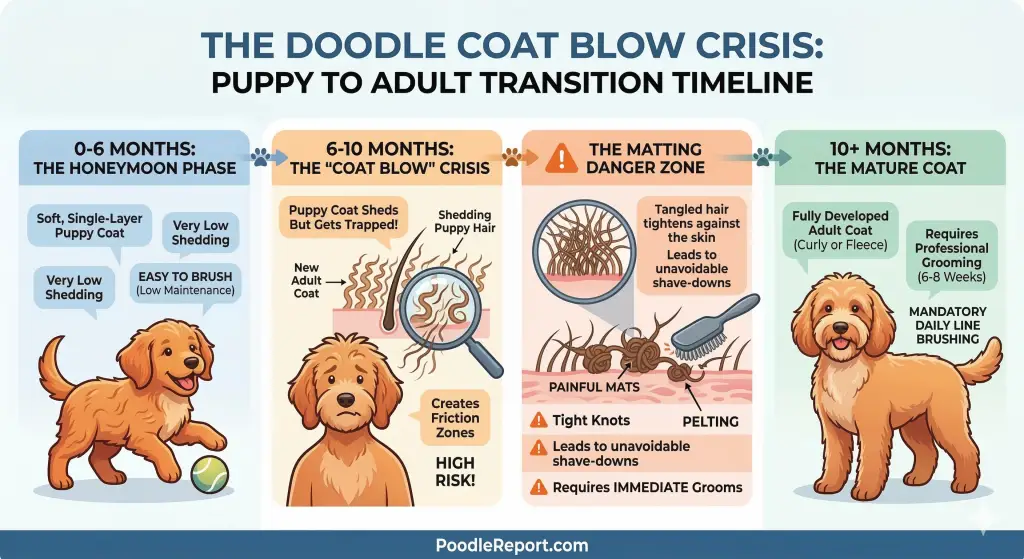
One of the biggest shocks for a first-time Doodle owner isn’t the dog’s behavior—it is the sudden, catastrophic change in their coat. Beginners often assume their 8-week-old puppy’s incredibly soft, wavy, and easy-to-brush coat is what they will have forever. Unfortunately, this creates a false sense of security.
The Puppy to Adult Coat Transition
Between 6 and 10 months of age, a Poodle mix will undergo a phase known by groomers as the “coat blow.” During this time, the dog sheds its soft puppy coat while the denser, curlier adult coat pushes through from the follicles.
In a mixed breed—especially one crossed with a shedding dog like a Golden Retriever or a Bernese Mountain Dog—this creates a massive friction zone. The shedding puppy hair doesn’t just fall out onto your floor; it gets immediately trapped within the incoming adult curls.
Surviving the “Matting Nightmare”
Practically overnight, a seemingly low-maintenance puppy can develop severe, painful mats directly against the skin (known as pelting). Many first-time owners are horrified when they take their 9-month-old Doodle to the groomer for the first time, only to be told the dog must be shaved completely bald.
To survive the coat blow, novices must:
- Invest in a high-quality slicker brush and a metal greyhound comb from day one.
- Learn the technique of “line brushing” (brushing the hair section by section all the way down to the skin).
- Consult resources from professional organizations like the National Dog Groomers Association of America (NDGAA) to understand proper hybrid coat maintenance before the matting begins.
Doodles Beginners Should Absolutely Avoid
As a researcher looking at breed genetics, the most alarming trend in the designer dog market is the casual mixing of purebred Poodles with high-drive working and herding breeds. While these dogs look like adorable teddy bears, underneath the curls is the brain of a canine athlete.
First-time owners should strongly avoid the following mixes, as they require advanced training, intense daily exercise, and expert behavioral management.
The Aussiedoodle (Australian Shepherd x Poodle)

Australian Shepherds were bred to control livestock across vast acres of land using intense eye contact, speed, and nipping. When you mix that relentless herding drive with a Poodle’s high intelligence, you get a dog that gets bored incredibly fast.
- The Beginner Risk: An under-stimulated Aussiedoodle will quickly begin herding your children, nipping at guests’ heels, and destroying furniture. They require a dedicated “job,” not just a walk around the block.
The Huskydoodle (Siberian Husky x Poodle)
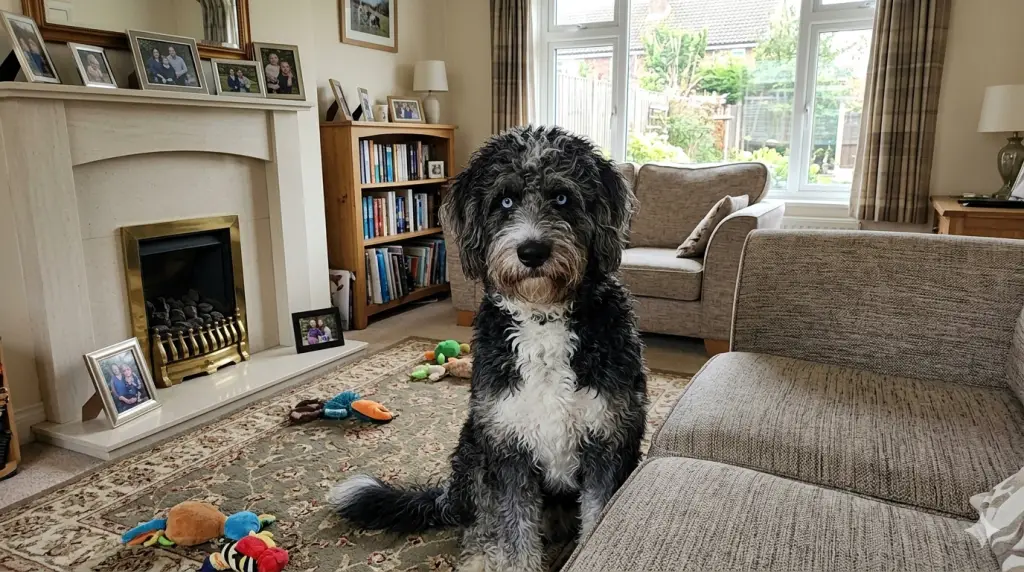
Siberian Huskies are independent, vocal endurance runners. They were bred to pull sleds for miles through the snow without needing constant direction from a human.
- The Beginner Risk: Mixing a Husky with a Poodle frequently creates a highly vocal, stubborn dog with a massive prey drive and an urge to escape the yard. According to resources from the Association of Professional Dog Trainers (APDT), managing a Husky mix requires extensive, ongoing obedience work and highly secure fencing.
The Bernedoodle (Bernese Mountain Dog x Poodle)

The Bernedoodle is currently booming in popularity due to its stunning tri-color coat. However, the Bernese Mountain Dog is a massive, heavy-boned working draft dog historically used for pulling carts in the Swiss Alps.
- The Beginner Risk: These dogs regularly exceed 80 to 90 pounds. Combining the sheer physical power and stubborn streak of a Bernese with a high-maintenance, double-coated Poodle mix creates a grooming and leash-walking nightmare for a novice who lacks the physical strength to manage them.
The “Immediate Availability” Red Flag: How to Spot a Bad Breeder
Green Flags vs. Red Flags for Doodle Breeders
| Breeder Evaluation Category | 🟢 Green Flag (Ethical Breeder) | 🔴 Red Flag (Puppy Mill / Backyard Breeder) |
| Puppy Availability | Operates with a waitlist (often 6-12 months long). | Puppies are available to take home “today” or “this weekend.” |
| Number of Breeds | Focuses on perfecting 1 or 2 specific Poodle mixes. | Breeds 4+ different types of Doodles simultaneously. |
| Health Testing | Openly provides cardiac, joint, and eye clearances verified by the Orthopedic Foundation for Animals (OFA). | Claims the vet gave a “clean bill of health” but provides no genetic or OFA paperwork. |
| Transparency & Visitation | Requires a buyer interview and allows you to see where the mother and puppies live. | Refuses to let you see the home environment or offers to “meet you in a parking lot” to deliver the dog. |
| Post-Adoption Support | Requires you to sign a contract stating you must return the dog to them if you can no longer keep it. | Hands over the puppy for cash and never contacts you again. |
For a first-time owner, the excitement of deciding to get a dog often comes with a strong desire to bring a puppy home this weekend. Unfortunately, the unregulated designer dog market heavily exploits this impatience.
Because Poodle mixes are not universally regulated by traditional kennel clubs, the market is saturated with high-volume puppy mills operating under the guise of “family farms.”
The Illusion of Choice
If you find a breeder’s website that offers five different types of Doodles (for example, they breed Goldendoodles, Bernedoodles, Cavapoos, and Maltipoos all at the same time) and they have puppies available to take home today, it is a massive red flag.
Ethical breeders focus on perfecting one or two specific crosses. They carefully manage their litters, meaning they typically have waitlists that are six to twelve months long. Immediate availability usually signals a high-volume breeding operation where profit is prioritized over the dogs’ temperaments and health.
Health Testing is Non-Negotiable
A common myth sold to beginners is that “mixed breeds are naturally healthier” so the parents don’t need expensive medical screening. This is entirely false. If a breeder crosses a Poodle with a Golden Retriever, the resulting puppy can inherit genetic diseases from both sides.
A responsible breeder will openly provide the cardiac, joint, and eye clearances for both parent dogs. Before putting down a deposit, novices must verify these health scores through established databases like the Orthopedic Foundation for Animals (OFA). If a breeder claims their vet simply “gave them a clean bill of health,” walk away.
requently Asked Questions (FAQ)
Which Poodle mix is the calmest?
For first-time owners seeking a calm demeanor, the Cavapoo (Cavalier King Charles Spaniel x Poodle) is widely considered the most relaxed mix. Their Cavalier genetics heavily dilute the Poodle’s high energy, resulting in a gentle, intuitive companion that requires significantly less daily exercise than larger Retriever crosses.
Are Poodle mixes actually good for first-time owners?
Yes, but only if you choose a mix with companion genetics (like a Maltipoo or Cockapoo). Novice owners should avoid mixes bred from high-drive working or herding dogs, such as Aussiedoodles or Huskydoodles, as their intense physical and mental needs often lead to behavioral issues in inexperienced hands.
Do all Doodles need professional grooming?
Absolutely. The “low-shedding” label is highly misleading for beginners. Poodle mixes frequently inherit a combination coat that traps shedding hair against curly hair, creating severe mats within days if not properly maintained. You should budget for professional grooming every 6 to 8 weeks and commit to daily line-brushing at home.
How do I avoid buying a Doodle from a puppy mill?
Avoid breeders who have multiple litters of different breeds available immediately, or those who refuse to let you see where the parent dogs live. Ethical breeders require interviews and have waitlists. For a comprehensive guide on identifying deceptive breeding practices, the American Society for the Prevention of Cruelty to Animals (ASPCA) provides an excellent checklist for spotting puppy mills.
Conclusion: Setting Yourself Up for Doodle Success
Bringing home your first dog is a massive 10-to-15-year commitment. As we have explored, the designer dog market is filled with incredible companions, but it is also fraught with misleading marketing.
For a first-time owner, the secret to a stress-free life is specifically seeking out companion genetics like the Cavapoo or Maltipoo, rather than falling for the aesthetic of a high-drive working cross like an Aussiedoodle. By understanding the realities of the coat blow crisis, acknowledging the risks of separation anxiety, and strictly vetting your breeders, you are already miles ahead of the average novice buyer.
Medical & Veterinary Disclaimer: PoodleReport.com is an informational resource for Poodle owners and enthusiasts. We are not veterinarians. The content on this website is not a substitute for professional veterinary care, diagnosis, or treatment. Always seek the advice of your veterinarian with any questions you may have regarding your pet’s medical condition, diet, or overall health.
Medical & Veterinary Disclaimer: PoodleReport.com is an informational resource for Poodle owners and enthusiasts. We are not veterinarians. The content on this website is not a substitute for professional veterinary care, diagnosis, or treatment. Always seek the advice of your veterinarian with any questions you may have regarding your pet’s medical condition, diet, or overall health.