
Disclaimer: The information provided on PoodleReport.com is for educational purposes only and does not constitute veterinary medical advice; always consult your vet before changing your dog’s diet. Additionally, this post contains affiliate links. As an Amazon Associate, and other affiliate advertising programs, I earn from qualifying purchases at no extra cost to you.
The image of a Poodle as a pampered show dog is a bit of a historical rewrite. In reality, these dogs were rugged athletes bred for the marshlands of Germany and France. My own Standard Poodle, Angus, lived for the water, proving that their aquatic drive is hardwired into their DNA. If there is a body of water nearby, a Poodle’s internal data usually dictates an immediate “search and retrieve” mission.
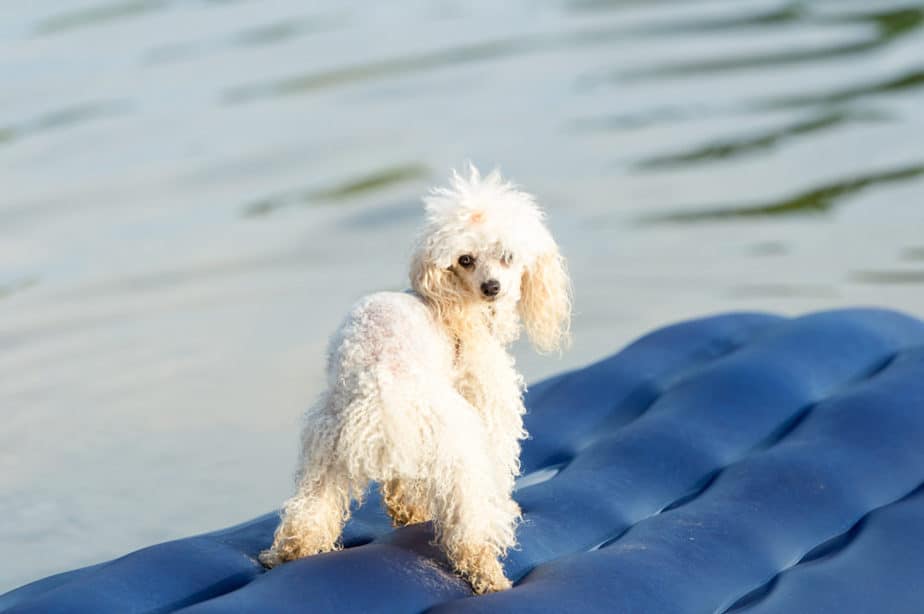
Yes, poodles can swim exceptionally well, as they were originally bred as water retrievers. Their unique anatomy, including webbed feet and a water-resistant, curly coat, provides them with superior buoyancy and propulsion in the water. While most poodles take to swimming instinctively, owners should still provide a gradual introduction and use a life jacket in deep or moving water to ensure safety.
According to the AKC, the breed’s very name comes from the Low German word pudeln, meaning “to splash.” Data from The Kennel Club confirms they are some of the most capable swimmers in the canine kingdom, provided we respect the biological limits of their exertion.
Understanding the psychological profile of an aquatic Poodle is just as vital as checking the pH of the pool. To see how their high intelligence influences their focus in the water and why they might prioritize a floating toy over a direct command, check out our comprehensive guides on poodle behavior.
Steps to Prepare Your Poodle for Swimming
Some dogs take naturally to water without any motivation on your part. Others, however, may need a bit of help. Follow these steps to make your poodle’s first swimming adventures easier.
1) Fit them with a proper life jacket.
Dogs may need a bit before they have the strength or confidence to swim without a life jacket. If the water is deep or it is a large body of water like a lake or an ocean, always keep your poodle safe with a life jacket.
2) Start with shallow water.
When your dog can comfortably explore the water and test their skills, they will feel more comfortable and you will, too.
3) Watch for signs of exhaustion.
Sometimes animals get so involved in playing that they exhaust themselves. This could lead to drowning in water if you aren’t careful.
4) Only use toys that float.
Don’t push your dog to put their heads underwater. They could breathe water into their lungs and it can fill their ears.
5) Have fun with it.
Don’t treat the process like a strict training regimen. Have fun in the water and let your dog enjoy themselves, too.
The Dual Advantage of the Dive
Swimming isn’t simply beneficial to your poodle. Humans also gain health benefits from swimming. If both poodles and their owners can reap rewards from swimming, why not swim together? Don’t just run to the nearest lake and throw your poodle in, though. Not every poodle will take to the water right away. Let them test out the water themselves. You could also show them it is safe by indulging in the fun as well. Some benefits of swimming with your poodle include:
- Swimming is excellent for joints. Water exercise is low-impact and therefore much easier on older bodies and those suffering physical ailments. It can also help regain strength and control for those who need it. Swimming has also been proven to help those suffering from arthritis.
- Ideal for muscles. Not only can swimming help you gain muscle, but it can also improve the quality of life for humans or animals suffering from muscle weakness.
- Swimming can help with the pain. Chronic pain illnesses don’t just affect humans. Swimming can help humans and pets improve in their health and give their bodies a break from the pressures that come from walking and standing.
- It is excellent for heart health. Getting your blood pumping in a less-impactful way is incredible for circulation.
- Especially helpful in rehabilitation. Some injuries need lower-impact exercises for rehabilitation. Swimming is one of the most recommended ways to get this exercise. There is often specific equipment for the pool or you may need to work with a specialist for you or your canine.
- Swimming can improve digestive health. It can speed up your metabolism, help your bowels move more regularly, and it can help you burn away any toxins.
- It can keep you lean. This doesn’t just mean with muscles but also with the weight you hold. Swimming is excellent for weight loss and management as it works multiple points of your body at once.
- Swimming helps with stress and anxiety. A playful exercise in a comforting environment can benefit the mental health of all living beings, especially you and your poodle.
- Water can help you cool down. This is important to take note of in case of blistering temperatures. Make sure you and your pet are consuming enough drinking water, too. Dehydration during exercise can occur even when you are swimming.
- It can be a lot of fun. Having healthy fun is beneficial in more ways than can be properly counted. It helps with mood, health, and overall well-being.
Popular Dog Water Toys

You may not want to or be able to join your canine in the water. Or, you may want to play with some toys made just for them. Whatever the reason, consider checking out these popular water toys for dogs on Amazon:
- ZippyPaws Duck Toy: This toy will allow you to encourage your poodle’s water retrieval without the harm of actual ducks. It will float on the water and it is also a squeaky toy.t
- The Kurgo Fetch Toy lets you skip rocks that your dog can fetch for you. They float and they come in neon colors, so they are easy to spot in the water.
- Hyper Pet Flippy Flopper Dog Frisbee is a flying disk that is durable and gentle on your dog’s mouth. It will float for long periods of time in the water so your poodle and take its time fetching.
- Chuckit! Ultra Ball is great for the ball-loving poodle. They are buoyant, durable, and bounce very high. They are good for in or out of the water.
When to Worry: Spotting the “Sinking” Signals
Poodles are essentially the high-performance watercraft of the dog world, but even a Ferrari can stall if it’s pushed beyond its mechanical limits. As a researcher, I’ve found that the high “prey drive” of a Poodle can sometimes override their own survival instincts. My Standard Poodle, Angus, would often retrieve until his legs were literal jelly, making it my job to read the biological data he was projecting rather than relying on his enthusiasm.
- The “Vertical Swim” Posture: If your Poodle’s rear end starts to dip and they begin splashing frantically with their front paws while moving vertically, they are exhausted. According to the AKC, this “climbing the ladder” posture is a clear precursor to submersion and requires immediate intervention.
- Hyponatremia (Water Intoxication): This occurs when a dog gulps too much fresh $H_2O$ while biting at waves or fetching toys. Research from PetMD indicates that symptoms like staggering, bloating, or excessive salivation are red flags for a metabolic emergency. The AVMA further suggests that keeping fetch sessions short can mitigate this risk.
- Blue-Green Algae (Cyanobacteria): This isn’t just unsightly pond scum; it’s a potent neurotoxin. The Merck Veterinary Manual warns that ingestion of even small amounts of contaminated water can be fatal within hours. To stay safe, the ASPCA recommends checking local water advisories before letting your Poodle dive in.
- Secondary Drowning Hazards: If your Poodle has a “near-miss” or accidentally inhales water, you must watch for lethargy or difficulty breathing for up to 24 hours. VCA Animal Hospitals notes that lingering water in the lungs can cause delayed respiratory distress that isn’t always obvious at the shoreline. For emergency peace of mind, I always keep the American Red Cross pet safety app on my phone to monitor vitals if a swim goes south.
Safety in the surf depends entirely on the strength of your communication and training foundation. To ensure your Poodle remains responsive even when their ancient “retriever” instincts take over, check out my research-based 2026 poodle behavior guide for proven training techniques that bridge the gap between instinct and obedience.
Common Mistakes: The “Dry Land” Errors
Husbandry for an aquatic Poodle involves more than just a towel and a dream. In my time cataloging the pitfalls of water play, I’ve noticed that most errors occur due to a lack of preparation or an overestimation of the dog’s physical stamina.
- The “Instinct” Fallacy: Assuming a Poodle can swim the English Channel on day one is a recipe for a panic attack. While the breed history is aquatic, individual confidence varies wildly. The PDSA recommends a gradual introduction in shallow, calm water to ensure the dog learns where the “exit” is before they lose their footing.
- Neglecting the “Ear Audit”: Poodle ears are essentially furry moisture traps. According to the Kennel Club, failing to dry the ear canal thoroughly after a swim is the primary cause of chronic infections.
- Skipping the Post-Swim Rinse: Salt, chlorine, and lake minerals are abrasive to a Poodle’s skin. A thorough fresh-water rinse is necessary to remove chemicals and prevent “hot spots” from forming underneath their dense, wet curls.
- The “Full Belly” Risk: Feeding a large meal right before high-intensity swimming can contribute to gastric torsion, especially in deep-chested breeds like the Standard Poodle. In my observations with Angus, waiting at least two hours post-meal before hitting the lake was a non-negotiable safety standard.
All About the Poodle
There are many fascinating tidbits of information all around about dog breeds, including the poodle. Some dogs are bred for specific purposes, and allowing your canine friend to take part in what comes naturally to them will provide them time to enhance those skills.
- Poodles are skilled water retrievers. More specifically, they were bred to retrieve game, like ducks and geese, from the water. This skill also allows them to be helpful if there were ever someone struggling to swim to shore.
- They are highly intelligent. This allows them to better understand situations, to train easier and faster, and to think quick on their feet. Their ease of training also makes them ideal for entertaining purposes.
- Poodles are alert observers. They can read a situation and tell if there is danger faster than some other breeds. This observation may be why your poodle sometimes stays clear of certain people or areas. It could be wise to pay attention to what they may be warning you about.
- Their loyalty is remarkable. They don’t tend to run away from a good home, like some other canines–no matter how wonderful they maybe–will. This being said, you can’t hold the rare sprint for a trespassing squirrel against them.
- They are hypoallergenic. This means that people who usually have an allergic reaction to dogs are much less likely to have any trouble with poodles. Not only that, but they shed a bit less than other dogs if you take care of their fur properly.
- Their nose can make you money. Their heightened ability to smell makes them skilled truffle hunters. It also allows them to be skilled trackers.
- Popular show dogs. Poodles are often presented in dog shows and obedience highlights. Their intelligence and loyal nature make them ideal for this lifestyle.
- They originate from Germany. Their thick and unique coat helps them play in the water even amongst the German cold. The fur can protect them from the brunt of the chill.
- There are three varieties. They are standard, miniature, and toy. However, they are all the same breed. The varieties only reference their size.
FAQ: Navigating the Waters with Your Poodle
Are all Poodle sizes good swimmers? Yes, Standard, Miniature, and Toy Poodles all share the same webbed feet and instincts. However, smaller Poodles have less muscle mass and can tire much faster. It is important to monitor Toy Poodles closely, as they can lose body heat quickly in cooler water.
How do I introduce my Poodle to the pool? Start in a shallow area where they can keep their paws on the ground. Never throw a dog into the water; instead, use a floating toy to encourage them to venture deeper at their own pace. This builds confidence and prevents a “panic splash” response.
Can swimming help with Poodle joint issues? Absolutely. Swimming is a premier form of low-impact exercise. For dogs suffering from hip dysplasia or arthritis, the buoyancy of the water provides a weightless environment to build muscle without the stress of gravity. As noted by VCA Animal Hospitals, hydrotherapy is a gold standard for canine rehabilitation and maintaining mobility in aging pets.
How long should a Poodle swim for? A 15-minute swim is roughly equivalent to a 45-minute walk in terms of energy exertion. Start with short 5 to 10-minute sessions and gradually increase the duration as their cardiovascular fitness improves. Always watch for signs of a “low tail” or heavy panting, which are indicators that it’s time to head back to the shore.
Final Findings: Stewardship of the Aquatic Athlete

Ultimately, the Poodle’s relationship with the water is a sophisticated blend of ancient biology and modern management, reminding us that even the most refined breed has a rugged, H2O-loving core. My Standard Poodle, Angus, taught me that the key to a successful swim season isn’t just about the dog’s innate ability, but the researcher’s preparation in preventing common pitfalls like ear infections or chemical dry-out.
By balancing their hardwired drive to retrieve with a high standard of husbandry—specifically the non-negotiable fresh-water rinse and a meticulous ear audit—you ensure that their aquatic sessions remain a therapeutic asset rather than a dermatological or metabolic liability.
Medical & Veterinary Disclaimer: PoodleReport.com is an informational resource for Poodle owners and enthusiasts. We are not veterinarians. The content on this website is not a substitute for professional veterinary care, diagnosis, or treatment. Always seek the advice of your veterinarian with any questions you may have regarding your pet’s medical condition, diet, or overall health.