
Disclaimer: The information provided on PoodleReport.com is for educational purposes only and does not constitute veterinary medical advice; always consult your vet before changing your dog’s diet. Additionally, this post contains affiliate links. As an Amazon Associate, and other affiliate advertising programs, I earn from qualifying purchases at no extra cost to you.
Most people look at a Poodle and see a fancy haircut—an aesthetic statement rather than a biological one. I see a high-performance engine in a curly, hypoallergenic chassis. But here’s the problem: that engine comes in seven different sizes, and if you try to shove a Standard-sized engine into a Toy-sized lifestyle, things are going to get messy. Choosing a Poodle variety isn’t just about how much hair you’re willing to vacuum or how big your sofa is; it’s about understanding the specific biological “operating system” you’re bringing into your home.
There are three official Poodle varieties recognized by major kennel clubs: the Standard, Miniature, and Toy. However, owners also frequently navigate four other commonly discussed sizes, including the European Moyen and Klein, the oversized Royal Standard, and the tiny Teacup. Finding the perfect match requires balancing your home’s capacity with the dog’s specific energy levels, health risks, and cognitive requirements.
The transition from a 4-pound Toy to a 75-pound Royal Standard involves massive shifts in energy expenditure and psychological drive. Having spent a decade analyzing the behavioral data of my Standard Poodle, Angus, was a constant reminder that Poodles aren’t just pets; they are participants. Angus didn’t just want to be with me; he wanted to be me. He was an observer. If I wasn’t providing a “mental job” for him, he would invent one—and usually, that “job” involved systematically deconstructing the baseboards or figuring out how to open the child-proof pantry.
In this guide, we’re going to sort through the marketing smoke and mirrors to analyze the seven Poodle types. We’ll separate the official standards from the “breeder-invented” labels and give you a decision framework that actually works. For a deep dive into the broader history of the breed, check out my definitive guide to Poodle types.
1. Understanding Poodle Sizes vs. Varieties (What Most Articles Get Wrong)
In the world of formal research, precision in terminology is non-negotiable. Most articles use “size” and “variety” interchangeably, which is a rookie mistake.
Official Poodle Varieties (AKC & FCI Standards)
The American Kennel Club (AKC) officially recognizes only three varieties. These dogs are all judged against the same morphological standard, with height at the withers as the only differentiator.
- Standard: Anything over 15 inches at the highest point of the shoulder.
- Miniature: Over 10 inches but under 15 inches.
- Toy: 10 inches and under.
However, a well-informed researcher has to look at the Fédération Cynologique Internationale (FCI) standards, which recognize a fourth category: the Moyen (Medium). In Europe, this size is a staple, bridging the gap between the agile Miniature and the imposing Standard.
Unofficial (But Commonly Recognized) Sizes
Beyond the “Big Three,” you’ll deal with labels like “Teacup,” “Royal,” and “Klein.” These aren’t official AKC varieties. They are marketing niches. I suggest you view these with extreme skepticism; they often come with a “designer” price tag but zero formal genetic oversight.
Why This Distinction Matters
When a label is “unofficial,” there is no governing body oversight. This means a “Royal Standard” breeder isn’t being held to a specific genetic health standard for that size. Research the OFA (Orthopedic Foundation for Animals) clearances of the parents, regardless of whether the breeder calls the dog a Standard or a Royal.
2. Quick Comparison Table: All 7 Poodle Sizes at a Glance
Before we get into the psychological weeds, let’s look at the raw data. This is the “what” before we get to the “why.”
| Poodle Type | Avg Height | Avg Weight | Lifespan | Energy Level | AKC Recognized? |
| Standard | 15–22″ | 45–70 lbs | 12–15 yrs | High | Yes |
| Royal/Giant | 25+ inches | 70–90 lbs | 10–12 yrs | Moderate | No* |
| Moyen | 15–20″ | 20–35 lbs | 13–15 yrs | High | No* |
| Klein | 13–15″ | 15–20 lbs | 13–15 yrs | Moderate | No* |
| Miniature | 10–15″ | 10–15 lbs | 14–17 yrs | Moderate | Yes |
| Toy | Under 10″ | 4–6 lbs | 14–18 yrs | Low-Mod | Yes |
| Teacup | Under 8″ | 2–4 lbs | 8–12 yrs* | Low | No |
3. The Trade-Offs: At-a-Glance Pros and Cons Guide
Raw data only tells part of the story. To understand the “daily reality” of owning these varieties, we must analyze the trade-offs in grooming, temperament, and health.
| Size | Primary Pros | Primary Cons |
| Standard | High cognitive stamina, sturdy for kids | Highest maintenance cost, risk of bloat |
| Royal | “Protective” presence, majestic look | Shortest lifespan, major joint strain |
| Moyen | The “Goldilocks” build, high athleticism | Hard to find with true health clearances |
| Miniature | Incredible longevity, very hardy | Intense prey drive, can be “yappy” |
| Toy | Portable, deeply bonding focus | Fragile bones, separation anxiety |
| Teacup | Fits anywhere | Severe health risks, ethical gamble |
| Klein | European lineage, sound structure | Terminology confusion with Minis |
4. The 7 Poodle Sizes and Varieties Explained
1. Standard Poodle
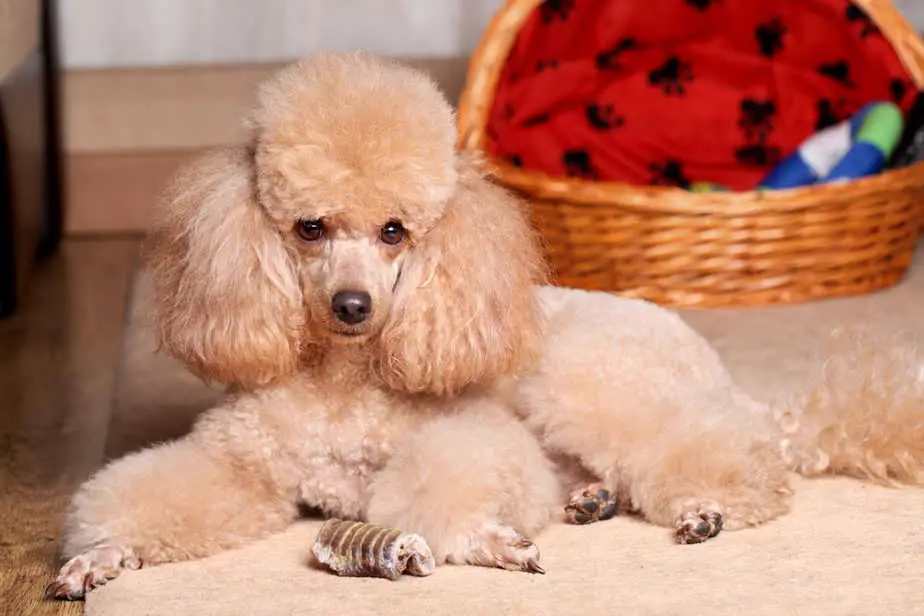
The Standard is the original water retriever. They are biologically wired for sustained focus. I remember Angus once spent forty-five minutes systematically removing every single squeaker from a “tough” toy without tearing the outer fabric. That isn’t just intelligence; it’s a terrifying level of focus that you simply don’t see in the smaller, more scatter-brained varieties. If you aren’t providing a “mental job” for a Standard, they will find one—and you probably won’t like it when their new “job” is deconstructing your kitchen cabinets.
2. Royal / Giant Poodle
Let’s clear up the “Royal” marketing. A Royal Poodle is just a Standard Poodle that hit a massive growth spurt. There is no secret genetic scroll that makes them “Royal.” While they are impressive, remember: more mass means more gravity on those joints. If you go “Royal,” your vet bills for orthopedic care will likely follow suit. They are often more “mellow” than average Standards, but their sheer mass makes them an imposing presence in the home.
3. Moyen (Medium) Poodle
“Moyen” is French for “Medium.” This is the “niche find” of the Poodle world. The Moyen provides the emotional stability of the Standard but in a 30-pound body. They are the ultimate “therapy dog” size—sturdy enough to be handled by strangers but small enough to fit easily in a hospital room. The problem? In the U.S., many “Moyens” are just small Standards or large Miniatures bred together. You want a breeder who uses and understands established European lines.
4. Klein Poodle
“Klein” is German for “Small.” In the research files, these are essentially high-performance Miniatures. They learn tricks in as few as three repetitions. However, this means they also learn “bad” habits—like figuring out the latch on the trash can—just as quickly. They are frequently the stars of European obedience trials.
5. Miniature Poodle
Everyone knows the Mini. They are the versatile “jester” of the family. They have a massive “settle” switch—they can be elite athletes in the morning and dedicated couch potatoes in the evening. They are significantly heartier than Toys but much easier to manage than the larger Standards.
6. Toy Poodle
The Toy is a “companion specialist.” Their energy is entirely directed toward their person. They are “emotion sponges”; if you are stressed, your Toy Poodle will likely mirror that anxiety through restlessness or alert barking. They are the marathon runners of the lifespan world, frequently reaching 18 years, provided they are kept safe from physical injury.
7. Teacup Poodle
Let’s be honest: breeding for the “Teacup” label is a biological gamble where the dog loses every time. From a research standpoint, calling a 2-pound dog a “Poodle” is a stretch of the definition. According to Cornell University’s Riney Canine Health Center, extreme miniaturization is linked to heart defects and fragile bones. They are essentially living jewelry with a medical schedule.
5. Which Poodle Size Matches Your Lifestyle?
- Best for Apartments: Miniature. They have a “settle” switch that allows them to be quiet indoors.
- Best for Families with Kids: Standard. Their physical sturdiness makes them the safest choice for younger children.
- Best for First-Time Owners: Miniature or Moyen. Easier to handle than a 70-pound Standard but more resilient than a 5-pound Toy.
- Best for Active Lifestyles: Standard. If you are a runner or hiker, a Standard will outpace you every time.
- Best for Low-Maintenance Living: No Poodle is truly low-maintenance due to grooming, but a Toy requires the least physical output.
6. Decision Tool: How to Choose the Right Size
Step-by-Step Selection Framework
- Audit Your Exercise Commitment: Standards need 90 minutes of vigorous work daily. Toys need 20 minutes of indoor play. Be honest with your schedule.
- Calculate Grooming Surface Area: A Standard Poodle can take 4 hours to groom; a Toy takes 45 minutes. Your budget must reflect this $100+ difference.
- Analyze Your Environment: Stairs are a risk for older Toys. Fences are a requirement for active Standards.
- Evaluate Travel Habits: Toys fly in-cabin. Standards require specialized, expensive transport or a very large vehicle.
Quick Decision Table
| If You Want… | Choose This Size |
| A running/hiking partner | Standard |
| An agile apartment athlete | Miniature |
| A travel-friendly lap dog | Toy |
| A sturdy “Goldilocks” middle | Moyen |
7. Grooming, Cost, and Care Differences by Size
Grooming Needs Comparison
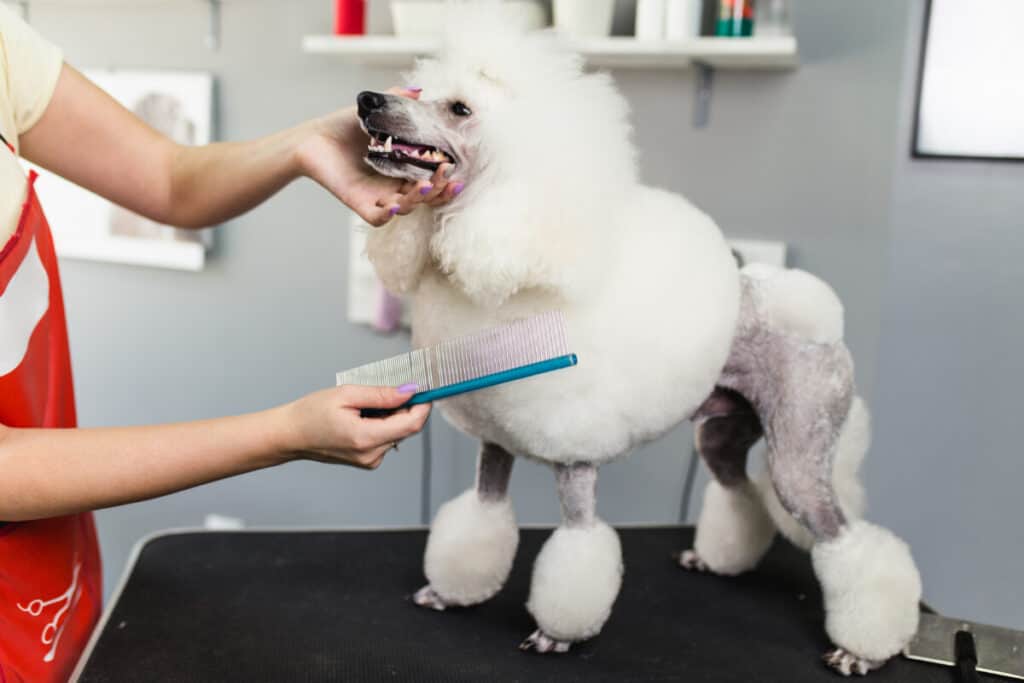
A Toy Poodle can often be bathed and brushed in under 45 minutes. A Standard, however, is a major undertaking. During the peak of his coat growth, grooming my Poodle, Angus, was a multi-hour commitment. You should expect a professional visit every 4 to 6 weeks.
Monthly Cost Breakdown
| Expense | Toy Poodle | Standard Poodle |
| Food | $20–$30 | $60–$100 |
| Grooming | $50–$70 | $100–$180 |
| Vet/Preventatives | $25 | $50+ |
8. Health and Lifespan Realities: The Biological Cost of Size
As a researcher, I cannot emphasize enough that size dictates health destiny. Generally, in the canine world, the smaller the dog, the longer the lifespan. According to the AVMA regarding senior pet care, larger breeds age faster.
The Large Breed Silo (Standard/Royal)
The biggest risk here is Gastric Dilatation-Volvulus (Bloat). According to VCA Animal Hospitals, this is a life-threatening emergency where the stomach twists. Larger Poodles are also disproportionately represented in cases of Addison’s Disease. A deep dive into the Merck Veterinary Manual reveals this requires lifelong hormone replacement but is manageable with early detection.
The Small Breed Silo (Toy/Miniature)
Smaller Poodles deal with Luxating Patellas (dislocated kneecaps) and Tracheal Collapse. Because their jaws are so small, their teeth are often crowded, leading to severe Dental Disease. They have just as many teeth as big dogs, but much less real estate to house them.
The Angus Case Study
While Angus remained athletic late into his life, we had to be hyper-vigilant about his joint health. Adding extra mass (as seen in Royal Standards) puts significant strain on their hips and elbows. I utilized orthopedic screenings from the Orthopedic Foundation for Animals (OFA) to ensure he stayed structurally sound. For those interested in breed genetics, UC Davis Veterinary Medicine offers extensive data on the importance of diverse breeding pools.
9. Common Misconceptions About Poodle Sizes
- “Smaller Poodles are always easier.” False. Toy Poodles are often harder to housebreak due to their tiny bladders and can be more “yappy” alert-barkers.
- “Teacup Poodles are healthier because they’re smaller.” False. Extreme miniaturization is almost always linked to systemic health failures.
- “Royal Poodles are a separate breed.” False. It is a marketing label for a big Standard.
- “All Poodles have the same temperament.” While consistent, Standards are more “majestic” and reserved, while Miniatures and Toys retain more “puppy-like” playfulness.
10. Where Most Owners Make the Wrong Choice
The most common mistake I see is choosing based on looks alone. People see a “Royal” and want the imposing look, but they don’t have the fenced yard required to let that dog gallop. Or, they choose a Teacup because it’s “cute” but aren’t prepared for a dog that cannot be left alone for long due to blood sugar risks.
Another pitfall is underestimating the grooming commitment. A matted Standard Poodle is a miserable animal. If you cannot afford the $1,500+ a year in grooming costs for a large Poodle, you are better off with a Miniature.
11. FAQ Section
What is the calmest Poodle size?
Generally, the Standard Poodle. They are majestic and reserved, whereas Toys can be high-strung “alert barkers.”
Which Poodle size lives the longest?
Toy and Miniature Poodles, often reaching 15 to 18 years of age. They are the marathon runners of the lifespan world.
Are Moyen Poodles recognized in the U.S.?
Not by the AKC. They are typically registered as Standards or Miniatures, but true European lines are the gold standard.
Do all Poodles need professional grooming?
Yes. Neglecting a Poodle’s coat for more than 8 weeks leads to painful matting. It’s the bottom line of ownership.
12. Final Thoughts: Choosing Your Perfect Silhouette
Selecting the right Poodle variety is a matter of matching your lifestyle to the dog’s biological needs. Whether you choose the imposing silhouette of a Royal Standard or the agile companionship of a Miniature, you are gaining one of the smartest partners in the animal kingdom.
Choose the variety you can truly commit to, and they will reward you with unparalleled loyalty. For a final check on grooming history and costs, revisit my 2026 Poodle Varieties Guide before making your decision.
Medical & Veterinary Disclaimer: PoodleReport.com is an informational resource for Poodle owners and enthusiasts. We are not veterinarians. The content on this website is not a substitute for professional veterinary care, diagnosis, or treatment. Always seek the advice of your veterinarian with any questions you may have regarding your pet’s medical condition, diet, or overall health.