

Disclaimer: The information provided on PoodleReport.com is for educational purposes only and does not constitute veterinary medical advice; always consult your vet before changing your dog’s diet. Additionally, this post contains affiliate links. As an Amazon Associate, and other affiliate advertising programs, I earn from qualifying purchases at no extra cost to you.
Poodles are well known as one of the most intelligent and distinct-looking dog breeds, and they’re great hunting dogs to boot. Because of their origin as outdoor working dogs, many people think poodles are suited to living outside. Is this true?
No, Poodles should not live outside full-time because they are highly social “Velcro” dogs that require consistent human interaction to thrive. While their athletic history as water retrievers makes them excellent outdoor playmates, their single-layer coats provide insufficient insulation against extreme heat and cold. Permanently housing a Poodle outdoors can lead to severe separation anxiety, destructive behaviors, and high-maintenance grooming crises.
Poodles are almost always best off living indoors with you and your family. There are a lot of reasons for this, such as their anxiety, poor resistance to bad weather, and intelligence. There are also some scenarios where it may actually be best to keep a poodle outdoors. We’ll cover all of that and more below.
Why Shouldn’t Poodles Live Outside?
Because Poodles are historically elite water retrievers, it is tempting to assume they share the rugged, all-weather endurance of working breeds like the Siberian Husky or the Australian Cattle Dog. However, beneath those athletic curls lies a biological and psychological profile that is fundamentally incompatible with full-time outdoor living. I’ve observed that even a highly capable Standard like Angus treats the backyard as a temporary stage for high-performance exercise, not a permanent residence.
There are three primary variables that disqualify the Poodle from a 24/7 outdoor lifestyle:
- Thermal Regulation Deficit: Unlike most working breeds, Poodles have hair rather than a double coat of fur. Without an insulating undercoat, the American Kennel Club (AKC) notes they have a limited ability to regulate core temperature in extreme weather.
- The “Velcro” Social Mandate: Poodles are high-contact social animals. When isolated, they often suffer from acute [suspicious link removed], which manifests in destructive behaviors and chronic stress.
- Cognitive Ruminations: Their high IQ is a double-edged sword. Without the mental stimulation of human interaction, a Poodle’s brain doesn’t just switch off; it becomes prone to neurotic anxiety.
We’ll unearth each of these critical factors and the specific physiological risks they present in the following sections.
Can Poodles Tolerate Cold Weather?
Despite their fluffy appearance, Poodles can not generally tolerate very cold weather for long. This is because their “fur” isn’t actually fur at all! It’s hair.
That may seem like a weird distinction, but it’s actually very important. This makes their coats:
- Hypoallergenic
- Non-shedding
- Distinct and curly
- Require more grooming
- Less effective at keeping them warm!
That last bit is the most important for this discussion. Because of their thinner coat, Poodles are really susceptible to cold weather. Those fancy sweaters you often see Poodles wearing are more than just fashion!
Here’s a handy chart to keep in mind what Temperatures a poodle can tolerate:
| 50-60 degrees F° | Poodles may get a bit chilly, but physical activity like running or playing will keep them warm enough. |
| 20-40 degrees F° | Danger of hypothermia in their extremities, like paws and tail. Poodles should not be out in this weather for extended periods of time. |
| Below 20 F° | Poodles should have a jacket or some other form of protection before going out for more than just a couple of minutes. |
Methods to Help Keep a Poodle Warm
Depending on how cold the weather is in your area, there are different ways to help keep your friend warm.
- Get them a well-fitted sweater or doggie jacket to help their natural coat keep them warm
- Keep them active and moving when out in cold weather to help their body heat keep up
- Always provide a warm space for them to retreat to when they get too cold
Even if the thermometer doesn’t say it’s that cold, always keep in mind that a wet dog is going to feel way colder than a dry one, and wind chill can make that even worse. When in doubt, bring them back to a warm space!
Can Poodles Tolerate Hot Weather?
So, they can’t handle cold weather well—but what if you live in an area that gets very hot? Can a Poodle be left outside in the heat?
While they can take the heat a little better than cold, Poodles still shouldn’t be left outside in the heat. Not only can it cause them serious discomfort and pain, but it can also even be fatal in the wrong circumstances. There are a few reasons Poodles can’t tolerate extreme heat.
Inability to Sweat
Dogs are unable to sweat through their skin and get rid of heat through evaporation, and Poodles are no different. Their paws will sweat a little bit, but the main way they get rid of heat is by panting and drawing cool air over their tongue. This helps keep their blood cool just like sweating does in humans.
This works better the colder the air is around them. As the temperature rises, panting is less and less effective at cooling a dog. So, don’t assume your Poodle is able to keep itself cool just from panting, especially if the heat is over 100 F°!
Dehydration
If you’re planning on leaving your Poodle outside in the heat for more than a few minutes, it’s extremely important to make sure it always has access to plenty of water. Evaporation can happen very fast at very high temperatures! Don’t assume your Poodle’s water bowl is full—always look before leaving them out there.
It’s not just evaporation that can leave a dog without water. Other things can happen, like:
- Your dog accidentally knocks their water bowl over, spilling it all
- The water becomes full of dead bugs or debris, and your dog doesn’t want to drink it
- Other animals, like birds, could be using your dog’s bowl and getting it even dirtier
Poodles are not any more susceptible to dehydration than other breeds, but it’s a very important thing to keep in mind if your Poodle is going to be kept outside for long periods.
Sunburn
Despite all the great things that come along with a Poodle’s beautiful coat, there are some negatives. One of those is that your poodle can get sunburnt through their hair because it is only a single fine layer.
In order to help avoid this, you can:
- Provide lots of shade for them to play in
- Use special sprays or lotions for dogs that include sunscreen
- Limit the time they spend outside and in direct sunlight
To learn much more about sunburn and how it affects your dog, I wrote this article. In it, you’ll learn exactly what steps to take to protect your poodle’s skin, as well as the best products to help you protect your poodle from the sun.
How to Help a Poodle Keep Cool
Lots of heat and sunshine is just an unavoidable part of some climates. How can you help your Poodle stay cool and safe in those circumstances? Here are a few tips:
- Always make sure they have a cool, shady place to rest. An indoor area with AC is even better.
- Provide plenty of water for drinking, and maybe even some for playing in. A small child’s pool filled with water for your Poodle to play in can really help them cool off.
- Use special products to help them, such as cooling bandanas or vests
Is it Cruel to Keep Your Poodle Outside?
There are some things that could tempt you to try and make your Poodle an outside dog such as:
- Bad behavior
- Incontinence
- Hyperactivity
However, Poodles are really not suited to be outdoor dogs and most people would consider it cruel to force them to do so.
Poodles:
- Are not suited for anything more than mild weather
- Need lots of social time with people
- Are intelligent and prone to anxiety
- Excellent escape artists, especially when bored or frustrated
For all of these above reasons and more, Poodles should never live outside except maybe under a few specific circumstances we’ll talk more about below.
As one Poodle owner said,
“Really, the only way I can imagine a poodle happy outside is if you move outside with him.”
usviteacher. Poodle Forum
While the physical environment is a major factor, the psychological toll of isolation is where the real research begins. For a Poodle, being left alone isn’t just about missing a meal; it is a fundamental disruption of their social hardware. To understand the complex emotional landscape and the “why” behind their intense social mandates, you can explore our broader research in my Poodle Behavior Guides.
Can Poodles Sleep Outside?
Ok, so Poodles shouldn’t live exclusively outside. What about just sleeping outside?
The short answer is no, probably not, for many of the same reasons they shouldn’t live outdoors in the first place. Poodles love their owners, and forcing them to sleep outside is likely to result in one of these things happening:
- They get extremely anxious from separation and start misbehaving, like digging or destroying outdoor decorations
- They bark, scratch, and whine all night to be let back in
- They just can’t sleep, leading to lethargy during the day and potential illness
Instead of making your Poodle sleep outside, it’s better to fix the problem that made you want to move them outside in the first place. For example, making a Poodle sleep outside because they were misbehaving at night is only likely to make the problem worse. Instead, consult a qualified dog trainer to help you fix the misbehavior.
To learn more about how living outside can affect your poodle’s sleep, I wrote this article as a comprehensive guide to your poodle’s sleep.
When Should a Poodle Live Outdoors?
Poodles should almost never be forced to live outdoors. However, there are a few specific circumstances that could mean it makes sense for them to be an outdoor dog, either temporarily or permanently.
Behavioral Problems

As we said above, forcing a Poodle to live outdoors because of behavior issues is likely only going to make the issue worse, you should instead train them.
Unfortunately, leaving them inside is not always an option, especially if they are very destructive. Training takes time, and you probably can’t just take weeks off from work to fix it. On the other hand, you can’t let your Poodle keep tearing up your couch every time you leave.
In this scenario, there are a few options:
- Confine them to a crate or kennel while you are gone
- Make a single smaller room of the house “puppy proof” and keep them there while you are away
- Move them outside until the behavior is back under control.
Getting them a crate or confining them to a single room where they can’t hurt anything is always preferable—but if you really have no other option, then temporarily moving them outside can work.
Interior Hazards
Even if you have a perfectly behaved furry friend, there may still be times when they can’t be inside the house for a day or two. You might be:
- Having areas of the house treated with pesticides that are unsafe
- Replacing carpets or flooring
- Painting, or other projects involving fumes that are unsafe for dogs
In these cases, it may make sense to move your Poodle outside for a day or two just to keep them safe and out of the way.
Regardless of the reason, if you do have to move your Poodle outside, it’s very important you take steps to make them comfortable and happy outside. We’ll cover some tips below.
How to Make Your Outdoor Space More Poodle Friendly
If you’re moving your Poodle outside permanently, or even if they are just going to be spending a lot of time outdoors, there are some things you should do to keep them healthy and happy!
Shade or Rain Cover
It’s crucial to make sure your dog has a good amount of cover from the elements. A Poodle should never be kept outside in extreme weather—below 40 F° or above 95 F°—but even in mild climates you should make sure they still have cover.
Good cover can include:
- Trees or tall bushes
- Opaque patio furniture
- Doghouse or other interior space
Adequate Water
A huge component of any outdoor space intended for dogs is a good, reliable source of clean water. Many owners just put out a big bowl of water. This can work just fine, but it has a few downsides:
- It can easily be soiled by dog drool, dead bugs, and dirt
- It can be spilled, leaving the dog without any water at all
- It can evaporate quickly or freeze in extreme temperatures
Escape-Proof
Poodles are one of the smartest breeds of dogs, and unfortunately, that can make them amazing escape artists! Before leaving your Poodle unattended in a backyard, make sure:
- The fence is too high for them to jump
- There are no nearby items they can use to get over the fence
- The fence is buried deep enough or has a barrier underneath, so they cannot dig under
- The gate latches are lockable in a way that a Poodle couldn’t accidentally bump open
Doghouse
The ultimate in outdoor luxury for your Poodle is going to be a doghouse. Doghouses provide many things, including:
- Refuge from heat, cold, rain, and sun
- A place where your Poodle can feel safe and secure
- A cozy spot for them to rest and nap
You can get really creative with what your dog’s house can do. Some even include feeding and watering stations! We’ll go more into making a great doghouse below.
Essential Components of a Good Outdoor Doghouse
A good doghouse is essential for your Poodle if they are going to be spending any long periods of time outside. There are a few things that go into making a good doghouse.
Doghouse Placement
Doghouses should be placed in a shady spot, preferable over grass or dirt where they can be sunk into the ground a couple of feet. This helps keep them insulated from outside temperatures.
If a doghouse is placed in a spot where it gets a lot of sun, it will quickly turn into a sauna that no Poodle would want to spend much time in.
Adequate Space
This may seem obvious, but make sure your doghouse is big enough to fit your Poodle when they are fully grown. A space that is too cramped will discourage your Poodle from actually using it as a den.
A less obvious fact is that a doghouse shouldn’t be too big, either. Dogs of all types tend to like small, secure places to make a den. If it is too big, your Poodle might be tempted to go to the bathroom in one end.
In general, there should be enough space for your Poodle to stand up and turn around, but not much more.
Easy Entrance and Ventilation
Make sure to face the entrance towards an area that is easily accessible for your dog—don’t make your poor Poodle squeeze through a small gap just to get to it! Equally, it’s best for the entrance to face into an open space. Your Poodle will prefer to be able to watch the yard from their den.
Another important factor is good ventilation to keep fresh air circulating. In warmer months, taking the front door off of the doghouse can provide good ventilation. You can also install a small fan to pull air through the doghouse and out the back.
Cleanliness and Pest Removal
Your Poodle isn’t the only one who might like this nice new space! It’s important to check regularly to make sure no unwanted visitors have moved into your dog’s new home. Cleaning their doghouse often will help with this.
The Dual Threat: Separation Anxiety and Thermal Distress
As a researcher-owner, I’ve often observed that a Poodle’s environment isn’t just about physical shelter—it’s about psychological stability. When we discuss why this breed is a poor candidate for outdoor living, we are looking at a “Dual Threat”: the internal collapse of their emotional state and the external failure of their biological insulation. This isn’t just an opinion; it is a clinical reality grounded in the Poodle’s genetic blueprint.
The Psychological Fallout of Isolation
Poodles are famously categorized as “Velcro dogs,” a term that highlights their intense need for human proximity. In my time observing Angus, it was clear that his high IQ wasn’t just for learning tricks; it was dedicated to monitoring my every move. When forced to stay outside, this high-performance brain doesn’t simply rest—it ruminates.
- Separation Anxiety: According to the [suspicious link removed], social isolation is a primary trigger for severe separation anxiety.
- Behavioral Manifestations: Without the “negotiation” of human interaction, Poodles often resort to destructive digging or relentless barking. This isn’t “bad” behavior; it’s a frantic attempt to bridge the Cognitive Gap created by their isolation.
The Biological Reality of Thermal Distress
While we often see Poodles in athletic water-retrieval roles, their coat is significantly different from other working breeds. They possess hair, not fur, and lack the insulating undercoat found in breeds like Labradors or Huskies. This creates a high risk for Thermal Distress.
- The Cold Limit: Without an undercoat, Poodles struggle to trap body heat. Once temperatures dip below 45°F (7°C), their metabolic reset works overtime to prevent hypothermia, which is why shivering is an immediate emergency signal.
- The Heat Threshold: Conversely, their dark, curly hair can act as a heat sponge in the summer. According to the Merck Veterinary Manual, Poodles are at high risk for heat exhaustion once the ambient temperature exceeds 85°F (29°C).
- Signs of Distress: Watch for excessive panting, glassy eyes, or a sudden lack of coordination. These are signs that the dog’s internal cooling system is failing.
By ignoring these thresholds, owners risk more than just a “unhappy” dog; they risk permanent physiological damage. For a breed that thrives on the nuances of your daily life, the backyard is a place for a visit—not a residence. To ensure your Poodle remains at peak cognitive performance, balancing their outdoor enrichment with the safety of your climate-controlled home is the only research-backed solution.
When to be Concerned: Clinical Indicators of Outdoor Distress
Because Poodles are high-IQ animals with a “Velcro” social mandate, they often internalize stress before it manifests in obvious physical ways. As a researcher-owner, you must monitor both physiological and behavioral “output” to determine if the outdoor environment is becoming hazardous. According to the [suspicious link removed], early detection of environmental stress is critical for preventing long-term psychological and physical trauma.
Watch for these specific warning signs:
- The “Huddle and Shiver”: If a Poodle is tucked into a tight ball with visible tremors, their internal thermoregulation is failing. Because they lack an insulating undercoat, shivering is an emergency signal that they can no longer maintain their core temperature.
- Hyper-Vocalization: Repetitive, high-pitched barking or “crying” at the door is rarely “nuisance” behavior. It is often a frantic attempt to re-establish contact with the pack.
- Excessive Paw Lifting: In extreme cold or heat, a Poodle will shift their weight or hold one paw off the ground. This indicates that the ground temperature is either causing thermal pain or risking frostbite/burns to the pads.
- Lethargy and “Checking Out”: If a normally alert Poodle becomes unresponsive or “glazed over” while outside, they may be experiencing the early stages of heat exhaustion or hypothermia.
Mistakes to Avoid: Misinterpreting the “Working Dog” Label
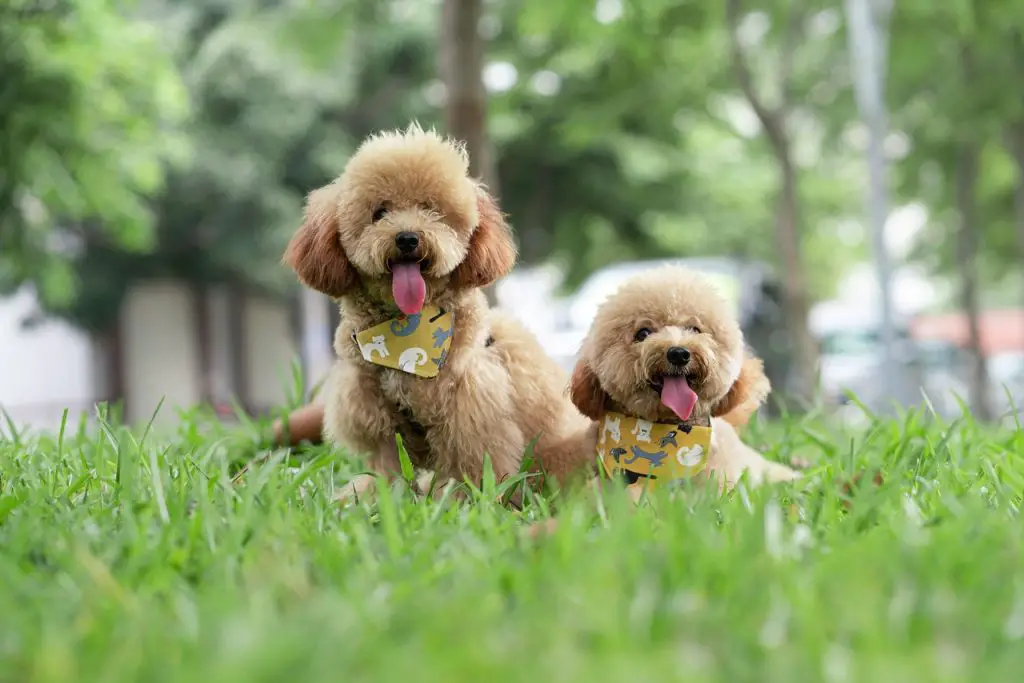
One of the most frequent errors in Poodle management is the “Working Dog Fallacy.” Because Poodles are world-class water retrievers, it is tempting to group them with rugged, double-coated breeds like Labradors or Huskies. This leads to several preventable pitfalls that can compromise the dog’s welfare.
- The “Double Coat” Assumption: Many owners assume the Poodle’s dense curls provide the same insulation as a Husky’s fur. In reality, Poodles have a single layer of hair. This hair offers almost no protection against the “wet cold” that double-coated breeds handle with ease.
- Neglecting the “Grooming Trap”: Leaving a Poodle outside under the assumption that they are “hardy” ignores the biological reality of their coat. Outdoor exposure leads to rapid matting from moisture and debris. These mats trap bacteria against the skin, leading to “hot spots” and infections that are often hidden until they become severe.
- Overestimating Independence: Owners often mistake a Poodle’s high IQ for the ability to self-soothe. While a Poodle is a brilliant problem-solver, they are genetically “hardwired” for human-centric collaboration. Forcing them to spend 24/7 in a yard is essentially a form of sensory deprivation for their highly social brains.
- The “Garage Compromise”: Thinking a garage or mudroom is a “safe middle ground” is a common error. These spaces often lack consistent climate control and, more importantly, they still isolate the dog from the family unit, triggering the same anxiety as a backyard
I noticed with Angus that his most impressive problem-solving happened in the living room, not the backyard; his brain simply required the “negotiation” of human presence to stay sharp. If you are transitioning your dog to a more indoor-centric lifestyle and want to ensure their high-IQ mind stays engaged, my 2026 Poodle Behavior Guide provides the proven, research-based training protocols needed to bridge the “Cognitive Gap” through evidence-based indoor enrichment.
FAQ: Poodle Outdoor Safety and Environmental Limits
1. What is the precise “Danger Zone” temperature for a Poodle?
Based on veterinary data, Poodles begin to struggle with thermoregulation once temperatures drop below 45°F (7°C) or rise above 85°F (29°C). Because they possess a single layer of hair rather than a double coat of fur, they lack the biological “buffer” required to maintain a stable internal temperature in extreme conditions.
2. Can a Poodle stay outside if they have a heated dog house?
A heated house addresses the thermal deficit but ignores the “Velcro” social mandate. The American Kennel Club (AKC) notes that while Poodles are sturdy and athletic, they are primarily indoor dogs who thrive on human companionship. For highly social breeds, physical comfort does not mitigate the psychological trauma of isolation, which can lead to a “Cognitive Gap” where the dog becomes less responsive to training and more prone to neurotic behaviors.
3. Why is an outdoor lifestyle a grooming nightmare for Poodles?
The dense, curly structure of Poodle hair is a biological magnet for ticks, fleas, and environmental debris like burrs and mud. In a controlled indoor environment, this is manageable; however, 24/7 exposure creates a high-maintenance grooming cycle that is nearly impossible to keep up with. This often leads to hidden skin infections beneath mats that can go unnoticed without daily indoor interaction.
4. Does being outside help with a Poodle’s high energy?
Actually, the opposite is often true. While the backyard offers space to run, a Poodle in a yard without human-led play quickly becomes bored. Without the mental stimulation of a “negotiation” or structured exercise, this high-IQ breed often turns to “nuisance barking” or destructive digging. Real exercise for a Poodle happens with you, not away from you.
5. Are Poodle mixes more hardy for outdoor living?
It is a common misconception that “Doodles” or other mixes inherit a more rugged coat. Genetics are unpredictable, and most mixes retain the Poodle’s intense social needs and single-coat vulnerabilities. Regardless of the mix, the psychological requirement for human proximity remains a fixed trait that cannot be bred out.
Conclusion: The Researcher’s Final Verdict
While the Poodle’s athletic history as a water retriever might suggest a rugged outdoor nature, our deep dive into the “Poodle Brain” proves otherwise. A Poodle relegated to the backyard isn’t just a dog in a different environment; they are a highly social, high-IQ companion being deprived of their primary cognitive stimulus—human interaction. The “Four-Legged Linguist” thrives on the nuances of your daily life, not the isolation of a fence line.
Ultimately, keeping a Poodle indoors isn’t about “pampering” a fancy breed; it is a clinical necessity based on their single-layer coat and intense social mandate. They are built for performance in the field, but they are genetically hardwired to recover on the rug at your feet. For a healthy, well-adjusted dog in 2026, the backyard should remain a theater for high-energy play, while the home remains their permanent headquarters. If you prioritize their need for proximity over the convenience of outdoor housing, you’ll be rewarded with the full potential of this remarkably intelligent breed.l, and loving breed of dog.
Medical & Veterinary Disclaimer: PoodleReport.com is an informational resource for Poodle owners and enthusiasts. We are not veterinarians. The content on this website is not a substitute for professional veterinary care, diagnosis, or treatment. Always seek the advice of your veterinarian with any questions you may have regarding your pet’s medical condition, diet, or overall health.