Disclaimer:The information provided on PoodleReport.com is for educational purposes only and does not constitute veterinary medical advice; always consult your vet before changing your dog’s diet. Additionally, this post contains affiliate links. As an Amazon Associate, and other affiliate advertising programs, I earn from qualifying purchases at no extra cost to you.
Feeding a Poodle isn’t just about filling a bowl; it’s about fueling a highly intelligent athlete with a unique physiological makeup. Whether you share your home with a lively Toy, an agile Miniature, or a stately Standard, this breed is celebrated for its vibrant energy and impressive longevity. However, maintaining that signature elegance and sharp mind requires a targeted approach to Poodle nutrition.
To support their rapid metabolism, lean muscle mass, and continuous hair growth, choosing the best food for Poodles is a critical decision. By prioritizing a nutrient-dense diet rich in bioavailable animal proteins and essential Omega fatty acids, you are building a scientifically backed foundation for your dog’s long-term health, cognitive sharpness, and daily vitality.
Feeding your dog’s athletic body and brilliant mind starts with putting the right ingredients in their bodies. Check out our [Poodle Food & Nutrition Guide] to manage picky eaters, soothe food allergies, and find the perfect diet for every size or Poodle type.
To maintain the high energy and cognitive sharpness of the breed, a generic “kibble” often falls short. Precision in Poodle protein requirements and healthy fats is the difference between a dog that is simply “fed” and one that is truly thriving.
Macronutrient Ratios: Proteins, Fats, and Carbs
For Poodles, high-quality animal protein is non-negotiable. Whether they are performing in agility trials or navigating a long neighborhood walk, their lean muscle mass requires constant repair.
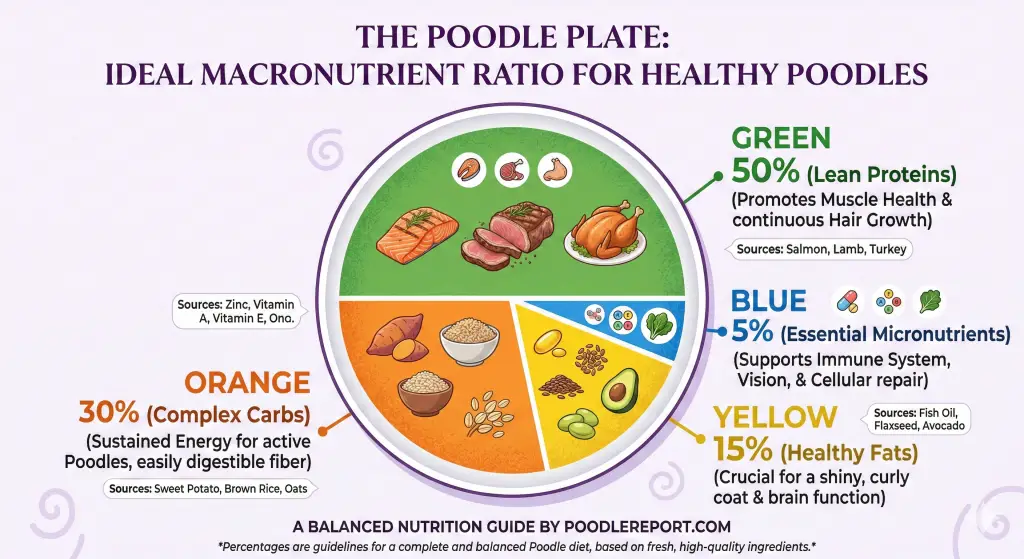
Animal Protein (22–28%): Unlike some breeds that can handle higher plant-based fillers, Poodles thrive on bioavailable animal proteins like chicken, lamb, or fish. This range supports tissue repair without taxing the kidneys.
Healthy Fats (10–15%): Fat is the primary energy source for Poodles. It also acts as the delivery vehicle for fat-soluble vitamins that keep their unique coat from becoming brittle.
Complex Carbohydrates: Look for low-glycemic sources like sweet potatoes or brown rice. These provide steady energy levels, preventing the “sugar crashes” that can lead to irritability in highly sensitive Toy and Miniature varieties.
Micronutrients for Coat and Eye Health
Beyond the basics, Poodles have specific “weak points” that can be supported through targeted micronutrients.
The “Poodle Glow”: Omega-3 and Omega-6
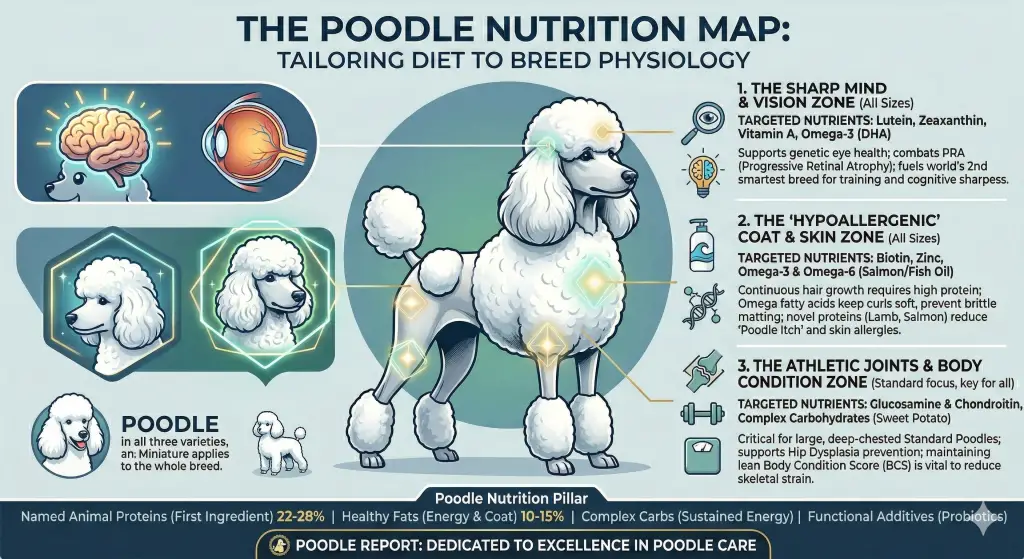
Because Poodle hair grows continuously (much like human hair), their demand for Omega-3 for dogs is significantly higher than shedding breeds.
EPA and DHA: Found in fish oil, these fatty acids reduce skin inflammation—a common trigger for the scratching and “hot spots” often seen in the breed.
Biotin and Zinc: These minerals work synergistically to improve Poodle coat health, ensuring curls remain soft rather than coarse.
Vision Support: Vitamin A and Antioxidants
Poodles are genetically predisposed to Progressive Retinal Atrophy (PRA). While diet cannot “cure” genetic conditions, supporting ocular health with Vitamin A and Lutein is a critical preventative measure.
Vitamin A: Essential for night vision and retinal health.
Beta-Carotene: Found in carrots and pumpkin, this helps combat oxidative stress in the eyes as your Poodle ages.
What is the Best Food for Poodles?
The best food for Poodles is a high-quality, protein-rich formula featuring named animal proteins (like lamb or salmon) as the first ingredient. It should contain 22–28% protein, 10–15% healthy fats for coat health, and complex carbohydrates like sweet potato to provide sustained energy for this active breed.
A Personal Note:When I first brought home my Standard Poodle, Angus, I fell into the trap of thinking all premium kibble was the same. Angus was incredibly athletic but struggled to maintain weight, and his beautiful black coat was turning dull and coarse. After months of trial and error and consultations with my vet, I realized that generic protein sources—often labeled vaguely as ‘meat meal’—simply weren’t bioavailable enough for his intense metabolic needs. It wasn’t until I switched him to a formula where deboned salmon was the first ingredient that I saw his coat regain its shine and his body condition stabilize. That experience solidified my commitment to looking past the marketing and analyzing the first five ingredients on every bag.
In short, the “best” food isn’t just about the brand—it’s about the biological chemistry that keeps a Poodle’s coat curly and their mind sharp. When evaluating a formula for optimal health, you want to look past the marketing and focus on these three pillars of Poodle nutrition:
1. The Power of “Named” Animal Proteins
Poodles are high-energy athletes, and protein is the literal building block of their dense, single-layer coats.
The “First Ingredient” Rule: Always ensure a specific animal protein (like Lamb, Salmon, or Turkey) is the first item on the label. Avoid “meat by-products” or generic “animal meal,” which can be inconsistent in quality and harder for Poodles with sensitive stomachs to digest.
Why Salmon & Lamb? These are often referred to as “novel” or “gentle” proteins. Since Poodles are prone to skin allergies and atopic dermatitis, these protein sources are less likely to trigger the itching and redness often associated with common beef or chicken-based kibbles.
Think of it this way: Poodles have very specific ‘follicle protein’ requirements for that dense, curly coat. If a label simply reads ‘meat meal’ or ‘animal derivatives,’ it can legally include low-quality parts like connective tissue or feathers. These are difficult for a Poodle’s sensitive system to break down. When you look for specific, muscle-based proteins like ‘Deboned Salmon’ or ‘Turkey Muscle Meal,’ you are ensuring the diet contains the essential amino acids (like L-carnitine and Methionine) that act as the building blocks for lean muscle and strong, matted-curl resistance.
2. The Golden Ratio: Protein vs. Fat
For an active adult Poodle, aim for a balanced nutritional profile that supports lean muscle without fueling weight gain:
Protein (22–28%): This range supports muscle maintenance and hair growth. Puppies and highly active agility Poodles may need to skew higher (up to 30%+), while seniors should stay on the lower end to protect kidney health.
Healthy Fats (10–15%): Poodles are famous for their “hypoallergenic” hair, but that hair requires significant oil to stay soft and prevent matting. Look for fats rich in Omega-3 and Omega-6 fatty acids (often sourced from salmon oil or flaxseed). These act as a natural moisturizer from the inside out, reducing the “Poodle itch” and keeping the skin barrier resilient.
3. Complex Carbohydrates for Sustained Energy
Unlike “filler” carbs like corn or soy—which can cause blood sugar spikes and “zoomie” crashes—complex carbohydrates provide slow-release energy.
Sweet Potato: A superstar ingredient for Poodles. It’s packed with beta-carotene for eye health and dietary fiber to keep their often-sensitive digestive tracts moving smoothly.
Ancient Grains (Optional): If your Poodle isn’t grain-sensitive, ingredients like oats, quinoa, or brown rice are excellent for heart health and provide the B vitamins necessary for brain function—essential for the world’s second-smartest dog breed.
4. Critical “Bonus” Ingredients
To truly optimize a Poodle’s diet, look for these specific functional additions:
Glucosamine & Chondroitin: Essential for Standard Poodles to support their joints and prevent hip dysplasia.
Probiotics: Poodles can be notorious “picky eaters” or have “nervous stomachs.” Added probiotics help maintain a healthy gut microbiome, which can improve appetite and stool quality.
The Poodle Metabolism: More Than Just a Pretty Face
Poodles are famously active and highly “work-oriented.” Because of their high cognitive function and physical agility, they often require a nutrient-dense diet that supports both brain health and muscle maintenance. Unlike some breeds prone to “couch potato” tendencies, a Poodle diet guide must account for their lean muscle mass and rapid energy burn.
Diet and the Iconic Poodle Coat
That hypoallergenic, curly coat isn’t just for show—it’s a barometer for their internal health. A Poodle’s hair is composed primarily of protein. Without the right balance of Omega-3 and Omega-6 fatty acids, their curls can become brittle, dull, and prone to thinning. A high-quality best food for Poodles will prioritize skin barriers and follicle strength to keep that “show-ring shine” year-round.
Metric
Impact of High-Quality Nutrition
Impact of Poor Nutrition
Key Nutrient Fix
Average Lifespan
14–18 years
10–12 years
Antioxidants & Lean Protein
Allergy Prevalence
Low (Limited Ingredients)
Up to 35% (Fillers)
Novel Proteins (Lamb/Fish)
Joint Issues
Delayed onset
Earlier onset
Glucosamine & Chondroitin
Poodle Vitality: By The Numbers
Evidence proves that a diet rich in bioavailable proteins and joint-supporting compounds can statistically delay the onset of breed-specific issues like Hip Dysplasia.
Furthermore, targeted Omega fatty acid intake isn’t just for shine; it is clinically shown to reduce the chronic skin inflammation that plagues up to 35% of Poodles on low-grade, filler-heavy diets.To understand why nutrition is the foundation of Poodle care, consider these statistics regarding their health and longevity:
Did You Know? Poodles are among the top five breeds most likely to develop food-related skin sensitivities. Switching to a grain-free or novel protein source can reduce “lick-staining” and ear infections by up to 60%.
Choosing the Right Food Format
The “best” food format for your Poodle often depends on their specific life stage, size, and activity level. Whether you opt for the convenience of kibble or the biological focus of a raw diet for Poodles, each has distinct advantages.
Dry Kibble vs. Wet Food vs. Raw (BARF)
Dry Kibble: This is the most popular choice for a reason. High-quality kibble is calorie-dense and shelf-stable. For Toy and Miniature Poodles, the mechanical scraping action of crunchy kibble is a vital defense against tartar buildup—a common issue in smaller mouths.
Wet Food: Often more palatable for “picky” Poodles, wet food has a high water content which supports kidney health. However, it lacks dental benefits and can be significantly more expensive for Standard Poodles.
Raw (BARF – Biologically Appropriate Raw Food): Proponents of a raw diet for Poodles point to shinier coats and smaller stools. While it mimics a canine’s ancestral diet, it requires strict hygiene and precise balancing of calcium-to-phosphorus ratios to avoid nutritional deficiencies.
How to Read a Pet Food Label Like a Pro
Selecting the best dog food brands for Poodles requires looking past the marketing and diving into the ingredient deck.
Whole Proteins vs. “Meat By-products”: Look for specific named meats (e.g., “Deboned Lamb” or “Salmon”) as the first ingredient. Avoid generic “meat by-products,” which can include low-quality tissues that are harder for a Poodle’s sensitive system to digest.
The “Meal” Factor: Ingredients like “Chicken Meal” are actually highly concentrated protein sources because the water has been removed. These are excellent for active Poodles.
Grain-Free vs. Ancient Grains: Unless your Poodle has a diagnosed grain allergy, “ancient grains” like quinoa or oats can provide excellent fiber. Be wary of “grain-free” diets that replace grains with massive amounts of legumes (peas/lentils), as these are currently being studied for links to heart health.
Expert Tip: The distinction between quality carbs and fillers is critical. We often look for ‘Ancient Grains’ like oatmeal, barley, or brown rice. These are preferable to ‘processed grain’ fillers like corn gluten meal or wheat by-products. The reason? Corn and wheat have higher glycemic indices, which spike a Toy or Miniature Poodle’s blood sugar, leading to lethargy. Conversely, oatmeal provides slow-release, sustained energy (the ‘complex carbohydrate’ effect) and includes important B vitamins that support cognitive function in this highly intelligent breed
Life Stage Feeding: From Toy to Standard
The caloric requirements of a Poodle shift dramatically as they transition from high-energy growth to focused adult maintenance and, eventually, their restful senior years.
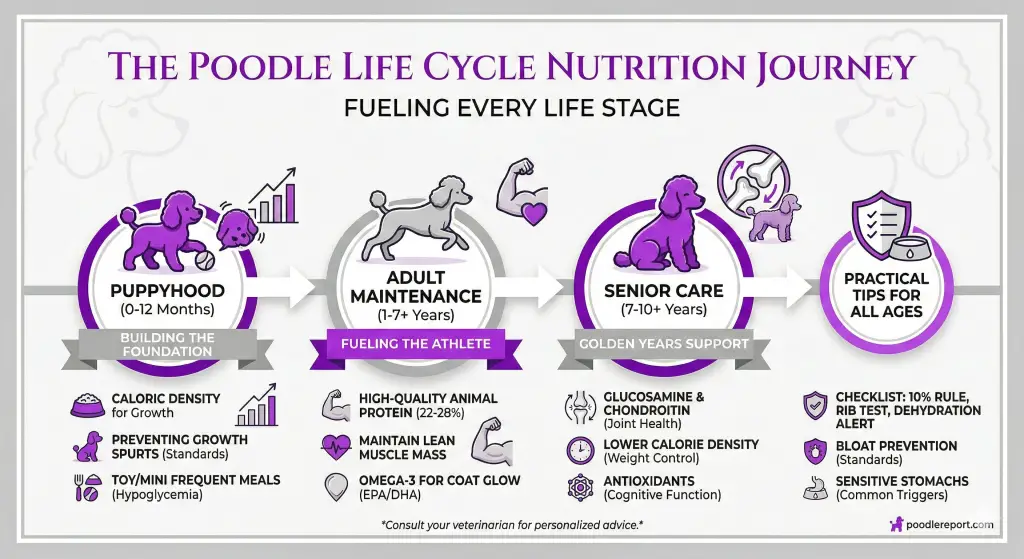
Poodle Puppy Nutrition (0–12 Months)
Feeding a Poodle puppy requires a delicate balance of caloric density and controlled growth. While Toy and Miniature puppies need frequent, small meals to prevent hypoglycemia (low blood sugar), Standard Poodles require a diet that prevents rapid “growth spurts.” If a Standard Poodle grows too quickly, it puts immense pressure on developing skeletal structures, increasing the risk of joint disorders later in life. Referencing puppy growth charts specific to your Poodle’s size category is essential for keeping them on a steady, healthy trajectory.
Adult Maintenance: Keeping the Lean Muscle
Once your Poodle reaches skeletal maturity, the focus shifts to adult Poodle calorie intake that supports their lean, athletic frame without allowing for excess fat. Poodles are naturally “tucked” in the waist; if you can no longer easily feel their ribs, it is time to reassess their portions. An active Standard Poodle may require significantly more calories than a sedentary Miniature, even when adjusted for weight.
Senior Poodle Care: Joint Support and Weight Control
As Poodles enter their “Golden Years” (around age 8–10), their metabolism slows. Senior diets should feature lower calorie density to prevent obesity, which is the primary enemy of aging joints. This is the life stage where Glucosamine and Chondroitin become essential additives to help manage wear and tear on the hips and knees.
Addressing Common Breed Health Issues Through Diet
Because Poodles are a “deep-chested” breed, their relationship with food is more than just about nutrients—it’s about safety.
Bloat (GDV) Prevention in Standard Poodles
Gastric Dilatation-Volvulus (GDV), or “Bloat,” is a life-threatening emergency common in Standard Poodles. Poodle bloat prevention starts at the food bowl:
Feeding Schedules: Split the daily allowance into two or three smaller meals rather than one large one.
The “Raised Bowl” Debate: While once recommended, recent studies suggest that raised bowls may actually increase the risk of GDV in some dogs. Consult your vet before elevating their station.
Avoid High-Fat Fermentable Foods: Foods that are excessively high in fat or gas-producing fermentable fibers can contribute to stomach distension.
Managing Sensitive Stomachs and Food Allergies
Poodles are notorious for having “discerning” (read: sensitive) stomachs. If your Poodle is constantly licking their paws or has chronic ear infections, they may be reacting to Common Triggers like:
Chicken: A common allergen for the breed despite being a staple in most kibbles.
Corn and Soy: Often used as fillers, these can cause digestive upset and skin flare-ups.
Joint Health: Hip Dysplasia and Luxating Patellas
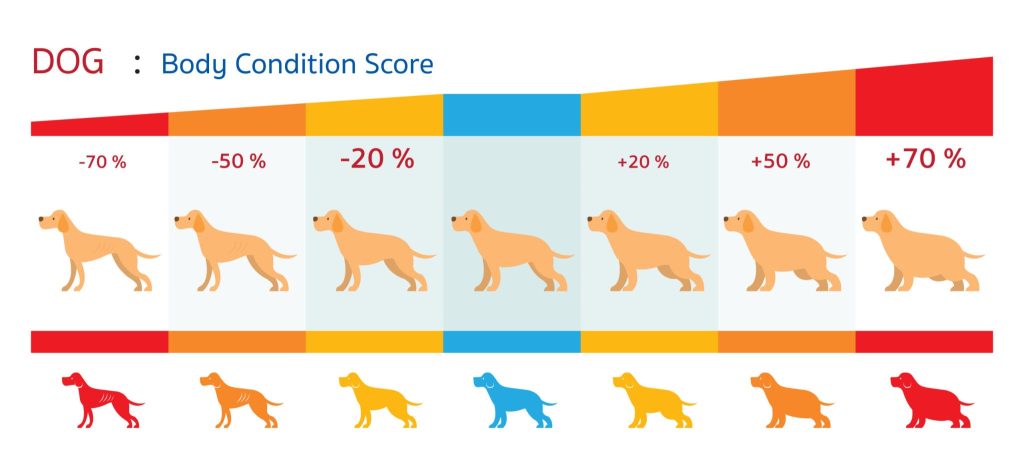
While Standards are more prone to Hip Dysplasia, Miniatures and Toys often face Luxating Patellas (kneecap dislocation). A diet rich in Omega-3s and maintaining a lean Body Condition Score (BCS) are your best defenses against these hereditary conditions.
Case Study: The “Itchy Poodle” Transformation
Subject: “Cooper,” a 4-year-old Miniature Poodle with chronic skin redness and paw biting.
The Switch: Moved from a standard grain-in chicken formula to a Limited-Ingredient Diet (LID) featuring Salmon and Sweet Potato.
Result: Within 6 weeks, Cooper’s skin redness vanished, his “rusty” paw staining disappeared, and his coat regained its natural elasticity and shine.
How to Feed a Poodle: A Step-by-Step Guide
Poodles are high-energy, intelligent athletes, which means their nutritional needs are more nuanced than just filling a bowl. To ensure your Poodle maintains a healthy weight and avoids common issues like bloat or finicky eating, follow these five essential steps:
1. Determine Your Poodle’s Variety
Because Poodles come in three distinct sizes—Toy, Miniature, and Standard—there is no “one size fits all” meal plan.
Toy & Miniature: These smaller varieties have faster metabolisms and require calorie-dense food to prevent hypoglycemia (low blood sugar).
Standard: As a larger, deep-chested breed, Standards are more prone to gastric torsion (bloat). Their goals should focus on steady growth and maintaining a lean frame to protect their joints.
The Science of the Scoop: Calculating Your Poodle’s RER
While the feeding chart below provides a solid baseline, every Poodle is an individual. To truly dial in their nutrition, veterinarians use the Resting Energy Requirement (RER) formula. This calculation determines the energy used by a dog at rest in a thermoneutral environment.
To give you the most accurate start, use our Lbs to Kg Conversion and Example RER Chart to find your Poodle’s base metabolic needs before adjusting for their life stage and lifestyle.
Poodle Variety (Target Adult Weight)
Weight in Pounds (lbs)
Equivalent Weight (kg)
Example RER (kcal)*
Toy Poodle
5 lbs
~2.27 kg
~140 kcal
Toy / Small Mini
10 lbs
~4.54 kg
~235 kcal
Miniature Poodle
15 lbs
~6.81 kg
~310 kcal
Large Mini / Small Standard
25 lbs
~11.36 kg
~460 kcal
Medium Standard
50 lbs
~22.72 kg
~760 kcal
Large Standard
70 lbs
~31.81 kg
~980 kcal
*Example RER calculations are (weight in kg)^(0.75) X 70. These figures represent the baseline energy requirement and must be adjusted using the lifestyle multipliers below.
How to Use the RER Formula (Step-by-Step)
Don’t let the math intimidate you. It is a simple four-step process to transition from a generic “one size fits all” scoop to precision feeding.
Step 1: Convert Weight to kg
If you know your Poodle’s weight in pounds (lbs), divide it by 2.2 to find their weight in kilograms (kg). (e.g., 10 lbs/ 2.2 = 4.54 kg).
Step 2: Calculate the RER (The Baseline)
Use a calculator to multiply their weight in kg by itself three times ($\text{kg} \times \text{kg} \times \text{kg}$), then find the square root of that number twice. Finally, multiply that result by 70.
(Or, simplify and just use the Example RER column in the chart above!)
Step 3: Adjust for Lifestyle (The Multiplier)
Your Poodle’s age and activity level dictate how much energy they need above their baseline RER. Multiply the RER from Step 2 by the correct number below:
Weight Loss Needed: Stick closer to 1.0 X RER to promote safe reduction.
Step 4: The Kilocalorie Conversion (The Final Step)
Now that you have your Poodle’s total daily caloric need (e.g., your typical 10 lb adult needs 235 X 1.6 = 376 kcal/day), look at your bag of food. You are searching for the kcal/kg or kcal/cup measurement.
Example Calculation:
Let’s say you calculate your Active Miniature Poodle (2.0 X RER) needs 600 kcal/day.
Your chosen brand of high-quality kibble is 400 kcal/cup.
The Formula: 600 (Daily Needs)/400 (kcal/cup) = 1.5 cups per day.
3. Set a Consistent Schedule
Poodles thrive on routine. Rather than “free-feeding,” which can lead to obesity and make house-training difficult, divide the daily food into 2–4 meals depending on the dog’s age and size:
Puppies (under 6 months): 3–4 small meals to maintain stable blood sugar.
Adults: 2 meals per day (morning and evening).
Bloat Prevention: For Standards, use a slow-feeder bowl or split meals into smaller, frequent portions to reduce air intake.
Weight can fluctuate quickly, especially during training. At least once a week, perform a hands-on check:
The Goal: You should be able to easily feel your Poodle’s ribs under a thin layer of skin, similar to the back of your hand.
The Warning Sign: If you have to press firmly to find the ribs, or if the “waist” tuck disappears, it’s time to scale back portions.
5. Adjust for Activity and Life Stage
A Poodle’s caloric needs are dynamic. Always be ready to pivot based on their current lifestyle:
High Activity: Increase portions by roughly 10% during weeks of heavy training, agility trials, or long hiking trips.
The Golden Years: As your Poodle ages and their metabolism slows, decrease portions or switch to a senior formula to prevent unnecessary strain on their heart and joints.
Pro Tip: Consult our Poodle-specific feeding chart (below) to find the baseline for your dog’s weight, then adjust based on their life stage (puppy, adult, or senior).
The Official Poodle Feeding Chart: Daily Portions by Weight
To ensure your Poodle stays lean and energetic, use the chart below as a starting point. These portions are based on a standard high-quality kibble (approx. 350–400 kcal/cup). If your Poodle is highly active (e.g., agility training) or a senior, you may need to adjust these figures by 10–15%.
Poodle Variety
Target Adult Weight
Daily Total (Cups)
Recommended Frequency
Toy
4–6 lbs
1/4 to 1/2 cup
3–4 small meals
Toy / Small Mini
7–10 lbs
1/2 to 3/4 cup
3 meals
Miniature
12–20 lbs
3/4 to 1 1/4 cups
2–3 meals
Small Standard
40–50 lbs
2 to 2 1/2 cups
2 meals
Large Standard
60–70+ lbs
3 to 4 cups
2 meals
Note: Always measure by weight (grams) for the highest precision, as “cups” can vary significantly by kibble density.
The Healthy Poodle Feeding Rules Checklist
[ ] The 10% Rule: Treats and “human food” toppers should never exceed 10% of their total daily caloric intake.
[ ] The Rib Test: You should be able to feel your Poodle’s ribs easily under their coat without a thick layer of fat, but they shouldn’t be protruding.
[ ] Hydration Check: Poodles are prone to bladder stones; ensure their water bowl is cleaned daily to encourage consistent drinking.
[ ] Age Transition: Shift from Puppy to Adult food at 9 months for Toys/Minis, and 12–14 months for Standards to protect joint plates.
Feeding Schedules and Portion Control
Establishing a consistent Poodle feeding schedule is just as important as the food itself. Because the breed varies so significantly in size—from a 5-pound Toy to a 70-pound Standard—a “one size fits all” approach to timing can actually be dangerous. Determining how much to feed a Poodle requires balancing their high metabolic rate with their specific skeletal needs.
Precision Timing: From Toys to Standards
Toy and Miniature Poodles: These smaller varieties have incredibly high metabolic rates but tiny glycogen stores in their livers. To prevent hypoglycemia (a dangerous drop in blood sugar that can cause lethargy or seizures), puppies should be fed 4–5 times a day, and adults should maintain at least 3 small meals.
Standard Poodles: While they are athletes, Standards are prone to bloat (GDV). Feeding one large meal a day is a significant risk factor. Instead, divide their daily caloric intake into 2–3 measured portions to keep the stomach from becoming over-distended.
[Checklist] Daily Feeding Routine by Poodle Variety
Use this quick-reference guide to structure your Poodle’s day based on their specific variety:
[ ] Toy Poodle (Adult): 3 meals per day (Morning, Noon, Evening). Focus on calorie-dense kibble to support high energy in small volumes.
[ ] Miniature Poodle (Adult): 2–3 meals per day. Monitor treats closely, as Miniatures are statistically the most prone to mid-life obesity.
[ ] Standard Poodle (Adult): 2 meals per day. Mandatory: Restrict heavy exercise for 60 minutes before and after eating to reduce bloat risk.
[ ] All Varieties: Fresh, filtered water should be available 24/7, as Poodles are prone to kidney stones if they remain even mildly dehydrated.
Safe Treats and Foods to Avoid
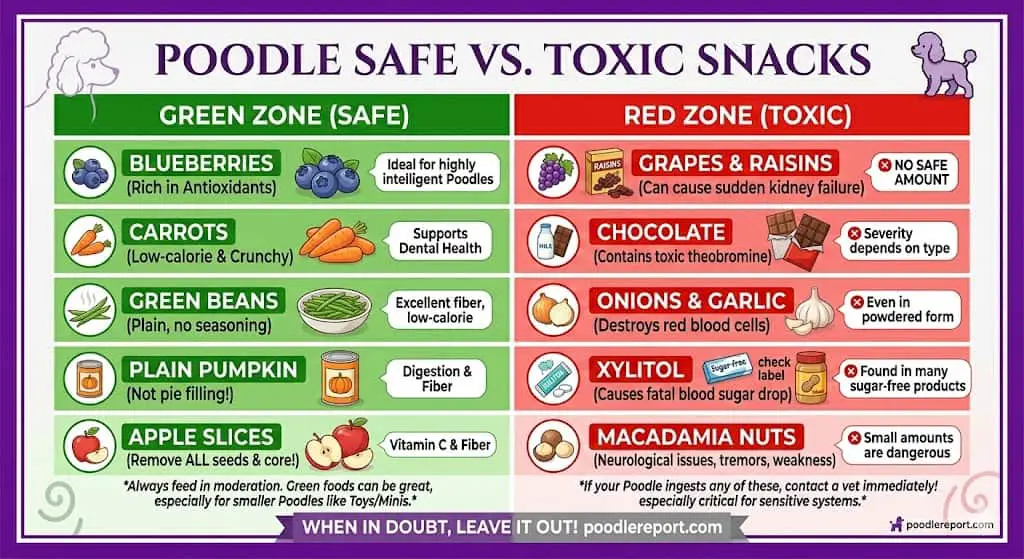
While it’s tempting to share a snack with those soulful Poodle eyes watching your every move, many human foods can be dangerous—or even fatal—to this breed. Because Poodles (especially Toy and Miniature varieties) are smaller and highly sensitive, even a tiny amount of the wrong ingredient can cause a major medical emergency.
Poodle-Safe Fruits and Vegetables
Using fresh produce as treats is an excellent way to provide antioxidants and fiber without the excess fats found in commercial “biscuits.”
Blueberries: A “superfood” for Poodles, packed with antioxidants that support cognitive function—critical for this highly intelligent breed.
Carrots: Low-calorie and crunchy; raw baby carrots help scrape away plaque, supporting the dental health of smaller Poodles.
Green Beans: Often called “the dieter’s secret,” plain steamed green beans are perfect for Miniature Poodles prone to weight gain.
Apples (No Seeds): A great source of Vitamin C. Warning: Always remove the seeds and core, as they contain trace amounts of cyanide.
Cucumbers: With almost no carbohydrates or fats, these are the ultimate hydrating snack for an active Standard Poodle on a hot day.
This list contains common household items that should never be within reach of your Poodle.
Grapes and Raisins: These can cause sudden kidney failure in Poodles. There is no “safe” amount—even one can be toxic.
Xylitol (Birch Sugar): Often found in sugar-free gum and some peanut butters. It causes a rapid, life-threatening drop in blood sugar and liver failure. Always check your peanut butter label!
Onions, Garlic, and Chives: These contain compounds that destroy a dog’s red blood cells, leading to anemia.
Chocolate and Caffeine: Both contain stimulants that Poodles cannot metabolize, leading to heart palpitations, tremors, and seizures.
Macadamia Nuts: Ingesting these can lead to “Macadamia Nut Toxicosis,” causing temporary hind-limb weakness, vomiting, and tremors.
Poodle Kitchen Safety: Fridge Magnet Guide
Pro Tip: Print our one-page guide and pin it to your refrigerator. It features a color-coded “Traffic Light” system (Green for Safe, Yellow for Caution, Red for Danger) to help every family member know exactly what can—and cannot—go into the food bowl.
Frequently Asked Questions (FAQs)
To help you navigate the nuances of Poodle ownership, we’ve compiled the most common questions regarding the breed’s unique dietary requirements. These answers are grounded in veterinary nutritional standards to ensure your Poodle remains in peak condition.
1. How often should I feed my Poodle?
Feeding frequency depends on your Poodle’s size and life stage. Toy and Miniature Poodles should eat 3–4 small meals daily to prevent hypoglycemia. Standard Poodles thrive on 2 meals per day. Dividing their intake helps maintain steady energy levels and reduces the risk of bloating in the larger varieties.
2. Is a grain-free diet better for Poodles?
Not necessarily. While Poodles are prone to food sensitivities, many thrive on “ancient grains” like oatmeal or brown rice. Grain-free diets are only recommended if your Poodle has a diagnosed grain allergy. Always consult your vet, as the FDA continues to investigate the link between certain grain-free diets (heavy in legumes) and heart conditions like DCM.
3. Why is my Poodle such a “picky eater”?
Poodles are highly intelligent and can quickly learn that refusing kibble leads to getting “better” human food. However, pickiness can also indicate a sensitive stomach or dental pain. If your Poodle suddenly stops eating, rule out medical issues before assuming it is a behavioral trait.
I can attest to this personally! Angus was famous for skipping meals, and my immediate reaction was to ‘upgrade’ his food with table scraps. He quickly learned that refusing his high-quality kibble meant getting chicken or safe, low-lactose cheese from me. To break this behavioral pattern, I had to implement a strict 15-minute rule: put the food down, and if it wasn’t eaten in 15 minutes, the bowl came up and was saved for the next meal. Within three days, her ‘finicky’ nature disappeared, confirming that he was training me, not the other way around!
4. Can Poodles eat a raw food diet?
Yes, Poodles can eat a raw (BARF) diet, but it requires meticulous planning. Because Poodles are prone to pancreatitis and digestive upset, the fat content must be carefully monitored. Additionally, raw diets must be nutritionally complete and balanced to avoid skeletal issues, especially in growing puppies.
5. What are the best protein sources for Poodles with allergies?
If your Poodle suffers from itchy skin or ear infections, “novel proteins” are often the best solution. Look for foods based on Lamb, Venison, Duck, or Salmon. Avoid “poultry meal” or generic “animal fat,” as these often contain hidden chicken or beef by-products that trigger allergic reactions.
6. How can I tell if my Poodle is at a healthy weight?
Since Poodles have thick, curly hair, you cannot rely on sight alone. Use the “Hand Test”: feel for their ribs. You should be able to feel each rib easily under a thin layer of skin (like the back of your hand). If you have to press hard to find them, your Poodle is likely overweight.
bright and their tail wagging. To help you turn these principles into a consistent routine, use the Master Checklist below:
Poodle Nutrition Master Checklist
Keep your Poodle in peak athletic condition with these daily and weekly habits.
Daily Maintenance
[ ] The 10% Rule: Ensure treats and “human food” toppers never exceed 10% of their total daily caloric intake.
[ ] Fresh Hydration: Clean water bowls daily to encourage drinking. Proper hydration is critical for Poodles to prevent kidney stones.
[ ] Variety-Specific Timing:
Toy/Mini: 3–4 small meals to prevent hypoglycemia.
Standard: 2–3 meals to reduce the risk of Bloat (GDV).
[ ] The Exercise Buffer: (Standards Only) Restrict heavy exercise for 60 minutes before and after every meal.
Weekly Health Checks
[ ] The Rib Test: Perform a hands-on check. You should easily feel the ribs under a thin layer of skin (similar to the knuckles on the back of your hand).
[ ] Skin & Ear Check: Look for redness or “rusty” paw staining—these are common early indicators of food-related sensitivities.
Shape, Health Chart and Infographic
Life Stage & Safety
[ ] Safety First: Ensure every member of the household knows the “No-Go” toxic list, particularly checking peanut butter labels for Xylitol.
[ ] Age Transition: Shift from Puppy to Adult food at 9 months (Toys/Minis) or 12–14 months (Standards).
[ ] Label Audit: Verify that a named animal protein remains the first ingredient in every new bag of food you buy.
Conclusion: Fueling a Lifetime of Vitality
Choosing the right fuel for your Poodle is far more than a daily chore—it is a long-term investment in their health, intelligence, and longevity. Poodles are built to be high-performance companions, and the nutrients they receive today pave the way for those extra “golden years” down the road.
By prioritizing a diet tailored to their unique physiology, you are doing more than just filling a bowl; you are providing:
Significant Savings on Vet Care: Targeted nutrition helps prevent costly treatments for food-related allergies, joint degradation, and metabolic disorders.
Sharper Cognitive Health: A brain-supporting diet keeps the “World’s Second Smartest Dog” engaged and responsive as they age.
Enhanced Quality of Life: Proper weight management is the single most effective way to ensure your Poodle remains mobile and pain-free throughout their senior years.
Ultimately, the “best” diet is the one that keeps your specific dog’s eyes
Fuel your dog’s brilliant mind and athletic body with a diet tailored to their specific size and needs. Check out our Poodle Food & Nutrition Guide for feeding schedules and food reviews, or dive into these related articles:
Medical & Veterinary Disclaimer: PoodleReport.com is an informational resource for Poodle owners and enthusiasts. We are not veterinarians. The content on this website is not a substitute for professional veterinary care, diagnosis, or treatment. Always seek the advice of your veterinarian with any questions you may have regarding your pet’s medical condition, diet, or overall health.
I’m Brent Hartman, Founder and Lead Researcher of Poodle Report. After losing my Standard Poodle, Angus, my search for Brent Hartman | Lead Researcher & Founder
Brent Hartman is the founder of Poodle Report and a dedicated student of canine cognition. His journey into the "Poodle Brain" began with his late companion, Angus, a black Poodle whose uncanny problem-solving skills challenged everything Brent knew about traditional dog training.
Recognizing that the Poodle's high intelligence requires a unique "Negotiation-Based" approach, Brent transitioned from a seasoned owner to a lead researcher. He has spent hundreds of hours synthesizing data from the American Veterinary Medical Association (AVMA) and the AKC to bridge the "Cognitive Gap" for owners worldwide. His work focuses on evidence-based protocols like the Metabolic Reset and the Independence Protocol, transforming the bond between humans and high-IQ dogs into true genius partnerships.
While a dropped french fry will summon a dog from three rooms away, you might be surprised to find that a simple, snapping green bean can elicit the exact same eager response. However, a quick glance...
Thinking about a second Poodle? Many owners find one "honors student" is never enough, but moving to a pair requires a data-backed look at multi-dog dynamics. From my research into the Poodle brain,...