

Disclaimer: The information provided on PoodleReport.com is for educational purposes only and does not constitute veterinary medical advice; always consult your vet before changing your dog’s diet. Additionally, this post contains affiliate links. As an Amazon Associate, and other affiliate advertising programs, I earn from qualifying purchases at no extra cost to you.
Large Poodle mixes bring together the sharp intelligence and low-shedding coats of the Poodle with the lovable, sturdy traits of breeds like the Bernese Mountain Dog or the Old English Sheepdog. But while those fluffy puppy photos are undeniably cute, bringing home a dog that will easily surpass 70 pounds is a massive 10-to-15-year commitment.
Sharing life with a Standard Poodle—like my boy, Angus—taught me exactly how much energy, training, and dedicated grooming these brilliant dogs require. Poodles consistently rank among the smartest dog breeds in canine behavioral studies, such as the widely cited intelligence rankings by psychologist Dr. Stanley Coren. When you add the heavy build and distinct instincts of another large working breed into the mix, the daily care and financial requirements change significantly.
If you are considering adding a large “doodle” to your family, you are likely trying to figure out which specific mix matches your lifestyle. You need to know how big they will actually get, whether they can handle apartment living, and what the true cost of grooming will be.
Large Poodle Mixes: Size, Energy, and Grooming Summary
| Rank | Poodle Mix | Parent Breed | Weight | Energy Level | Grooming Needs | Best Suited For |
| 1 | Bernedoodle | Bernese Mountain Dog | 70–100+ lbs | Moderate | High | Families, first-time owners, moderate yards |
| 2 | Goldendoodle | Golden Retriever | 50–90 lbs | High | High | Active families, runners, secure fences |
| 3 | Saint Berdoodle | Saint Bernard | 110–200 lbs | Low to Moderate | High | Homes with plenty of space, older children |
| 4 | Sheepadoodle | Old English Sheepdog | 60–85 lbs | High | Very High | Experienced owners, active families |
| 5 | Aussiedoodle | Australian Shepherd | 50–75 lbs | Extremely High | High | Highly active individuals, agility enthusiasts |
| 6 | Mastidoodle | English Mastiff | 90–150+ lbs | Low | Mod. to High | Large homes, owners needing a deterrent |
| 7 | Newfypoo | Newfoundland | 90–150 lbs | Low to Moderate | High | Large indoor spaces, water lovers |
| 8 | Irish Wolfadoodle | Irish Wolfhound | 80–120+ lbs | Moderate | Mod. to High | High secure fences, homes with older children |
| 9 | Pyredoodle | Great Pyrenees | 85–120+ lbs | Low to Moderate | Very High | Rural homes, large fenced yards |
| 10 | Rottle | Rottweiler | 60–90+ lbs | Mod. to High | Mod. to High | Experienced owners, active households |
| 11 | Great Danoodle | Great Dane | 90–150+ lbs | Moderate | Mod. to High | Spacious floor plans, homes with older children |
| 12 | Boxerdoodle | Boxer | 50–80 lbs |
This guide breaks down 12 of the best large Poodle mixes. Instead of just highlighting the positives, we are looking at their fully-grown sizes, generational differences (like F1 vs. F1B), realistic shedding levels, and distinct temperaments so you can find the perfect match for your home.
1. The Bernedoodle (Bernese Mountain Dog & Standard Poodle)

The Bernedoodle combines the goofy, easygoing loyalty of the Bernese Mountain Dog with the sharp intelligence and allergy-friendly coat of the Standard Poodle. Standard Poodles are renowned for their remarkable mental acuity and high maintenance grooming needs, requiring a dedicated routine to keep their coats and minds in top shape. When you mix that sharp Poodle intellect with a heavy-boned, sometimes stubborn working breed, you get a deeply affectionate, but undeniably demanding, companion.
At a Glance:
At a Glance:
- Weight: 70 to 100+ pounds (Standard size)
- Height: 23 to 29 inches at the shoulder
- Energy Level: Moderate (Loves a good hike, but equally happy on the couch)
- Grooming Needs: High
- Best For: Families with children, first-time doodle owners, and homes with a moderate yard
Size Reality Check & Generations If you are looking for a guaranteed low-shedding dog, you must pay attention to generations. An F1 Bernedoodle (50% Bernese, 50% Poodle) often has a wavy, fleece-like coat that may still shed slightly. An F1B Bernedoodle (25% Bernese, 75% Poodle) will have a much curlier coat that sheds very little, making it a better choice for allergy sufferers. Be prepared for a massive dog: while breeders often estimate 70 pounds, it is very common for male Standard Bernedoodles to clear 90 or even 100 pounds fully grown.
The Grooming Reality That beautiful tri-color coat comes with a steep maintenance price. Bernedoodles require thorough line-brushing at home at least three to four times a week to prevent severe matting close to the skin. You should budget for professional grooming every 6 to 8 weeks, which can easily cost between $100 and $150 per session for a dog of this size.
Health & “Hybrid Vigor: While mixing breeds can introduce some hybrid vigor, a Bernedoodle is still susceptible to the health issues of its parent breeds. The purebred Bernese Mountain Dog has a notoriously short lifespan of just 7 to 10 years, largely due to high cancer rates tracked by the Berner-Garde Foundation. Crossing them with a Standard Poodle often extends the Bernedoodle’s life expectancy to 12–15 years. However, joint issues remain a major concern. Before purchasing a puppy, ensure the breeder provides proof of joint testing to rule out hip and elbow dysplasia.
2. The Standard Goldendoodle (Golden Retriever & Standard Poodle)
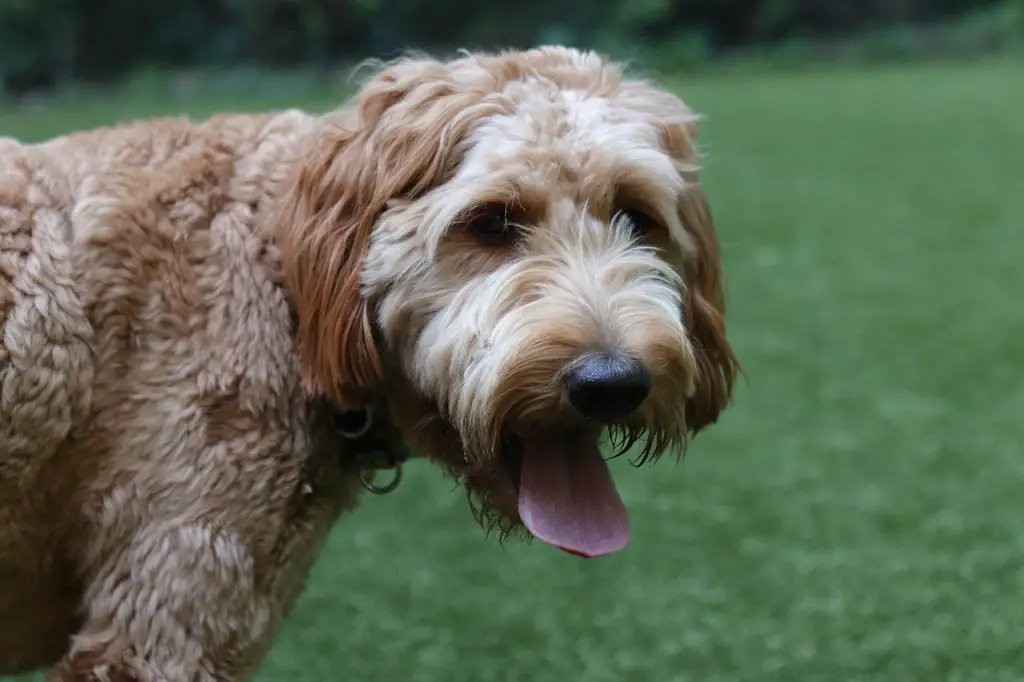
The Goldendoodle is arguably the most popular Poodle cross in the world. By blending the eager-to-please, sunny disposition of the Golden Retriever with the Poodle’s sharp intelligence, you get a highly trainable and incredibly social family dog. Having experienced the sheer brainpower of a Standard Poodle, I know firsthand that their smarts mean they need engaging activities—and adding the Golden’s natural retrieving instincts only amplifies that need for a daily “job” to stay out of trouble.
At a Glance:
- Weight: 50 to 90 pounds
- Height: 20 to 24 inches at the shoulder
- Energy Level: High (Requires vigorous daily exercise and mental stimulation)
- Grooming Needs: High
- Best For: Active families, runners, and homes with a securely fenced yard
Size Reality Check & Generations Because purebred Golden Retrievers have a dense, water-repellent double coat that sheds year-round, an F1 Goldendoodle (50% Golden, 50% Poodle) has a high chance of shedding and is often not suitable for severe allergy sufferers. For a more hypoallergenic, low-shedding option, an F1B Goldendoodle (25% Golden, 75% Poodle) is a much safer bet. While average weights sit around 60 to 70 pounds, males from larger breeding lines frequently approach the 90-pound mark.
Temperament & Training These are not couch potatoes. A bored Goldendoodle with pent-up energy can quickly become anxious or destructive. They thrive on retrieving, swimming, and agility work. Their high intelligence means positive reinforcement training should start on day one to establish good household manners before they reach their full, powerful adult size.
Health & “Hybrid Vigor: Assuming a Goldendoodle will automatically be perfectly healthy due to hybrid vigor is a common mistake. Reputable breeders should adhere to the strict health testing guidelines set by organizations like the Goldendoodle Association of North America (GANA), which require cardiac evaluations, eye certifications, and joint clearances through organizations like the Orthopedic Foundation for Animals (OFA) for both parent dogs before breeding.
3. The Saint Berdoodle (Saint Bernard & Standard Poodle)
When you cross a Standard Poodle with a famous alpine rescue dog, you get the Saint Berdoodle—one of the absolute largest doodle mixes in existence. While the Standard Poodle contributes a regal height and a sharp, active mind, the Saint Bernard influence brings a level of sheer mass and laid-back patience that completely changes the dynamic of having a giant dog in the house.
At a Glance:
- Weight: 110 to 200 pounds
- Height: 24 to 30 inches at the shoulder
- Energy Level: Low to Moderate (Prone to short bursts of energy followed by long naps)
- Grooming Needs: High
- Best For: Homes with plenty of space, families with older children, and those who don’t mind a little drool
Size Reality Check & Space Requirements The sheer size of a Saint Berdoodle cannot be overstated. Even with the Poodle parent pulling the weight down slightly, these dogs regularly clear 120 pounds, with males frequently approaching 150 pounds or more. Because of their massive physical footprint, they are generally not suited for apartment living, even though their daily energy levels are relatively low.
Coat, Shedding & Drool Purebred Saint Bernards have a dense coat and heavily jowled mouths, meaning they are notorious for both shedding and drooling. An F1 Saint Berdoodle (50% Saint Bernard, 50% Poodle) will likely still shed to some degree and may retain some of those loose jowls, meaning they aren’t completely drool-free. An F1B Saint Berdoodle (75% Poodle) will have a tighter, more curly coat that is better for allergy sufferers, and typically a much drier mouth.
Health & “Hybrid Vigor: breeds carry unique and serious health risks. The purebred Saint Bernard has a notably short lifespan of just 8 to 10 years. While the Poodle genetics often extend the Saint Berdoodle’s life expectancy to 10–12 years, that extreme weight puts immense stress on their joints. Furthermore, deep-chested giant breeds face a massive risk of bloat (gastric dilatation-volvulus). Studies from the Purdue University College of Veterinary Medicine have shown that canine bloat is a critical emergency, making it vital for owners to familiarize themselves with the symptoms.
4. The Sheepadoodle (Old English Sheepdog & Standard Poodle)

The Sheepadoodle is a striking, deeply affectionate, and often comical mix. The Standard Poodle’s sharp mind is famously known for requiring constant engagement and clear boundaries to prevent boredom-induced mischief. When you combine that innate Poodle intellect with the hardwired working instincts of an Old English Sheepdog, you get a highly athletic dog that absolutely thrives when given a “job” to do.
At a Glance:
- Weight: 60 to 85 pounds
- Height: 22 to 27 inches at the shoulder
- Energy Level: High (Strong herding instincts and requires vigorous exercise)
- Grooming Needs: Very High
- Best For: Experienced dog owners, active families, and homes with a large yard
Herding Instincts & Training One of the most important things to understand about Sheepadoodles is their genetic drive. According to the American Kennel Club (AKC), Old English Sheepdogs were bred for driving cattle and sheep over long distances. This herding instinct frequently transfers to the doodle mix. Without early obedience training and redirection, Sheepadoodle puppies may try to herd small children or other pets by nipping at their heels. They need positive, focused training channels—like agility or advanced trick training—to keep this intelligence directed appropriately.
Size Reality Check & Generations An F1 Sheepadoodle (50% Sheepdog, 50% Poodle) usually has a shaggy, wavy coat that can still shed, making them less ideal for severe allergy sufferers. An F1B Sheepadoodle (25% Sheepdog, 75% Poodle) will have a much tighter, curlier coat that sheds very little. Regardless of generation, these are substantial, heavy-boned dogs that easily reach 80 pounds and take up a significant amount of space in your home.
The Grooming Reality This mix has one of the most demanding coats in the doodle world. The dense, thick, and sometimes coarse hair of the Sheepdog combined with the Poodle’s tight curls creates a coat that mats incredibly fast. Daily, down-to-the-skin brushing with a high-quality slicker brush and metal comb is mandatory to prevent painful pelting.
Health & “Hybrid Vigor” While often robust and healthy, Sheepadoodles are prone to the shared genetic issues of their parent breeds. Joint problems, specifically hip dysplasia, are a major concern for heavy, active dogs. Additionally, both breeds can be prone to certain eye conditions, such as progressive retinal atrophy (PRA). Ensure the breeder you choose provides verifiable joint and eye clearances through the Orthopedic Foundation for Animals (OFA) for both the Poodle and Sheepdog parents.
5. The Standard Aussiedoodle (Australian Shepherd & Standard Poodle)

It is a fundamental trait of the Standard Poodle that such a high-intelligence dog requires a “busy brain” and constant mental stimulation to stay out of trouble. When you take that razor-sharp Poodle intellect and cross it with the tireless work ethic of an Australian Shepherd, you get the Aussiedoodle (sometimes called an Aussiepoo)—a mix that is affectionately, and accurately, described as the “Einstein” of the doodle world.
At a Glance:
- Weight: 50 to 75 pounds (Standard size)
- Height: 19 to 24 inches at the shoulder
- Energy Level: Extremely High (Requires rigorous physical exercise and a daily “job”)
- Grooming Needs: High
- Best For: Highly active individuals, runners, agility enthusiasts, and homes with large, securely fenced yards
The Reality of Herding Instincts The Australian Shepherd is a serious herding breed built to outsmart and outmaneuver livestock all day long. The Australian Shepherd Club of America (ASCA) emphasizes that their strong herding drive and intense energy levels require channeled, positive outlets. A Standard Aussiedoodle frequently inherits this instinct, meaning they may try to “herd” running children, cats, or even bicycles by nipping at heels. This is absolutely not a dog for a sedentary family. If you do not give an Aussiedoodle a job—like agility training, advanced obedience, or scent work—they will invent their own job, which usually involves destroying your baseboards or furniture.
Coat, Shedding & Generations Purebred Australian Shepherds possess a dense, weather-resistant double coat that sheds heavily, particularly during the spring and fall. Because of this, an F1 Aussiedoodle (50% Aussie, 50% Poodle) usually has a shaggy, wavy coat that will absolutely still shed, making them a poor choice for severe allergy sufferers. To achieve a low-shedding, tightly curled coat, you need to seek out an F1B Aussiedoodle (75% Poodle). Regardless of the generation, their coats mat very easily and require daily line-brushing at home to prevent pelting.
Health & “Hybrid Vigor: While crossing an Aussie with a Standard Poodle can produce a robust, athletic dog with a lifespan of 10 to 13 years, there is a very specific genetic risk you must be aware of. Herding breeds are highly prone to the MDR1 (Multi-Drug Resistance) gene mutation, which causes severe, sometimes fatal, adverse reactions to common veterinary drugs, including certain heartworm preventatives and anesthesia. According to VCA Animal Hospitals, testing for this mutation is simple but critical. You must verify that your breeder has conducted MDR1 DNA testing on the parent dogs, alongside standard joint and eye evaluations, before bringing a puppy home.
6. The Mastidoodle (English Mastiff & Standard Poodle)
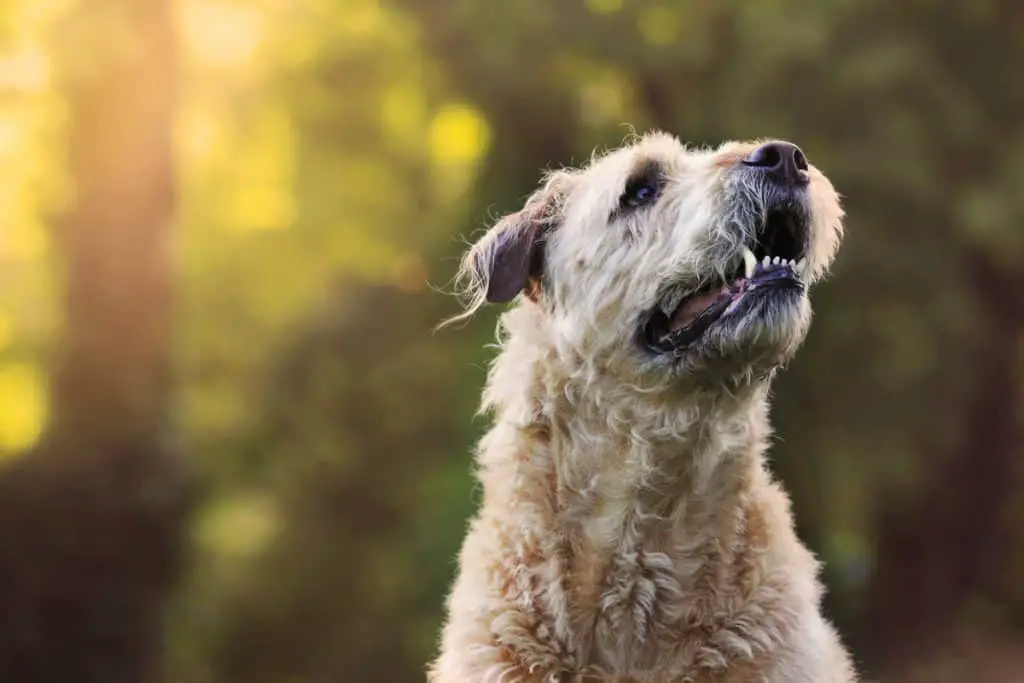
If you love the low-shedding appeal of a doodle but want a formidable, fiercely loyal guardian, the Mastidoodle is an incredible, albeit massive, option. While the Standard Poodle is renowned for being remarkably alert and high-energy, the English Mastiff is famous for being a dignified, slow-moving homebody. Crossing these two breeds results in a fascinating blend of active intelligence and calm, protective restraint.
At a Glance:
- Weight: 90 to 150+ pounds
- Height: 25 to 30 inches at the shoulder
- Energy Level: Low (Prone to short bursts of playtime followed by hours of sleeping)
- Grooming Needs: Moderate to High
- Best For: Homes with plenty of floor space, owners looking for a gentle but effective deterrent, and families with older children
Size Reality Check & The Guard Dog Instinct The sheer scale of a Mastidoodle is intimidating, which often serves as all the home security you will ever need. The American Kennel Club (AKC) notes that purebred male English Mastiffs can weigh up to 230 pounds. While the Poodle influence brings the overall weight down, a Mastidoodle is still a colossal dog. Because Mastiffs were bred as estate guardians, this mix often inherits a watchful, sometimes aloof nature with strangers, meaning early and consistent socialization is absolutely mandatory so they do not become overly protective.
Coat, Shedding & Drool Unlike the tightly curled coats of a Sheepadoodle or Goldendoodle, the Mastidoodle’s coat can be unpredictable. An F1 Mastidoodle (50% Mastiff, 50% Poodle) often has a shorter, wiry, or wavy coat that will still shed, though significantly less than a purebred Mastiff. The heavy jowls of the Mastiff often persist in the F1 generation, so you should expect some drool, especially after they drink water. For a tighter curl and a drier mouth, an F1B Mastidoodle (75% Poodle) is the better choice.
Health & “Hybrid Vigor” The most significant benefit of crossing a Mastiff with a Standard Poodle is the potential increase in lifespan. Purebred Mastiffs have tragically short lifespans, averaging just 6 to 10 years. The Poodle genetics can sometimes stretch a Mastidoodle’s life expectancy to 9–12 years. However, carrying that much weight puts a massive strain on their bodies. They are highly prone to elbow and hip dysplasia, so it is non-negotiable that your breeder provides joint clearances from the Orthopedic Foundation for Animals (OFA). Like all deep-chested giants, they are also at a very high risk for bloat (gastric dilatation-volvulus), making specialized feeding routines a daily necessity.
7. The Newfypoo (Newfoundland & Standard Poodle)

If you are searching for a true gentle giant, the Newfypoo (sometimes called a Newdle) is one of the most massive Poodle crosses you can find. The purebred Newfoundland was literally built for icy water rescues. Blending the Newfoundland’s famously sweet, docile nature with the refined, highly trainable mind of a Poodle creates a brilliant, lumbering family companion.
At a Glance:
- Weight: 90 to 150 pounds
- Height: 25 to 30 inches at the shoulder
- Energy Level: Low to Moderate (Enjoys a daily walk and a swim, but loves to lounge)
- Grooming Needs: High
- Best For: Families with plenty of indoor space, homes with older children, and water lovers
Size Reality Check & The Drool Factor The sheer mass of a Newfypoo is its defining feature. Even with the Poodle genetics bringing the average weight down slightly, male Newfypoos frequently tip the scales at 130 pounds or more. Because purebred Newfoundlands have a heavy double coat and loose jowls, an F1 Newfypoo (50% Newfoundland, 50% Poodle) will likely still shed moderately and is almost guaranteed to drool. For allergy sufferers—or those who want to keep their walls drool-free—an F1B Newfypoo (75% Poodle) is a better option, offering a much tighter curl and a drier mouth.
Temperament & Space Requirements According to the American Kennel Club (AKC), Newfoundlands are notoriously patient and devoted “nanny dogs.” This protective, gentle temperament usually carries over beautifully to the doodle mix. However, their physical footprint means they are not suited for small apartments. Simply turning around in a narrow hallway can be a clumsy endeavor for a dog of this size.
Health & “Hybrid Vigor” Giant breeds age much faster than smaller dogs, and the purebred Newfoundland has an average lifespan of just 9 to 10 years. The Poodle influence can stretch the Newfypoo’s life expectancy to 10–12 years, but their extreme weight requires serious preventative care. They are at high risk for elbow and hip dysplasia, making it essential to verify that the breeder performs joint evaluations through the Orthopedic Foundation for Animals (OFA). Furthermore, deep-chested giants are highly susceptible to bloat (gastric dilatation-volvulus). It is vital to learn the emergency signs of bloat and discuss preventative measures, like a prophylactic gastropexy, with your veterinarian.
8. The Irish Wolfadoodle (Irish Wolfhound & Standard Poodle)

If you are drawn to dogs with a commanding presence but a deeply gentle soul, the Irish Wolfadoodle (sometimes called an Irish Woodle) is a breathtaking, towering crossbreed. I’ve come to appreciate their athletic grace and sharp minds. When you combine those Poodle traits with an ancient, giant sighthound bred to hunt wolves, you get an extraordinarily tall, scruffy, and surprisingly sensitive companion.
At a Glance:
- Weight: 80 to 120+ pounds
- Height: 28 to 35+ inches at the shoulder
- Energy Level: Moderate (Prone to intense, short sprints followed by hours of lounging)
- Grooming Needs: Moderate to High
- Best For: Homes with high, secure fences, families with older children, and owners who appreciate a quiet, deeply bonded dog
Size Reality Check & The Sighthound Instinct The Irish Wolfhound is officially the tallest of all AKC-recognized breeds. Even with the Standard Poodle bringing the size down slightly, the Irish Wolfadoodle is a true giant, often capable of resting their chin on your kitchen counters without jumping. Because the American Kennel Club (AKC) categorizes the Wolfhound as a sighthound, this mix frequently inherits a very high prey drive. They are hardwired to chase anything that runs, meaning off-leash play outside of a securely, highly fenced area is extremely risky.
For those who need a Poodle mix with a more grounded, predictable energy level that is easier on the joints and balance, explore our list of the 10 Safest Low-Maintenance Poodle Mixes for Seniors.
Coat, Shedding & Generations Purebred Irish Wolfhounds have a rough, wiry, double coat that sheds moderately year-round. An F1 Irish Wolfadoodle (50% Wolfhound, 50% Poodle) usually sports a charmingly scruffy, wavy coat that is lower-shedding but not completely hypoallergenic. To get a coat that is tightly curled and more allergy-friendly, you will need to look for an F1B Irish Wolfadoodle (75% Poodle). Regardless of generation, their coat will require regular brushing to prevent tangles and professional clipping every few months.
Health & “Hybrid Vigor” The heartbreaking reality of the purebred Irish Wolfhound is their tragically short lifespan, averaging just 6 to 8 years. Crossing them with a Standard Poodle often provides a desperately needed boost in longevity, potentially extending the Wolfadoodle’s life expectancy to 8–12 years. However, giant sighthounds are highly susceptible to bone cancer (osteosarcoma), heart conditions, and bloat. It is imperative that breeders perform cardiac evaluations and joint testing through the Orthopedic Foundation for Animals (OFA) before breeding, as hybrid vigor alone cannot erase these severe genetic risks.
9. The Pyredoodle (Great Pyrenees & Standard Poodle)

Living with a highly trainable Standard Poodle like Angus is an absolute joy, but when you mix that eager-to-please Poodle nature with a fiercely independent livestock guardian, you get a fascinating, strong-willed protector. The Pyredoodle blends the athletic intelligence of the Poodle with the sheer bulk and devoted, protective instincts of the Great Pyrenees.
At a Glance:
- Weight: 85 to 120+ pounds
- Height: 22 to 32 inches at the shoulder
- Energy Level: Low to Moderate (But requires space to “patrol”)
- Grooming Needs: Very High
- Best For: Rural homes, families with large fenced yards, and owners looking for a gentle but alert guardian
Size Reality Check & The Guardian Instinct The Great Pyrenees is not a herding dog; it is a Livestock Guardian Dog (LGD). According to the American Kennel Club (AKC), they were bred to work independently, guarding flocks from predators primarily at night. This means your Pyredoodle is highly likely to inherit a deep, booming bark and a hardwired instinct to patrol the perimeter of your home after dark. Because of this nocturnal vocalization and their massive size, they are completely unsuited for apartments or neighborhoods with strict noise ordinances.
Coat, Shedding & Generations Purebred Great Pyrenees possess a famously thick, weather-resistant double coat that sheds profusely year-round. When you mix that dense undercoat with the tight curls of a Poodle, you get a grooming challenge. An F1 Pyredoodle (50% Great Pyrenees, 50% Poodle) will usually have a thick, wavy coat that still sheds moderately and requires daily, intensive brushing to prevent the undercoat from pelting. For allergy sufferers looking for a low-shedding guardian, an F1B Pyredoodle (75% Poodle) is essential, though their curly coats will still require professional clipping every 6 to 8 weeks.
Health & “Hybrid Vigor” The Great Pyrenees generally has a slightly better lifespan than other giant breeds, averaging 10 to 12 years. The addition of Poodle genetics can sometimes stretch a Pyredoodle’s life expectancy to 11–13 years. However, like all large, heavy-boned dogs, they carry a high risk for orthopedic issues. It is critical that your breeder provides verifiable hip and elbow clearances through the Orthopedic Foundation for Animals (OFA). Furthermore, their deep chests make them vulnerable to bloat (gastric dilatation-volvulus), so owners must be vigilant about feeding practices and recognize the emergency symptoms.
10. The Rottle (Rottweiler & Standard Poodle)

When you cross the athletic elegance of a Standard Poodle with the sheer muscular power of a Rottweiler, you get the Rottle (sometimes called a Rottie-Poo). Standard Poodles are widely recognized for being brilliantly trainable and sensitive companions. When you pair that sharp intellect with the steadfast, fiercely loyal nature of a Rottweiler, the result is a highly capable, intelligent dog that bonds deeply with its family but requires a firm, experienced leader.
At a Glance:
- Weight: 60 to 90+ pounds
- Height: 20 to 27 inches at the shoulder
- Energy Level: Moderate to High (Requires daily physical exercise and focused mental tasks)
- Grooming Needs: Moderate to High
- Best For: Experienced dog owners, active households, and families looking for a loyal, protective companion
Size Reality Check & The Guarding Instinct The American Kennel Club (AKC) describes the purebred Rottweiler as a robust working breed with inherent guarding instincts and a confident demeanor. A Rottle will likely inherit some of this protective nature. While they are usually big softies with their own families, they can be aloof or suspicious of strangers. Because these dogs are incredibly strong and heavy-boned, early, consistent obedience training and heavy socialization from puppyhood are absolute musts. You do not want a 90-pound dog that you cannot safely walk on a leash.
If you’re specifically searching for a more relaxed companion, check out our companion guide to the 12 Calmest Poodle Mixes after finishing this list.”
Coat, Shedding & Generations Purebred Rottweilers have a short, dense double coat that sheds moderately year-round. An F1 Rottle (50% Rottweiler, 50% Poodle) often ends up with a unique, wiry or wavy coat that will still shed, meaning they are rarely a good fit for families with severe allergies. If you need a low-shedding companion, an F1B Rottle (75% Poodle) will offer a tighter, curlier coat. Keep in mind that their coats can sometimes be coarse, requiring regular brushing to prevent tangles and mats.
Health & “Hybrid Vigor” The Rottweiler has an average lifespan of 9 to 10 years, and crossing them with a Standard Poodle can sometimes boost the Rottle’s life expectancy to 10–13 years. However, both parent breeds are highly susceptible to severe joint issues. It is absolutely vital that breeders provide verifiable hip and elbow clearances through the Orthopedic Foundation for Animals (OFA). Furthermore, Rottweilers are prone to specific cardiac issues, such as subaortic stenosis, so proof of a recent cardiac evaluation for the parent dogs is another crucial document to ask for before bringing a puppy home.
11. The Great Danoodle (Great Dane & Standard Poodle)

10. The Great Danoodle (Great Dane & Standard Poodle)
Standard Poodles possess an active, athletic intellect that requires consistent mental engagement, but mixing those traits with the “Apollo of Dogs”—the Great Dane—creates a majestic, towering companion that completely changes the dynamic of a home. The Great Danoodle (sometimes called a Danedoodle) blends the refined grace of the Poodle with the gentle, goofy, and sometimes clumsy nature of one of the world’s largest breeds.
At a Glance:
- Weight: 90 to 150+ pounds
- Height: 28 to 35 inches at the shoulder
- Energy Level: Moderate (Enjoys a daily walk but is famously known as a giant couch potato)
- Grooming Needs: Moderate to High
- Best For: Homes with spacious floor plans, families with older children, and owners who want a giant dog with a milder temperament
Size Reality Check & Space Requirements The Great Danoodle is arguably the tallest doodle mix you can find. The Great Dane Club of America (GDCA) highlights that purebred males easily stand 32 inches at the shoulder. Even with the Poodle genetics, a Great Danoodle is a massive, leggy dog that can easily swipe a roast off your kitchen counter without even jumping. While their energy levels are surprisingly moderate—often perfectly content lounging on your sofa all day—their physical size makes them incredibly difficult to navigate in small apartments or tight hallways.
Coat, Shedding & Generations Purebred Great Danes have a very short, sleek coat that sheds moderately year-round. Because their hair is so fundamentally different from a Poodle’s, an F1 Great Danoodle (50% Great Dane, 50% Poodle) often ends up with a scruffy, wiry, or slightly wavy coat that will still shed. If you suffer from allergies and need a low-shedding giant, you must look for an F1B Great Danoodle (75% Poodle) to get those tighter, more allergy-friendly curls.
Health & The Risk of Bloat Great Danes have tragically short lifespans, frequently living only 7 to 10 years. While crossing them with a Standard Poodle can sometimes stretch that life expectancy to 9–12 years, the breed carries severe medical vulnerabilities. The most critical health risk for this deep-chested crossbreed is Gastric Dilatation-Volvulus (GDV), commonly known as bloat. According to the American College of Veterinary Surgeons (ACVS), bloat is a rapidly fatal, emergency condition where the stomach fills with gas and twists. Anyone bringing a Great Danoodle home must discuss preventative measures, such as a prophylactic gastropexy surgery, with their veterinarian.
12. The Boxerdoodle (Boxer & Standard Poodle)

Standard Poodles are renowned for being exceptionally observant and sharp-minded dogs. When you pair that focused, analytical Poodle intellect with a Boxer—a breed famously known as the “clown of the dog world”—you get the Boxerdoodle. This mix is highly energetic, relentlessly playful, and forms an intensely close, “velcro” bond with its human family, meaning they often prefer to stay right by your side.
At a Glance:
- Weight: 50 to 80 pounds
- Height: 22 to 25 inches at the shoulder
- Energy Level: High (Requires daily, vigorous physical exercise and interactive play)
- Grooming Needs: Moderate to High
- Best For: Very active families, owners who spend most of their time at home, and households with securely fenced yards
The “Boxer Bounce” & Temperament Purebred Boxers are incredibly physical dogs. True to their name, they tend to use their front paws for everything from playing to demanding attention. A Boxerdoodle frequently inherits this bouncy, paw-heavy playstyle. While their goofy antics are endearing, a 70-pound dog jumping up to “box” with you can accidentally knock over small children or elderly family members. Because of this, early obedience training focused on keeping “four on the floor” is an absolute requirement. Furthermore, they are highly prone to separation anxiety and do not do well if left alone for long workdays.
Coat, Shedding & Generations Purebred Boxers have a very short, smooth coat with no undercoat, but they do shed steadily year-round. Because a Boxer’s coat is so fundamentally different from a Poodle’s curls, an F1 Boxerdoodle (50% Boxer, 50% Poodle) often develops a scruffy, wiry, or slightly wavy coat that will still shed moderately. If you are looking for a dog that is easier on allergies, you must seek out an F1B Boxerdoodle (75% Poodle) to secure a tighter, lower-shedding curly coat.
Health & Cardiac Risks While the Poodle influence can bring a Boxerdoodle’s lifespan to a respectable 10 to 13 years, the purebred Boxer carries some severe genetic vulnerabilities that breeders must screen for. Boxers are highly prone to certain cancers (like mast cell tumors) and a very specific, serious heart condition known as Arrhythmogenic Right Ventricular Cardiomyopathy (ARVC), often simply called “Boxer Cardiomyopathy.” According to the Cornell University College of Veterinary Medicine, this condition can cause irregular heartbeats and fainting. It is imperative that your breeder provides proof of recent 24-hour Holter monitor testing and cardiac clearances for the Boxer parent before you commit to a puppy.
Frequently Asked Questions (FAQ)
1.Do large Poodle mixes shed? While large Poodle mixes shed significantly less than their purebred counterparts (like Golden Retrievers or Bernese Mountain Dogs), no dog is 100% hypoallergenic. An F1 mix (50% Poodle) will often shed lightly, whereas an F1B mix (75% Poodle) is much more likely to have a tightly curled, non-shedding coat.
2.How much does it cost to groom a large Poodle mix? Professional grooming for a dog weighing over 70 pounds is a significant ongoing expense. Depending on your location, a full groom (bath, blowout, and haircut) for a large doodle typically costs between $100 and $180, and needs to be done every 6 to 8 weeks.
3. Are large Poodle mixes good for apartment living? Most large Poodle mixes, particularly high-energy breeds like the Goldendoodle or Sheepadoodle, do not thrive in apartments unless the owner is highly committed to several hours of vigorous outdoor exercise daily. Giant, lower-energy mixes like the Newfypoo may handle apartment life better purely from an energy standpoint, but their massive physical size often makes small living spaces impractical.
4. What is the largest Poodle mix breed? The largest Poodle mixes are typically the Saint Berdoodle (Saint Bernard mix) and the Newfypoo (Newfoundland mix). Both of these giant crossbreeds can easily weigh between 100 and 150 pounds when fully grown.
Conclusion
Bringing a large Poodle mix into your home is a decision that will shape your daily routine for the next decade or more. When you blend those traits with the massive size, heavy coats, and unique working instincts of breeds like the Newfoundland, Mastiff, or Great Pyrenees, the responsibilities only grow.
Be honest with yourself about your family’s daily energy levels, the actual size of your living space, and your budget for professional grooming and giant-breed veterinary care. If you’ve read through this list and realized a 90-pound dog might be too much for your current living situation, don’t worry.
You can explore our comprehensive breakdown of the the 50 Best Poodle Mixes or Browse my other complete Poodle Mix Guides guides to compare smaller crosses, understand generation differences, and find the doodle that perfectly fits your lifestyle
Medical & Veterinary Disclaimer: PoodleReport.com is an informational resource for Poodle owners and enthusiasts. We are not veterinarians. The content on this website is not a substitute for professional veterinary care, diagnosis, or treatment. Always seek the advice of your veterinarian with any questions you may have regarding your pet’s medical condition, diet, or overall health.