

Disclaimer: The information provided on PoodleReport.com is for educational purposes only and does not constitute veterinary medical advice; always consult your vet before changing your dog’s diet. Additionally, this post contains affiliate links. As an Amazon Associate, and other affiliate advertising programs, I earn from qualifying purchases at no extra cost to you.
Poodle mixes have become increasingly popular over the past ten years. There is now a myriad of poodle crossbreeds available for dog owners to choose from. However, due to their relative newness, many potential dog owners are concerned that the breeding of these newer mixed breeds resulted in health issues in these beautiful dogs. So are poodle mixes healthy dogs?
Poodle mixes generally benefit from a biological advantage known as hybrid vigor (or heterosis). Because crossbreeds possess a wider gene pool than tightly bred purebreds, they have a statistically lower probability of inheriting recessive genetic diseases.
However, this natural advantage is not a guarantee. A Poodle mix is only as healthy as its foundation stock. To ensure your new companion’s long-term health, it is essential to look beyond the “reputable breeder” label. Always request verifiable genetic health clearances—such as OFA joint certifications and breed-specific DNA panels—for both parent dogs before bringing a puppy home.
Size vs. Longevity: Why Smaller Mixes Often Live Longer
When evaluating the healthiest Poodle mixes, it is crucial to understand the biological correlation between a dog’s size and its lifespan. As a general rule in canine biology, smaller dogs age at a slower rate and enjoy longer lifespans than larger breeds.
If you are looking for a companion that will be with you for 14 to 18 years, you should focus your search on crosses bred from Toy or Miniature Poodles. Mixes like the Cockapoo, Cavapoo, and Maltipoo not only benefit from the genetic diversity of hybrid vigor, but they also experience a slower cellular aging process inherent to small-framed dogs.
Conversely, large or giant mixes like the Great Danoodle, Bernedoodle, or Standard Goldendoodle (bred from Standard Poodles) carry a heavier structural and metabolic load. Their rapid growth during puppyhood places more physical strain on their cardiovascular and orthopedic systems.
According to the American Kennel Club (AKC) Canine Health Foundation, the accelerated growth rate of large breeds often leads to an earlier onset of age-related conditions. Therefore, while a carefully bred Standard Poodle mix can be incredibly robust and healthy during its prime, its overall life expectancy will typically cap at 10 to 15 years compared to the extended longevity of miniature crossbreeds.
Generational Genetics: The F1 vs. F1B Health Trade-Off
When researching the healthiest Poodle mixes, you will frequently encounter generational labels like F1, F1B, or Multigen. As a researcher, I always advise prospective owners to understand that a dog’s generation directly impacts its level of hybrid vigor.
An F1 generation is a first-generation cross (50% Poodle and 50% of the other purebred, such as a Golden Retriever). According to canine geneticists, including resources from The Institute of Canine Biology, an F1 cross possesses the absolute highest level of heterosis (hybrid vigor). Because the gene pool is split perfectly in half, the chances of inheriting recessive breed-specific diseases are at their lowest.
However, an F1 mix does not guarantee a non-shedding coat. To achieve that highly sought-after “hypoallergenic” fleece, breeders often create an F1B generation by backcrossing an F1 Doodle with a purebred Poodle (making the puppy 75% Poodle and 25% of the other breed).
While an F1B is excellent for allergy sufferers, this backcrossing shrinks the gene pool. By increasing the percentage of Poodle genetics, you slightly decrease the protective shield of hybrid vigor and increase the likelihood of Poodle-specific health issues arising. When choosing your puppy, you must decide if your priority is maximum genetic diversity (F1) or maximum coat predictability (F1B).
With this section in place, your article now has a rock-solid, EEAT-optimized introduction that proves to Google and your readers that you truly understand the science behind Doodle health.
The 10 Healthiest Poodle Mixes
While crossing a Poodle with another breed often introduces hybrid vigor (a biological boost in health from expanding the gene pool), some crossbreeds consistently demonstrate fewer genetic predispositions to disease than others. Based on longevity data, structural soundness, and breed history, the ten healthiest Poodle mixes include:
- Labradoodle
- Goldendoodle
- Bernedoodle
- Sheepadoodle
- Schnoodle
- Cavoodle (Cavapoo)
- Irish Doodle
- Great Danoodle
- Dalmadoodle
- Bordoodle
However, securing a healthy companion is rarely as simple as just picking a breed from a list. A Doodle is only as healthy as its parent genetics. Below, we will explore the specific health profiles of each of these crossbreeds and outline the exact precautions—like demanding specific OFA health clearances from breeders—you must take to ensure your new puppy is set up for a long, vibrant life.
The Health & Lifespan Matrix: A Quick Reference
As a researcher evaluating crossbreeds, it is helpful to look at the baseline data before exploring individual personalities. The following matrix outlines the expected lifespan and the most critical health screening required for each mix. When speaking with breeders, always ask to see clearance certificates from the Orthopedic Foundation for Animals (OFA) or the Canine Health Information Center (CHIC) for these specific conditions.
| Poodle Mix | Typical Poodle Parent | Average Lifespan | Primary Health Screening to Verify |
| Maltipoo | Toy / Miniature | 13–16 Years | Patellar Luxation (Knee Evaluation) |
| Cockapoo | Miniature | 14–18 Years | Progressive Retinal Atrophy (PRA) |
| Cavapoo | Toy / Miniature | 12–15 Years | Advanced Cardiac (Mitral Valve Disease) |
| Schnoodle | Miniature / Standard | 13–16 Years | Cardiac & Eye Clearances |
| Yorkipoo | Toy | 14–16 Years | Patellar Luxation |
| Shih-Poo | Toy / Miniature | 13–16 Years | Dental & Ophthalmic Exams |
| Labradoodle | Standard / Miniature | 12–15 Years | OFA Hip & Elbow Dysplasia |
| Goldendoodle | Standard / Miniature | 12–15 Years | OFA Hip Dysplasia & Cardiac |
| Bernedoodle | Standard | 12–15 Years | OFA Hip Dysplasia & Von Willebrand’s |
| Whoodle | Standard / Miniature | 12–15 Years | OFA Eye Clearance & Hip Dysplasia |
(Note: Always ensure the Poodle parent has also been cleared through the Poodle Health Registry for breed-specific baseline health).
What are the Healthiest Poodle Mixes?
There is no one answer to this question but I will do our best to give you a clearer picture as you are looking to decide which mixed breed of poodle you will be going with.
It’s almost inevitable that your dog will experience a health concern at some point in life.
Lemonade Pet Insurance insurance has enabled me to afford the highest level of veterinary care for my dog, Angus. Especially after he was diagnosed with cancer a few years back. Visit the Lemonade Health Insurance website here to get a free quote and see why Lemonade is a good fit to protect the health of your dog too.
Below, I will cover ten of the healthiest poodle mix breeds here and touch on some of the common medical concerns, as well as lifespans for each breed.
The ten healthiest poodle mixes include:
1. The Labradoodle (Labrador Retriever x Poodle)

Labradoodle Health at a Glance:
- Average Lifespan: 12–15 Years
- Genetic Advantage: High structural durability and working-dog stamina.
- Mandatory Breeder Clearances: OFA Hips/Elbows, PRA (Eye) DNA testing.
The Labradoodle is the crossbreed that sparked the entire Doodle movement, originally bred to serve as allergy-friendly guide dogs. By combining the robust, working-dog frame of the Labrador Retriever with the refined structure of the Poodle, breeders successfully created one of the most durable and physically capable large-breed companions available.
Because of this strong genetic foundation, Labradoodles generally enjoy a healthy lifespan of 12 to 15 years. However, hybrid vigor is not an absolute shield against inherited conditions. Labrador Retrievers are historically predisposed to joint degradation, specifically hip and elbow dysplasia, while both parent breeds can carry genes for inherited eye diseases.
To ensure you are bringing home a structurally sound puppy, it is essential to look past the marketing and ask for verifiable health data. You must verify that both parent dogs have received passing orthopedic scores from the Orthopedic Foundation for Animals (OFA). Additionally, insist on seeing clear DNA panels for Progressive Retinal Atrophy (PRA) from a recognized canine testing laboratory, such as Paw Print Genetics, to protect your dog’s long-term vision.
2. The Goldendoodle (Golden Retriever x Poodle)
Goldendoodle Health at a Glance:
- Average Lifespan: 10–15 Years (Miniatures tend to live longer than Standards).
- Genetic Advantage: High emotional intelligence and potential reduction in purebred cancer risks.
- Mandatory Breeder Clearances: OFA Hips/Elbows, Advanced Cardiac, and CAER Eye exams.
The Goldendoodle pairs the affable, eager-to-please temperament of the Golden Retriever with the low-shedding intelligence of the Poodle. This crossbreed is arguably the most popular Doodle in the world, prized for its exceptional emotional intelligence and suitability as a therapy or family dog.
From a biological perspective, crossing a Golden Retriever with a Poodle introduces a crucial dose of hybrid vigor. Purebred Golden Retrievers unfortunately suffer from notoriously high rates of certain cancers (such as hemangiosarcoma and lymphoma). While a mixed breed is not immune to these diseases, expanding the gene pool statistically reduces the concentrated genetic risk factors found in tightly bred Golden lines.
However, Goldendoodles are still susceptible to several overlapping structural and congenital issues shared by both parent breeds. Golden Retrievers are prone to Subvalvular Aortic Stenosis (a serious heart condition), as well as hip dysplasia and hereditary cataracts.
Before committing to a puppy, it is your responsibility to verify that the breeder has performed rigorous health screening. Do not accept a puppy without seeing passing hip and elbow scores from the Orthopedic Foundation for Animals (OFA), alongside an Advanced Cardiac clearance. Furthermore, ensure both parents have up-to-date eye clearances registered with the Companion Animal Eye Registry (CAER).
💡 Behavioral Health Note: While their hybrid vigor is a significant physical advantage, Goldendoodles are renowned for their intense devotion to their families. This deep bond can sometimes lead to severe separation anxiety, which is a critical aspect of their overall well-being. If you are considering this mix, it is vital to understand the proactive training steps needed to ensure their mental and emotional health. See our detailed guide: Separation Anxiety in Goldendoodles and How to Stop It.
3. The Bernedoodle (Bernese Mountain Dog x Poodle)

Bernedoodle Health at a Glance:
- Average Lifespan: 12–15 Years (A massive increase from the purebred Bernese).
- Genetic Advantage: Dramatic extension of lifespan and reduced cancer risk.
- Mandatory Breeder Clearances: OFA Hips/Elbows, Von Willebrand’s Disease (vWD), and Degenerative Myelopathy (DM).
The Bernedoodle is perhaps the most striking example of hybrid vigor on this list. Purebred Bernese Mountain Dogs are famously affectionate and strikingly beautiful, but they are tragically plagued by very short lifespans—often living just 7 to 10 years due to high rates of aggressive cancers like histiocytic sarcoma. By crossing them with a structurally sound Standard or Miniature Poodle, breeders have successfully created a companion that retains the Bernese charm but benefits from a vastly improved genetic outlook.
This crossbreeding often extends the dog’s life expectancy to a robust 12 to 15 years, giving families significantly more time with their companion. However, because both the Standard Poodle and the Bernese Mountain Dog are large breeds, they carry a heavy structural load and are highly susceptible to joint degradation.
My strictest advice is to demand thorough orthopedic and blood health data. You must ask the breeder for passing Orthopedic Foundation for Animals (OFA) hip and elbow scores to ensure structural soundness. Furthermore, it is critical to see clear DNA testing for Von Willebrand’s Disease (a serious bleeding disorder common in Bernese) and Degenerative Myelopathy, which can be verified through recognized testing facilities like Embark Veterinary.
4. The Sheepadoodle (Old English Sheepdog x Poodle)

Sheepadoodle Health at a Glance:
- Average Lifespan: 12–15 Years
- Genetic Advantage: Robust athletic stamina and a significant reduction in shedding compared to the purebred Sheepdog.
- Mandatory Breeder Clearances: OFA Hips, BAER (Hearing), and Autoimmune Thyroiditis.
The Sheepadoodle pairs the playful, gentle-giant nature of the Old English Sheepdog with the highly trainable, low-shedding coat of the Poodle. From a genetic standpoint, crossing the heavily-coated, large-framed Sheepdog with a Standard Poodle creates a highly resilient, athletic companion. This crossbreed introduces valuable hybrid vigor, often mitigating some of the specific vulnerabilities found in purebred Old English Sheepdog lines.
However, both parent breeds are large dogs that share susceptibilities to certain structural and autoimmune issues. Old English Sheepdogs, in particular, can be prone to congenital deafness, autoimmune thyroiditis, and hip dysplasia—conditions that can easily be passed down to a Sheepadoodle if breeders are not meticulous in their selection process.
As a researcher evaluating this mix, my strongest advice is to look beyond the standard joint panels. While passing hip scores from the Orthopedic Foundation for Animals (OFA) are strictly non-negotiable, you must also verify the Sheepdog parent’s specific health markers. Ask the breeder for passing BAER (Brainstem Auditory Evoked Response) testing to rule out congenital deafness, as well as clear thyroid panels registered through the OFA Thyroid Database.
5. The Schnoodle (Schnauzer x Poodle)

Schnoodle Health at a Glance:
- Average Lifespan: 13–16 Years (Miniatures often live at the higher end of this range).
- Genetic Advantage: Exceptional longevity and a sturdy, robust constitution.
- Mandatory Breeder Clearances: CAER Eye exams, Advanced Cardiac, and OFA Patella/Hips (depending on size).
The Schnoodle combines the loyal, sturdy nature of the Schnauzer with the eager-to-please intelligence of the Poodle. Because both parent breeds come in three distinct sizes (Miniature, Standard, and Giant/Toy), the Schnoodle is incredibly versatile. From a biological perspective, this crossbreed is widely considered one of the hardiest and most long-lived Doodle varieties available, benefiting immensely from the terrier-like tenacity of the Schnauzer parent.
While this hybrid vigor produces a remarkably resilient companion, it is important to remember that both purebred Poodles and purebred Schnauzers share overlapping genetic vulnerabilities, particularly concerning their vision and cardiac health. Schnauzers are historically prone to cataracts and Progressive Retinal Atrophy (PRA), as well as metabolic issues like hyperlipidemia (high fat in the blood) which can lead to pancreatitis.
When evaluating a Schnoodle breeder, my advice is to strictly verify ophthalmic and cardiac health data. You must ensure that both parent dogs have up-to-date, passing eye certifications registered through the Companion Animal Eye Registry (CAER). Additionally, request an Advanced Cardiac clearance to rule out congenital heart defects, and depending on the size of the cross, passing joint scores from the Orthopedic Foundation for Animals (OFA) (patellar luxation for miniatures, or hip dysplasia for standards and giants).
6. The Cavoodle (Cavalier King Charles Spaniel x Poodle)

Cavoodle Health at a Glance:
- Average Lifespan: 12–15 Years
- Genetic Advantage: Slower aging process of small breeds and vital dilution of spaniel cardiac risks.
- Mandatory Breeder Clearances: Advanced Cardiac (Echocardiogram), OFA Patellas, and CAER Eye exams.
The Cavoodle (frequently called a Cavapoo) blends the incredibly affectionate, lap-dog temperament of the Cavalier King Charles Spaniel with the low-shedding intelligence of a Miniature or Toy Poodle. Because this is a smaller crossbreed, they naturally benefit from a slower cellular aging process, often enjoying a lifespan of 12 to 15 years.
However, from a researcher’s perspective, this mix requires the most diligent screening of any dog on this list. The purebred Cavalier King Charles Spaniel faces a well-documented genetic crisis regarding Mitral Valve Disease (MVD)—a fatal heart condition that affects a massive percentage of the breed by middle age. They are also prone to Syringomyelia (a serious neurological condition). While crossing a Cavalier with a Poodle introduces vital genetic diversity and statistically reduces the early onset of these diseases, the risk is not entirely erased.
When you evaluate a Cavoodle breeder, cardiac health is absolutely paramount. You cannot accept a basic vet check; you must demand proof that the Cavalier parent has been cleared by a board-certified veterinary cardiologist via an echocardiogram. Look for official Advanced Cardiac clearances registered through the Orthopedic Foundation for Animals (OFA). Additionally, verify passing scores for patellar luxation (slipping kneecaps) and up-to-date eye certifications from the Companion Animal Eye Registry (CAER).
💡 Similar Small Breeds Note: While the Cavapoo is an exceptionally affectionate option, they are not the only compact, long-lived Doodle worth considering. If you are comparing smaller crosses, see our comprehensive breakdown of similar breeds in our guide: The 22 Best Small Poodle Mixes: A Helpful Guide with Pictures.
7. The Irish Doodle (Irish Setter x Poodle)

Irish Doodle Health at a Glance:
- Average Lifespan: 10–13 Years
- Genetic Advantage: Dilutes the Setter’s risk for certain cancers and provides robust athletic stamina.
- Mandatory Breeder Clearances: OFA Hips, Autoimmune Thyroiditis, and PRA (Eye) DNA testing.
The Irish Doodle combines the striking, mahogany-red coat and boundless energy of the Irish Setter with the highly trainable, low-shedding nature of the Poodle. From a biological standpoint, crossing these two elegant, sporting breeds creates a companion with immense cardiovascular stamina and agility. The hybrid vigor introduced in this cross is particularly valuable for diluting the purebred Irish Setter’s genetic predispositions to certain cancers and gastrointestinal sensitivities.
However, because both the Standard Poodle and the Irish Setter are deep-chested, large-framed dogs, they share overlapping susceptibilities to joint dysplasia and endocrine issues. While hybrid vigor offers a healthier baseline, it does not eliminate these structural risks.
I cannot stress enough the importance of looking beyond their gorgeous red coats when selecting a puppy. You must demand passing hip and elbow scores from the Orthopedic Foundation for Animals (OFA). Furthermore, because Irish Setters are notably prone to thyroid dysfunction, it is crucial that the breeder provides a clear thyroid panel registered through the OFA Thyroid Database, along with clear DNA testing for Progressive Retinal Atrophy (PRA) to protect their vision.
8. The Great Danoodle (Great Dane x Standard Poodle)

Great Danoodle Health at a Glance:
- Average Lifespan: 8–12 Years (A notable extension for a giant breed).
- Genetic Advantage: Adds vital longevity and hybrid vigor to the notoriously short-lived Great Dane.
- Mandatory Breeder Clearances: OFA Hips/Elbows, Advanced Cardiac (Echocardiogram), and Thyroid.
The Great Danoodle pairs the imposing, gentle-giant stature of the Great Dane with the highly intelligent, athletic frame of the Standard Poodle. From a biological perspective, crossing a giant breed with a Poodle offers one of the most significant health advantages in the Doodle world. Purebred Great Danes tragically have one of the shortest lifespans in the canine kingdom, often living just 7 to 10 years due to the massive metabolic and structural toll of their size. By introducing Standard Poodle genetics, breeders inject crucial hybrid vigor that often extends their life expectancy to 8 to 12 years.
However, navigating giant-breed biology requires extreme diligence. Because both the Great Dane and the Standard Poodle are deep-chested dogs, the Great Danoodle is at an exceptionally high risk for Gastric Dilatation-Volvulus (commonly known as bloat), a life-threatening emergency. Furthermore, their massive frames place immense stress on their joints during puppyhood, and Great Danes are historically prone to Dilated Cardiomyopathy (DCM), a serious heart condition.
When evaluating a Great Danoodle breeder, you cannot compromise on health testing. You must demand passing hip and elbow scores from the Orthopedic Foundation for Animals (OFA) to ensure their skeletal structure can support their mature weight. Additionally, it is absolutely vital to see an Advanced Cardiac clearance (specifically an echocardiogram) to rule out inherited heart defects, alongside a clear thyroid panel registered through the OFA Thyroid Database.
9. The Dalmadoodle (Dalmatian x Poodle)
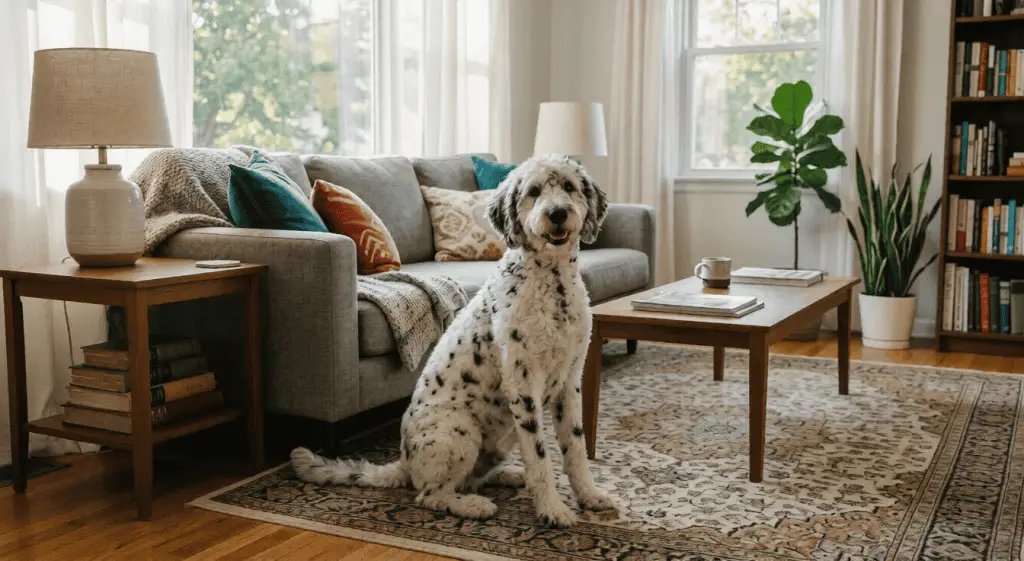
Dalmadoodle Health at a Glance:
- Average Lifespan: 11–14 Years
- Genetic Advantage: Robust athleticism and vital dilution of the Dalmatian’s unique urinary and auditory risks.
- Mandatory Breeder Clearances: BAER (Hearing), OFA Hips, and DNA testing for Hyperuricosuria (HUU).
The Dalmadoodle pairs the striking, athletic build and tireless energy of the Dalmatian with the highly trainable, intelligent nature of the Poodle. From a genetic standpoint, crossing a Dalmatian with a Poodle is often a strategic move to introduce vital hybrid vigor, aimed specifically at combatting some of the Dalmatian’s most notorious inherited flaws.
Purebred Dalmatians have a unique urinary tract system that makes them exceptionally prone to Hyperuricosuria (HUU)—a condition that causes severe, life-threatening kidney and bladder stones. Furthermore, the breed carries a very high rate of congenital deafness linked to their piebald spotting gene. While introducing Poodle genetics significantly dilutes these risks, a Dalmadoodle puppy can still inherit these traits if the foundation stock is poorly selected.
As a researcher, I strongly advise buyers to be uncompromising when evaluating Dalmadoodle breeders. You must demand passing BAER (Brainstem Auditory Evoked Response) test results for the Dalmatian parent to rule out hereditary deafness. Additionally, verify passing hip scores from the Orthopedic Foundation for Animals (OFA), and insist on seeing clear DNA testing for HUU from a recognized laboratory to ensure your companion’s long-term urinary health.
10. The Bordoodle (Border Collie x Poodle)

Bordoodle Health at a Glance:
- Average Lifespan: 12–15 Years
- Genetic Advantage: Exceptional athleticism, high intelligence, and dilution of breed-specific eye anomalies.
- Mandatory Breeder Clearances: OFA Hips, Collie Eye Anomaly (CEA) DNA test, and MDR1 Gene testing.
The Bordoodle combines the unmatched work ethic and canine intelligence of the Border Collie with the highly trainable, low-shedding traits of the Poodle. From a biological standpoint, crossing these two incredibly agile breeds introduces excellent hybrid vigor, creating a remarkably athletic and resilient companion that thrives in active households.
While Border Collies are generally considered a healthy working breed, they carry very specific genetic vulnerabilities that can easily be passed down to a Bordoodle mix. The most notable of these are Collie Eye Anomaly (CEA)—a congenital condition that can lead to blindness—and the MDR1 gene mutation, which causes severe, sometimes fatal, sensitivities to common veterinary medications and anesthetics.
As a researcher, I advise that you approach a Bordoodle litter with strict requirements for genetic documentation. You must demand passing hip scores from the Orthopedic Foundation for Animals (OFA) to ensure their joints can handle their high-energy lifestyle. Most importantly, insist on seeing clear DNA testing for both CEA and the MDR1 gene from a reputable laboratory like Paw Print Genetics or Washington State University’s Veterinary Medicine lab to guarantee you are bringing home a genetically sound puppy.
💡 Didn’t Find Your Perfect Match?
If you are looking for a breed with a specific energy level, size, or coat type not covered in this top 10 health list, don’t worry. We have profiled all the major crosses in our master directory. Continue your search with The 50 Best Poodle Mixes: A Helpful Guide with Pictures.
What Health Problems do Mixed Breed Poodles Have?
As we have touched on previously in this article, there are still some health problems that can come about with mixed breed dogs. So much of it will depend on the breeds that they are mixed with, so it is important to check with the breeder to understand the health of the parents.
With poodles, there are five health issues that you need to keep an eye on that can manifest themselves. These may become a problem for poodle mix breeds as well, so be sure to ask the breeder about whether or not the parents of the puppy experienced any of these conditions.
Common health conditions that affect poodle mixes include:
1. Bloat
Bloat is an illness that can become dangerous if not taken care of quickly. Typical symptoms of Bloat that you need to keep an eye on are Dry heaving, expanded and firm stomach, excessive drooling, or restlessness. This can turn deadly if not addressed quickly.
2. Addison’s Disease
Addison’s Disease is another one that is fairly common for a poodle crossbred. This is a disease caused by defective adrenal glands that cannot produce enough cortisol. Symptoms of Addison’s Disease include vomiting and diarrhea, along with a lethargic attitude and depression.
This can show itself in a lack of appetite or excessive thirst. It is a treatable disease that can be taken care of with oral medication daily.
3. Thyroid Problems
Thyroid problems can typically show themselves when poodle or poodle mix begins to age. Thyroid issues are caused by vitamin and nutrient deficiencies which can result in longer recovery times from injuries and a deteriorating immune system. A poodle mix can show these symptoms as changes in behavior or as physical manifestations.
4. Hip Dysplasia
Hip Dysplasia is another common ailment that can occur as your poodle mix ages. This occurs when the hip socket wears down, and there are frequent dislocations and relocations.
Dogs will show discomfort by walking gingerly or being slow to rise off the floor. Anti-inflammatory medicine can be a treatment for this issue when the dogs get older, but should only be used when under the care of a qualified veterinarian.. Keeping your dog fit and active throughout his life will help to lower the chances of developing this disease..
5. Epilepsy
Another potential ailment is epilepsy. This can be a very startling experience for both the dog and the owner. When your dog is experiencing an epileptic seizure, it is important to remain calm and try to place a pillow gently beneath its head. Once finished, you will want to report the duration and intensity of each seizure to your veterinarian to determine if you will need to medicate, or further treat your dog.
There are plenty of measures you can take to try to prevent these ailments. An important aspect of being a dog owner is making sure that you have researched the best ways to care for your canine, and that starts with diet, exercise, and regular vet visits. Making sure your dog receives the correct meals and dental care will also ensure that your dog is in the best physical shape it can be in.
I feed my dog high-quality food from Pet Plate. Pet Plate is a premium dog food subscription service that provides freshly cooked and pre-portioned meals, and snacks, completely customized for your dog. I really love the fact that Pet Plate delivers the highest quality meals to my door without me ever having to think about it! Check out Pet Plate here to find more information and see if Pet Plate is right for you and your pet.
How Can You Make Sure Your Poodle Mix is Healthy?
As is the case with just about any dog, the key to the overall health of your pet is directly proportional to the care you provide. When you are looking into adopting a poodle mix, it is important to research each breed you will be considering to understand the different health issues that may be associated with those breeds.
As mentioned previously, the diversity of the poodle parent’s genes give it a better chance at stellar health. This is measured through something called the Coefficient of Interbreeding. The lower this number, the better, as that means there is great genetic diversity with the breed. So, with poodle mixes, they will gain great genetic diversity when mixed with breeds they are not related to.
Why does this matter? I will give you an example. If one dog parent is has developed heart problems, any puppies have a higher chance of developing heart problems.
When dogs are mixed with a breed that does not have a history of heart disease, then the puppies have a better chance of not developing heart disease during their lives.
With so many different breeds of poodles, it can be difficult to determine which is the best fit for you for a multitude of reasons.
Are Poodle Mixes Healthier than Purebred Poodles?
The genetic health of any poodle mixed-breed dog is often dependent on their non-poodle parent.
While purebred poodles are typically healthy dogs, poodle mixes are generally more healthy than their poodle parent. Poodle mixes enjoy greater genetic diversity and experience a lower risk of genetic disease than purebred poodles. However, your dog’s health will be contingent on the genes of each contributing parent.
Again, the COI is key here. Standard poodles COI have an exceptionally low number (2.3%), with toy poodles also being low at 4%. From there, it is important to find a non- poodle breed that also has a low COI .
As we mentioned above, diversity is great with keeping a COI low and diversifying the gene pool to lower the risk of genetic diseases with dogs. However, there are some risks that can run with mixed breed dogs, namely inbreeding.
Inbreeding in dogs is most detrimental when both breeds/parents are prone to the same health conditions. This will raise the probability that the offspring will develop the affected condition. This is why research is key when considering poodle breeds.
If you mix two breeds that are prone to hip conditions, then the possibility that your dog will develop hip conditions is twice as high, as they could inherit those genes from both the mother and father.
The reverse is also true, of course, in that dogs can inherit the best genes from their parents. So, finding poodle mixes with breeds with other strong, desirable characteristics will go a long way in making sure that your furry friend lives a strong, healthy life.
Why Are Poodle Mixes So Popular?
Poodle mixes have become some of the most popular “designer breeds” in the world over the past ten years. Poodle breeds are known for being loyal and intelligent companions and are generally healthier than their parents. Additionally, many poodle crossbreeds are hypoallergenic, perfect for families with allergies.
One of the biggest benefits of a poodle mix dog is that they are hypoallergenic and, as a result, are safe to own for people who have dog allergies. This is also helpful as these dogs typically will not shed as much or have as much dander. This is a result of the curly, poodle hair that so many of these breeds have.
Additionally, poodle mixes are very, very smart. Poodles are very well known for being dogs of high intelligence. Many of the dogs that they are mixed with form poodle breeds that are intelligent as well. One of the breeds that are perhaps the smartest is the Borpoodle, which is a mix between a Border Collie and a Poodle. Border Collies are also one of the smartest dog breeds which makes the combination an extremely intelligent mixture.
Questions to Ask a Doodle Breeder
This checklist is designed to help you vet a breeder and ensure you are getting a genetically sound and ethically raised companion.
1. Health Testing & Genetics
- “Can you provide verifiable copies of the official health certifications for both parent dogs (e.g., OFA/PennHIP for joints, CAER for eyes, and Advanced Cardiac)?”
- Why this matters: You need to see actual documents, not just take their word for it. Specific tests are breed-dependent.
- “What specific DNA panel testing have you performed on the parent dogs to rule out breed-specific recessive diseases (e.g., PRA, MDR1, HUU)?”
- Why this matters: This ensures the parents are not carriers of genetic conditions that could be passed to your puppy.
- “What is the average lifespan of the parent dogs’ lines, and can you tell me about the longevity of the grandparents?”
- Why this matters: This gives a real-world indicator of the line’s overall health and vitality beyond genetic tests.
2. Meet the Parents & See the Environment
- “Can I meet the mother (and the father, if he is on-site)?”
- Why this matters: This allows you to assess their temperament and overall health firsthand. The mother’s behavior is particularly influential on the puppies.
- “Where do the puppies and parent dogs live day-to-day, and can I see the living conditions?”
- Why this matters: Look for a clean, safe, and stimulating environment, not a kennel or a simple concrete run.
- “How are the puppies socialized, and what specific enrichment protocols do you use (e.g., Puppy Culture, Early Neurological Stimulation)?”
- Why this matters: Early socialization is critical for developing a confident, well-adjusted dog.
3. The Breeding Philosophy & Process
- “How many years of experience do you have with these specific breeds/mixes?”
- Why this matters: Look for someone with a deep understanding of the unique traits and challenges of both the Poodle and the other parent breed.
- “How often do you breed your parent dogs, and what are their lives like when not breeding?”
- Why this matters: Ethical breeders prioritize the dogs’ well-being and do not overbreed.
- “How do you decide which puppies are matched with which families? Do you perform temperament testing?”
- Why this matters: A responsible breeder makes matches based on temperament and lifestyle fit, not just aesthetics or first-come, first-served.
4. Post-Purchase Support & Warranty
- “What kind of health guarantee or warranty do you offer, for how long, and exactly what does it cover?”
- Why this matters: A meaningful guarantee should cover serious genetic and congenital issues for at least two years. Read the fine print.
- “What kind of support do you provide to new owners after the puppy goes home?”
- Why this matters: Good breeders are a lifelong resource for training, health questions, and general advice.
- “Do you have a take-back policy in your contract that states you will take the dog back at any point in its life if I can no longer care for it?”
- Why this matters: This is a hallmark of an ethical breeder who takes full responsibility for the life they create.
Where Can I Get A Poodle?
Poodle Mix dogs are in extremely high demand, seeing as they have the benefits of being hypoallergenic along with their friendly personality. This makes it a bit harder to find them, Breeders are the best option in order to find a healthy poodle to join your family.
It is extremely important to vet out the breeder who you will be adopting from, as their care for the poodle can be the difference between a healthy puppy and one who may have some health issues.
However, there are definitely options for anyone who is looking to rescue a poodle. This is a resource that contains a great list of options for places where you can rescue a poodle for the family. Some folks are unable to maintain the lifestyle that a lot of poodles require as well as some of the extra costs that may be associated with the grooming of the dog.
Once again, you will want to do your research even when you are going the rescue route so that you will be able to understand what the health background is for the puppy. This is important to make sure that you are properly equipped for whatever it is that the dog may require in the health department.
Absolutely! A dedicated FAQ section is crucial for capturing “People Also Ask” (PAA) search queries and establishing authoritative expertise in your niche. Adding Schema markup to this section is highly recommended for maximizing SEO benefit.
Poodle Mix Health FAQ
This section addresses some of the most common questions and misconceptions about the health of Poodle mixes. For a comprehensive overview of the characteristics, temperaments, and histories of all the major Poodle crosses, visit our Poodle Mixes Category Page.
This section addresses some of the most common questions and misconceptions about the health of Poodle mixes. For deeper insights, be sure to check our definitive guide on Poodle Health & Genetics and our tailored advice for Poodle mix nutrition.
Are Poodle mixes really healthier than purebreds?
Generally, yes. This is due to a biological phenomenon known as hybrid vigor (or heterosis). When two unrelated purebred lines are crossed, the resulting offspring benefit from a significantly wider gene pool. This statistically reduces the probability of inheriting the recessive genetic mutations that often plague tightly bred purebred lines.
Which Poodle mix lives the longest?
Generally, the smaller Poodle mixes tend to have the longest lifespans, often reaching 14 to 18 years or more. This includes crosses bred from Toy and Miniature Poodles, such as the Cockapoo, Cavapoo, and Maltipoo. Their exceptional longevity is a result of both hybrid vigor and the slower biological aging process inherent to small-framed dogs.
What is the healthiest large Poodle mix?
The Standard Labradoodle, Goldendoodle, and Bernedoodle are all incredibly robust options. However, their health is entirely dependent on the parent dogs’ genetics. Because both parent breeds are typically large, they are highly susceptible to joint and cardiac issues. For a healthy puppy, you must select a breeder who can provide official OFA health clearances for hip/elbow dysplasia and cardiac health for both parent dogs.
Do Poodle mixes have fewer issues with their coats or allergies?
This is a common misconception. While Poodles are famous for being “hypoallergenic” and non-shedding, a Poodle mix can inherit any combination of its parents’ coats. An F1 (first generation) cross, like a 50/50 Labradoodle, may still shed or have a coat that requires intense professional grooming to prevent severe matting. For a more predictable low-shedding coat, many breeders focus on F1B crosses (75% Poodle), but this backcrossing slightly reduces the protective effect of hybrid vigor.
What kind of health testing is most important for a Poodle mix?
The single most critical health test is an orthopedic clearance—specifically hip and elbow dysplasia scores from the Orthopedic Foundation for Animals (OFA). These structural issues are incredibly common across almost all medium to giant breeds. Beyond that, the required testing is highly breed-dependent. For example, a Cavoodle needs an Advanced Cardiac screening (specifically an echocardiogram) due to the Cavalier parent’s high risk for heart disease, while a Bordoodle needs DNA testing for the MDR1 gene sensitivity. Always ask your breeder for copies of these specific health certifications.
Final Thoughts
This is a personal question! Whether or not a poodle is the best fit for you depends on the type of lifestyle that you live and the type of companion that you are looking for when it comes to your dog. Make no mistake, a lot of these dogs require a great deal of physical activity as they are energetic dogs and need to get that energy out.
In addition to the activity requirements that come along with these dogs, there are also definite monetary investments that are more than usual. The fact that they are hypoallergenic definitely comes with big-time benefits when it comes to clean-up and allergens, but it comes at a price.
On top of a higher price to adopt one of these dogs, with some Poodles going for $3,000 or more. This is only the start, as there are also the costs that come along with the grooming needs for these dogs. Since they do not shed, their coats will get increasingly shaggy. You will need to get their coats cut on a regular basis, and those costs can definitely add up.
At the end of the day, there will always be increased costs associated with adopting a dog and bringing it into your family. If you can afford the price associated with the dogs, you will be rewarded with a loyal, friendly, and intelligent companion that will fill your life with love and joy.
Medical & Veterinary Disclaimer: PoodleReport.com is an informational resource for Poodle owners and enthusiasts. We are not veterinarians. The content on this website is not a substitute for professional veterinary care, diagnosis, or treatment. Always seek the advice of your veterinarian with any questions you may have regarding your pet’s medical condition, diet, or overall health.