

Disclaimer: The information provided on PoodleReport.com is for educational purposes only and does not constitute veterinary medical advice; always consult your vet before changing your dog’s diet. Additionally, this post contains affiliate links. As an Amazon Associate, and other affiliate advertising programs, I earn from qualifying purchases at no extra cost to you.
If you are looking for a new family dog, both the Bernedoodle and the Poodle make excellent, kid-friendly pets that bond quickly with their owners. However, as we head into 2026, prospective owners are moving away from “designer dog” trends and seeking hard data on size predictability, genetic health, and allergy friendliness.
This comparison is part of my comprehensive Poodle Mixes Resource Hub, where I analyze how different breeds compare to the intelligence and health standards of the purebred Poodle.
While both are intelligent and affectionate, the Poodle is a refined purebred with a centuries-old history, whereas the Bernedoodle—a cross between the Bernese Mountain Dog and the Poodle—is a versatile hybrid designed for companionship. According to recent 2026 popularity reports from Rover, the Bernedoodle has officially become a staple for suburban families, while the Poodle remains the gold standard for high-level trainability.
In this guide, we will break down the significant differences between these two breeds, provide the most accurate size charts available for 2026, and help you determine which of these lovable dogs is the right genetic fit for your family.
The 2026 Poodle vs. Bernedoodle Size Predictor
One of the biggest challenges for new owners is the “Size Surprise.” While Poodles are purebred and follow a very predictable growth curve, Bernedoodles can vary wildly depending on which parent’s bone structure they inherit. To help you plan your living space and exercise needs, I have compiled this data-backed size comparison for 2026.
| Size Category | Poodle Weight (Avg) | Bernedoodle Weight (Range) | Best Living Environment |
| Toy / Micro | 6–9 lbs | 10–24 lbs | Apartment or Urban Condo |
| Miniature | 15–17 lbs | 25–49 lbs | Suburban Home or Large Apt |
| Standard | 45–70 lbs | 70–90+ lbs | Large Home with Fenced Yard |
Researcher’s Tip: To estimate your puppy’s adult weight, many veterinary experts recommend a simple formula: double their weight at 16 weeks and add 5–10% for “filling out.” For Standard Bernedoodles, expect growth to continue until 18 months, whereas Poodles typically stabilize their frame by 12 months.
It is also worth noting that Bernedoodles often feel “heavier” than Poodles of the same height. This is due to the Bernese Mountain Dog’s heritage as a draft animal. While a Poodle is built for agility and “lightness” in the water, a Bernedoodle carries a sturdier, broader chest.
If you are looking for a hiking companion that can handle rugged terrain, the Bernedoodle’s build is an advantage; if you want a dog that is easy to lift into a car or bathtub, the Poodle is the clear winner.
Key Factors to Consider Before Choosing the Right Dog Breed:
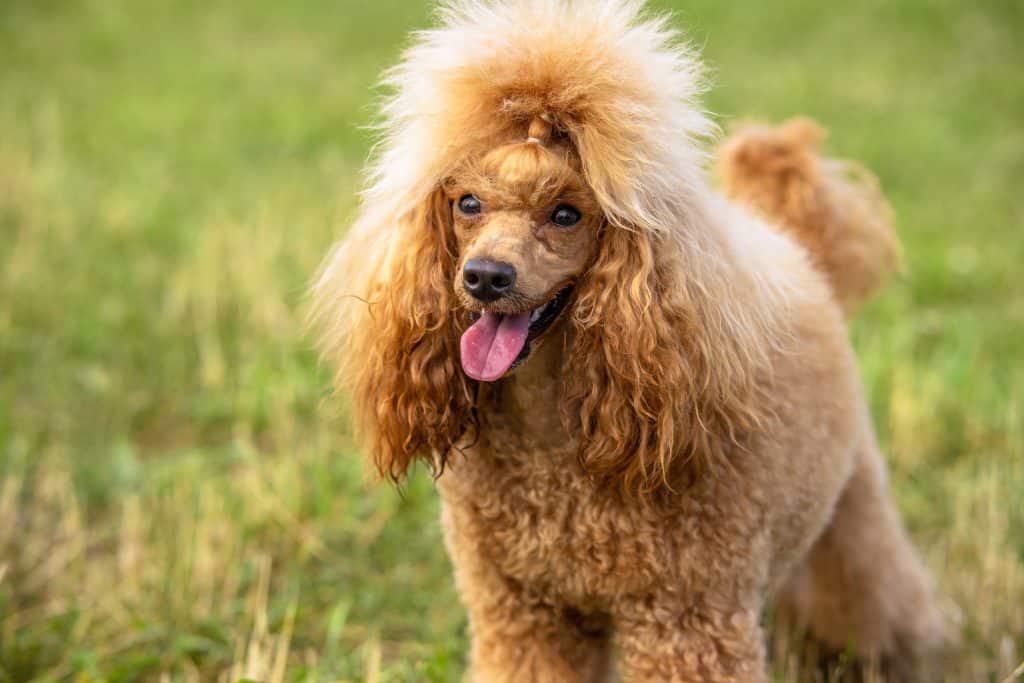
Whether your new pup will be your first dog or you’re adding another dog to the pack, it’s vitally important to choose the right dog to fit your family’s unique culture and lifestyle. With that said, there are some key factors that you can employ to help make the decision process a little easier.
The Genetic Health Gap: Purebred Stability vs. Hybrid Vigor
A common debate among prospective owners is whether the Bernedoodle’s status as a hybrid offers better health than the purebred Poodle. In my years of researching Poodle health—and navigating the veterinary care required for my own dog, Angus—I’ve learned that the term “Hybrid Vigor” is often misunderstood by the general public.
While it is true that a diverse gene pool can reduce the risk of certain breed-specific recessive disorders, it is not a biological “pass” for health issues. According to longitudinal data from the Institute of Canine Biology, mixed breeds often show lower incidences of some genetic diseases, but they remain susceptible to conditions shared by both parent breeds.
For both the Poodle and the Bernedoodle, there are three non-negotiable health benchmarks you should verify with any breeder in 2026:
- Hip and Elbow Dysplasia: Both breeds are prone to joint issues, especially the Standard and Giant varieties.
- Von Willebrand’s Disease (vWD): This is a common bleeding disorder found in many Poodle lines that can be passed to Bernedoodles.
- Gastric Dilatation-Volvulus (Bloat): Because both dogs are deep-chested, they are at high risk for this life-threatening condition. According to VCA Animal Hospitals, knowing the signs of bloat is the most important “fact” any owner can learn.
12 Critical Factors for Choosing the Right Breed
Whether you are comparing the Poodle and the Bernedoodle or looking at another hybrid, your decision should be based on long-term compatibility. In my research as a dog owner and breed enthusiast, I recommend evaluating these 12 key factors before making a commitment:
I. Time & Lifestyle Commitments
- Grooming Requirements: The required time and financial cost associated with maintaining a non-shedding coat (essential for Poodles and Doodles).
- Socialization & Training: The daily hours required to properly socialize and train a new puppy during its formative months.
- Activity Level: The specific exercise requirements needed to maintain the dog’s physical and mental health.
- Barking Tendencies: Knowing your own “bark tolerance” compared to the natural vocal habits of the breed.
II. Home & Environment Compatibility
- Physical Size: How the dog’s adult size and weight fit your preferred living situation (e.g., apartment vs. large yard).
- Family Dynamics: Whether you currently have children in the home or plan to have them in the future.
- Climate Acclimation: Assessing whether the dog’s coat and energy levels are suited for your local climate.
- Local Rules & Ordinances: Being aware of local laws, breed restrictions, or homeowners association rules involving dog ownership.
III. Financial & Sourcing Decisions
- Ownership Costs: Calculating both the initial purchase price and the recurring costs (food, insurance, vet care) involved in ownership.
- Breed Temperament: Matching the innate personality and behavioral traits of the breed with your family’s unique culture.
- Adoption vs. Breeder: Determining whether to adopt a dog from a shelter or purchase a puppy from a health-tested, reputable breeder.
- The Age of the Dog: Deciding between the high-intensity needs of a puppy versus the established temperament of an adult dog.
I cannot stress this enough: only work with breeders who provide OFA (Orthopedic Foundation for Animals) clearance and CHIC (Canine Health Information Center) certification for both parents. This level of transparency is the only way to ensure your puppy has a foundation for a long, healthy life.
Dogs make excellent pets for almost every family situation. However, it’s important to consider these twelve key factors to help determine whether the dog is a good fit for your family’s lifestyle and personal expectations.
Bernedoodle Facts: What You Should Know
Bernedoodles are a cross between a Bernese Mountain Dog and a Poodle and originate from Canada. Bernedoodles are not recognized by the American Kennel Club or by most other well-known clubs. However, this breed is recognized by less well-known clubs, such as the American Canine Hybrid Club.
The Hypoallergenic Truth: F1 vs. F1b Generations
One of the primary reasons families choose a Poodle-mix is the promise of a “non-shedding” coat. However, it is a common misconception that all Bernedoodles are 100% hypoallergenic. While the Poodle is a purebred non-shedding dog, the Bernedoodle is a genetic cross, and the amount of “Poodle coat” they inherit depends on their generation.
To ensure you find a dog that won’t trigger your allergies, you need to understand the 2026 breeding standards:
- F1 Bernedoodle (50% Poodle / 50% Bernese): This is a first-generation cross. These dogs often have “wavy” coats. While they shed significantly less than a purebred Bernese Mountain Dog, they still produce dander and may shed lightly.
- F1b Bernedoodle (75% Poodle / 25% Bernese): This “backcross” involves breeding an F1 Bernedoodle back to a Poodle. According to coat genetics research from Embark Veterinary, this generation is much more likely to inherit the “furnishings” gene, resulting in a curly, non-shedding coat nearly identical to a Poodle’s.
If someone in your home has moderate to severe dog allergies, a Purebred Poodle or an F1b Bernedoodle are your only scientifically sound choices. As a researcher, I always recommend a “t-shirt test”—spending time with a specific puppy to see if your allergies react before bringing them home.
Essential Bernedoodle Facts: 2026 Breed Guide
The Bernedoodle is a versatile hybrid, but because they are a crossbreed, their traits can vary significantly. In my research, I have found that understanding the balance between the Bernese Mountain Dog and the Poodle is key to setting the right expectations. Here are the vital statistics:
I. Costs, Size, and Physical Traits
- Investment: A Bernedoodle puppy typically costs between $2,000 and $5,000, depending on the breeder’s reputation and the puppy’s coat patterns (tricolor being the most expensive).
- Size Variance: While a standard adult averages 50 pounds and stands 18–22 inches tall, they can vary from “Tiny” (10 lbs) to “Standard” (90+ lbs).
- Coat Variety: They can inherit curly, wavy, or straight hair. Generally, the curlier the coat, the more hypoallergenic the dog will be.
- Color Patterns: Common colors include black, black and white, brown and black, and the highly sought-after tricolor (black, white, and tan).
II. Temperament and Training
- Family Compatibility: They are exceptional pets for children and the elderly due to their gentle, sturdy nature.
- Social Nature: Bernedoodles are generally friendly with strangers and other dogs. They are typically “average” with cats, though early socialization is key.
- Stubborn Streak: Unlike the “eager-to-please” Poodle, Bernedoodles can be stubborn. This makes them a challenge for some first-time owners, though they are deeply loyal.
- Service Potential: While their stubbornness can make them harder to train than a purebred Poodle, their calm “Bernese” temperament makes them excellent candidates for therapy work.
- Low Drool: Unlike purebred Bernese Mountain Dogs, the Bernedoodle has a very low tendency to drool.
III. Health, Grooming, and Lifespan
- Longevity: They enjoy a long life expectancy of 12–18 years, significantly longer than the purebred Bernese parent.
- Health Benchmarks: They are generally healthy but should be screened for hip and elbow dysplasia, ocular issues, skin diseases, and allergies.
- Grooming Requirements: High. Contrary to popular belief, Bernedoodles require significant grooming. Their “low-to-no shedding” coat traps dead hair, which leads to painful matting if not brushed several times a week and professionally groomed every 6–8 weeks.
Essential Poodle Facts: 2026 Breed Guide
The Poodle is a world-class purebred with roots in Germany and France. Renowned for their high intelligence and athletic history, they were officially recognized by the American Kennel Club in 1887. Today, they remain one of the most popular breeds for families needing a hypoallergenic, highly trainable companion.
I. Costs, Size, and Physical Traits
- Investment: A Poodle puppy from a reputable, health-tested breeder typically costs between $1,500 and $5,000.
- Standard Size & Weight: While Poodles come in three sizes, the Standard variety averages 52–58 pounds and stands 15+ inches at the shoulder.
- Hypoallergenic Coat: Poodles possess a single-layer, curly coat that is strictly non-shedding. They are the gold standard for owners with severe dander sensitivities.
- Color Variety: They are one of the most color-diverse breeds, appearing in apricot, brown, gray, silver, white, fawn, blue, cream, red, beige, and jet black.
- Low Mess: Poodles have a very low tendency to drool, making them an excellent choice for tidy households.
II. Temperament and Training
- Elite Intelligence: Consistently ranked as the #2 smartest dog breed, Poodles are exceptionally easy to train and thrive on mental stimulation.
- Versatile Service: Due to their “focus” and work ethic, Poodles make world-class service and therapy dogs.
- Family Life: They are among the best breeds for children and the elderly, known for being intuitive and gentle.
- Social Compatibility: Poodles generally get along well with other dogs and cats and are considered very stranger-friendly.
III. Health, Grooming, and Lifespan
- Longevity: Poodles are remarkably long-lived, with an average lifespan of 12 to 19 years.
- Health Benchmarks: While generally hardy, they are predisposed to specific hereditary conditions. In my research, I’ve found that Standard Poodles should be screened for Addison’s disease, Bloat (GDV), Hip Dysplasia, and Von Willebrand’s Disease.
- Grooming Requirements: Extensive. To prevent painful matting, Poodles require professional grooming every 6–8 weeks and daily brushing if the coat is kept long.
Quick Comparison: Poodle vs. Bernedoodle
When comparing these two breeds side-by-side, the choice often comes down to predictability vs. personality.
- Physicality & Space: While both breeds offer a variety of sizes, the Standard Poodle is a lighter, more athletic athlete built for agility. In contrast, the Bernedoodle is a sturdier, heavier-boned companion that often “feels” larger due to its Bernese heritage. If you live in a smaller apartment, the predictable size of a Miniature or Toy Poodle is often the safer bet.
- Grooming & Allergies: Both breeds require high-maintenance grooming to prevent matting. However, if severe allergies are a factor in your household, the Poodle offers 100% certainty of a non-shedding coat. With a Bernedoodle, you must carefully choose an F1b generation to achieve that same level of hypoallergenic reliability.
- Training & Temperament: The Poodle is a “high-focus” dog that excels at service work and complex obedience. The Bernedoodle brings a more relaxed, “goofy” energy to the home, but their independent stubbornness means they may take longer to train than a purebred Poodle.
Personality Profiles: The “Work Ethic” vs. The “Goofy” Streak

While both dogs are highly intelligent, their “work ethic” and energy levels differ significantly. In my research—and in my daily life with Poodles—I’ve found that owners often underestimate the mental stimulation a Poodle requires compared to the more laid-back nature of a Bernedoodle.
- The Poodle (The Focused Professional): According to the American Kennel Club (AKC), Poodles rank as the #2 most intelligent dog breed. They were originally bred as water retrievers, which means they are “focus-driven.” A Poodle needs a job to do. Without mental puzzles or active play, they can become bored and vocal.
- The Bernedoodle (The Goofy Companion): The Bernedoodle inherits the “velcro dog” personality from the Bernese Mountain Dog. They are often described as “goofy” and “sturdy.” While they are smart, they can have a stubborn streak (especially during the teenage months). They are usually happier to “lounge” with the family than a Standard Poodle would be.
As a Poodle owner, I can tell you that a Poodle’s intelligence is a double-edged sword—they learn fast, but they also learn how to outsmart you! If you want a dog for agility or high-level obedience, choose the Poodle. If you want a sturdy, affectionate “couch potato” who enjoys a moderate daily walk, the Bernedoodle is likely your best fit.
Bernedoodles: Positives and Negatives of Ownership
In this section, let’s talk about the pros and cons of Bernedoodle ownership.
Pros of Owning a Bernedoodle
- Few Health Problems
- Bernedoodles are good swimmers
- Bernedoodles get along well with other pets in the home.
- Most Bernedoodles are Hypoallergenic and shed very little.
- Bernedoodles are excellent for families with children.
Cons of Owning a Bernedoodle:
- Bernedoodles are expensive to purchase
- Bernedoodles cannot be left alone for long periods.
- These dogs are very active and need regular exercise.
- This crossbred needs more space than smaller dogs.
- Bernedoodles require a good deal of regular grooming.
Poodles: Positives and Negatives of Ownership
Now, let’s discuss the pros and cons of Poodle ownership.
Pros of Owning a Poodle
- Poodles are hypoallergenic and shed very little.
- Poodles are great in families with children or other pets.
- This breed is very easy to train.
- A friendly and loyal temperament
- Very easy to train.
Cons of Poodle Ownership
- Demanding grooming needs.
- Very Excitable if not properly trained.
- Poodles tend to get bored quickly when training or playing
- Require regular exercise and playtime.
- Poodles are prone to health issues such as hip dysplasia, and epilepsy. and bloat.
Apartment or Condo living: Poodle Vs. Bernedoodle
All size Poodles can do well living in an apartment or condo, but most Bernedoodles are not a good fit in small living spaces. However, both breeds do adapt very well to changes in their living environments.
Bernedoodles need only moderate exercise, while Poodles need a lot more. Both Poodles and Bernedoodles do not sleep excessively as they are each very energetic animals. Additionally, both do well in both warm and cold climates.
Hopefully, after taking a closer look at all the information about each breed, you are beginning to determine which breed would better fit your lifestyle and needs.
As you can see, there are many similarities between the two breeds, but enough differences you should be able to judge for yourself between the two.
Frequently Asked Questions: Poodle vs. Bernedoodle
Which breed is better for a first-time dog owner? Generally, the Poodle is a better fit for first-time owners. Their high “eagerness to please” makes them easier to train. Bernedoodles, while affectionate, inherit a stubborn streak from the Bernese Mountain Dog that can be challenging for those unfamiliar with consistent pack leadership.
Do Bernedoodles smell more than Poodles? Yes. Poodles are famous for having almost no “doggy odor” due to their single-layer coat. Bernedoodles, especially those with thicker F1 coats, tend to hold more oils and trapped moisture, which can lead to a more noticeable scent if they aren’t bathed regularly.
Which breed lives longer? Poodles typically have a longer lifespan, often reaching 12–15 years (and sometimes up to 18 for smaller varieties). Because Bernedoodles are a cross with a Giant breed (Bernese Mountain Dogs have an average lifespan of only 7–10 years), the hybrid usually averages 12–15 years, which is a significant improvement over the purebred Bernese.
Is a Bernedoodle or Poodle better for protection? While neither is a traditional “guard dog,” the Poodle is often more alert and vocal. A Poodle will almost certainly bark to alert you to a stranger. Bernedoodles are generally more “stranger-friendly” and may simply greet an intruder with a wagging tail.
Does a Bernedoodle require more grooming than a Poodle? They are roughly equal. Both require professional grooming every 6–8 weeks. However, the Bernedoodle’s coat can be more prone to “matting” if it is a wavy-type coat, as it traps loose fur more easily than the tight curls of a Poodle.
Final Verdict: Is a Poodle or Bernedoodle Right for You?
Choosing between a Poodle and a Bernedoodle ultimately comes down to your lifestyle and the level of predictability you require. After years of researching these breeds and living with the unique intelligence of my Poodle, Angus, I’ve found that the decision usually rests on three main factors:
- Choose a Poodle if: You live in an apartment, need a 100% hypoallergenic guarantee, or want a highly focused partner for service work or advanced training. The Poodle’s compact size (in Toy/Mini varieties) and predictable temperament make them the refined choice for structured households.
- Choose a Bernedoodle if: You have a large yard, prefer a “goofy” and more laid-back personality, and don’t mind a bit of unpredictability in size or coat type. The Bernedoodle is the ultimate companion for families looking for a sturdy, affectionate “velcro dog” who is less vocal than a purebred Poodle.
Ultimately, both breeds are exceptional family dogs. Whether you choose the sharp, athletic Poodle or the sturdy, playful Bernedoodle, you are bringing home a companion capable of deep bonds and years of loyalty.
Your choice should align with the amount of time you can commit to grooming, training, and exercise—ensuring a happy life for both you and your new best friend. If you are still weighing your options between these two breeds, you might find it helpful to see how the Bernedoodle compares to other popular crosses in our guide to the 50 Best Poodle Mixes.
Medical & Veterinary Disclaimer: PoodleReport.com is an informational resource for Poodle owners and enthusiasts. We are not veterinarians. The content on this website is not a substitute for professional veterinary care, diagnosis, or treatment. Always seek the advice of your veterinarian with any questions you may have regarding your pet’s medical condition, diet, or overall health.