

Let’s be honest: it’s nearly impossible to resist those big, soulful Poodle eyes when you’re slicing up an apple for a snack. Sharing a bite with your dog is a natural way to bond, but a canine’s digestive tract simply isn’t built like ours. While certain fruits offer fantastic hydration and a much-needed boost of vitamins, others contain hidden compounds that can quickly lead to an emergency vet visit.
As a researcher (and the proud owner of a Standard Poodle named Angus), I’ve spent countless hours diving into canine nutrition to make sure what drops on my kitchen floor is actually safe. Whether you are using fruit as a high-value training reward or just want to add some fresh antioxidants to their kibble, the golden rule of dog diets always applies. As recommended by the experts at the American Kennel Club (AKC), treats—including safe, fresh fruits—should never make up more than 10% of your Poodle’s daily caloric intake.
Before you share your morning fruit salad, use this guide to ensure every single bite is completely safe for their system.
While fruit is a fantastic addition to their bowl, it is just one piece of the puzzle. If you are looking for a complete breakdown of what should make up their daily meals, check out my comprehensive guide on the Best Foods for Poodles, where I dive into the top kibble and fresh food brands for every life stage
Quick Reference: Safe vs. Toxic Fruits for Poodles
If you currently have a Poodle sitting at your feet, staring a hole through your soul while you hold a piece of fruit, you probably need an answer right now. Use this quick-reference cheat sheet before tossing them a bite.
This list is cross-referenced with the toxic plant and food database from the ASPCA Animal Poison Control Center so you can share your snacks with total peace of mind.
| Fruit | Safe for Poodles? | Preparation & Toxicity Notes |
| Apples | ✅ Yes | Core and seeds MUST be removed (cyanide risk). |
| Avocados | ❌ NO (Toxic) | Contains persin; causes severe stomach distress. |
| Bananas | ✅ Yes | High sugar; feed sparingly. Remove peel entirely. |
| Blueberries | ✅ Yes | Excellent antioxidant; serve raw or frozen. |
| Cherries | ❌ NO (Toxic) | Pits and stems contain cyanide. |
| Grapes / Raisins | ❌ NO (Toxic) | Highly toxic; causes acute kidney failure. |
| Mango | ✅ Yes | Must remove the pit and tough skin before serving. |
| Strawberries | ✅ Yes | High in fiber; feed in moderation due to sugar. |
| Tomatoes | ❌ NO (Toxic) | Green parts contain solanine, a toxic chemical. |
| Watermelon | ✅ Yes | Excellent for hydration; must remove rind and seeds. |
5 Safe Fruits Your Poodle Can Eat (And How to Serve Them)
Dogs are omnivores, which means their digestive systems can actually benefit from the vitamins, minerals, and fiber found in fresh plant materials. Through my ongoing research into Angus’s diet—and a lot of trial and error at the cutting board—I’ve identified the absolute best, veterinarian-approved fruits to share with your Poodle.
Here are the top five, plus exactly how you need to prep them to keep your dog safe.
1. Apples (The Breath Freshener)
If your Poodle’s breath could knock over a small horse, apples are an outstanding, high-fiber remedy. They are packed with vitamins A and C, and the firm, crunchy texture actually helps scrape plaque off their teeth to naturally freshen them up.
- Preparation: You must remove the core and all seeds. Apple seeds contain trace amounts of cyanide, which is toxic to dogs. I always slice the apple into thin, bite-sized pieces so my dog doesn’t try to swallow a massive chunk whole.
2. Blueberries (The Superfood)
If you are doing obedience training and need a repetitive reward that won’t pack on the pounds, blueberries are the ultimate choice. According to the veterinary nutritionists at Tufts University’s Clinical Nutrition Service, fresh berries are an excellent, low-calorie treat rich in antioxidants, which help prevent cellular damage.
- Preparation: Toss them fresh for your dog to catch, or freeze them during the summer for a crunchy, cooling reward. Because they are naturally bite-sized, there is almost zero prep work involved.
3. Watermelon (The Hydrator)
During the sweltering summer months, Poodles (especially Standard Poodles with thick, dark coats) can overheat quickly. Watermelon is 92% water, making it a fantastic way to sneak some extra hydration into their day while giving them a sweet snack.
- Preparation: You must completely remove the green rind and any black seeds before feeding. The rind is incredibly tough to digest and is notorious for causing severe intestinal blockages that often require emergency surgery.
4. Bananas (The Potassium Boost)
You probably know the drill: you peel a banana in the kitchen, and suddenly a Poodle materializes at your feet. Bananas are excellent for their digestion and muscle function because they are loaded with potassium, vitamins, and biotin.
- Preparation: Bananas are very high in natural sugar (fructose), so they should be given strictly in moderation to avoid unnecessary weight gain. Always remove the peel entirely, as it is incredibly difficult for a dog to digest and will almost certainly cause a stomach ache.
5. Mango (The Vitamin Bomb)
Packed with vitamins A, B6, C, and E, mango is a sweet, messy treat that most dogs go absolutely crazy for. It is a fantastic occasional reward when you want to give them something extra special.
- Preparation: You absolutely must remove the tough outer skin and the large, hard pit. The pit is a massive choking hazard and, like apple seeds, contains trace amounts of cyanide. Just slice the soft, orange flesh into small, manageable cubes.
The Poodle Portion Guide: How Much is Too Much?
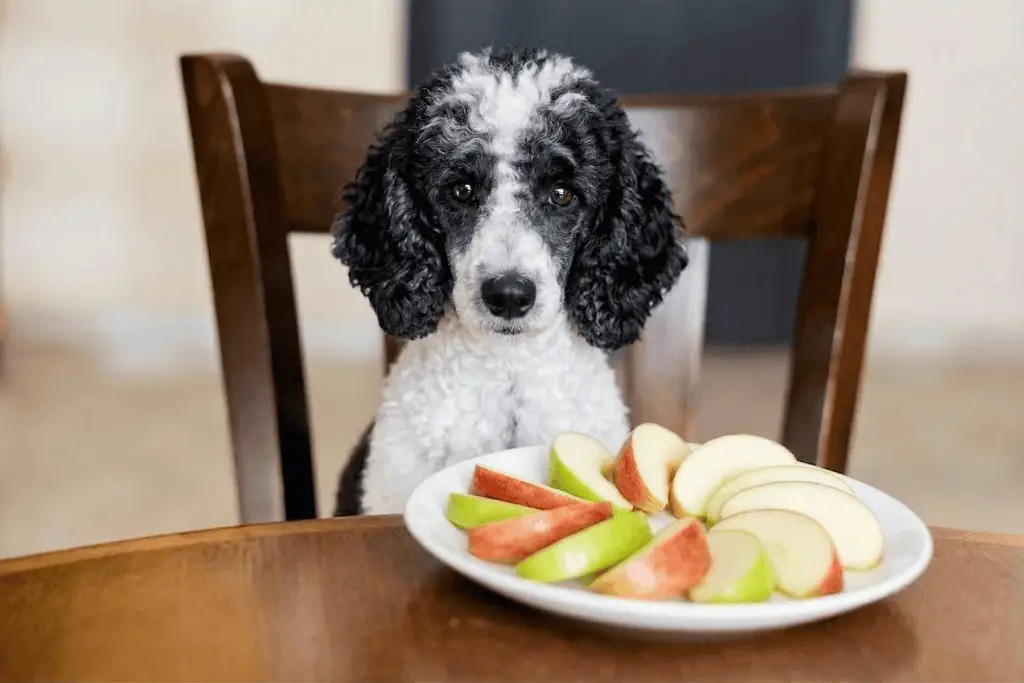
One of the most common mistakes owners make is treating all Poodles the same when it comes to serving sizes. A “handful of blueberries” is a light snack for a 60-pound Standard, but it could be an entire day’s worth of calories for a 6-pound Toy.
To keep your dog within the 10% treat rule, use this researcher-backed serving guide based on your Poodle’s specific size.
| Poodle Type | Typical Weight | Maximum Daily Fruit Serving (Approx.) |
| Toy Poodle | 4–6 lbs | 1–2 blueberries OR 1 paper-thin slice of apple. |
| Miniature Poodle | 10–15 lbs | 3–5 blueberries OR 2-3 thin slices of apple. |
| Standard Poodle | 45–70 lbs | 1 small handful of blueberries OR 1/4 of a medium apple. |
The “Rule of Thumb” for Variety
If you are mixing a fruit salad for your dog, aim for a total portion size no larger than the size of their paw. This is a quick, easy way to visualize a safe portion without needing to pull out a kitchen scale every time you’re prepping a snack.
Fruits Your Poodle Must Never Eat (The Toxic List)
While finding a healthy, safe snack is a great feeling, you have to be vigilant. Some fruits contain chemical compounds that a canine’s liver and kidneys simply cannot process. When I am chopping up ingredients for a fruit salad, I make absolutely sure that the following items are nowhere near the edge of the counter where a curious snout might snatch them.
If your Poodle ingests any of these, do not wait around to see if they get a stomach ache. Immediately contact your local veterinarian or the ASPCA Animal Poison Control Center.
1. Grapes and Raisins (Extreme Toxicity)
Grapes and their dehydrated counterpart, raisins, are highly toxic to all dog breeds. The exact toxic compound inside them is still being studied, but the clinical results are terrifyingly clear: ingestion leads to acute, rapid kidney failure.
- The Danger: According to the veterinary experts at VCA Animal Hospitals, grape toxicity is not strictly dose-dependent. Even a single grape or raisin can cause severe, fatal reactions in some dogs, regardless of their size. Keep them completely out of your home if possible.
2. Avocados (The Persin Problem)
Avocados contain a fungicidal toxin called persin. While humans can process a giant bowl of guacamole without issue, dogs are highly sensitive to this compound.
- The Danger: Eating avocado leaves, skin, or flesh can cause severe vomiting, diarrhea, and heart damage. Furthermore, that large, dense pit is a major choking hazard and can easily cause a fatal bowel obstruction if swallowed whole.
3. Cherries (The Cyanide Threat)
While the fleshy part around the cherry pit is technically safe, the pits, stems, and leaves contain dangerous levels of cyanide.
- The Danger: Cyanide disrupts cellular oxygen transport, meaning your dog’s cells literally cannot get the oxygen they need to survive. Symptoms include dilated pupils, difficulty breathing, and bright red gums. It is simply not worth the risk or the hassle of trying to pit cherries for your dog.
4. Green Tomatoes (Solanine Toxicity)
A small bite of a plain, fully ripe, red tomato is generally safe if it drops on the floor. However, the green parts of the tomato plant—including the stems, leaves, and unripe green tomatoes—contain a toxic alkaloid called solanine.
- The Danger: Solanine ingestion causes severe gastrointestinal distress, extreme lethargy, and a dangerously slowed heart rate. If you grow a vegetable garden in your backyard, make sure it is completely fenced off from your Poodle.
5. Raspberries & Blackberries (The Hidden Xylitol Warning)
Many older pet blogs still list raspberries and blackberries as completely safe superfoods. However, modern veterinary research has highlighted a critical nuance you need to know: these berries contain trace amounts of naturally occurring xylitol.
- The Danger: Xylitol is a sweetener that causes a rapid, life-threatening drop in blood sugar (hypoglycemia) in dogs, followed by liver failure. While a large Standard Poodle would need to eat a massive quantity of raspberries to experience clinical poisoning, it poses a much higher risk for smaller Toy and Miniature Poodles. It is always safer to skip these and stick to blueberries instead.
Fresh, Frozen, Canned, or Dried: The Preparation Rule

Once you know which fruits are safe, the next hurdle is how they are served. The processing method can turn a healthy snack into a sugary disaster (or worse). When I’m looking at different fruit options, I always follow these simple rules to keep things safe.
- Fresh and Frozen (The Gold Standard): Serving fresh fruit is always the best way to go. If you want a pro-tip for the summer, try freezing chunks of watermelon or fresh blueberries. It is a fantastic way to soothe the gums of a teething Poodle puppy or help an adult dog cool down after a long walk in the sun.
- The Pesticide Warning: Thin-skinned fruits like apples and strawberries are often heavily sprayed with chemicals. The Environmental Working Group (EWG) consistently lists these at the top of their “Dirty Dozen” pesticide list. Because Poodles have much smaller organs than we do, pesticide residue can impact them more significantly. I always make sure to wash fruit thoroughly or buy organic when it’s for my dog.
- Canned Fruits (The Hidden Danger): You should generally avoid canned fruits. Even if the fruit itself is “safe,” it’s usually sitting in a heavy, artificial syrup. These syrups are packed with sugar and sometimes use artificial sweeteners like xylitol, which is highly toxic to dogs.
- Dried Fruits: It is best to skip dried fruits like apricots or banana chips. The dehydration process concentrates the natural sugars, making them way too rich for a dog’s pancreas to handle. This usually leads to a very upset stomach and a messy cleanup for you later.
Toy vs. Standard Poodles: The Choking Hazard Scale
One thing every Poodle owner knows is that while they are the same breed, a Standard and a Toy might as well be from different planets when it comes to mealtime. When you’re preparing fruit, you have to account for these massive differences in jaw structure and airway size.
- Standard Poodles: Because they are larger, it’s tempting to just toss them a whole slice of apple. However, many Standards are notorious for “inhaling” their food without chewing. According to the American Veterinary Medical Association (AVMA), unchewed, dense items are a major cause of choking in large breeds. I always recommend slicing dense fruits like apples or melons into thin, flat pieces rather than thick chunks that could get lodged in the esophagus.
- Toy & Miniature Poodles: These smaller guys have extremely narrow tracheas. For a Toy Poodle, a single large blueberry or a thick slice of banana can quickly become a life-threatening choking hazard. If you have a smaller Poodle, you should always mash their fruit or cut it into paper-thin, pea-sized bites. If I’m giving blueberries to a small dog, I always give them a quick “squish” first just to be safe.
The 10% Treat Rule, Fructose, and The Bloat Risk
While fruit is a healthy addition, it’s important to remember that a dog’s digestive system is designed primarily for protein and fat. Dogs don’t process fructose (fruit sugar) as efficiently as we do. The universal veterinary standard, supported by the World Small Animal Veterinary Association (WSAVA), is that treats—including these safe, fresh fruits—should never exceed 10% of your Poodle’s daily caloric intake.
Feeding too much fruit can lead to rapid yeast overgrowth in the gut, severe diarrhea, and long-term obesity. My rule of thumb is to introduce only one new fruit at a time and wait a full 24 hours to monitor their stool. If everything looks normal, you’re good to go!
The Standard Poodle Bloat Risk: If you own a Standard Poodle, you likely already know about the risk of Gastric Dilatation-Volvulus (GDV), or “bloat.” Because Poodles are deep-chested, they are at a higher risk for this fatal condition where the stomach fills with gas and twists. Since the sugar in fruit can ferment in the digestive tract and create excess gas, you should never feed your Poodle a large portion of fruit right before or immediately after a high-energy run or play session. Keeping their “fruit snacks” small and timed away from heavy exercise is a simple way to keep them safe.
The Emergency Action Plan: What to Do If They Eat Toxic Fruit
Even with the best research and a carefully fenced-off garden, accidents happen. Maybe a guest dropped a raisin or your Poodle managed to snag an avocado pit out of the trash. If they swallow something from the “Toxic List,” the most important thing you can do is stay calm and act quickly. Do not wait for symptoms like lethargy or vomiting to show up; by then, the toxin is already being processed.
Instead, follow this immediate three-step plan:
- Clear the Area: Quickly remove any remaining fruit from their mouth or the floor. You want to make sure they (or any other pets) can’t get a second helping of whatever is causing the danger.
- Do NOT Induce Vomiting: It’s a common instinct, but never try to force your dog to throw up using hydrogen peroxide unless a vet explicitly tells you to. Some toxins are corrosive or can cause more damage to the esophagus coming back up than they did going down.
- Call for Help: Immediately call your local emergency veterinarian or the ASPCA Animal Poison Control Center at (888) 426-4435. Be ready to tell them exactly what was eaten, roughly how much, and your Poodle’s current weight. Having those details ready helps them give you the fastest, most accurate advice.
The “Watch & Wait” Checklist: A Triage Guide for Poodle Parents
If your Poodle has managed to snag a piece of fruit—whether it was on the “safe” list or the “toxic” list—you need to know exactly what signs warrant a call to the vet. Use this checklist to monitor their condition over the next 24 to 48 hours.
🟢 Green Light: Monitor at Home
If your Poodle is acting normally but has a mild reaction to a new fruit (like too many blueberries), you will likely see these symptoms. These usually resolve on their own within a day.
- A single bout of soft stool or diarrhea.
- Mild stomach “gurgling” or gas.
- Slightly decreased appetite for one meal.
- What to do: Skip the next treat, stick to plain kibble, and ensure they have plenty of fresh water.
🟡 Yellow Light: Call Your Veterinarian
These symptoms indicate that the fruit (or the quantity) has caused significant irritation or a mild toxic reaction. Do not wait for these to get worse.
- Multiple bouts of vomiting or diarrhea within a few hours.
- Noticeable lethargy (they aren’t greeting you at the door or playing).
- Abdominal pain (standing with a “hunched” back or whining when touched).
- Loss of appetite for more than 24 hours.
- What to do: Call your vet’s office, explain what was eaten, and describe these specific symptoms. They may ask you to bring your dog in for fluids or a checkup.
🔴 Red Light: Emergency Room Immediately
If you see any of the following, your Poodle is likely experiencing a severe toxic reaction or a physical obstruction. This is a life-threatening emergency.
- Pale or blue-tinted gums (indicates lack of oxygen or shock).
- Extreme restlessness or unproductive retching (a primary sign of Bloat). Detailed emergency signs of gastric torsion can be found in the Merck Veterinary Manual.
- Dilated pupils or difficulty breathing.
- Collapse, tremors, or seizures.
- Blood in the vomit or stool.
- What to do: Do not call; just go. If it’s after hours, head straight to the nearest 24-hour emergency animal hospital. For a complete list of clinical symptoms for specific toxins, refer to the ASPCA’s AnTox Toxicology Database.
Frequently Asked Questions (FAQ)
Can Poodles eat citrus fruits like oranges or lemons? While the fleshy part of an orange technically isn’t toxic, you should generally avoid citrus. The high citric acid content almost always leads to stomach upset and diarrhea. Furthermore, the rinds, peels, and seeds are toxic and contain essential oils that can cause central nervous system depression.
What is the best fruit for a Poodle’s upset stomach? If your Poodle has a mild case of the “runnies,” plain, mashed pumpkin (not the spiced pie filling) is the gold standard. It’s packed with soluble fiber that helps regulate digestion. A small, mashed slice of banana can also help settle things down.
Are strawberries safe for Toy Poodles? Yes, but moderation is everything. Because of their high sugar content, a Toy Poodle should only have about a quarter of a single strawberry, cut into tiny, manageable pieces to avoid a sugar spike or a choking hazard.
Conclusion
Sharing a fresh, fruity snack with your Poodle is one of those simple joys of dog ownership, but it pays to be a bit of a “research nerd” about it. By sticking to safe options like blueberries, apples, and watermelon—and being diligent about preparation—you can provide a healthy, antioxidant-rich boost to their day without the stress of an emergency vet visit.
Just remember to keep the portions small, keep the toxic list memorized, and always keep a close eye on their digestion. Your Poodle (and their stomach) will thank you for it!
Want to keep your Poodle’s bowl as healthy as possible? Check out my other full guides on Poodle Diet & Nutrition for more researcher-backed feeding tips!