
Disclaimer: The information provided on PoodleReport.com is for educational purposes only and does not constitute veterinary medical advice; always consult your vet before changing your dog’s diet. Additionally, this post contains affiliate links. As an Amazon Associate, and other affiliate advertising programs, I earn from qualifying purchases at no extra cost to you.
Poodles are often stereotyped as prim and proper show dogs, but beneath those fancy haircuts lies the heart of a highly social, intelligent, and athletic companion. Originally bred as water retrievers, Poodles of all sizes—Standard, Miniature, and Toy—thrive on interaction and teamwork.
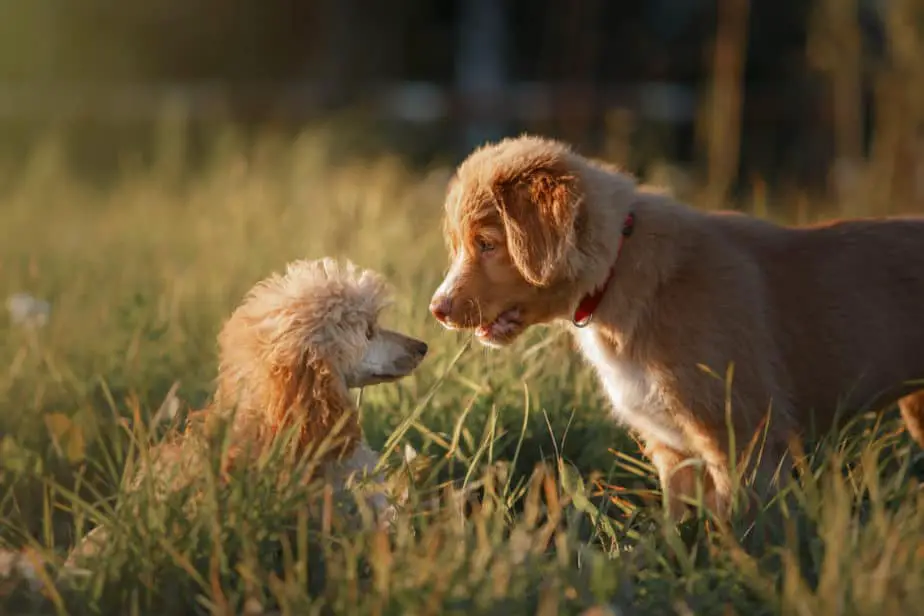
So, do Poodles get along with other dogs? Yes! When properly socialized, Poodles generally get along wonderfully with other canines. Their historic working background means they are observant and adaptable. However, loud noises or rough play can sometimes make them nervous if they haven’t been positively introduced to other dogs early on.
With the right positive reinforcement training, your Poodle can easily become a confident, playful friend at the local dog park or in a multi-pet household.
The Breed Compatibility Breakdown
As with all dogs, individual personality plays a bigger role than breed alone. However, because Poodles come in three distinct sizes, the breeds they play best with will vary based on physical stature and energy levels. Here are some of the best dog breeds that get along with Poodles:
- For Standard Poodles: Golden Retrievers, Labrador Retrievers, Bernese Mountain Dogs (and fantastic mixes like the Bernedoodle, as well as other Standard Poodles.
- For Miniature and Toy Poodles: Beagles, Pugs, Shih Tzus, Yorkies, and French Bulldogs.
While Poodles are generally very friendly, negative behaviors can emerge if they haven’t been properly socialized. When interacting with other dogs, there are a few common hurdles to watch out for. (If you want to explore more about why they act the way they do, you can browse all of my resources on Poodle behavior.
Dog Breeds That Get Along With Poodles
Because Poodles are highly adaptable and socially intelligent, they have the potential to make friends with almost any breed. However, finding the perfect playmate usually comes down to matching their specific energy levels and physical size to ensure both dogs feel safe and engaged. Let’s look at which dog breeds typically make the best companions for your Poodle’s specific variety.
The Critical Poodle Socialization Window
If you are bringing home a Poodle puppy, the most effective way to ensure they get along with other dogs is through early, proactive socialization. Canine behavioral researchers emphasize a critical developmental window that occurs between 3 and 14 weeks of age. During this period, puppies are exceptionally receptive to new experiences, animals, and environments.
Safely exposing your Poodle to other friendly, fully vaccinated dogs during this time is crucial. Positive interactions at a young age help prevent the hypersensitivity, fear-based barking, and nervous withdrawal that un-socialized Poodles sometimes display later in life. For detailed guidance on safely navigating this period before your puppy has had all their shots, the American Veterinary Medical Association (AVMA) offers excellent, science-backed resources on early socialization protocols.
Positive Introduction Training For Poodles

Poodles can get along with other dogs and play with them, just like friends. Before they do that, they need to be trained very well. Here are some positive training techniques that will help your poodle interact well with other dogs.
Positive introduction training includes the following steps:
1. Give Treats at a Distance
This method works well when you don’t have another dog to help you with your training. Sit or stand with your poodle away but in sight of a dog path or public area. When another dog comes into view, quickly praise and give your poodle a treat when he acts calmly.
2. Get Closer to the Other Dog
After your dog gains more experience at a distance, gradually reduce the distance until you are only a few feet away from the other dog. Make sure the dogs don’t touch or come in direct contact though. Continue to reward your poodle as he calmly reacts to the nearby dog.
3. Parallel Walking Your Poodle
Next, after your poodle is responding positively, walk your dog parallel to a walking path or trail a few feet away from another dog. Try to keep your dog’s attention and continue to reward him for calm behavior. Be sure to keep your poodle at a distance so the dogs do not come in contact with each other.
4. Introduce Your Poodle to Another Dog
After walking parallel with another dog, and you are happy with the result, It’s time to introduce your poodle to another dog. Ask another dog owner, walking a dog with a calm disposition, if you can introduce your dog to theirs. Make sure to keep the meeting short and reward your poodle for positive interactions.
5. Repeat the Process With Many More Dogs
Repeat this process with multiple dogs of many sizes and dispositions.
Screenshot This: Your Quick-Reference Introduction Checklist
- Choose Neutral Territory: Meet at a quiet park or neutral walking path, not inside your home or yard where your Poodle might feel territorial.
- Keep Leashes Loose: A tight leash creates physical tension that translates directly to anxiety. Keep the leash relaxed but secure.
- Allow the 3-Second Sniff: Let the dogs sniff each other for just three seconds, then gently and upbeatly call your Poodle away to prevent overstimulation.
- Reward the Calm: Immediately praise and give your Poodle a high-value treat for looking at you calmly instead of reacting or barking.
- End on a High Note: Keep the first few meetings under five minutes to ensure they end positively before either dog gets too tired or overwhelmed.
Putting these steps into practice takes patience, but it is entirely worth the effort. When I was first socializing my own Poodle, Angus, taking him to neutral territory and rewarding him just for staying calm made a massive difference in his confidence around other dogs. Start small, stay consistent, and always let your dog set the pace.
Training Your Poodle to Socialize Based on Size

All three varieties of the Poodle share the exact same high intelligence and eagerness to learn, but their physical size significantly influences how you should approach their training around other dogs.
Standard Poodles
As the largest variety of the breed, Standard Poodles are robust, highly athletic, and naturally confident. When socializing Standard Poodles with other dogs, your primary training focus should be on impulse control and polite manners. Because of their size and stamina, they can easily hold their own with big, energetic breeds like Retrievers or Boxers.
However, this also means their enthusiasm can unintentionally overwhelm smaller, more timid dogs during play. Teaching a rock-solid recall command and consistently rewarding them for calm, gentle interactions is the key to ensuring they are safe and polite companions at the local dog park.
Miniature Poodles
Miniature Poodles possess the exact same brilliant, working-dog brain as the Standard, but in a more compact and energetic package. While they are certainly sturdy enough for active play, their smaller stature means they can still be easily intimidated by larger, boisterous canines.
To foster positive Miniature Poodle behavior, it is best to conduct introduction training in a controlled, quiet environment rather than a chaotic, wide-open space. This allows them to build their confidence safely at their own pace. When walking near larger dogs, utilizing high-value treats to keep their attention focused squarely on you is a highly effective method to prevent fear-based leash reactivity.
Toy Poodles
While Toy Poodles share the brilliant problem-solving minds of their larger relatives, their tiny physical size requires a much more careful approach to socialization. Because the world is so much bigger than they are, Toy Poodles can easily become overwhelmed or exhibit fear-based reactivity when approached by large, boisterous dogs.
When socializing Toy Poodles with other dogs, it is critical to introduce them primarily to small, calm companions to prevent accidental injury and help build their confidence. If you are walking near large breeds, training your Toy Poodle to look to you for safety—rather than barking defensively—will make social outings much less stressful for both of you.
Since young Toy Poodles can have short attention spans and are easily distracted, using brightly colored toys or high-value treats during these introductions is a highly effective way to keep their focus locked directly on you. For more research-backed tips on building a petite dog’s confidence, the American Kennel Club (AKC) offers excellent guidance on safely socializing toy breeds.
Quick Reference: Poodle Play Compatibility
To help visualize which breeds typically match best with your Poodle’s energy and size, here is a quick-reference chart based on general canine temperaments and physical durability:
| Poodle Size | General Play Style & Energy | Best Canine Matches |
| Standard | Athletic, robust, loves running and roughhousing | Golden Retrievers, Labrador Retrievers, Boxers, other Standards |
| Miniature | Energetic, quick, sturdy but requires mindful play | Beagles, Cocker Spaniels, Corgis, French Bulldogs |
| Toy | Alert, agile, easily overwhelmed by size/weight | Pugs, Shih Tzus, Yorkies, Maltese, other Toys |
Note: While this chart reflects typical breed tendencies, early socialization and individual personality always play the biggest role in whether two dogs will become friends.
Behavioral Problems Poodles Can Have With Other Dogs
While Poodles are generally very friendly, negative behaviors can emerge if they haven’t been properly socialized. When interacting with other dogs, here are a few of the most common behavioral hurdles to watch out for:
Hypersensitivity Because they are highly observant and intelligent, Poodles can easily become overwhelmed by boisterous, loud, or rough-playing dogs. If they feel threatened, a Poodle’s first instinct is often flight rather than fight. They may withdraw, tuck their tail, and attempt to hide behind your legs or nearby furniture to avoid the social situation.
Leash Frustration and Whining Sometimes, a whining Poodle isn’t necessarily scared—they might just be frustrated! This often happens on walks when they see another dog and desperately want to say hello but are held back by the leash. They quickly learn that whining gets your attention, much like a child asking for candy.
Reactivity and Barking Barking is a natural canine communication tool. However, excessive barking or lunging when seeing other dogs is usually rooted in anxiety or barrier frustration rather than true aggression. If vocalization becomes a persistent issue during greetings or walks, our step-by-step resource on How to Get a Poodle to Stop Barking is a great place to start. Understanding the root cause of this canine reactivity is the first step in helping your Poodle feel calm and confident around their peers.
Play vs. Panic: Reading Your Poodle’s Body Language
Poodles are incredibly expressive dogs, but because they are so bouncy and energetic, it can sometimes be tough for owners to tell if their dog is having fun or feeling overwhelmed. Knowing the difference between healthy canine play and mounting stress is vital when introducing them to new dogs.
Here is a quick cheat sheet to help you read the room:
Signs of Healthy Play:
- The “Poodle Bounce”: A classic, light-on-their-feet hopping motion that signals they are engaged and having fun.
- The Play Bow: Front legs down, elbows on the ground, and rump in the air. This is the universal canine signal for “I’m just playing!”
- Loose and Wiggly: A relaxed body posture, open mouth (often looking like a smile), and a gently, broadly wagging tail.
- Taking Turns: Healthy play involves role reversal. If one dog is chasing, they should eventually stop and let the other dog chase them.
Signs of Panic or Overwhelm:
- Tucked Tail and Hiding: Trying to retreat behind your legs, under a bench, or pulling hard away from the interaction.
- Lip Licking and Yawning: When your dog isn’t tired or eating, these are common displacement behaviors that indicate high anxiety or discomfort.
- Stiff Posture: A frozen, rigid body with a tightly closed mouth.
- “Whale Eye”: When a dog turns their head slightly away but keeps their eyes fixed on the other dog, revealing the whites of their eyes. This means they are highly uncomfortable and the interaction should be paused immediately.
Poodle Intelligence
Poodles are regarded as being one of the smartest dog breeds. In France, they are idolized as being the National Dog of France. Originally, they were used as retrievers because of their intelligence. Additionally, they were good for retrieving things from the water. This is because they are one of the breeds of dogs who have webbed feet.
Their intelligence is rivaled by few and helps make poodles easy to train. This is also why poodles can be around many kinds of dogs without a problem. Dog Shows usually have a lot of Poodles as well because they are that easy to train.
Frequently Asked Questions
Are Poodles aggressive toward other dogs? Generally, no. Poodles are not known for being an aggressive breed. However, like any dog, a lack of early socialization can lead to fear-based reactivity. Introducing them to other vaccinated dogs during their critical socialization window helps ensure they grow into well-adjusted, friendly adults.
Do Standard Poodles play differently than Toy Poodles? Yes, size plays a big role in their play style. Standard Poodles are large, robust dogs that can easily roughhouse with big breeds. Toy and Miniature Poodles are more delicate and can be inadvertently injured by boisterous dogs. It is usually best to match your Poodle with playmates of a similar size and energy level.
How do I introduce my Poodle to a new puppy? Start in a neutral environment, like a quiet park. Keep both dogs on loose leashes, allow them to sniff briefly, and reward them with high-value treats for calm behavior. Keep the initial meetings short, and always supervise their interactions.
The Bottom Line: Do Poodles Get Along With Other Dogs?
Ultimately, Poodles are incredibly social, highly intelligent dogs that make fantastic companions for other canines. Because of their history as working retrievers, they are naturally inclined to be part of a team. Whether you have a Standard, Miniature, or Toy, their success in a multi-dog household or at the local dog park comes down to early socialization and consistent, positive reinforcement training.
By understanding their unique traits—which you can explore deeply in our Ultimate Guide to Poodle Behavior—keeping their size in mind, and taking the time to introduce them to new friends properly, you will set your Poodle up for a lifetime of happy, playful relationships with other dogs.
Medical & Veterinary Disclaimer: PoodleReport.com is an informational resource for Poodle owners and enthusiasts. We are not veterinarians. The content on this website is not a substitute for professional veterinary care, diagnosis, or treatment. Always seek the advice of your veterinarian with any questions you may have regarding your pet’s medical condition, diet, or overall health.