

Disclaimer: The information provided on PoodleReport.com is for educational purposes only and does not constitute veterinary medical advice; always consult your vet before changing your dog’s diet. Additionally, this post contains affiliate links. As an Amazon Associate, and other affiliate advertising programs, I earn from qualifying purchases at no extra cost to you.
If you’ve ever boiled a pot on the stove and looked down to see those classic, pleading Poodle eyes begging for a taste, you know it’s a scene every owner understands well. This reminds me of a specific night with my Standard Poodle, Angus, who was miserable with sudden tummy trouble. I ended up whipping up a batch of extra-mushy white rice and boiled chicken to soothe his system, which successfully got his digestion back on track.
Yes, plain, cooked white rice is medically safe for Poodles and frequently utilized as a highly digestible carbohydrate for managing acute gastrointestinal distress. Clinical protocols prioritize white rice for irritated digestive tracts due to low fiber, reserving brown rice strictly for healthy subjects. It is imperative that all administered rice remains completely devoid of additives like lipids, sodium, and toxic alliums (onion/garlic) to prevent severe, breed-sensitive complications like pancreatitis or hemolytic anemia.
However, canine nutrition isn’t one-size-fits-all. Poodles—from the tiny, energetic Toys to the deep-chested Standards—have unique metabolic needs and famously sensitive digestive tracts. How you choose, prepare, and serve that rice makes all the difference for their immediate comfort and long-term health.
White Rice vs. Brown Rice
When deciding what type of rice to scoop into your Poodle’s bowl, the choice usually comes down to white or brown. While both are safe, they serve completely different purposes for your dog’s digestive system.
White Rice: The Tummy Soother
White rice has had its outer bran and germ stripped away. This makes it incredibly easy for a dog to digest, allowing their gastrointestinal tract to rest while still providing essential calories. It is the absolute go-to choice for an upset stomach or diarrhea. However, because it lacks fiber, it has a high glycemic index. This can cause rapid blood sugar spikes, which is a specific concern for tiny Toy Poodles who are prone to hypoglycemia, or older Poodles managing diabetes.
Brown Rice: The Energy Booster
Brown rice retains its nutrient-dense seed coat, offering more fiber, vitamins, and a lower glycemic index. This keeps healthy Poodles feeling fuller for longer and provides a steady, slow release of energy. Because it is much harder to break down, it should never be given to a Poodle currently suffering from a gastrointestinal flare-up. The extra fiber will only force their digestive system to work harder, potentially worsening the irritation.
The Poodle Rice Matrix
Use this quick reference table to choose the right grain for your Poodle’s current needs:
| Feature | White Rice | Brown Rice |
| Digestibility | Very High (Fast digestion) | Moderate (Slower digestion) |
| Glycemic Index | High | Low |
| Best Use Case | Upset stomach, diarrhea, bland diet | Daily maintenance for healthy dogs |
| Poodle Size Warning | Watch for blood sugar spikes in Toy Poodles | Safe for healthy Miniature & Standard Poodles |
The 2026 Golden Rules for Serving Rice to Poodles
Even if you’ve chosen the perfect grain for your Poodle’s tummy, preparation is where many well-meaning owners make mistakes. Follow these four essential rules to keep your dog safe.
Rule 1: Rinse Thoroughly & Never Serve Raw
While current (2026) discussions around canine nutrition highlight the presence of trace inorganic arsenic in rice crops, the most immediate danger in preparation is serving raw rice.
Raw rice is impossible for dogs to digest, will swell dramatically in their gut, and can cause life-threatening intestinal obstructions. You must always cook the rice until it is “extra mushy.” To minimize long-term risks, always rinse your raw rice under cold water until it runs completely clear before boiling. (Read more about managing arsenic exposure in rice for dogs from the FDA)
Rule 2: Keep It Plain (No Seasoning)
Resist the urge to make the bowl more appetizing by human standards. Your Poodle does not need butter, oil, or salt to enjoy their meal. More importantly, common kitchen staples like onions and garlic are highly toxic to dogs and can cause severe, lasting damage to their red blood cells (hemolytic anemia). Plain rice, boiled in water, is the only way to go.
Rule 3: Let It Cool Completely
Serving hot food to a hungry Poodle is a recipe for disaster. Grains retain heat deep within the mixture for a long time. If you serve rice before it has cooled completely, you risk causing severe burns to your dog’s mouth, tongue, and throat (esophagitis). Wait until the bowl is completely cool to the touch (room temperature) before serving.
Rule 4: Mind the Portion (The Standard Poodle Bloat Risk)
Standard Poodles are deep-chested dogs, which predisposes them to Gastric Dilatation-Volvulus (commonly known as Bloat)—a sudden and life-threatening veterinary emergency. Feeding a massive quantity of expanding grains in a single sitting can increase the risk of dangerous gas buildup. Always serve rice in appropriate, controlled portions.
Owners sometimes try to sweeten a bland bowl of rice with human snacks, not realizing that common additions like raisins are highly toxic. Before you introduce any new human food, consult my Poodle Fruit Safety Guide to ensure their sensitive system stays protected.”
The Bland Diet: The Ideal Meat-to-Rice Ratio
When a Poodle comes down with diarrhea or vomiting, the immediate advice is usually to feed them chicken and rice. However, tossing arbitrary amounts into a bowl often prolongs the gastrointestinal upset. Getting the ratio right is key to a smooth recovery.
- The 2:1 Rule: Feeding a bland diet for an upset stomach requires a strict ratio: two parts plain, cooked white rice to one part boiled, lean white meat (like skinless chicken breast).
- Why It Works: Poodles need the high carbohydrate content of the white rice to actively bind their stool and soothe the lining of the stomach and intestines. The smaller portion of lean protein provides necessary calories and amino acids for energy without overworking the pancreas—a crucial factor since the Poodle breed is prone to pancreatitis.
- Feeding Schedule: Instead of feeding their normal one or two large daily meals, divide the bland diet into four to six small portions spread throughout the day. Small amounts prevent triggering the stretch receptors in the stomach, which can cause further vomiting or discomfort, especially in deep-chested Standard Poodles.
The Perfect Bland Diet Bowl
Visualizing the ideal recovery meal is simple. If you are creating a graphic or just measuring it out in the kitchen, aim for this breakdown:
| Bowl Composition | Ingredient | Purpose |
| 66% (2/3 of the bowl) | Plain, cooked white rice (extra mushy) | Binds stool and soothes the GI tract |
| 33% (1/3 of the bowl) | Shredded, boiled lean chicken breast | Provides gentle, low-fat energy |
Medical & Veterinary Disclaimer: PoodleReport.com is an informational resource for Poodle owners and enthusiasts. We are not veterinarians. The content on this website is not a substitute for professional veterinary care, diagnosis, or treatment. Always seek the advice of your veterinarian with any questions you may have regarding your pet’s medical condition, diet, or overall health.
2026 US Poodle Rice Guide: Quick Safety & Digestion Tips
Before feeding your poodle, consult this visual checklist for vital preparation rules—like cooling food to room temperature and preventing life-threatening bloat in Standard Poodles—and refer to our unique, weight-based serving guide tailored specifically to Toy, Miniature, and Standard varieties.
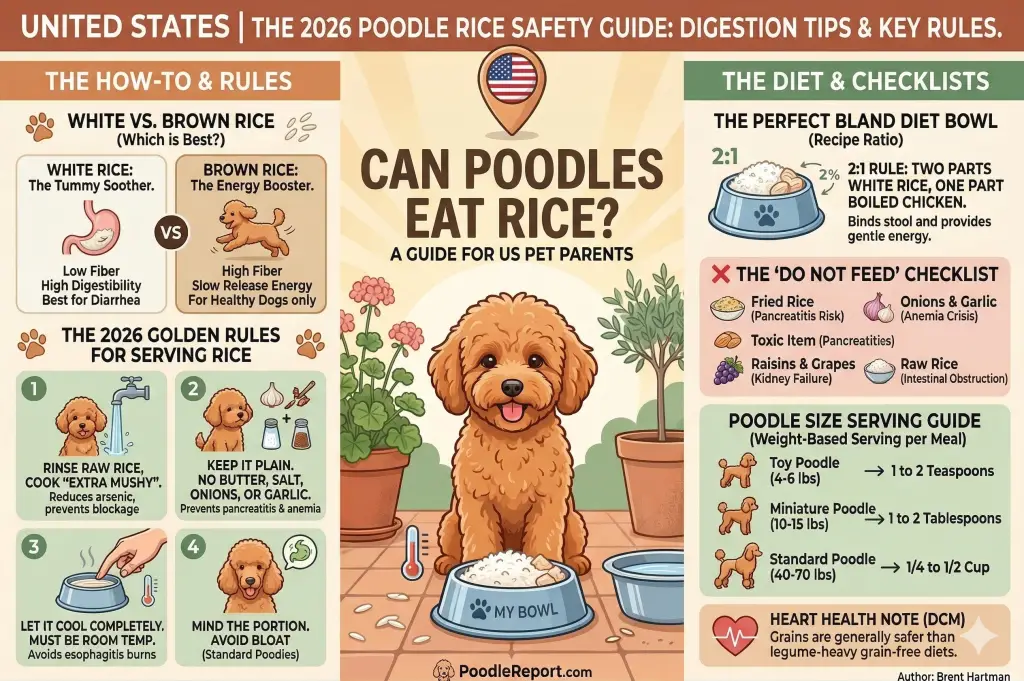
Poodle Size Serving Guide
When your dog is feeling under the weather, knowing exactly how much to put in their bowl is just as important as what goes in it. General canine advice often vaguely suggests feeding a “small amount,” which isn’t very helpful when a “small amount” for a 60-pound Standard Poodle could completely overwhelm the tiny stomach of a 5-pound Toy Poodle.
Here is a definitive, weight-based feeding guide tailored specifically to the three Poodle varieties.
Temporary Bland Diet Serving Sizes
Important Note: These measurements represent the total volume (the 2:1 rice and chicken mixture combined) for just one serving. This is intended for a temporary bland diet fed across four to six small meals throughout the day, not a permanent daily addition to their regular kibble.
| Poodle Variety | Average Weight Range | Serving Size (Per Meal) |
| Toy Poodle | 4 – 6 lbs | 1 to 2 teaspoons |
| Miniature Poodle | 10 – 15 lbs | 1 to 2 tablespoons |
| Standard Poodle | 40 – 70 lbs | 1/4 to 1/2 cup |
Once your Poodle’s stool returns to normal and they are keeping food down without issue, you can begin slowly weaning them off this mixture. Gradually replace the rice and chicken with their standard diet over the course of three to four days to prevent shocking their system.
Rice & The Grain-Free Diet Debate
Over the last decade, the conversation around canine nutrition was heavily influenced by the grain-free trend. However, ongoing investigations by the FDA into diet-associated Dilated Cardiomyopathy (DCM) have caused a major shift in how the veterinary community views traditional ingredients like rice.
The DCM Connection
Many grain-free dog foods replace traditional grains with high concentrations of peas, lentils, and other legumes. Researchers, including those at the Tufts University Clinical Nutrition Service, continue to study the potential link between these legume-heavy, grain-free diets and the development of this serious heart condition in dogs.
Heart Health & True Allergies
While some owners worry about grain allergies, true grain intolerances are actually quite rare in dogs. The vast majority of canine food allergies are triggered by proteins, such as beef, dairy, or chicken. Because of this, veterinary cardiologists generally recommend keeping healthy, easily digestible grains in your dog’s bowl.
Unless your veterinarian has diagnosed a specific allergy, rice is an excellent, safe carbohydrate that supports overall heart health. When you are evaluating the Best Foods for Poodles to feed on a daily basis, prioritizing diets that include wholesome, well-researched grains like rice is often the safest bet for their long-term health and vitality.
Human Leftovers: What to Avoid

Poodles are incredibly intelligent, which means they are masters at learning exactly how to beg for whatever is on your plate. While a scoop of plain white rice from the stovetop is perfectly fine, the rice dishes we prepare for ourselves are often packed with hidden dangers.
Before you scrape your dinner plate into your Poodle’s bowl, keep these common human foods in mind:
- Fried Rice: Whether it’s takeout or homemade, fried rice is strictly off-limits. It is typically cooked in heavy oils that can trigger a painful bout of pancreatitis. Worse, fried rice is almost always loaded with soy sauce, onions, and garlic. Onions and garlic cause oxidative damage to a dog’s red blood cells, leading to a life-threatening condition called hemolytic anemia.
- Flavored Rice Mixes: Boxed rice pilafs or wild rice blends are convenient, but the seasoning packets contain massive amounts of sodium and concentrated onion and garlic powders. Consuming these can quickly lead to salt toxicosis or severe anemia.
- Rice Cakes: Plain, unsalted rice cakes are technically non-toxic, but they offer zero nutritional value. For Toy and Miniature Poodles, a dry, brittle chunk of a rice cake can easily become a choking hazard.
It is also important to remember that while rice itself is safe, what we mix into it often isn’t. Owners sometimes try to sweeten a bland bowl of rice with human snacks, not realizing that common additions like raisins or grapes are highly toxic and can cause sudden kidney failure. For a complete list of what you can and cannot add to their bowl, check out our comprehensive Best Foods for Poodles Guide.
Poodle Food Sensitivities: What if Rice is the Problem?
While the chicken-and-white-rice mixture is the clinical standard for a bland diet, canine nutrition isn’t always predictable. Poodles, with their notoriously sensitive systems, can occasionally have an underlying intolerance or allergy to the very ingredients meant to soothe them (though this is rare).
If your Poodle is one of the rare few that cannot tolerate chicken or rice, don’t panic. You still need to give their pancreas and gut a rest with bland, high-moisture foods. Here are the vet-approved alternatives that are equally effective and digestible:
Substitute Carbohydrates (Instead of White Rice):
- Plain Canned Pumpkin: Ensure it is not pumpkin pie filling (which contains toxic spices and sugar). Plain pumpkin is highly digestible and packed with fiber that regulates digestion.
- Plain Boiled Sweet Potato (Mashed): Skip the butter and salt. Sweet potatoes are dense with nutrients and gentle on the gut.
Substitute Proteins (Instead of Boiled Chicken):
- Lean Ground Turkey (Boiled): Lean ground turkey that has been boiled and well-drained of fat is an excellent alternative protein.
- low-fat cottage cheese: A small spoonful of plain, low-fat cottage cheese is acceptable only if you know your Poodle is not lactose intolerant (many are).
The “Do Not Feed” Rice Checklist
Keep this quick guide handy when prepping food in the kitchen:
| ✅ Safe to Feed | ❌ Toxic or Unsafe to Feed |
| Plain, cooked white rice | Fried rice (heavy oils, soy sauce) |
| Plain, cooked brown rice | Flavored rice boxes (high sodium) |
| Rice boiled in plain water | Onion or garlic powder |
| Rice boiled in unsalted chicken broth | Raisins or grapes mixed in |
“When to See a Vet” Trigger Points (The Red Alert Box)
A bland rice diet is an effective remedy for mild digestive upset. Please refer to the guidelines in my 2026 US Poodle Rice Safety Guide regarding proper preparation, but understand that home treatment has limits.
🛑 Beyond the Bowl: When Rice Isn’t Enough
A bland rice diet is an excellent, time-tested home remedy for mild, temporary digestive upset in Poodles. However, it is not a cure-all. Attempting to manage a serious medical condition at home with rice can delay life-saving treatment.
Skip the rice and contact your veterinarian or an emergency animal hospital immediately if your Poodle exhibits any of the following symptoms:
- Persistent Symptoms: Diarrhea or vomiting that persists longer than 24-36 hours despite a bland diet.
- Refusal to Drink Water: The inability to keep water down leads to rapid dehydration (a critical emergency for tiny Toy Poodles).
- Extreme Lethargy: The dog appears weak, listless, or unresponsive.
- Bloody Vomit or Stool: Any presence of bright red blood or black, “coffee grounds” vomit is an emergency.
- Severe Abdominal Pain or Retching: If your Poodle is unsuccessfully trying to vomit, pacing, or crying when touched, this can indicate Bloat (GDV), which is a 911 scenario for Standard Poodles.
- Known Toxin Ingestion: If you know your Poodle ingested raisins, onions, or antifreeze, a bland diet is irrelevant—you need a vet now.
Poodle Nutrition FAQ
Even with a solid understanding of white versus brown rice, you might still have a few specific questions when standing in the kitchen. Here are the most common questions Poodle owners have about preparing this popular grain.
Can I feed my Poodle rice every day? While rice is a great ingredient in many high-quality commercial dog foods, feeding extra scoops of plain rice every day as a topper is generally not recommended unless directed by your vet. Rice is carbohydrate-dense, and feeding too much on a daily basis can quickly lead to unwanted weight gain and throw off the nutritional balance of their primary diet.
Does rice cause bloat in Standard Poodles? Rice itself does not directly cause Gastric Dilatation-Volvulus (Bloat). However, feeding a Standard Poodle a massive portion of expanding grains and allowing them to aggressively gulp down a bowl of water right afterward can create excess gas and trigger stomach expansion, which is a known risk factor. Always serve it in small, manageable amounts.
Are Jasmine and Basmati rice safe for Poodles? Yes. Both Jasmine and Basmati are simply long-grain varieties of white rice. They digest the exact same way as standard, short-grain white rice and are perfectly safe for your Poodle as long as they are fully cooked and served completely plain.
Can I give my Poodle rice water? Absolutely. In fact, offering the starchy water left over from boiling white rice is a fantastic way to hydrate a sick dog that might be refusing solid food. The starches in the water help soothe the gastrointestinal tract. You can find excellent instructions on how to properly make and serve rice water for dogs from the American Kennel Club.
How long does cooked rice last in the fridge for dogs? Cooked rice should be stored in an airtight container in the refrigerator and used within 3 to 4 days. Rice is highly susceptible to a specific type of bacteria called Bacillus cereus if left sitting out at room temperature, which can cause severe food poisoning in both you and your dog. When in doubt, throw it out and boil a fresh batch.
Conclusion: Serving Rice Safely to Your Poodle
Ultimately, keeping a bag of plain white rice in your pantry is one of the smartest things a Poodle owner can do. Whether you are mixing up a 2:1 bland diet bowl to help soothe a sudden bout of tummy trouble, or just offering a tiny, plain spoonful as an occasional treat, rice is a safe and effective staple when prepared correctly.
Just remember to skip the human seasonings, rinse your grains thoroughly, and always tailor the portion size specifically to your dog’s variety—from the tiniest Toy to the deepest-chested Standard. By following these straightforward guidelines, you can safely navigate those inevitable pleading eyes while keeping your Poodle’s sensitive digestive system happy and healthy.
By following these straightforward guidelines, you can safely navigate those inevitable pleading eyes. Continue exploring my comprehensive Poodle nutrition guides for more breed-specific advice on keeping your companion healthy.
Medical & Veterinary Disclaimer: PoodleReport.com is an informational resource for Poodle owners and enthusiasts. We are not veterinarians. The content on this website is not a substitute for professional veterinary care, diagnosis, or treatment. Always seek the advice of your veterinarian with any questions you may have regarding your pet’s medical condition, diet, or overall health.