
Disclaimer: The information provided on PoodleReport.com is for educational purposes only and does not constitute veterinary medical advice; always consult your vet before changing your dog’s diet. Additionally, this post contains affiliate links. As an Amazon Associate, and other affiliate advertising programs, I earn from qualifying purchases at no extra cost to you.
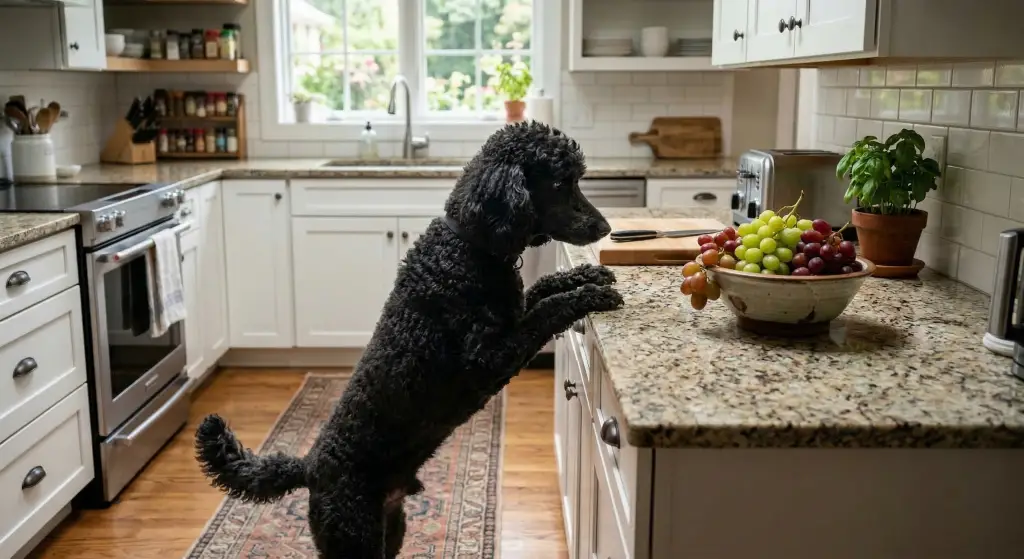
As Poodle owners, we know our dogs are essentially four-legged toddlers with a genius-level IQ and a permanent “sampling” problem. Whether you are living with a high-energy Standard or a tiny Toy Poodle, their curiosity often leads them straight to the kitchen counter or the dropped snacks under the dining table. During my years researching breed-specific health and reflecting on my time with my Standard Poodle, Angus, I’ve found that few “human foods” are as deceptively dangerous as the common grape.
Can Poodles eat grapes? No, Poodles should not eat grapes or raisins under any circumstances. Whether they are red, green, seedless, or organic, grapes contain tartaric acid, a specific toxin that leads to acute renal (kidney) failure in dogs. Because Poodles come in varying sizes—from the 5-pound Toy to the 60-pound Standard—even a single grape can represent a life-threatening emergency, particularly for smaller varieties with less body mass to filter the toxin.
While many fruits like blueberries or apples offer nutritional perks, grapes sit in a category of their own. According to the ASPCA Animal Poison Control Center, there is no “safe” dose for grape ingestion. Unlike other toxins that might cause a simple upset stomach, the compounds found in grapes attack the kidneys directly. For a breed already prone to certain metabolic sensitivities, understanding the “why” behind this toxicity isn’t just trivia—it’s an essential part of Poodle proofing your home.
Diet plays a crucial role in preventing health emergencies and keeping your dog healthy. For a deeper dive into what your dog should and shouldn’t be eating, check out my extensive list of Poodle food and nutrition Guides.
Why Grapes are Lethal: The Tartaric Acid Mystery
For decades, the veterinary community was baffled by grape toxicity. While we knew that some dogs could eat a handful of raisins and be fine, while others faced fatal kidney failure from a single grape, the actual “poison” remained a ghost in the machine. As a researcher following the latest clinical data, I’ve been tracking a major breakthrough that has finally solved this mystery.
The culprit is Tartaric Acid.
Recent studies, popularized by the ASPCA Animal Poison Control Center and published in the Journal of Veterinary Emergency and Critical Care, have identified that grapes and raisins contain high concentrations of tartaric acid and its salt, potassium bitartrate.
The Science of the Kidney Attack
When a Poodle ingests a grape, the tartaric acid is absorbed into the bloodstream. Unlike humans, many dogs lack the metabolic pathway to process this specific organic acid efficiently.
- Acute Tubular Necrosis: The acid attacks the delicate tubules within the kidneys.
- Filtration Failure: As these tubules die, the kidneys lose their ability to filter waste and produce urine.
- Toxin Buildup: Once the kidneys stop functioning, metabolic waste builds up in the blood, leading to the rapid onset of uremic poisoning.
The primary danger with grapes is the acute renal failure they trigger, which stands in stark contrast to fruits that actually support kidney and immune health. For instance, while grapes are a clinical ‘no-go,’ berries offer a completely different nutritional profile. You can compare the risks and the high-vitamin rewards in our guide to strawberries for Poodles, where we analyze the benefits of polyphenols for active breeds.
Why “Dose-Dependent” Advice is Dangerous
One of the biggest gaps in older pet care articles is the suggestion that toxicity depends on the dog’s weight. While it’s true that a larger Standard Poodle has more “filtering power” than a Toy Poodle, the Pet Poison Helpline warns that sensitivity to tartaric acid varies wildly between individual dogs. Because we don’t yet have a genetic test to determine which Poodles are “hyper-sensitive,” we must treat every single ingestion as a potential 10/10 emergency.
Researcher’s Note: Even if your Poodle has accidentally eaten a grape in the past without an issue, do not assume they are “immune.” The concentration of tartaric acid varies by grape variety, ripeness, and even the soil they were grown in. Each encounter is a new roll of the metabolic dice.
The Raisin Toxicity Multiplier: Why Dried Means Deadly
Because raisins are dehydrated, the water is removed, but the tartaric acid remains. This dramatically concentrates the toxin. One ounce of raisins contains significantly more toxin than one ounce of fresh grapes.
| Fruit State | Water Content | Toxin (Tartaric Acid) Concentration | Toxicity Level per Unit (Estimated) |
| Fresh Grape | High (~80%) | Diluted within the water volume. | High |
| Dried Raisin | Very Low (~15%) | Heavily concentrated in a smaller mass. | Extremely High |
| Sultana/Currant | Very Low | Concentrated; higher sugar content often causes rapid ingestion. | Extremely High |
The Critical Takeaway: You cannot use the weight of fresh grapes to estimate the danger of the same weight of raisins. A single standard small box of raisins (1.5 oz) can contain the equivalent toxin load of nearly a full pound of fresh grapes.
While grapes and raisins are some of the most dangerous offenders, they aren’t the only hazards in the produce aisle. For a complete breakdown of what to avoid, review our guide to toxic fruits for Poodles.
Poodle Size & Risk: Toy vs. Standard

When it comes to grape toxicity, a Poodle’s size and genetic predispositions completely change the risk profile. What might be a severe emergency for a large dog can be instantly fatal for a smaller one, and general “one-size-fits-all” advice often ignores the unique anatomy of the Poodle varieties.
Toy and Miniature Poodles: The Aspiration Risk
For a 5-pound Toy Poodle, a single grape represents a massive dose of tartaric acid relative to their total blood volume and kidney size. The margin for error is practically zero.
However, the danger for small Poodles doesn’t stop at the kidneys. If a dog eats a grape, many general pet blogs advise owners to induce vomiting at home using a hydrogen peroxide solution. For small-breed Poodles, this DIY approach is incredibly dangerous.
Toys and Minis have delicate airways and can be prone to collapsing tracheas. Forcing them to vomit at home significantly increases the risk of inhaling stomach contents into their lungs, leading to a life-threatening condition called aspiration pneumonia. Instead of trying at-home remedies, small Poodles require immediate professional veterinary care where the stomach can be safely and medically emptied.
Standard Poodles: The Addison’s Disease Complication
While a 60-pound Standard Poodle has significantly more body mass to absorb toxins, they carry a unique, breed-specific vulnerability. Standard Poodles are genetically predisposed to Addison’s Disease (hypoadrenocorticism), an endocrine disorder that affects how the body regulates critical electrolytes like sodium and potassium.
When a dog experiences acute kidney failure from grape toxicity, their blood potassium levels naturally spike to dangerous levels (a condition known as hyperkalemia). If a Standard Poodle already has compromised adrenal function—even if it is undiagnosed—this sudden, massive spike in potassium isn’t just a threat to the kidneys; it can quickly trigger cardiac arrest.
Synthesized Summary: Biological Vulnerabilities by Poodle Variety
While the kidneys of every Poodle are at risk from tartaric acid, their varying anatomy creates different secondary lethal threats that determine the emergency response strategy.
| Poodle Variety | Key Physiological Trait | Primary Toxicity Threat | Secondary Emergency Risk | Crucial Emergency Warning |
| Toy (5–10 lbs) | Minimal Body Mass | Fast kidney failure (dilution effect is non-existent). | Aspiration Pneumonia from delicate airways. | Do NOT induce vomiting at home. |
| Miniature (15–20 lbs) | Low Body Mass | rapid kidney decline. | GI obstruction (grapes can block the small pylorus). | Seek professional veterinary help immediately. |
| Standard (45–70+ lbs) | High Body Mass | delayed (progressive) kidney failure. | Cardiac Arrest linked to sudden potassium spikes. |
Poodles thrive on high-quality lean proteins and need specific nutrients to keep their coats shining. To ensure your pup is getting exactly what they need without the fillers, explore our top picks for the best foods for Poodles.
The 72-Hour Symptom Timeline
One of the most dangerous misconceptions about grape toxicity is that if your Poodle seems fine immediately after eating one, they are in the clear. As a researcher, I cannot stress this enough: the damage from tartaric acid is progressive. The kidneys do not fail the moment the grape hits the stomach; they fail as the toxin is absorbed and begins destroying the renal tubules over a period of days.
Waiting to see if your Poodle develops symptoms is a gamble with their life. However, if you are unsure whether your dog ingested a grape or raisin, monitoring them against this clinical timeline is crucial.
The Grape Toxicity Progression Chart
| Time Post-Ingestion | Clinical Stage | Observable Symptoms in Poodles |
| 0 – 12 Hours | Early Onset (GI Distress) | Vomiting (often containing partially digested grapes/raisins), diarrhea, unusual lethargy, and a sudden disinterest in play or food. |
| 12 – 24 Hours | Intermediate (Renal Stress) | Increased drinking and urination (polydipsia/polyuria) as the kidneys struggle to concentrate urine. Your Poodle may also show abdominal pain, standing with a hunched posture or “guarding” their belly when picked up. |
| 24 – 48 Hours | Severe (Renal Decline) | A sharp decrease in urination (oliguria), severe dehydration, refusal to eat, and weakness. You may notice “uremic breath,” which smells faintly of ammonia, as toxins build up in the bloodstream. |
| 48 – 72 Hours | Critical (Acute Renal Failure) | Complete cessation of urine production (anuria), tremors, seizures, coma, and potentially fatal cardiac events (especially in Standard Poodles with underlying endocrine issues). |
The Golden Rule of the Timeline: If your Poodle reaches the 24-to-48-hour mark and is exhibiting signs of decreased urination, the kidney damage is already severe and potentially irreversible. The goal is always to intervene medically within the first 2 hours, well before the intermediate symptoms ever have a chance to appear.
Emergency Action Plan: What to Do in the Next 10 Minutes

If you have just caught your Poodle eating a grape or a raisin, the clock is ticking. The first two hours are the “golden window” for a veterinarian to safely decontaminate the stomach before the tartaric acid enters the bloodstream and begins attacking the kidneys.
In an emergency, panic is your worst enemy. Take a deep breath and follow these exact steps within the first 10 minutes of ingestion:
Step 1: Secure the Area and the Dog
Immediately remove any remaining grapes, raisins, or trail mix from the floor or counter. Put your Poodle in a safe, confined space like a crate or a small room so you can monitor them and ensure they don’t ingest any more toxins while you are making phone calls.
Step 2: Gather Critical Information
Before you pick up the phone, take 30 seconds to assess the situation. The vet will need specific details to prepare for your arrival.
- What was eaten? (Fresh green grapes, dried raisins, grape juice?)
- How much was eaten? (Even a rough estimate of “one or two” versus “a whole bunch” helps.)
- When did it happen? (Note the exact time.)
- What is your Poodle’s current weight?
Step 3: Call for Professional Help
Do not wait to see if symptoms develop. Call your local emergency veterinarian immediately. If you are unsure where the nearest emergency clinic is, or if you are traveling, contact a dedicated animal poison service:
- ASPCA Animal Poison Control Center: (888) 426-4435
- Pet Poison Helpline: (855) 764-7661
Note: Both of these services may charge a consultation fee, but the case number they provide will give your emergency vet direct access to board-certified toxicologists.
Step 4: Do NOT Induce Vomiting at Home
As we covered in the section on small-breed risks, do not attempt to use hydrogen peroxide or fingers to make your Poodle vomit unless explicitly instructed to do so by a veterinary professional while on the phone. The risk of aspiration pneumonia or exacerbating an underlying health issue is simply too high. Let the professionals handle gastric decontamination in a safe, clinical setting.
Beyond the Fruit Bowl: Hidden Sources of Grape Toxicity
It is easy enough to keep a bowl of fresh fruit pushed to the back of the kitchen counter. However, as a researcher analyzing pet toxicity reports, I’ve found that the vast majority of grape-related emergencies don’t come from fresh grapes at all. They come from the pantry.
When grapes are dehydrated into raisins, sultanas, or currants, the water is removed, but the tartaric acid remains. This means a single ounce of raisins is far more concentrated—and far more lethal—than an ounce of fresh grapes. Because Poodles are notoriously smart and opportunistic scavengers, you have to be vigilant about the “hidden” grapes in your home.
Here are the most common household hazards you need to Poodle-proof:
- Trail Mixes and Granola: This is the number one culprit. A dropped handful of trail mix on a hike or a forgotten granola bar in a gym bag can be deadly. Poodles will often root through bags to find these sweet, calorie-dense snacks.
- Baked Goods: Oatmeal raisin cookies, fruitcakes, scones, and cinnamon raisin bagels are highly dangerous. The baking process does absolutely nothing to neutralize the tartaric acid.
- “Zante” Currants and Sultanas: Often found in European baking and specialty breads, true sultanas and Zante currants are actually just varieties of dried, seedless grapes. Treat them with the exact same level of extreme caution as a standard raisin.
- Juices and Wine: Leaving a glass of grape juice or wine on a low coffee table is an invitation for a curious Standard Poodle to take a lap. While alcohol is toxic to dogs in its own right, wine carries the compounded threat of grape-induced acute renal failure.
- Toddler Snacks: If you have small children, your Poodle is likely acting as the designated “vacuum cleaner” under the highchair. Fruit snacks, gummy candies made with grape juice, and small boxes of raisins are prime targets.
Researcher’s Warning: Never trust the label “organic” or “pesticide-free” to mean safe. The toxicity comes from the grape’s natural biological makeup (the tartaric acid), not from agricultural chemicals. A homegrown, pesticide-free grape from your backyard vine is just as deadly as a commercially farmed one.
The 72-Hour “Renal Flush” & Recovery Diet
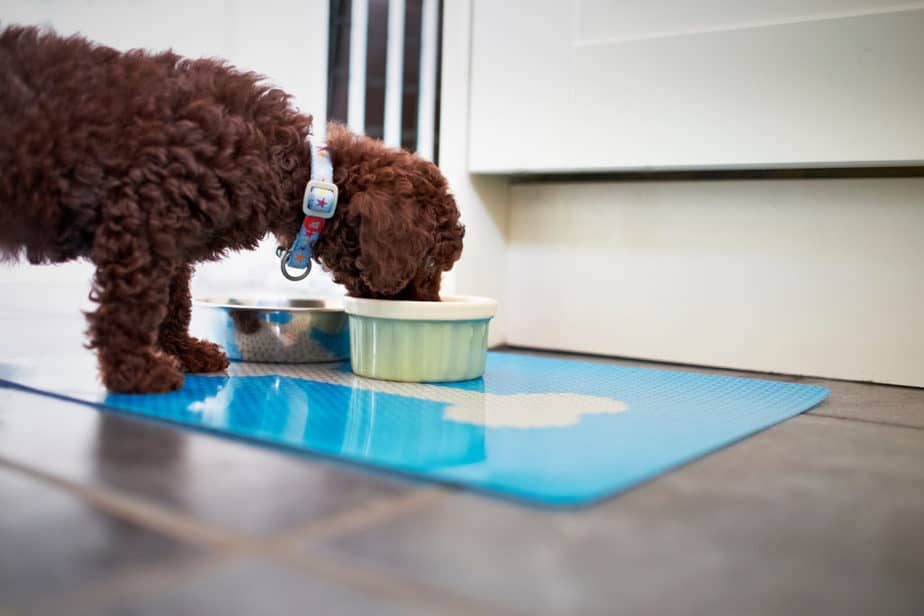
Most generic pet articles end their advice the moment your dog leaves the veterinary clinic. But as a researcher focused on long-term Poodle health, I know that the 72 hours after a toxic event are critical. If your Poodle was treated for grape ingestion—likely enduring induced vomiting, activated charcoal, and aggressive IV fluid therapy—their kidneys have just survived a massive physiological stress test.
Once your vet clears them to come home, the immediate goal is to reduce the metabolic workload on their renal system while keeping them highly hydrated to continuously “flush” any lingering toxins.
The Post-Toxicosis Renal Protocol
For the first few days home, you need to step away from their standard commercial kibble, which is often too high in phosphorus and protein for stressed kidneys to process easily. Instead, you want highly digestible, low-phosphorus, and high-moisture foods.
Here is the emergency recovery shopping list I keep on hand for a renal flush diet:
- Boiled Egg Whites: The yolk is high in phosphorus, but the egg white is the absolute gold standard for highly digestible, kidney-safe protein.
- White Rice: Skip the brown rice for now. White rice is easily digestible and provides immediate carbohydrate energy without taxing the gastrointestinal tract or the kidneys.
- Boiled, Skinless Chicken Breast: Keep it incredibly lean. Poodles (especially Minis and Toys) have a genetic predisposition to sensitive pancreases, so avoiding heavy fats during this recovery phase is crucial.
- Low-Sodium Chicken Broth: Hydration is your best friend right now. Adding a splash of dog-safe, onion-free and garlic-free broth to their water bowl will encourage them to drink voluntarily and keep those kidneys flushing.
At-Home Monitoring Checklist: The First 72 Hours Post-Exposure
Your job isn’t done when your Poodle leaves the hospital. Use this checklist to monitor their at-home recovery and identify warning signs that require an immediate return trip to the ER.
| Observation Metric | At-Home “Green Flag” (Okay) | Emergency “Red Flag” (Call Vet) |
| Urination Frequency | Consistent, voluminous urination (the goal of the “flush”). | None (anuria) or very little (oliguria) urination within a 6-hour window. |
| Urine Color | Clear or very pale yellow. | Dark yellow, orange, brown, or bloody. |
| Energy/Attitude | Progressively increasing energy; interest in standard “Angus-level” play. | Extreme lethargy, inability to stand, or sudden collapse. |
| Appetite | Interest in the Recovery Diet (egg whites/rice). | Complete refusal of any food; renewed vomiting. |
| Breath Smell | Normal “Poodle breath” or slight chicken smell from the recovery diet. | Sudden, distinct ammonia or “urine-like” odor on the breath. |
Researcher’s Note: This home-cooked protocol is designed strictly for the immediate 72-hour recovery window. If your Poodle suffered sustained kidney damage, your veterinarian will likely prescribe a lifelong commercial therapeutic renal diet formulated to meticulously balance calcium, phosphorus, and specific amino acids.
Frequently Asked Questions (FAQ)
When it comes to high-stress situations like toxin ingestion, owners usually have rapid-fire questions. Based on the most common search queries and my own research into Poodle health, here are the direct answers to the most frequently asked questions regarding grape toxicity.
Q: My Toy Poodle ate one single dropped grape. Will they be okay? A: You must treat it as a medical emergency. Because grape toxicity is driven by individual sensitivity to tartaric acid rather than just body weight, even a single grape can be fatal. For a 5-pound Toy Poodle, the concentration of the toxin relative to their small kidneys leaves zero room for error. Call your vet immediately.
Q: Are peeled or seedless grapes safe for dogs? A: No. The tartaric acid that causes acute renal failure is present throughout the entire grape, including the fleshy interior. Peeling the grape, removing the seeds, or buying naturally seedless varieties does absolutely nothing to remove the danger.
Q: Can Poodles have baked goods flavored with grape juice? A: Absolutely not. Cooking, baking, or juicing does not neutralize the tartaric acid. In fact, because grape juice is heavily concentrated, it delivers a massive dose of the toxin very quickly. Keep your Poodle away from any jams, jellies, or baked goods containing grape derivatives.
Q: Why do some dogs eat grapes and survive without any issues? A: This specific anomaly baffled veterinary toxicologists for decades. Current research indicates that individual dogs simply have varying metabolic abilities to process and excrete tartaric acid. However, because there is currently no genetic test to determine if your specific Poodle is “immune” or highly sensitive, playing Russian roulette with their kidneys is never worth the risk.
Conclusion: Safe Fruit Alternatives for Poodles
Discovering just how dangerous a simple grape can be to your Poodle is undoubtedly stressful, but knowledge is your best defense. By keeping your counters clear, educating your family about hidden sources like trail mix, and knowing exactly what to do in the first 10 minutes of an emergency, you are already providing top-tier care for your dog.
Fortunately, cutting grapes out of your Poodle’s life doesn’t mean you have to deprive them of nature’s sweet treats. Poodles are highly intelligent and highly food-motivated, making safe fruits excellent high-value rewards for training. My Standard Poodle, Angus, will happily do a full routine of tricks for a single piece of apple!
Keep the grapes in the grocery store, stock up on blueberries, and enjoy the peace of mind that comes with knowing exactly how to protect your Poodle’s health.
Medical & Veterinary Disclaimer: PoodleReport.com is an informational resource for Poodle owners and enthusiasts. We are not veterinarians. The content on this website is not a substitute for professional veterinary care, diagnosis, or treatment. Always seek the advice of your veterinarian with any questions you may have regarding your pet’s medical condition, diet, or overall health.