

Disclaimer: The information provided on PoodleReport.com is for educational purposes only and does not constitute veterinary medical advice; always consult your vet before changing your dog’s diet. Additionally, this post contains affiliate links. As an Amazon Associate, and other affiliate advertising programs, I earn from qualifying purchases at no extra cost to you.
It is a universal truth among dog owners: most Poodles absolutely lose their minds for cheese. The rich scent and savory taste make it an incredibly effective, high-value reward during obedience training or a clever trick to hide a stubborn pill.
However, before making dairy a regular part of your routine, you must stop and evaluate the hidden health risks. Because the Poodle breed is genetically predisposed to sensitive stomachs, blindly tossing them a slice from your fridge can quickly lead to severe gastrointestinal distress. So, is cheese safe for Poodles?
Yes, Poodles can safely eat small amounts of cheese, provided it is plain and low in lactose. However, before handing over that slice, you must ensure the cheese does not pose these three major health risks:
- Toxic Additives: Many flavored artisan cheeses contain garlic, onions, or chives, which are highly poisonous to canines and can permanently damage their red blood cells.
- High Fat Content: Rich cheeses like Brie or cream cheese can easily trigger a painful, life-threatening bout of acute pancreatitis.
- Lactose Intolerance: Because adult dogs naturally lack the lactase enzyme, even “safe” cheeses can cause explosive diarrhea if your Poodle is highly sensitive to dairy.
When I need an irresistible reward for my dog, Angus, a tiny cube of carefully selected cheese works wonders—but I always check the fat, sodium, and lactose content first.
What you feed a fast-growing Standard Poodle looks very different from the ideal diet of a tiny, low-appetite Toy. Browse our [Poodle Food & Nutrition Guide] to learn how to perfectly tailor your dog’s meals, handle dietary allergies, and ensure lifelong health.
In this guide, I’ll break down exactly how to use cheese safely as a treat without compromising your dog’s digestion. Read on to discover the best low-lactose cheeses for Poodles, the surprising nutritional benefits of safe dairy, and the strict portion rules you need to follow.
Does Your Poodle Actually Benefit From Eating Cheese?
If you research the health benefits of cheese, you will find an extensive list of human nutritional perks. Cheese is packed with protein, calcium, phosphorus, zinc, and essential vitamins like A and B12. However, while these nutrients are fantastic for us, your Poodle’s biology processes them differently. So do Poodles actually benefit from eating cheese?
Nutritionally, no. Assuming your Poodle eats a balanced, AAFCO-approved dog food, they do not need the extra calcium or vitamins found in dairy. However, cheese provides massive behavioral and practical benefits when used strictly as a high-value training reward, a tool to hide medication, or an appetite enticer for picky eaters.
While dairy isn’t biologically necessary, safe cheeses offer massive behavioral and practical benefits for Poodles when used strategically.
Examples of when you might carefully introduce cheese into your Poodle’s routine include:
- Soothing an Upset Stomach (Cottage Cheese Only): If your dog is recovering from mild gastrointestinal distress, veterinarians often recommend feeding plain, low-fat cottage cheese mixed with boiled white rice. The high protein and low lactose content make it an incredibly gentle, easily digestible bland diet.
- Concealing Daily Medications: Poodles are notoriously clever and can easily eat around a pill hidden in their regular kibble, leaving the medication sitting at the bottom of the bowl. Molding a soft, pea-sized piece of safe cheese around a capsule is a foolproof, stress-free way to ensure they swallow their prescription.
- High-Value Obedience Training: Because Poodles are so incredibly intelligent, they sometimes need a massive motivational boost to learn complex commands, master agility courses, or focus during high-distraction environments. A tiny cube of cheddar acts as the ultimate high-value reward.
- Enticing a Picky Eater: Standard, Miniature, and Toy Poodles alike are known for their aristocratic, picky eating habits. If they are turning their nose up at dinner, a light dusting of grated hard cheese over their bowl is often all it takes to convince them to eat.
The Golden Rule of Portion Control: The 10% Limit
Whether you are using it to hide a pill, reward a new trick, or entice a picky appetite, cheese must be given in strict moderation. Veterinarians strongly recommend that all treats—including cheese—make up no more than 10% of your dog’s daily caloric intake.
The high fat content that makes cheese so appealing can quickly lead to canine obesity and severe joint stress if not carefully managed. When I worked on training commands with Poodle, I ensured the cheese pieces were no larger than a pea. This guaranteed he got the reward without overloading his digestive system or overloading his daily calories.
What Kind of Cheese Can Poodles Eat?
You must be incredibly selective about the type of cheese you feed your Poodle, as the dairy aisle is filled with unsafe options. Beyond lactose intolerance, the biggest dietary threat comes from high-fat cheeses.
Poodles can safely eat plain, aged, low-lactose cheeses in strict moderation. Because adult dogs lack the enzyme to digest heavy dairy, you must stick to these canine-safe options:
- Swiss Cheese: Highly aged and naturally very low in lactose.
- Cheddar Cheese: A firm, aged cheese that makes an excellent, low-lactose training reward.
- Cottage Cheese: Lower in fat and high in protein; often recommended by vets to soothe an upset canine stomach.
Many owners assume that only small dogs need to worry about the fat content in dairy. While it is true that a 6-pound Toy or Miniature Poodle has virtually zero room for extra calories before facing severe weight issues, even a large, 60-pound Standard Poodle like my dog Angus is highly susceptible to the dangers of excess fat.
Feeding your Poodle rich, high-fat cheeses—such as Brie, Camembert, or cream cheese—can rapidly lead to canine obesity and severe joint stress. More alarmingly, a sudden spike in dietary fat is the primary trigger for acute pancreatitis in Poodles.
This is a highly painful, potentially life-threatening inflammation of the pancreas that requires emergency veterinary care. To protect your dog’s long-term health, these high-fat dairy options must remain strictly off-limits.
The Hidden Dangers of Feeding Your Poodle Cheese
While a tiny cube of plain cheddar might seem like a harmless treat, the dairy aisle is actually a minefield of hidden canine health threats. Most owners are aware of lactose intolerance, but the most severe dangers of feeding a Poodle cheese come from the fat content and toxic additives hiding in artisan varieties.
Before you share a slice from your fridge, you must ensure it does not pose any of these four hidden dangers:
- The Pancreatitis Trigger (High Fat Content): Poodles are incredibly susceptible to a life-threatening condition called acute pancreatitis. This intense, painful inflammation of the pancreas is directly triggered by sudden spikes in dietary fat. Rich, creamy options like Brie, Camembert, and cream cheese contain enough fat in a single serving to send a dog to the emergency vet.
- Toxic Mold (Roquefortine C): The specific fungi used to ripen blue cheeses (like Roquefort, Gorgonzola, and Stilton) produce a mycotoxin called Roquefortine C. While perfectly safe for humans, this compound is a neurotoxin for dogs. Ingesting even a small crumb of blue cheese can cause severe muscle tremors, vomiting, and lethal seizures.
- Hemolytic Anemia (Garlic and Onion Additives): Holiday cheese balls and artisan spreads are frequently infused with herbs, chives, garlic, and onions. These ingredients belong to the Allium family and are highly poisonous to canines. They cause oxidative damage to a dog’s red blood cells, leading to a fatal condition known as hemolytic anemia.
- Severe Kidney Strain (High Sodium): Heavily processed options like spray cheese, individually wrapped slices, and brined feta are packed with dangerously high levels of sodium. A sudden intake of salt puts immense strain on a Poodle’s kidneys and heart, which is especially dangerous for senior dogs.
The Golden Rule: When I am selecting a safe training reward for Angus, I never assume a cheese is safe just because it is dairy. Always read the ingredient label to ensure the cheese is completely plain, unseasoned, and naturally low in both fat and sodium.
Poodle Cheese Safety Guide: Safe vs. Toxic Options
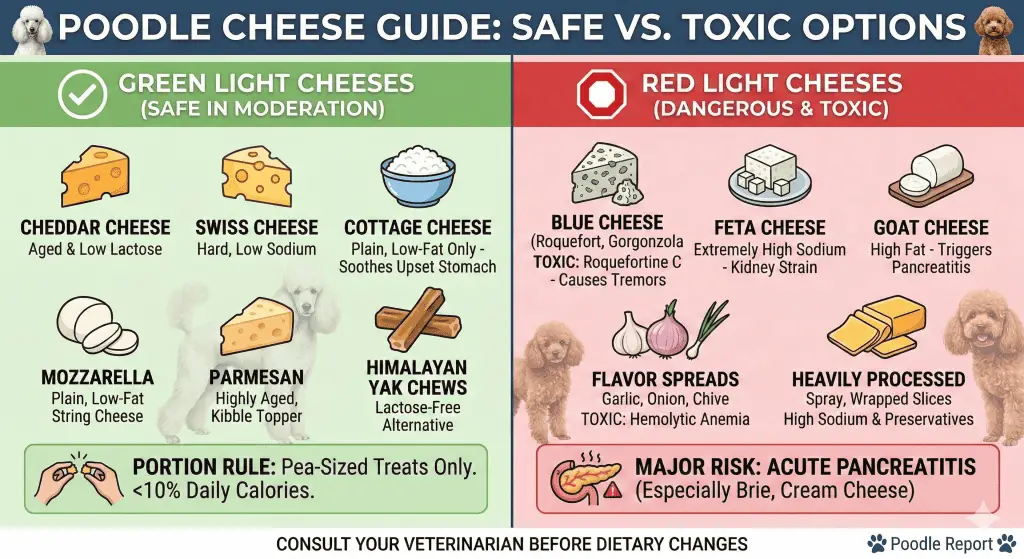
Knowing which human foods are safe for your dog can be challenging. I make this infographic to help provide a clear guide on safe and dangerous cheese choices for your poodle.
Red Light Cheeses: Toxic Additives and Dangerous Varieties
Beyond the threat of high fat and lactose, some cheeses contain ingredients that are fundamentally poisonous to canines. When I am cleaning up after hosting a dinner party, I am always incredibly careful to ensure my black Standard, Angus, doesn’t counter-surf the leftover charcuterie board.
If you keep any of the following “Red Light” cheeses in your fridge, they must be kept strictly out of your Poodle’s reach:
- Blue Cheeses (The Mold Danger): Cheeses like Roquefort, Gorgonzola, and Stilton get their signature flavor from a specific fungus. As this fungus ripens, it produces a mycotoxin called Roquefortine C. While humans can digest this safely, dogs are highly sensitive to it. Even a small crumb of blue cheese can cause vomiting, diarrhea, severe muscle tremors, and life-threatening seizures in a Poodle.
- Garlic, Onion, and Chive Spreads: Artisan cheeses and holiday cheese balls are frequently rolled in or infused with herbs. Garlic, onions, and chives belong to the Allium family, which is highly toxic to dogs. Consuming these ingredients causes oxidative damage to a dog’s red blood cells, leading to a fatal condition known as hemolytic anemia.
- Heavily Processed “Plastic” Cheeses: Spray cheeses in a can and individually wrapped American cheese slices are barely classified as actual dairy. They are loaded with artificial preservatives, oils, and dangerously high levels of sodium. A sudden massive intake of salt can lead to sodium ion poisoning, putting intense strain on your Poodle’s kidneys and heart.
If you suspect your Poodle has ingested blue cheese or a spread containing garlic or onions, do not wait for symptoms to appear. Contact your veterinarian or the ASPCA Animal Poison Control Center immediately.
Green Light Cheeses: The Safest Options for Poodles
If you want to use dairy as a high-value training reward or to hide a daily pill, you must stick exclusively to “Green Light” cheeses. These are specific varieties that are naturally lower in lactose, sodium, and fat, making them significantly safer for canine digestion.
The secret to a safe dog cheese lies in the aging process. As a cheese ferments and ages, the bacteria naturally consume and break down the lactose sugars. This means the older and harder the cheese, the safer it generally is for your Poodle’s stomach.
Here are the top four safest cheeses you can keep in your fridge:
- Cheddar Cheese: A firm, aged cheddar is one of the best options for dogs. Because it is naturally very low in lactose, it is unlikely to trigger severe gastrointestinal upset. When I need an irresistible reward to keep Angus focused during a highly distracting training session, a few pea-sized cubes of sharp cheddar work perfectly without upsetting his stomach later.
- Swiss Cheese: Like cheddar, Swiss is an aged, hard cheese with incredibly low lactose levels. It also tends to be slightly lower in sodium than other hard cheeses, making it an excellent, heart-healthy option for senior Poodles who still enjoy a savory treat.
- Mozzarella (Plain and Unseasoned): While not as aged as cheddar or Swiss, mozzarella is naturally lower in fat and sodium than most other cheeses. If you are going to share a piece of mozzarella string cheese with your Poodle, ensure it is completely plain and never marinated in garlic or herb oils.
- Cottage Cheese (Low-Fat): This is the ultimate “bland diet” cheese. While it is not a hard cheese, the fermentation process makes it highly digestible. Veterinarians frequently recommend mixing a spoonful of plain, low-fat cottage cheese with boiled white rice to help soothe a dog recovering from diarrhea or an upset stomach. It is packed with protein and calcium but gentle on the gut.
The “Pea-Sized” Portion Rule
Even with these highly digestible Green Light options, portion control is non-negotiable. Poodles have sensitive digestive tracts, and a sudden influx of rich food can cause immediate distress. Always cut hard cheeses into pieces no larger than a standard green pea, and remember that cheese should never make up more than 10% of your Poodle’s total daily caloric intake.

Feeding Poodles Cheese: Portion Sizes and Safety Guidelines
Whether you are using cheese as a high-value training reward, a clever pill pocket, or a weight-gain supplement, execution is everything. Feeding your Poodle dairy incorrectly can quickly trigger serious, life-threatening health problems like acute pancreatitis and canine obesity.
To protect your dog’s digestive system, always follow these four strict rules:
1. The “Start Small” Test
If your Poodle has never had cheese before, you must treat it like a dietary experiment. Give them a single, pea-sized amount and wait a full 24 hours to see how their digestive tract reacts. If you notice any pacing, discomfort, or loose stools, they are likely highly lactose intolerant, and you should remove dairy from their diet entirely.
2. Practice Strict Portion Control
When it comes to feeding Poodles human food, moderation is the most critical factor. Even safe, low-fat cheeses will cause severe stomach issues or rapid weight gain if overfed. Cheese should be an occasional, high-value treat—never a daily snack.
Here is how I managed portion control when treating my dog:
- For Hiding Pills: Use only enough soft cheese to create a paper-thin layer around the tablet. Do not give them a massive chunk.
- For Meal Toppers: If enticing a picky eater, use a very light dusting of grated hard cheese to avoid adding large, heavy servings of fat to their bowl.
- For Training: Cut the cheese into microscopic, pea-sized cubes. They only need the scent and the taste to feel rewarded.
- Rotate Your Rewards: Alternate cheese with lower-calorie, canine-specific treats (like freeze-dried liver) so they do not consume too much dairy in one training session.
3. Stick to “Green Light” Cheeses
Never deviate from the safe list. Always choose low-fat, low-sodium, aged cheeses (like Swiss, cheddar, or plain mozzarella). Strictly avoid high-fat cheeses or anything packed with toxic additives like garlic, chives, and onions.
4. Consult Your Veterinarian First
It is always the safest choice to consult your vet before introducing new human foods into your dog’s diet. This is especially vital if your Poodle has a known history of sensitive digestion, food allergies, or pancreatitis. Your veterinarian knows your dog’s exact medical history and is in the best position to recommend the safest treats for their unique biological needs.
Choose Dog-Friendly Cheeses
Make sure to avoid cheeses that are rich in fat and sodium because such cheeses may cause obesity or severe health conditions. Always choose low-fat cheese, and do not forget to practice moderation with the suitable cheese as well.
Consult a Vet before Dietary Changes
It’s always a good idea to consult your vet before introducing new foods to your dog’s diet. This is especially important if your poodle has a history of stomach upsets or not handling different types of food well. Besides, your vet is in the best position to offer you a recommendation for the best cheeses for dogs.
Frequently Asked Questions About Poodles and Cheese
Can a Poodle puppy eat cheese?
Yes, but it should be heavily restricted to microscopic amounts. Poodle puppies have incredibly sensitive, developing gastrointestinal tracts. While a tiny nibble of low-lactose cheddar is an amazing high-value reward for potty training, feeding a puppy too much dairy will cause severe diarrhea. In small puppies, diarrhea quickly leads to life-threatening dehydration. Always start with canine-specific puppy treats before introducing human dairy. When Angus was a puppy, I strictly relied on tiny pieces of boiled chicken before ever graduating to cheese.
Is Parmesan cheese safe for Poodles?
Yes, plain Parmesan is one of the safest cheeses for a Poodle. Because it is a highly aged, hard cheese, it contains almost zero lactose. If your Poodle is being a particularly picky eater, sprinkling a light dusting of grated Parmesan over their kibble is an excellent, low-risk way to entice them to finish their dinner.
Can Poodles eat feta or goat cheese?
No, feta and goat cheese should generally be avoided. Feta is heavily brined and contains dangerously high levels of sodium, which puts severe strain on a dog’s kidneys. While goat cheese has slightly less lactose than cow’s milk, it is incredibly high in fat. Feeding your Poodle rich goat cheese drastically increases their risk of developing acute pancreatitis.
What are Himalayan Yak cheese chews, and are they safe?
Yes, Himalayan Yak chews are a fantastic, safe alternative to soft dairy. These long-lasting hard chews are made by boiling yak and cow milk, which naturally extracts the lactose. The result is a virtually lactose-free, low-fat chew that satisfies a Poodle’s natural urge to gnaw while simultaneously scraping plaque off their teeth. Always supervise your dog with any hard chew to prevent choking hazards as it gets smaller.
The Bottom Line: Can Poodles Safely Eat Cheese?
To recap, yes, Poodles can safely eat cheese—but you must be highly selective about the type and the portion size. Not all dairy belongs in your dog’s bowl, and feeding the wrong kind can lead to severe health complications.
To protect your Poodle’s sensitive digestive system, always remember these final safety rules:
- Avoid High-Fat and Toxic Varieties: Steer completely clear of high-fat, high-sodium options that can quickly trigger acute pancreatitis. Strictly avoid blue cheeses, as the ripening mold produces mycotoxins that are highly lethal to canines.
- Stick to Low-Lactose “Green Light” Cheeses: Opt for plain, aged cheeses like Swiss or cheddar. If your dog needs a bland diet or a protein boost, a spoonful of plain, low-fat cottage cheese is your safest option.
- Enforce Strict Moderation: Whether I am rewarding my black Standard Poodle, Angus, for mastering a new obedience command or simply hiding a daily pill, I always stick to the “pea-sized” rule to prevent unnecessary weight gain and joint stress.
Explore the Poodle Dietary Excellence Hub
Nourish your dog’s sharp intellect and high-energy lifestyle with a menu specifically designed for their unique physique. Visit our [Comprehensive Poodle Nutrition Guide for expert feeding schedules and top-tier product reviews, or browse these featured articles:
- Can Poodles Eat Chicken? 2026 Guide to Raw, Kibble & Treats
- Can Poodles Eat Human Food? Safe Snacks & Toxic Foods Guide For 2026
- The Best Food For Poodles: A Complete 2026 Nutrition Guide
- Can Poodles Eat Ice Cream? 2026 Risks & Safe Treat Guide
Medical Disclaimer & Veterinary Consultation
Important Safety Note: While this guide provides researched nutritional insights, it is not a substitute for professional medical advice. Every dog’s biological profile and digestive sensitivity is unique. You must always consult your veterinarian before introducing cheese or any new human foods into your Poodle’s routine. Your vet is the only resource capable of determining if a specific treat is safe for your dog’s unique health history, ensuring their diet remains balanced, healthy, and free from risk.