
Disclaimer: The information provided on PoodleReport.com is for educational purposes only and does not constitute veterinary medical advice; always consult your vet before changing your dog’s diet. Additionally, this post contains affiliate links. As an Amazon Associate, and other affiliate advertising programs, I earn from qualifying purchases at no extra cost to you.
Lacing up for a solo run is a victory for your cardiovascular health, but adding a four-legged partner transforms a routine chore into a mutual wellness mission. As a researcher of canine stamina, I’ve found that the mental and physical synergy of a shared stride is hard to beat—for both species. However, biology is a stern judge, and not every pup is physiologically designed for the pavement. You might be wondering: is the Standard Poodle the elite marathoner you’ve been looking for, or is your current best friend better suited for a tactical nap?
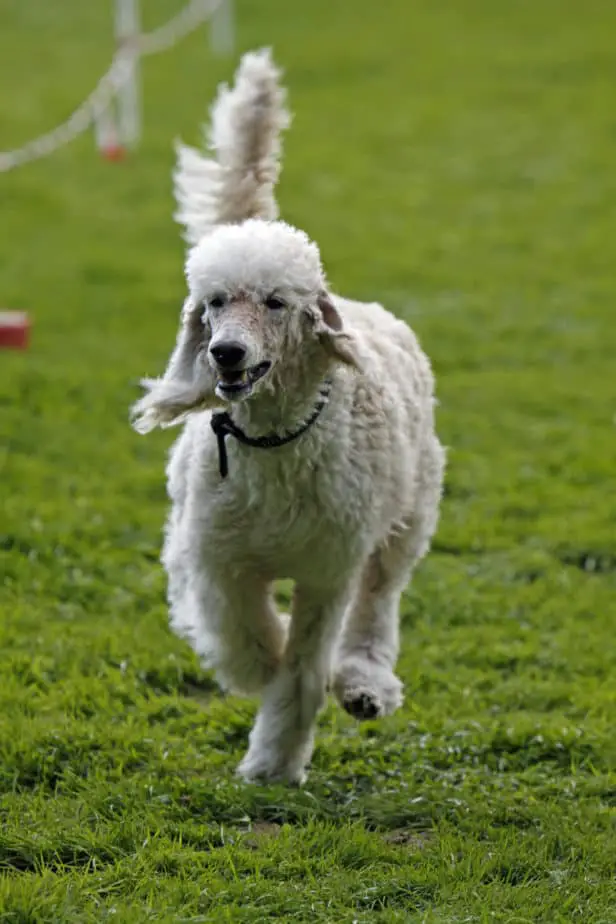
Standard Poodles make exceptional running companions because they blend a lightweight, athletic frame with the deep-chested lung capacity of an endurance athlete. Originally bred as versatile water retrievers, they possess the cardiovascular stamina for long-distance runs, provided they have finished growing (around 18 months) and are kept in a short “sport clip” to manage heat. Their high intelligence makes them incredibly easy to leash train, ensuring they stay focused on the path rather than distractions.
Beyond their physical endurance, Standard Poodles possess a psychological trifecta of intelligence, high energy, and loyalty that makes them remarkably biddable on a leash. These cognitive traits, paired with their athletic heritage, transform them from mere pets into disciplined endurance partners. Read on to explore the specific mechanical qualities of the breed and the essential conditioning protocols required to keep your canine athlete in peak racing form.
The Anatomy of a Marathoner
While the public often views the Standard Poodle as a delicate ornament, their biological blueprint tells a different story. These dogs were originally bred as water-retrieving athletes, and that DNA remains intact. The Standard Poodle possesses a deep, narrow chest—ideal for significant lung expansion—and a light, athletic frame that minimizes joint stress during long-duration cardio.
In my years of researching the breed, I’ve noted that their high pasterns (the dog’s wrists) act as natural shock absorbers. Unlike heavier breeds that “thump” the pavement, a Poodle’s gait is light and springy. Their lean muscle mass is built for endurance, allowing them to maintain a consistent pace that often outlasts many other sporting breeds. This efficiency of movement is a hallmark of the breed’s athletic heritage.
The 18-Month Rule: Protecting Growth Plates
One of the most dangerous gaps in general pet advice is failing to mention growth plate closure. For a Standard Poodle, the long bones in their legs are capped by soft areas of cartilage that eventually calcify into bone. Running a Poodle on hard surfaces before these plates have fully fused can lead to lifelong joint issues or hip dysplasia.
According to the American Kennel Club (AKC), forced running should be avoided until the dog is physically mature. For a Standard, this typically occurs between 12 and 18 months of age. Until then, stick to “off-leash” play in a yard where the puppy can choose when to stop, rather than being forced to maintain your pace on a leash.
Distance Benchmarks and Conditioning

A physically fit Standard Poodle is a natural 5-mile (8 km) runner. However, they are capable of much more with a research-backed conditioning schedule. You wouldn’t run a half-marathon without training, and neither should your dog. To help you gauge their progress, I’ve developed a baseline for performance expectations.
| Fitness Level | Typical Distance | Suggested Pace | Frequency |
|---|---|---|---|
| Introductory | 1–2 Miles | 10–12 min/mile | 2 days/week |
| Intermediate | 3–5 Miles | 9–10 min/mile | 3 days/week |
| Advanced | 6–10+ Miles | 8–9 min/mile | 4 days/week |
The 10% Rule: To avoid soft tissue injuries, never increase your weekly mileage by more than 10%. This allows the pads of their feet to thicken and their cardiovascular system to adapt to the increased oxygen demand.
- The Mental Mode: Poodles are high-biddability dogs. If you establish the run as a “job,” they will focus on the path rather than distractions.
Running is as much a mental exercise as a physical one. If your partner is constantly scanning for squirrels or pulling against the leash, they aren’t in “work mode”—they’re just a dog on a string. To bridge the gap between high-energy instinct and disciplined endurance, explore my 2026 Poodle Behavior Guide. It provides the cognitive framework necessary to ensure your Poodle stays focused on the path, not the distractions.
The Bloat Risk: The 60-Minute Feeding Window
This is a critical safety gap that many general guides ignore. Standard Poodles are a “deep-chested” breed, placing them at high risk for Gastric Dilatation-Volvulus (GDV), commonly known as Bloat. This condition, where the stomach fills with gas and twists, is frequently fatal and can be triggered by vigorous exercise.
To mitigate this, follow a strict 60-minute rule: never feed your Poodle one hour before or one hour after a run. The VCA Animal Hospitals guide on sports medicine also suggests managing water intake; do not let your Poodle “gulp” large amounts of water immediately after stopping. Offer small, frequent sips to prevent them from swallowing excess air while panting.
Surface Science and Paw Maintenance
Where you run is just as vital as how far you run. While a Poodle’s shock-absorbing gait is efficient, repetitive impact on asphalt can lead to micro-fractures in the digits. Whenever possible, choose dirt paths or grass, which are easier on the joints and provide the mental stimulation of diverse scents.
Be mindful of the seven-second rule for pavement: if you can’t hold the back of your hand to the asphalt for seven seconds, it is too hot for your Poodle’s paws. Check between their toes for “foxtails” or burrs after every trail run, a practice recommended by the Humane Society.
Thermal Regulation and the “Sport Clip”
A Poodle’s hair is a double-edged sword for an athlete. While it doesn’t shed into your home, it is incredibly efficient at trapping heat. If you are a serious runner, the traditional “Show Clip” with heavy poms is your enemy.
A short Sport Clip or Kennel Clip is far superior for thermoregulation. This allows for better airflow to the skin, helping the dog cool down through convection as they move. Learn more about the athletic history and coat needs of the breed at The Poodle Club of America.
Recognizing Red Flags: When the Trail Becomes a Risk
Even the most athletic Poodle has a breaking point. As a responsible researcher of the breed, you must learn to spot the “silent” signals of distress. If your partner begins lagging behind your heel, they aren’t being stubborn; they are likely hitting a metabolic wall.
Watch for “spatulate” tongue, where the tongue becomes wide, flat, and dark red—this is a primary indicator of impending heat exhaustion. Additionally, keep an eye out for high-stepping or “skipping” in their gait. This often signals that a sharp stone or a burr has compromised the interdigital skin. Because of their thick coats, Poodles can overheat quickly; use the chart below to manage your environmental risks.
| Ambient Temp | Humidity | Risk Level | Running Protocol |
|---|---|---|---|
| Below 60°F | Any | Low | Ideal for long-distance endurance. |
| 60°F–75°F | Below 50% | Moderate | Carry water; watch for heavy panting. |
| 75°F–85°F | Above 60% | High | Short sessions only; early morning. |
| Above 85°F | Any | Danger | Do not run; high risk of heatstroke. |
Frequent Conditioning Errors: Pitfalls for the Human Partner
Frequent Conditioning Errors: Pitfalls for the Human Partner
The “weekend warrior” approach is a recipe for soft tissue disaster. Taking a Poodle that has spent all week on the couch and forcing them into a high-intensity trail run can cause ligament tears and excessive cardiac strain.
Equipment Failure and Tracheal Health
Running a Poodle on a standard neck collar can cause tracheal damage or “collapsing trachea” if they surge ahead. Always use a Y-front harness to allow for a full range of shoulder extension and to ensure pressure is distributed across the chest rather than the throat.
Recovery Protocols and Nutrition
Many owners neglect the “cool-down” phase. After a run, walk your Poodle for at least 10 minutes to allow their heart rate to return to baseline gradually. To dive deeper into the nuances of their psychological development and social drives, browse my full library of Poodle Behavior Guides. Understanding the wider spectrum of their instincts is the key to building a partnership that lasts for the long haul. Ensuring they receive adequate Omega-3 fatty acids can also help manage exercise-induced inflammation, a topic often discussed by Tufts University’s Clinical Nutrition Service.
FAQ
Can I run with a Miniature or Toy Poodle? Miniatures are athletic but have a significantly shorter stride, making them better suited for 1-to-2-mile jogs. Toy Poodles are generally not suited for sustained running.
What is the best running gear for a Poodle? A non-restrictive “Y-front” harness is best, as it ensures there is no pressure on the trachea and allows for a full range of shoulder movement.
How do I know if my Poodle is too tired? Watch for “lagging behind,” heavy panting where the tongue is excessively long and red, or a lack of interest in the surroundings.
Do Poodles need boots for running? If you are running on salted winter roads or jagged rocky trails, yes. Otherwise, regular conditioning will usually thicken their pads enough for standard running. You can research joint injury symptoms at Tufts University’s Clinical Nutrition Service.
Can a Poodle run in the rain? Yes, and many enjoy it. However, remember that wet hair is heavier and can chill them quickly in cold weather. Always dry them thoroughly after a rainy run.
How often should we run? Most Standards thrive on 3 to 4 runs per week, with rest days in between. Consistency is more important for their health than intensity.
Conclusion: The Legacy of a Partner
If you began this article viewing the Standard Poodle as a delicate, high-maintenance ornament, the research suggests a different reality. These dogs are elite athletes disguised in a curly coat. When you respect the 18-month growth plate rule, manage the 60-minute bloat window, and choose the right sporting clip, you aren’t just taking a pet for a jog—you are training with a high-performance partner.
Jogging the trails with Angus taught me that the Poodle’s greatest running asset isn’t just their light, springy gait; it’s their intelligence. They don’t just run at your side; they run with you, mirroring your pace and anticipating the path ahead. As long as you prioritize their unique biological needs, a Standard Poodle will likely be the most loyal and capable running partner you’ve ever had.
Medical & Veterinary Disclaimer: PoodleReport.com is an informational resource for Poodle owners and enthusiasts. We are not veterinarians. The content on this website is not a substitute for professional veterinary care, diagnosis, or treatment. Always seek the advice of your veterinarian with any questions you may have regarding your pet’s medical condition, diet, or overall health.