

Disclaimer: The information provided on PoodleReport.com is for educational purposes only and does not constitute veterinary medical advice; always consult your vet before changing your dog’s diet. Additionally, this post contains affiliate links. As an Amazon Associate, and other affiliate advertising programs, I earn from qualifying purchases at no extra cost to you.
Hearing your Poodle growl can be an unsettling experience. Our first instinct is often worry or even a sense of betrayal. However, for a breed as highly intelligent and vocal as the Poodle, a growl is rarely a random act of aggression. Instead, it is a sophisticated form of communication—a “canine sentence” that tells us something is wrong in their environment or their body.
What are the 9 reasons why a Poodle might growl?
A Poodle may be triggered to growl due to a variety of physical, environmental, and breed-specific factors. As we explore them below, you will see they follow this order:
- The “Poodle Grumble”: A harmless, vocal expression of playfulness or contentment.
- Medical Pain: Specifically ear infections or dental decay common in the breed.
- Sleep Startle Reflex: An involuntary defensive reaction when touched while sleeping.
- Visual Sensitivity: Confusion caused by reflections or shadows during adolescent fear periods.
- Grooming Aversion: Negative associations with brushing or handling sensitive areas.
- Size-Specific Anxiety: Feeling physically vulnerable due to being a Toy or Miniature variety.
- Watchdog Instincts: Alerting the owner to environmental changes or intruders.
- Resource Guarding: Protecting high-value items like food, toys, or sleeping spots.
- Intellectual Frustration: Lack of mental enrichment leading to “demand” growling.
When a Poodle vocalizes, human instinct often interprets it as a sudden threat. However, behavioral research indicates that for this highly cognitive breed, a growl is rarely an unprovoked act of aggression. Instead, it serves as a critical diagnostic tool—a vocal indicator that something in the dog’s internal or external environment has shifted. To accurately decode what your Poodle is trying to communicate, we must look at the specific catalysts that prompt this behavior.
1. The Poodle “Grumble” vs. A Warning Growl
Context is everything when assessing canine vocalizations. Before assuming the worst, it is essential to document a breed-specific phenomenon often referred to as the “Poodle Grumble.” Unlike a true warning growl, which is rooted in fear or pain, the grumble is a harmless, communicative rumble used to express playfulness, minor impatience, or deep contentment.
During my behavioral observations with my Standard Poodle, Angus, I frequently noted this low-frequency grumbling during highly positive interactions, such as right before mealtime or while initiating a game of fetch. It functions much like a cat’s purr or a human’s playful sigh. Misinterpreting this playful grumble as a threat can inadvertently damage the human-canine bond.
According to veterinary behaviorists, distinguishing between a conversational grumble and a true warning requires a careful evaluation of the dog’s physical posture. You can explore the nuances of general canine body language through comprehensive resources like the American Kennel Club’s behavioral guides.
Summary Comparison: Grumble vs. Growl
| Feature | The Poodle “Grumble” (Play/Sass) | The Warning Growl (Boundary/Fear) |
| Body Tension | Loose and curvy. The dog may “wiggle” or bow. | Rigid and frozen. The dog appears “locked” in place. |
| Facial Muscles | Relaxed. Lips are loose; the mouth may be slightly open. | Tense. Lips may be retracted or pulled into a tight “V” shape. |
| Eye Contact | Soft and blinking. The dog looks at you then away. | Hard stare. Unblinking, direct, or showing “whale eye” (whites). |
| Tail Carriage | Mid-level or low wag. Moving in a wide, fluid motion. | High and stiff or tucked tight. May vibrate rather than wag. |
| Context | During play, before meals, or when being “talked to.” | During handling, near resources, or when startled. |
For a deeper dive into these physical cues, the Doggone Safe non-profit provides excellent visual resources for families.
If you are noticing other unique vocalizations or body language shifts, my comprehensive Poodle Behavior Guide provides a deeper, research-based look into how this highly cognitive breed communicates.
The Poodle Trigger Hierarchy (Intensity Levels)
Categorizing data helps in risk assessment. Below is the Poodle Trigger Hierarchy, which organizes common growling triggers by their potential intensity and the likelihood of a defensive escalation.
| Intensity Level | Specific Triggers | Expected Behavioral Response |
| 🟥 HIGH | Resource Guarding, Sleep Startle, Acute Medical Pain | Immediate & Sharp: High risk of a snap or defensive bite if the boundary is ignored. |
| 🟧 MEDIUM | Grooming Aversion, Visual Sensitivity, Territorial Alert | Sustained Warning: A low, steady growl often accompanied by a rigid body posture. |
| 🟨 LOW | Intellectual Frustration, Demand Barking, “Poodle Grumble” | Vocal Dialogue: “Bossy” or sass-filled vocalizations; usually lacks rigid body tension. |
2. Breed-Specific Medical Pain (Ears & Teeth)
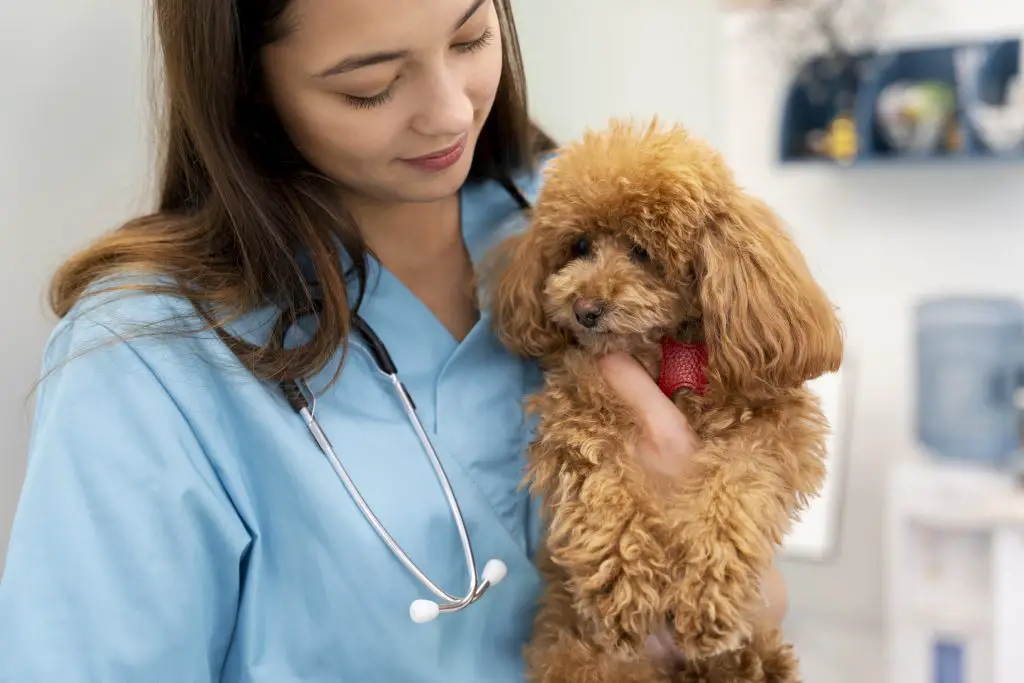
When a typically affectionate Poodle suddenly begins growling, hidden pain is the primary suspect. Dogs intuitively mask physical vulnerability to protect themselves. Generic dog behavior guides often overlook the fact that Poodles grow hair, rather than fur, continuously inside their ear canals. If this hair is not routinely maintained, it creates a dark, moist environment that is highly susceptible to painful yeast and bacterial infections. Similarly, Toy and Miniature Poodles are genetically prone to severe periodontal (dental) disease due to their compact jaw structures.
If your Poodle growls, snaps, or pulls away when you attempt to pet their head, brush their ears, or touch their muzzle, they are likely experiencing localized pain. Before attempting behavioral modifications, a thorough veterinary exam is required.
🩺 Vet Consultation Checklist: 5 Questions to Ask
If your Poodle’s growling is sudden or touch-related, bring this list to your next appointment:
- Ear Canal Review: “Can we check for deep-seated yeast or bacterial infections, specifically looking for hair impaction?”
- Dental Imaging: “Given the breed’s prone nature to periodontal disease, are there signs of abscesses or root decay?”
- Joint Assessment: “Is there evidence of luxating patellas (kneecaps) or early-onset arthritis?”
- Cushing’s Disease Screening: “Could hormonal changes or adrenal issues be contributing to irritability?”
- Pain Trial: “Would a short-term trial of dog-safe NSAIDs help determine if the growling is pain-induced?”
3. Sleep Startle Reflex and Handling
A growl is frequently rooted in a dog’s instinctual need to protect themselves when they feel vulnerable. One of the most common, yet misunderstood, triggers for a Poodle—particularly Toy and Miniature varieties—is the sleep startle reflex.
Because Toy and Miniature Poodles are small and lightweight, owners often develop a habit of physically picking them up to move them off a bed while they are asleep. When a dog is pulled abruptly from deep REM sleep by physical touch, a neurological reflex triggers a disoriented, defensive growl (or even a snap) to protect themselves from what they perceive as an unknown predator. Always use a gentle verbal cue to wake your Poodle before attempting to handle or move them.
4. Visual Sensitivity and Canine Fear Periods
Poodles possess exceptional visual acuity and acute situational awareness—traits originally bred into them as retrieving water dogs. A common reason for a Poodle growling seemingly at “nothing” is a heightened visual sensitivity to reflections or shadows.
This behavior occurs most frequently during canine adolescence, a developmental phase characterized by hormonal shifts and distinct fear periods. A young Poodle catching a glimpse of their own reflection in a dark glass door may misinterpret the visual stimulus as an intruding animal. This is a temporary developmental phase, not a permanent aggressive trait.
Age-Related Behavioral Risk Scale
| Poodle Life Stage | Behavioral Risk Index (1–10) | Primary Behavioral Catalyst |
| Puppyhood (0–6 Months) | 2 / 10 | Teething & Play: High-pitched “sass” or frustration during training; rarely defensive. |
| Adolescence (6–18 Months) | 6 / 10 | Fear Periods & Hormones: Heightened visual sensitivity (reflections) and boundary testing. |
| Adulthood (1.5–7 Years) | 4 / 10 | Stability: Generally the most predictable stage; resource guarding is the primary outlier. |
| Senior Years (7+ Years) | 9 / 10 | Physical Decline: Onset of arthritis, failing vision, and dental pain creates high irritability. |
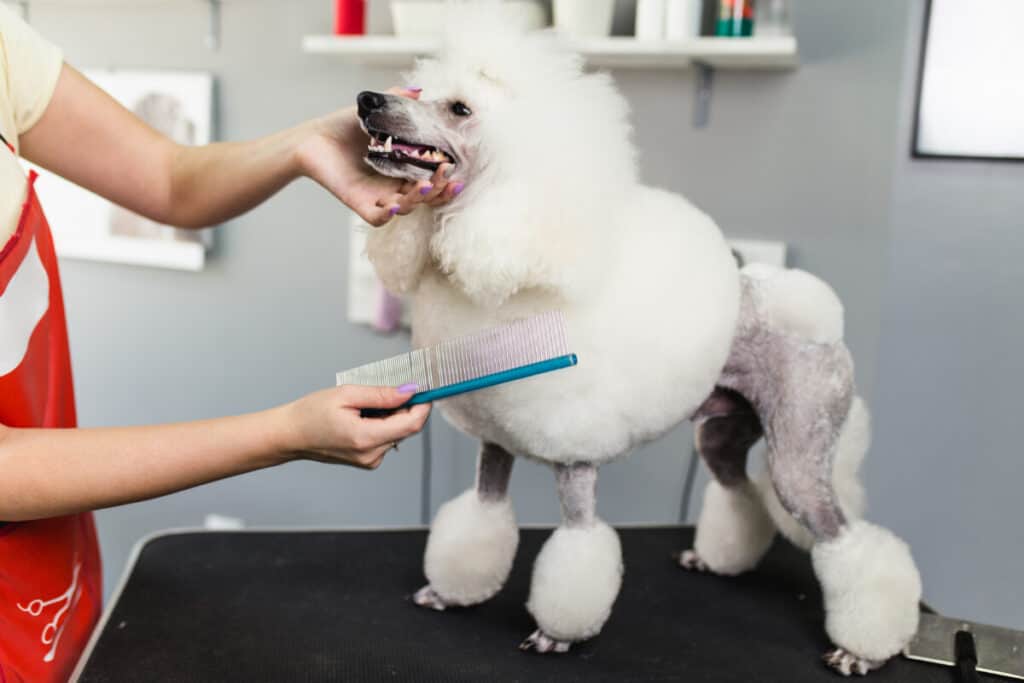
5. Grooming Aversion and Touch Sensitivity
Poodles require intensive, lifelong professional grooming and daily at-home maintenance. If a Poodle has experienced painful matting, accidental clipper burns, or stressed handling during a grooming session, they can quickly develop what behaviorists call touch aversion.
A Poodle suffering from grooming aversion will utilize a warning growl to establish a strict boundary regarding physical contact, particularly when an owner reaches for their paws, face, or rear legs. The American Society for the Prevention of Cruelty to Animals (ASPCA) recommends making handling a highly rewarding experience to rebuild trust, rather than forcing the dog through a painful brushing session which can escalate the growl into a defensive bite.
6. Size-Specific Handling Anxiety
When assessing why a Poodle is growling, it is critical to account for the drastic physiological differences between the breed’s size varieties.
Toy and Miniature Poodles often develop fear-based handling anxiety simply due to their stature. Because humans frequently loom overhead and reach down abruptly to pick them up, they growl to ward off a perceived predatory threat. To mitigate this, always squat down to their level and offer your hand for them to approach you first.
Conversely, a Standard Poodle rarely growls out of physical vulnerability. Their growling is far more likely rooted in territorial instincts, resource guarding, or intellectual frustration.
7. Standard Poodle Watchdog Instincts
Standard Poodles were originally bred in Germany as working water retrievers, endowing them with exceptionally sharp situational awareness. When a Standard Poodle emits a low, rumbling chest growl while staring out a window or listening to a sudden noise outside, they are rarely displaying aggression toward their owner. Instead, they are acting as an alert system.
This watchdog growl is a purposeful communication designed to inform the pack that something in the environment has shifted. Because this behavior is deeply ingrained, punishing a watchdog growl is counterproductive. Acknowledge the alert, visually check the area they are guarding, and use a calm, dismissive command like “thank you, enough” to let the dog know you are handling the situation.
8. Resource Guarding Behavior & The “Trade-Up” Method
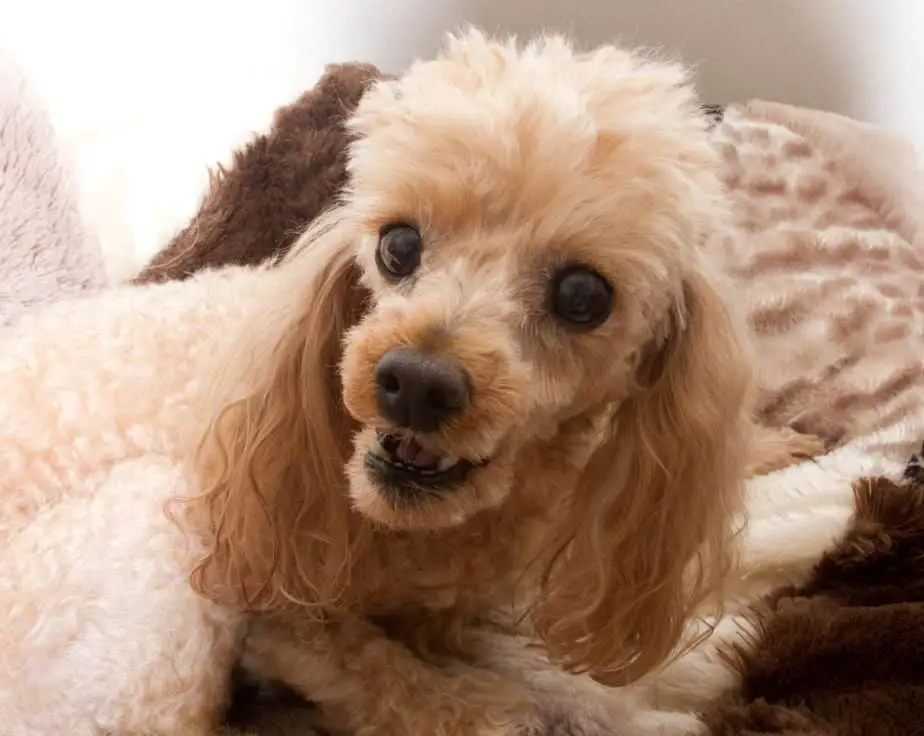
Because they were originally bred as water retrievers, Poodles have a strong genetic predisposition to hold and evaluate items in their mouths. When a Poodle perceives a threat to a high-value item—whether that is a food bowl, a favorite chew toy, or a stolen piece of laundry—they may growl to protect their prize.
Research from veterinary behaviorists associated with the American Veterinary Society of Animal Behavior (AVSAB) strongly advises against punishing a resource-guarding growl or forcibly removing the item. Punishing the growl suppresses their early warning system, increasing the chance they will bite without warning next time. Instead, utilize the “trade-up” protocol.
How to Safely Manage Resource Guarding: The 5-Step “Trade-Up” Method
- Identify the Value: Find a “high-value” treat that is significantly better than what they currently have (e.g., plain boiled chicken).
- Maintain Distance: Stand far enough away that your Poodle stops growling or whining and looks at you. Do not reach for the object yet.
- The “Toss and Walk”: Toss a few high-value treats near the dog. As they move to eat the treats, they will naturally drop the guarded item.
- Repeat and Trade: Toss another handful further away. While they move to get those, calmly retrieve the guarded object.
- Provide an Alternative: Immediately give them a safe, long-lasting chew to replace what was taken so they don’t feel “robbed.”
9. Intellectual Frustration and Boredom
Consistently ranked just behind the Border Collie in canine intelligence, Poodles are complex problem solvers. When a Poodle is chronically under-stimulated, they experience a very real phenomenon known as intellectual frustration.
An owner might experience their Poodle staring at them and emitting sharp, bossy barks or low, frustrated growls when the dog wants to initiate play or simply demands engagement. Rather than a sign of aggression, this “demand growl” is a symptom of an unmet cognitive need. Providing puzzle toys, teaching advanced obedience tricks, or engaging in scent work allows the dog to channel their intelligence constructively.
Diagnostic: Enrichment vs. Boredom Balance Sheet
| The Under-Stimulated Poodle | The Optimally Enriched Poodle |
| Vocal Sign: Sharp, repetitive “demand” growling. | Vocal Sign: Relaxed “contentment” grumbles. |
| Body Language: Pacing or “nudging” for attention. | Body Language: Ability to settle into deep sleep. |
| Behavior: Destructive chewing or hyper-vigilance. | Behavior: High focus during training sessions. |
| Outcome: Chronic stress-based vocalization. | Outcome: A calm, communicative companion. |
How to Safely Respond to a Growling Poodle
When your Poodle growls, your immediate reaction dictates whether the situation de-escalates or results in a bite. If your Poodle growls at you, follow these steps to diffuse the tension:
- Stop immediately: Freeze your current action. If you are reaching for them, stop reaching.
- Avoid direct eye contact: In canine body language, a hard stare is a direct challenge. Soften your eyes and slowly turn your head slightly to the side.
- Back away slowly: Give the dog physical space to decompress. Do not run or make sudden movements.
- Assess the environment: Once you are at a safe distance, look for the trigger. Was there a high-value chew toy nearby? Did you accidentally touch a sensitive ear?
- Consult a professional: If the growling is a sudden new behavior, always see a veterinarian to rule out hidden pain first. If given a clean bill of health, seek guidance from a certified professional dog trainer through directories like the Certification Council for Professional Dog Trainers (CCPDT).
Frequently Asked Questions (FAQ)
Should I punish my Poodle for growling? No, you should never punish a growl. A growl is a vital communication tool indicating discomfort, fear, or a boundary. Punishing a growl teaches your Poodle to suppress their warning system, which dramatically increases the likelihood that they will bite without warning in the future.
Why does my Poodle growl when I pet them? If your Poodle growls during petting, they are likely experiencing hidden pain or touch aversion. Common culprits include ear infections (due to hair in the ear canal), dental disease, or sensitivity from a past painful grooming experience. If their body is loose and relaxed, however, they may simply be doing a contented “Poodle grumble.”
Why does my Toy Poodle growl when I pick them up? Toy and Miniature Poodles are prone to size-specific handling anxiety. Being lifted suddenly removes their sense of control and mimics a predatory threat from above. To prevent this fear-based growl, use a verbal cue before picking them up or train them to confidently hop onto your lap on command.
Conclusion
Growling is one of the most misunderstood behaviors in the canine world. For a highly intelligent and sensitive breed like the Poodle, a growl is rarely an unprovoked threat; rather, it is a clear plea for space, a symptom of underlying pain, or simply a vocal expression of their current mood.
By shifting our perspective from punishment to observation, we can accurately decode whether they are guarding a resource, reacting to a sleep startle reflex, or just giving us a conversational “Poodle grumble.” Building a relationship based on trust and clear communication will ultimately result in a safer, happier environment for both you and your Poodle.
If you are experiencing other unique vocalizations or training challenges, exploring our comprehensive Poodle Behavior Guides can provide deeper insights into how this highly cognitive breed communicates.