

Disclaimer: The information provided on PoodleReport.com is for educational purposes only and does not constitute veterinary medical advice; always consult your vet before changing your dog’s diet. Additionally, this post contains affiliate links. As an Amazon Associate, and other affiliate advertising programs, I earn from qualifying purchases at no extra cost to you.
If you own a Poodle, you have likely experienced the sensation of being watched. A Poodle’s intense, unblinking gaze can feel almost human, which is both endearing and occasionally unnerving. In canine behavioral research, we observe that staring is a primary data-gathering tool for highly cognitive breeds. They are not just looking at you; they are studying you.
What are the 12 reasons why a Poodle might stare at you?
A Poodle’s stare is a complex form of communication rooted in their genetics, emotions, and environment. The 12 core reasons include:
- The “Velcro” Trait: Releasing the bonding hormone, oxytocin.
- Analytical Studying: Memorizing your micro-routines.
- Intellectual Frustration: A demand for mental enrichment.
- Anticipation of Cues: Waiting for their next training command.
- Emotional Contagion: Reading your stress or sadness.
- Separation Anxiety: Tracking your movements to ensure you don’t leave.
- The Vulnerability Stare: Acting as a “pack lookout” during bathroom breaks.
- The “Appeasement Stare”: De-escalating perceived threats (often mistaken for guilt).
- The “Head Tilt” Combination: Shifting their muzzle to read your facial expressions.
- Sleep Staring: The harmless visibility of the third eyelid during REM sleep.
- Resource Guarding: A hard stare warning you to back away.
- Medical Decline: Vision loss or cognitive dysfunction in senior dogs.
The Poodle “Stare Decoder” Matrix
Before evaluating the specific psychological or medical reasons behind your Poodle’s intense gaze, it helps to establish a behavioral baseline. By analyzing the physical kinesics (body language) that accompany the stare, we can accurately categorize the dog’s internal state.
| The Look | Accompanying Body Language | The Diagnosis |
| Soft & Blinking | Relaxed ears, slightly open mouth, loose tail. | Affection: Triggering the mutual oxytocin loop. |
| Intense & Unblinking | Sitting perfectly still, ears perked forward. | Analytical Studying / Anticipation: Waiting for a routine or cue. |
| Head Tilted | Ears shifting, intense focus on your face. | Cognitive Processing: Trying to understand your words or tone. |
| Averted/Low Posture | Head down, looking up (whale eye), lip licking. | Appeasement: Reading your frustration and trying to de-escalate. |
| Fixed & Stiff | Rigid body, closed mouth, guarding an item. | Resource Guarding: A fear-based warning to back away. |
| Nudging & Sustained | Pacing, huffing, or dropping a toy at your feet. | Intellectual Frustration: Demanding mental enrichment. |
| Vacant / Glazed | Staring at walls, confusion, bumping into objects. | Medical Issue: Potential vision loss (PRA) or cognitive decline. |
Deepen Your Understanding: Poodle Behavior: A single behavior is just one piece of the canine communication puzzle. Explore my complete list of Poodle Behavior Guides to decode your dog’s daily habits, manage high-energy frustration, and learn to read their subtle warning signals before they escalate.
The Genetics of the Poodle Stare
To understand the behavior, we must look at the breed’s origins. Standard Poodles were developed in Germany as water retrievers. Their job was to sit in boats or blinds and visually track waterfowl as it fell from the sky. Sustained visual focus and sharp acuity are heavily coded into their DNA.
Size also plays a role. Toy and Miniature Poodles are highly aware of their physical vulnerability. They frequently stare upwards to monitor foot traffic, keeping a close eye on the humans around them to avoid being stepped on or startled.
1. The “Velcro” Trait and Oxytocin Loop
Poodles are notoriously “Velcro dogs,” meaning they attach themselves deeply to their primary caregiver. When your Poodle gives you a “soft stare”—characterized by relaxed facial muscles and gentle, slow blinking—they are expressing affection.
Research shows that mutual gazing between a dog and its human triggers the release of oxytocin (the “love hormone”) in both species. This hormonal loop strengthens the emotional bond, functioning much like a hug would between humans.
2. High Canine Intelligence (The Analytical Stare)
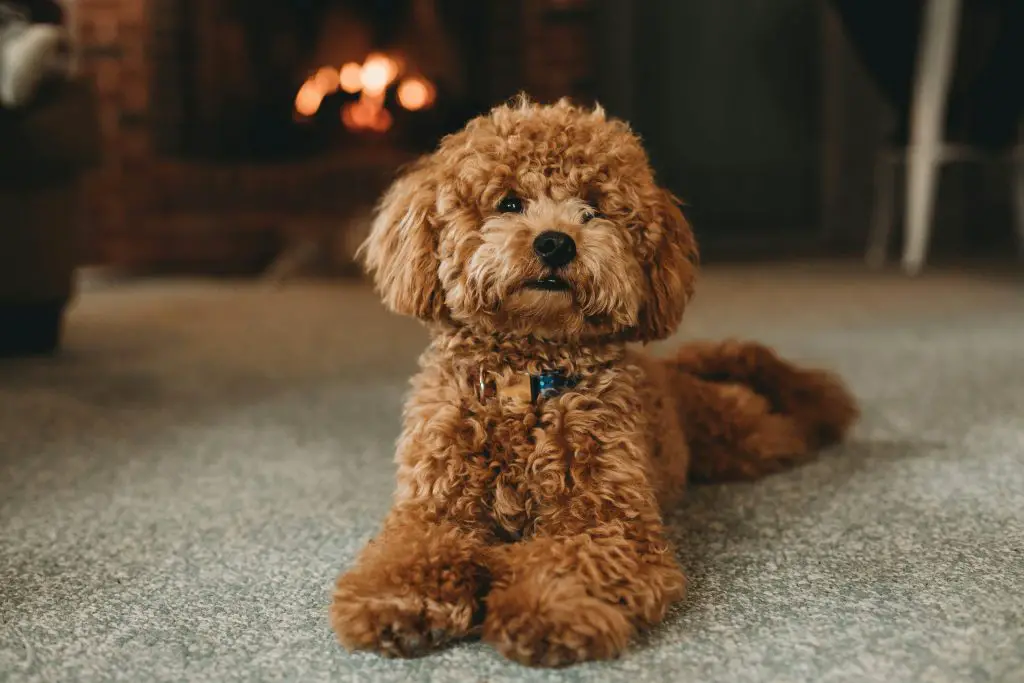
Ranked as the second smartest dog breed, Poodles use their vision to map out their world. During my time observing my own Standard Poodle, Angus, I noticed he didn’t just stare blankly; he was always actively collecting data.
Poodles study human micro-expressions and habits. If your Poodle is staring at you from across the room, they are likely memorizing the exact sequence of your routine. They learn that when you put on a specific pair of shoes, a walk is imminent, or when you grab your keys, you are leaving the house.
3. Intellectual Frustration (The Demand Stare)
Because they are so intelligent, Poodles require immense mental enrichment. When a Poodle is chronically under-stimulated, they will use a fixed, unrelenting stare to demand engagement.
This is essentially a “silent bark.” If they sit directly in front of you, staring a hole through your forehead while occasionally huffing or nudging you, they are demanding a job. Providing a puzzle toy or a short training session usually breaks this intense visual lock.
4. Anticipation of Training Cues
A well-trained Poodle has a strong working-dog mindset. During obedience training or agility work, a Poodle will lock eyes with their handler. This is a highly desirable trait in the dog training world known as “checking in.”
If you are holding a treat, holding their leash, or simply standing in a way that implies a training session is about to begin, your Poodle will stare at you in eager anticipation of their next command.
5. Empathy and Emotional Contagion
Poodles possess incredible emotional intelligence and are highly susceptible to “emotional contagion”—the phenomenon of mirroring the emotions of those around them.
If you are crying, visibly stressed, or angry, your Poodle will often stare intently to assess your emotional state. They are trying to figure out if the “pack leader” is in danger or if they need to offer comforting appeasement behaviors, such as resting their chin on your knee.
6. Separation Anxiety and “Tracking”
Because they bond so tightly to one person, Poodles are genetically predisposed to separation anxiety. If your Poodle suffers from this, their stare is a form of preemptive worry.
An anxious Poodle will stare at you to track your every movement, terrified that you might leave the room or the house without them. They keep their eyes glued to you so that they can instantly follow if you attempt to stand up or walk toward a door.
7. The Vulnerability Stare (Bathroom Behavior)
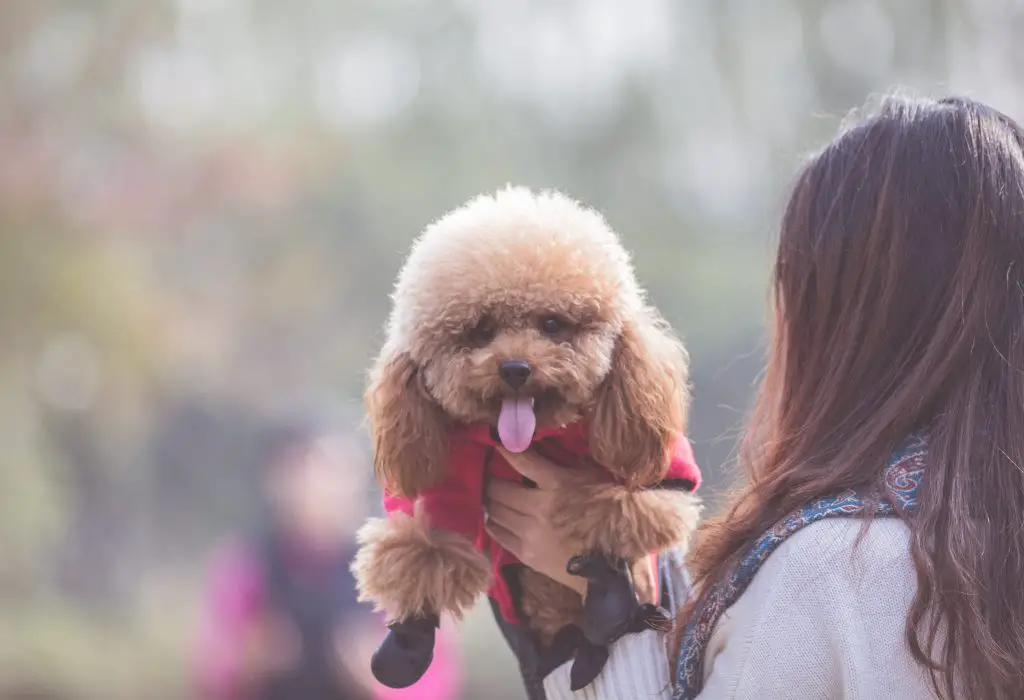
One of the most frequent behavioral queries owners research is why their Poodle stares at them while the dog is eliminating, or conversely, why the dog insists on following them into the human bathroom to stare.
In canine psychology, the act of elimination puts an animal in a highly compromised physical posture. When your Poodle locks eyes with you while doing their business in the yard, they are using you as an early warning system to ensure their trusted “lookout” considers the environment safe. Your Poodle follows you into the bathroom to return the favor, acting as your personal lookout to ensure nothing sneaks up on you while you are compromised behind closed doors.
Many owners assume their Poodle is staring at them out of “guilt” after shredding a pillow or having an accident on the rug. However, canine behavioral research indicates that dogs do not experience guilt in the human sense.
If your Poodle has their head lowered, ears back, and is staring up at you with wide eyes, they are displaying an “appeasement stare.” They are simply reading your tense body language or angry tone and offering submissive behaviors to de-escalate what they perceive as a threat from their pack leader.
9. The “Head Tilt” Combination
If your Poodle stares at you while dramatically tilting their head to the side, they are actively trying to process information. This behavior serves two anatomical purposes.
First, tilting the head adjusts their ear pinnae to better locate the exact source and tone of your voice. Second, a dog’s muzzle can partially block their lower field of vision. By tilting their head, they shift their muzzle out of the way, allowing them to clearly read your mouth and facial expressions.
10. Sleep Staring (The Half-Open Eye)
It can be startling to look over and realize your Poodle appears to be staring dead at you while they are fast asleep.
Fortunately, this is entirely harmless. Dogs possess a nictitating membrane, commonly known as the third eyelid. During deep REM sleep, the primary eyelids may drift partially open, revealing this pale or translucent membrane. They are not actually watching you; it is merely an anatomical quirk of canine sleep cycles.
11: The “Hard Stare” (Resource Guarding)
It is critical to differentiate a loving gaze from a dangerous warning. If your Poodle goes completely rigid, stops blinking, and gives you a “hard stare” (often showing the whites of their eyes), this is a sign of resource guarding or fear.
They are warning you to back away from their food, their high-value toy, or their physical space. If you encounter this, do not stare back, as dogs interpret sustained, hard eye contact as a direct challenge.
12. Breed-Specific Medical Decline
If your senior Poodle’s stare seems “vacant” or if they are staring blankly at walls rather than at a person, a medical evaluation is required.
- Progressive Retinal Atrophy (PRA): Poodles are highly predisposed to this genetic eye condition, which leads to gradual blindness. A dog with failing vision may stare seemingly into space as they try to navigate light shadows.
- Canine Cognitive Dysfunction (CCD): In senior Poodles (typically over the age of 10), staring at corners or walls is a hallmark symptom of canine dementia.
The At-Home Vision and Cognitive Checklist
Before consulting your veterinarian, perform these simple at-home observations:
- The Cotton Ball Test: Drop a standard cotton ball right in front of your Poodle’s face. Because it makes no sound, your dog must rely entirely on their vision to track it.
- The Shadow/Low-Light Test: Observe if your Poodle’s staring and hesitation increase dramatically at dusk or when transitioning into a dimly lit room (a common early sign of PRA).
- The Navigation Check: Look for sudden spatial confusion, like hesitating at staircases they previously navigated with ease.
Human vs. Canine Eye Contact: The Species Difference
To truly understand your Poodle’s gaze, it helps to recognize how unique this behavior is. In the wild, wolves and feral dogs rarely make sustained eye contact with one another. Among canines, a direct, unblinking stare is almost exclusively used as a threat or a challenge.
However, over thousands of years of domestication, dogs have evolutionarily adapted to communicate with humans. Studies show that when presented with an unsolvable puzzle, a dog will look back at their human for help, whereas a wolf will not. Your Poodle’s willingness to stare into your eyes is a remarkable, species-specific adaptation designed exclusively to build a bridge between their world and yours.
The Age-Related Staring Profile: How Your Poodle’s Gaze Evolves
As your Poodle’s brain develops, the primary catalysts behind their staring will fundamentally shift. What is driven by curiosity in a puppy may be driven by medical decline in a senior dog. Understanding this longitudinal progression helps owners set realistic behavioral expectations for their specific life stage.
| Life Stage | Primary Staring Catalyst | The “Researcher’s Translation” | Typical Management Approach |
| Puppyhood (0–6 Months) | Information Gathering | “I am a sponge learning the rules of this new world.” | Reward soft eye contact to build engagement; ignore demand staring. |
| Adolescence (6–18 Months) | Boundary Testing & Demand | “I am bored and I want you to entertain me right now.” | Utilize the “Go to Place” command and increase mental enrichment. |
| Adulthood (1.5–7 Years) | Emotional Contagion & Routine | “I know exactly what you are feeling and what you will do next.” | Enjoy the deep oxytocin bond; ensure their working-dog needs are met. |
| Senior Years (7+ Years) | Sensory Compensation or Decline | “I am relying on my eyes because my hearing is fading, or my vision is clouding.” | Schedule a veterinary exam to check for PRA or Canine Cognitive Dysfunction. |
Actionable Advice: How to Break the Staring Habit
If your Poodle’s staring becomes obsessive, demand-based, or stems from anxiety, you can use positive redirection to break the habit:
- Applying the “Rule of 3 Seconds”: Prolonged, direct eye contact is an escalating behavior. If your Poodle locks eyes with you for longer than three seconds without blinking, their arousal level is rising. If the stare is tense, avert your eyes slightly to the side to de-escalate the tension.
- The “Go to Place” Command: Teach your dog to go to a designated mat or bed. This breaks their visual lock on you and gives them a specific job to focus on.
- The “Find It” Game: If they are staring out of boredom, toss a handful of kibble into the grass and tell them to “Find it.” This forces them to use their nose rather than their eyes, lowering their arousal levels.
Frequently Asked Questions (FAQ)
Is it bad to stare back at my Poodle?
It depends on the context. If your Poodle has soft, relaxed eyes, returning the gaze releases bonding hormones. However, if your dog is stiff or guarding a toy, staring back is perceived as an aggressive challenge in canine body language.
Why does my Poodle stare at me while I eat?
This is a classic case of anticipation and resource gathering. Your highly observant Poodle has learned that human meals sometimes result in dropped crumbs, and they are simply waiting for an opportunity.
How do I know if my Poodle’s staring is a medical issue?
If your dog is staring blankly at walls, bumping into furniture, showing cloudiness in their pupils, or failing to track moving objects, the staring may be related to vision loss (like PRA) or cognitive decline. Always consult your veterinarian if the behavior is accompanied by disorientation.
Conclusion
A Poodle’s stare is a testament to their deep bond with humanity and their exceptional intelligence. Whether they are seeking a job, reading your emotions, or acting as your bathroom lookout, their eyes are their primary tool for communication. By observing the body language that accompanies the stare, you can accurately decode exactly what your canine companion is trying to say.
Want to truly understand what your Poodle is thinking? Because they are highly cognitive working dogs, Poodles require a unique behavioral approach. Read my 2026 Poodle Behavior Guide to earn how to decode their body language, stop unwanted behaviors through positive redirection, and build a stronger, stress-free bond.
Medical & Veterinary Disclaimer: PoodleReport.com is an informational resource for Poodle owners and enthusiasts. We are not veterinarians. The content on this website is not a substitute for professional veterinary care, diagnosis, or treatment. Always seek the advice of your veterinarian with any questions you may have regarding your pet’s medical condition, diet, or overall health.