

Disclaimer: The information provided on PoodleReport.com is for educational purposes only and does not constitute veterinary medical advice; always consult your vet before changing your dog’s diet. Additionally, this post contains affiliate links. As an Amazon Associate, and other affiliate advertising programs, I earn from qualifying purchases at no extra cost to you.
If you own a Cockapoo, you would probably agree that one of its most annoying traits is its tendency to bite. Cockapoos, a hybrid pup, combine the trainability and humor of Poodles with the sweet nature of Cocker Spaniels.
However, despite being intelligent and charming, Cockapoos have one weakness: they like exploring with their teeth through biting.
Cockapoos often bite as a result of illness, excitement, teething, or boredom. Employing proper bite inhibition techniques, early socialization, and distraction can help to curb biting in Cockapoos. In puppies, Nipping can be suppressed by limiting foot or hand movements after your Cockapoo bites.
In this article, we’ll discuss everything related to your Cockapoo’s biting habits, including the top reasons why they bite, when you should be concerned about your dog’s biting, and some helpful tips to stop this behavior in its tracks.
If you’re looking for more ways to manage your dog’s unique personality beyond just biting, you can browse through our full Poodle Mixes category for more guides on raising a well-adjusted pup.
Why Do Cockapoos Bite?
Before beginning your journey to curb your canine’s biting behavior, it’s essential to understand why he may love biting in the first place.
Generally, a Cockapoo will not bite you without reason — your dog’s biting will always involve triggers of some kind. Luckily, if you have a close bond with your Cockapoo, it’s pretty easy to discover what may be causing the biting with a little time and loving patience.
The ten most common reasons Cockapoos bite include:
1. Self Defense
If your pup feels like he’s in danger, his most likely reaction will be to bite.
For example, if someone screams at your Cockapoo or runs towards him in a threatening manner, he’s likely to feel nervous or frightened, and there’s a high chance he’ll react by biting. You really can’t blame your canine furball in this case — even humans tend to be aggressive when responding to a threat.
2. Excitement
When Cockapoos feel excited, they tend to jump on their owners and may end up biting from sheer exuberance. In this case, he may be sharing this enthusiasm with his owner without the intention of biting or injuring anyone!
3. Exploration
Sometimes, Cockapoos — especially puppies — use their teeth to explore the world around them. When Cockapoo puppies are in the learning stage, they and are highly curious and investigative about everything. As a result, you may find them biting or nipping people and other objects in a bid to learn more about them.
4. To Protect
Cockapoos are affectionate and possessive of their owners. They see their owners as the leader of their pack. Whenever your dog feels you are under threat, he’s likely to do anything within his power to defend and protect you, including biting.
In a bid to keep you safe, you may find your Cockapoo biting even innocent children when he spots them playing with you. It’s essential to train your pup bite inhibition, as he may harm unsuspecting children in the future.
5. When Teething
Your pup may also bite when teething. The teething process usually lasts between two to three months, and during this stage, a puppy tends to suffer discomfort, which they often relive through biting or mouthing.
Teething is a crucial phase in your pup’s life that you can’t avoid. Therefore, it’s important to be aware of the signs your dog is likely to show when teething.
Signs of teething in Cockapoos include:
- Swollen gums
- Loss of appetite
- Lethargy
- Bad smelling breath
- Chewing and gnawing
6. When Startled
If you suddenly wake your pup from their slumber or make a loud noise, they’re likely to get startled. Startling often triggers biting.
7. To Seek Attention
Cockapoos may occasionally bite if they’re desperate for their owner’s attention. Since these dogs crave constant attention from humans, they may nip on an exposed part of your body anytime you divert attention elsewhere.
8. Boredom
In some cases, Cockapoos bite out of boredom. When your dog has nothing to do, he may bite objects and people as a way of keeping himself busy and entertained.
9. Sickness or Injury
When your pup is sick or in pain, he may bite you in an attempt to express his feelings. Therefore, if your canine companion has begun biting randomly, you might want to take your pet to the vet.
10. Natural Instinct
Cockapoos, just like other dog breeds, trace their origin from the lineage of wild dogs. And although they’re domesticated and raised as pets alongside humans, you can’t eliminate all of their natural instincts — for example, their desire to chase prey.
If your Cockapoo notices a toddler running or a toy moving across the room rapidly, his instincts may kick in, encouraging him to chase after the child.
Should You Be Concerned if Your Cockapoo Puppy is Bitting?
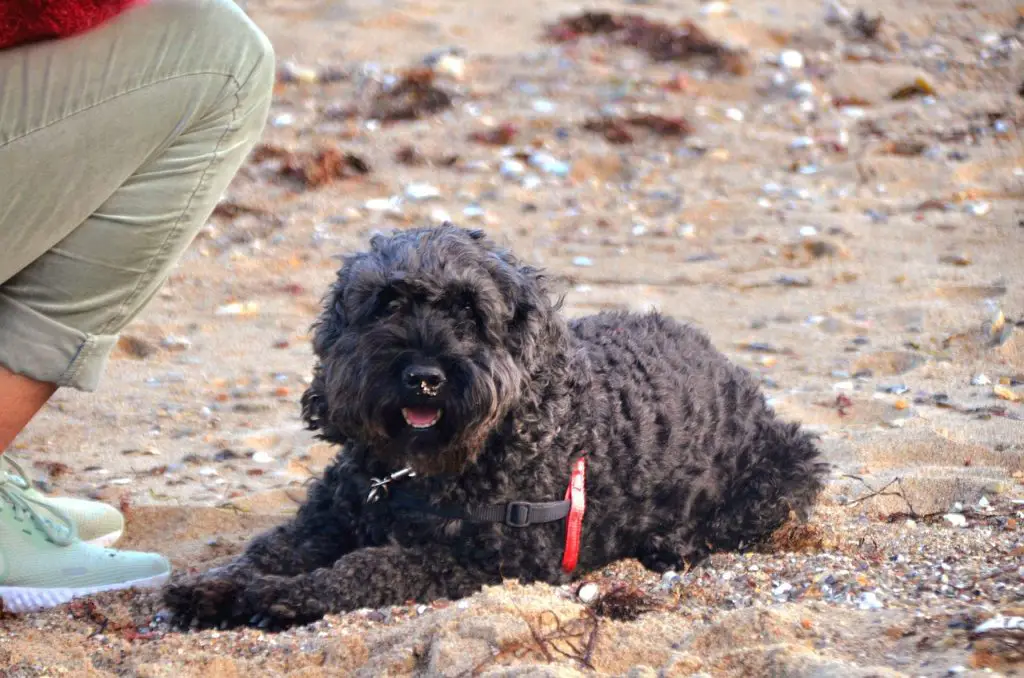
Generally, most dogs — especially puppies — love biting. Luckily for puppies, this comes as a phase during their early months of development, which they soon outgrow. Therefore, if your Cockapoo puppy bites a lot, it doesn’t guarantee that they’ll be aggressive, full-grown adults.
However, there are a few things about their biting that you should be wary of, which might turn into untamable problems in the future.
You should be concerned about your Cockapoo puppy’s biting if:
- His bites are sharp and strong enough to break through delicate skin.
- He growls, snarls, and bites whenever you reach for his feeding bowl or if anyone walks past them while he’s feeding.
- He growls and bites kids.
- Your pup growls and bites new people coming to your home.
- Your Cockapoo first stares and stiffens before biting.
These biting habits can grow to become undesired aggressive behaviors in your adult Cockapoo if not appropriately controlled at a young age. Therefore, if you are unable to get your dog’s biting behavior under control, it’s best to consult a professional vet to help you.
Understanding “Cocker Rage” Syndrome
While most biting is simply a normal puppy phase or a behavioral issue, it is important to be aware of a rare genetic condition linked to the Cocker Spaniel lineage often referred to as “Cocker Rage” or Idiopathic Aggression. This syndrome is characterized by sudden, unprovoked, and severe aggressive outbursts in an otherwise sweet and normal dog.
During an episode, a Cockapoo may stare blankly, their pupils may dilate, and they will snap or bite without any typical warning signs like growling or stiffening. Minutes later, the dog often appears completely confused and returns to their normal, affectionate self. Because this is suspected to be a neurological issue rather than a behavioral one, standard training techniques will not stop the biting. If your dog exhibits sudden, unpredictable aggression that seems entirely out of character and happens without any clear trigger, it is vital to consult your veterinarian to rule out underlying pain and discuss specific management strategies.
Chart: Typical Puppy Biting vs. “Cocker Rage” Symptoms
It is essential to distinguish between a behavioral choice and a neurological event. While most biting is just a normal part of the “puppy blues,” the Cockapoo can, in very rare instances, inherit a condition from its Cocker Spaniel lineage known as Idiopathic Aggression, or “Cocker Rage.”
This isn’t a sign of a “bad dog”—it’s a seizure-like neurological episode that happens without warning or a clear trigger. Because these outbursts can be frightening, you need to look at the specific diagnostic traits to tell if your dog is just overstimulated or if they need a professional veterinary evaluation. Use the chart below to help identify what your Cockapoo is actually experiencing.
| Diagnostic Trait | Normal Cockapoo Biting | Idiopathic Aggression (“Cocker Rage”) |
| Predictability | High (Triggered by play, overtiredness, or teething) | Zero (Sudden, unprovoked onset with no clear trigger) |
| Warning Signs | Mouthiness, playful growling, or stiffening if guarding | None (Often preceded by a blank stare and dilated pupils) |
| Intensity | Usually inhibited (nips and scratches) | Severe, uninhibited biting causing real damage |
| Post-Incident Behavior | Remains excited, playful, or settles down | Appears confused, disoriented, or immediately submissive |
| Age of Onset | 8 weeks to 1 year (Developmental phases) | Typically emerges unexpectedly in young adulthood (1-3 years) |
| Effective Solution | Consistent training, redirection, and maturity | Requires immediate veterinary and neurological evaluation |
Should You Punish Your Cockapoo for Biting?
Admittedly, anytime your dog bites, one of the first thoughts that cross your mind is to punish them. Some dog owners believe that punishing their canines will reduce their tendency to bite — however, this isn’t always true.
Under no circumstances should you punish your Cockapoo for biting. Harsh punishments such as slapping or yelling often increase biting behaviors in dogs by encouraging aggressive behavior. Saying ‘NO’ or clapping when your Cockapoo bites train him to associate these actions with not biting.
In this case, it’s a better idea to use the reward-based training method to help your pooch learn that biting is bad.
You can also try saying ‘NO’ in a high-pitched but calm voice or clap whenever you spot your pooch biting. By doing this, your pup learns that whatever they’re doing isn’t acceptable.
Immediately after your pup stops biting, give them chewable toys to divert their attention elsewhere. Once they’re distracted, offer them a reward. This whole process (commanding them to stop biting, distracting them with toys, and offering them a treat) should happen within a very short time, maybe even seconds.
By doing this repeatedly and consistently, your pup will learn to associate the positive reinforcement with not biting. This may go a long way in stopping your Cockapoo from biting. Therefore, not all undesirable behavior, especially in canines, requires harsh punishment. Whenever possible, look for alternatives.
How To Stop a Cockapoo From Biting
Generally, it’s far easier to control biting in a Cockapoo puppy than an adult dog. That’s because puppies are still in their early years of growth, and it’s easier to curb undesirable traits while they’re still open to training. However, negative biting behaviors can become ingrained in adults, making them harder to eliminate.
Owners can help stop a Cockapoo from biting by:
1. Socializing From a Young Age
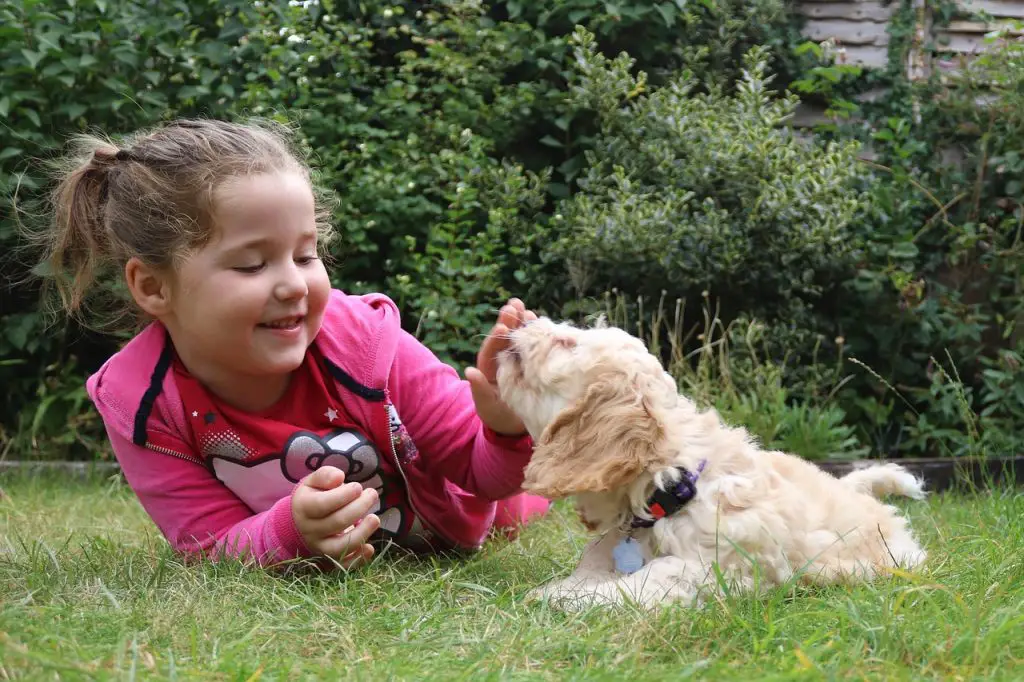
Poorly socialized Cockapoos tend to bite more than the socialized ones. This is probably because Cockspoos see other pets and people as threats or intruders.
It’s a good idea to enroll your puppy in socialization classes or introduce him to the real world starting at a very young age, even as early as seven to eight weeks old.
However, it’s never too late to begin socializing, even your adult dog. In addition to registering your adult dog for socialization classes, it’s also a good idea to take him to public places where he has the chance to interact with other dogs and people.
Although socialization may take longer than you expect, your patience and diligence will be rewarded as your dog enters adulthood.
Introducing your puppy to other dogs at a young age provides an opportunity for him to learn boundaries, tricks, and other desirable behaviors.
Additionally, if possible, introduce your canine to children early enough to help the duo create a strong bond. This allows your Cockapoo to see kids as friendly creatures rather than threats. However, always supervise your Cockapoo’s interactions with children to ensure your kids are safe.
Through early socialization, your pup learns to coexist with other pets and humans. Your dog will become accustomed to other creatures and humans and may no longer view them as strangers or feel compelled to bite. Therefore, socialization reduces your Cockapoo’s chances of biting other people or even object in the home.
2. Using Bite Inhibation Training
Training is vital for every dog, giving them the chance to learn new tricks and commands. Training helps canines develop desirable habits and makes them more obedient toward their owners.
When training your Cockapoo, be sure to teach them commands such as ‘No,’ ‘Stop,’ and ‘Sit,’ among others that you can use to redirect their attention while biting.
Anytime your dog bites you, or you spot him chewing on your furniture in the house, quickly use these commands to alert them that whatever they’re biting. If your dog responds positively and stops biting, reward them.
Practice this consistently, and with time, your pup will start associating rewards or treats with not biting and will respond to the ‘No,’ ‘Stop,’ or ‘Sit’ commands.
However, don’t expect your canine companion to acclimate to your training techniques overnight. It may take a few days, weeks, or even months before you start seeing any significant changes in your dog’s biting behavior.
Consistency and perseverance go a long way in making bite inhibition training successful.
If you need some help training your Poodle bite inhibition, there are plenty of online courses that can assist you as you teach your dog new things at home.
When I was working with Angus, the Brain Training for Dogs program made a massive difference. The best part for me was the private member’s area—it was great being able to connect with other owners who were actually going through the same training hurdles I was. If you’re feeling stuck or just want a better way to engage your dog’s mind, I really think this is worth a look.
3. Using Sounds/Signals
Besides the basic training commands, you can also use signals and sounds that tell your Cockapoo whatever he’s doing isn’t okay. Here, you can develop a sound (high pitched but not harsh) that you make when your dog bites your feet or hands.
The point of the signals or sounds is to let your pup know when something hurts. If possible, you can imitate the sound that puppies make when playtime goes too far. But you can still come up with a unique sound that all members of your family can use whenever your Cockapoo bites them. For example, ‘Ouch.’
Anytime your pup nips or bites your skin, use this sound. Over time, your pup will learn that you make this distress sound only when they bite you and will likely begin to understand that biting makes you sad or causes you pain. Since Cockapoos love to please, they’ll eventually stop biting.
Like all other commands, avoid using a distress sound for more than one purpose because this may confuse your furry canine friend. Only use this sound when your dog bites you, not when they nibble on the couch leg. However, you can develop a unique sound to stop your Cockapoo from biting and chewing the furniture too.
4. Distracting Your Cockapoo
As we already mentioned, distracting your dog can go a long way in curbing biting behavior. Distraction is best employed immediately after you’ve used commands and signals to stop the biting.
As soon as your Cockapoo stops biting, distract them with dog-friendly chewable toys. This action alone may stop your dog from biting you or your furniture again while he’s still excitable.
Distracting your pup with the right toys directs them to a positive form of biting and chewing, which keeps him from gnawing on furniture and your soft limbs. Therefore, always ensure that your pup’s toys are within arm’s reach.
Once you make it a routine, your pup will understand it’s okay to bite and chew toys but not people and furniture. When distracting your canine, you can even hold a toy using your hands to teach them the difference between toys and hands when biting.
5. Avoiding Movement in Hands or Feet When Your Cockapoo Bites
Not moving your hand or feet away after a dog bite sounds counterintuitive, right? However, doing this can help stop your Cockapoo from biting.
Let’s find out how.
Generally, anytime a pup bites, the first thing you want to do is move your hand away from the pain. However, you should try overriding this instinct because, after all, your pup won’t bite you that hard; it’s often a quick little nip.
Any time you move your hand or feet away after a bite, you make your dog even more curious. Puppies especially feel the urge to explore more by biting again and again. This also mimics fleeing prey.
The best bet here is to ignore the biting behavior. If your pup bites, just ignore them — don’t punish or reward them.
Finally, your dog will realize that he isn’t earning attention when biting, and since dogs love attention from their owners, your Cockapoo will catch the hint soon enough. It’s also important to tell other family members and guests to do the same (ignore the bites).
6. Making Use of Crate Training
Some dog owners see crate training as a cruel dog training method, regarding it as a harsh punishment. However, if properly implemented, it can be one of the most effective ways to correct your pup’s undesirable behaviors (like biting)
Anytime you catch your Cockapoo biting, place him in the create immediately. Since crate training keeps a dog locked and reduces their freedom to move around the house, most dogs will learn their lesson pretty quickly.
Your Cockapoo will begin associating being locked in a crate with their biting. The only way they can stay out of their lonely crate is to stop biting in the first place.
7. Managing Resource Guarding
One of the most common reasons an older Cockapoo puppy or adult dog will suddenly bite is due to a behavior called resource guarding. Because of their Spaniel heritage, Cockapoos can occasionally become incredibly possessive over high-value items, such as a favorite chew toy, a stolen shoe, or their food bowl. If you reach down to pull an item out of their mouth, their natural instinct is to snap or bite to protect their prize.
Instead of forcibly removing an item—which builds mistrust and increases the likelihood of a severe bite—the most effective strategy is to play the “Trade Up” game. If your Cockapoo has something they shouldn’t, find a treat of significantly higher value. Casually toss the high-value treat on the floor a few feet away. When your dog drops the forbidden item to go get the treat, calmly pick up the original item. This teaches your dog that giving up a guarded item results in a positive reward, completely diffusing the tension that leads to defensive biting.
4. Chart: Identifying Resource Guarding vs. Normal Play
It is essential to distinguish between a behavioral choice and a neurological event. While most biting is just a normal part of the “puppy blues,” the Cockapoo can, in very rare instances, inherit a condition from its Cocker Spaniel lineage known as Idiopathic Aggression, or “Cocker Rage.”
This isn’t a sign of a “bad dog”—it’s a seizure-like neurological episode that happens without warning or a clear trigger. Because these outbursts can be frightening, you need to look at the specific diagnostic traits to tell if your dog is just overstimulated or if they need a professional veterinary evaluation. Use the chart below to help identify what your Cockapoo is actually experiencing.
| Behavioral Cue | Normal Play & Teething | Active Resource Guarding |
| Body Posture | Loose, wiggly, and bouncy | Stiff, frozen, and lowered over the item |
| Eye Contact | Soft eyes, blinking, looking away | Hard stare, unblinking, showing whites (“Whale Eye”) |
| Vocalization | High-pitched yips or playful, rumbly growls | Deep, continuous, and tense warning growl |
| Ear Position | Relaxed or perked forward | Pinned tightly back against the head |
| The Trigger | General excitement, playing, or petting | Human or other pet approaching a high-value item |
| The Fix | Redirect to a chew toy or enforce a nap | Play the “Trade Up” game with a higher-value treat |
FAQ: Cockapoo Biting & Behavior
At what age do Cockapoos stop biting? Most Cockapoos will significantly grow out of the “land shark” phase once their adult teeth are fully in, typically around 6 to 8 months. However, if the biting is driven by overstimulation or lack of boundaries rather than teething, it can persist into adulthood without consistent redirection and “timeout” training.
Are Cockapoos naturally aggressive? No. Cockapoos are widely known for being social, affectionate, and gentle. When aggression occurs, it is almost always linked to a specific, treatable cause: lack of socialization, fear, pain, or resource guarding. In the extremely rare case of “Cocker Rage,” the behavior is neurological rather than a reflection of the breed’s natural temperament.
Why does my Cockapoo growl when I take things away? This is a classic sign of resource guarding. Your dog isn’t trying to be “alpha”; they are genuinely afraid of losing something they value. Using the “Trade Up” game—swapping the item for a high-value treat—is the fastest way to stop the growling and prevent a bite.
Is my Cockapoo puppy biting because of “Cocker Rage”? Almost certainly not. “Cocker Rage” is incredibly rare and usually doesn’t appear until a dog reaches social maturity (1–3 years old). If your puppy is under 6 months old and biting during play or when they are tired, it is standard puppy behavior that can be managed with training and naps.
How can I tell if a bite is playful or aggressive? Look at the rest of the body. A playful bite is accompanied by “bouncy” movements and a wagging tail. An aggressive bite is preceded by a “freeze”—the dog will go stiff, stare intensely (whale eye), and may give a low, rumbling warning growl.
While the Cockapoo is a fantastic family dog, their specific Spaniel-inherited traits—like resource guarding—mean they aren’t always the perfect match for every household. If you are still in the research phase and want to see how the Cockapoo’s energy and temperament stack up against other popular hybrids, check out my massive guide to the 50 Best Poodle Mixes. It’s a great way to compare the different ‘Doodle’ personalities to make sure you’re bringing home the right pup for your lifestyle.
Conclusion
Biting and nipping are some of the most frustrating parts of raising a Cockapoo, but they aren’t a permanent personality trait. Whether your dog is dealing with puppy teething, testing boundaries, or protecting a favorite toy, the solution always comes down to patience and consistency. By understanding the biology behind these behaviors—and knowing when a bite is a training issue versus a medical one—you can stop these habits before they turn into adult aggression.
Remember that training isn’t an overnight fix; it is a long-term investment in your relationship. It may take several weeks or even months of consistent redirection before your Cockapoo fully understands the rules, but the result is a confident, gentle companion who knows how to use their mouth appropriately.
Medical & Veterinary Disclaimer: PoodleReport.com is an informational resource for Poodle owners and enthusiasts. We are not veterinarians. The content on this website is not a substitute for professional veterinary care, diagnosis, or treatment. Always seek the advice of your veterinarian with any questions you may have regarding your pet’s medical condition, diet, or overall health.