
Quick Summary: Top Picks for Older Adults
- Best for Apartments (Zero Lifting Strain): Maltipoo (8–14 lbs)
- Lowest Energy (The Couch Potato): Shih-poo (10–15 lbs)
- Best for Active Seniors (Sturdy Build): Toy Goldendoodle (15–25 lbs)
- Best for Severe Allergies (Low Dander): Bidoodle (10–15 lbs)
Introduction: Finding the Perfect, Safe Pace
The benefits of canine companionship for older adults are well-documented. A dog provides a structured daily routine, decreases feelings of isolation, and can even help lower blood pressure. However, these emotional rewards must be carefully balanced against the physical realities and safety concerns of aging.
I’m Brent Hartman, Founder and Lead Researcher of Poodle Report. My deep understanding of canine cognition was forged through my experience with my Standard Poodle, Angus. While his intense intelligence and loyalty were incredible gifts, a large Poodle requires a massive amount of physical management. For an older adult, wrestling with a high-drive, 60-pound dog on a leash—especially on wet or icy pavement—isn’t just exhausting; it is a serious safety hazard.
That is exactly why scaling down to a toy or miniature Poodle mix (commonly called a “Doodle”) is often the smartest, safest choice for a senior citizen.
By choosing a smaller hybrid, you retain that famous Poodle intelligence but in a highly manageable package. More importantly, you can utilize what I call a “Metabolic Reset”—managing the dog’s energy through indoor cognitive games and puzzles rather than relying on physically demanding outdoor walks. This guide moves past the standard “cute puppy” photos to provide a practical, safety-first evaluation of the best small Doodle mixes for your lifestyle.
Explore the Library
Ready to understand the Poodle intelligence within your Doodle? Whether you own a mellow Maltipoo or a more robust Toy Goldendoodle, your dog has inherited a world-class analytical mind. Browse my Poodle Mix Guides to learn how to confidently manage separation anxiety, conquer reactive barking phases, and apply training methods designed for the unique cognitive realities of Poodle hybrids.
How We Ranked the Safest Doodles for Older Adults
Most generic lists of “best dogs for seniors” fail because they only focus on a breed’s physical appearance or general friendliness. They completely ignore the physical realities of aging, such as arthritis, joint replacements, and limited mobility.
To provide a genuinely helpful resource, Poodle Report evaluated these low-maintenance dogs for older adults using a strict safety rubric. We aligned our criteria with the American Veterinary Medical Association (AVMA) guidelines for selecting a pet, prioritizing physical safety and ease of care above all else.
The Senior Pet Safety Rubric
When evaluating these Poodle mixes, we judged them strictly on three factors that directly impact a senior’s daily safety:
- Fall & Trip Risk: The CDC reports that pets are a leading cause of falls among older adults. We assessed whether a breed is generally grounded and independent, or if it is a “velcro dog” that weaves dangerously around walkers, canes, or unsteady legs.
- Lifting & Portability (Under 25 lbs): Bending over to pick up a struggling 40-pound dog can cause severe back strain. We only selected mixes that are highly portable, allowing a senior to safely lift them into a vehicle, onto a grooming table, or into a bathtub.
- Mental vs. Physical Energy: A dog that pulls hard on a leash is a major hazard. We looked at how easily each mix can be mentally exhausted indoors using puzzle toys (the Metabolic Reset) rather than requiring daily, strenuous outdoor hikes.
The Safest Mixes for Senior Citizens (Dogs 1–3)

1. The Maltipoo (Maltese & Toy Poodle Mix)
The Maltipoo consistently ranks as one of the most manageable companions for older adults. By crossing the intensely affectionate Maltese with the highly intelligent Toy Poodle, breeders have created a low-maintenance dog with a very low physical drive. They are completely content to sit on a lap for hours, making them perfect for seniors in apartments or assisted living facilities.
From a lifting perspective, the Maltipoo is incredibly safe and light enough to scoop up with one arm. However, you must be aware of their trip hazard potential. Because they bond so deeply with their owners, they become “shadow dogs” that follow right at your heels. Seniors using a mobility aid will need to train them to hold a “place” command to avoid stepping on them.
| Safety Metric | The Senior Reality |
| Weight | 8–14 lbs (Zero lifting strain) |
| Fall Risk | Moderate (Prone to shadowing your footsteps) |
| Energy Level | Low (Easily managed with 15 minutes of indoor puzzle toys) |
| Grooming Need | High (Requires a professional groomer every 6–8 weeks) |
2. The Shih-poo (Shih Tzu & Poodle Mix)
The Shih-poo is the definitive couch potato of the Doodle world. While they possess a slight stubborn streak inherited from the Shih Tzu, they are incredibly gentle, quiet, and perfectly happy to spend the majority of the day napping on a comfortable sofa.
Their physical limitations are actually their greatest safety benefit. Because many Shih-poos inherit a slightly shortened snout from the Shih Tzu side, they are susceptible to brachycephalic airway syndrome. This medical reality means they physically cannot tolerate heat or overexertion. A short, slow-paced stroll down the block is all the exercise they can safely handle, completely eliminating the risk of a senior being pulled down by a high-drive dog.
| Safety Metric | The Senior Reality |
| Weight | 10–15 lbs (Highly portable and easy to carry) |
| Fall Risk | Low (Prefers sleeping on furniture rather than weaving underfoot) |
| Energy Level | Very Low (Short outdoor sniffs are fully sufficient) |
| Grooming Need | High (Requires daily eye-area cleaning and regular clipping) |
3. The Toy Goldendoodle (Golden Retriever & Toy Poodle)
This mix offers the highly desired, goofy “Golden” personality in a highly manageable 15-to-20-pound package. They are fantastic for active seniors who still want to play in the yard and need a sturdy, robust dog that isn’t too fragile around visiting grandchildren.
Do not let the small size fool you—they retain that classic retriever energy and a “soft mouth” instinct. Instead of risking a fall on a long outdoor hike, you can safely burn their energy indoors. Teaching them to carry soft toys, or setting up a daily routine of hallway fetch, will keep their minds sharp and prevent destructive chewing.
| Safety Metric | The Senior Reality |
| Weight | 15–25 lbs (Moderate portability; may be heavy for frail adults) |
| Fall Risk | Moderate (Can be bouncy or jump up when excited) |
| Energy Level | Moderate (Requires daily interactive play like indoor fetch) |
| Grooming Need | Very High (Thick hybrid coat is highly prone to severe matting) |
The Safest Mixes for Senior Citizens (Dogs 4–6)
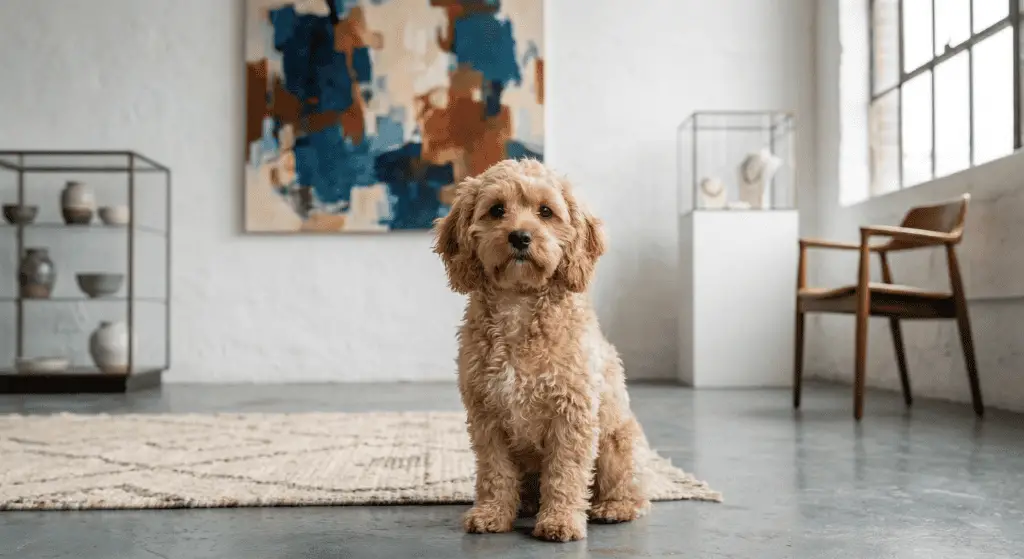
4. The Cavapoo (Cavalier King Charles Spaniel & Poodle Mix)
The Cavapoo is rapidly becoming the premier choice for older adults seeking an emotional support animal. By blending the gentle, sweet-natured Cavalier with the trainable Poodle, you get a highly empathetic companion that perfectly matches the emotional tone of your home.
From a safety perspective, they are incredibly well-suited for seniors. They lack the high, bouncy energy of a Goldendoodle and are generally very calm indoors. Because they are highly attuned to their owners, they tend to move deliberately rather than darting quickly across the floor. This provides a very low fall risk for seniors navigating with canes or walkers.
| Safety Metric | The Senior Reality |
| Weight | 12–20 lbs (Highly portable and easy to manage) |
| Fall Risk | Low (Calm, deliberate indoor movements) |
| Energy Level | Low to Moderate (Enjoys a gentle daily walk and quiet companionship) |
| Grooming Need | Moderate (Requires routine brushing to prevent tangles in their soft coat) |
Export to Sheets
5. The Cockapoo (Cocker Spaniel & Poodle Mix)
As one of the oldest and most established Doodle hybrids, the Cockapoo offers incredible predictability. They are sturdy and robust, making them a fantastic option for a senior who frequently hosts energetic grandchildren. They are tough enough to handle playtime without being fragile, yet small enough to safely manage on a leash.
However, there is a specific physical care requirement that older adults must consider: hand dexterity. Cockapoos have heavy, floppy ears that are notoriously prone to infections. An owner must have the grip strength and wrist flexibility to thoroughly clean and dry the dog’s ears every single week to prevent chronic medical issues.
| Safety Metric | The Senior Reality |
| Weight | 15–25 lbs (Moderate lifting strain; sturdy build) |
| Fall Risk | Low (Grounded and predictable indoors) |
| Energy Level | Moderate (Excellent candidates for indoor scent-work games) |
| Grooming Need | Moderate to High (Weekly, hands-on ear maintenance is absolutely mandatory) |
6. The Bidoodle (Bichon Frise & Poodle Mix)
The Bidoodle is the standout choice for seniors who suffer from severe pet allergies or asthma. Because both parent breeds are considered low-dander and non-shedding, this mix provides the highest probability of a truly hypoallergenic coat. They are cheerful, clownish, and thrive on human interaction, making them a wonderful antidote to loneliness.
However, from a mobility management perspective, this intense desire for connection makes them a high-risk “velcro dog.” They will follow a senior from room to room, often stopping abruptly right at their owner’s heels. For an individual who is unsteady on their feet, this extreme closeness presents a significant trip hazard that must be managed with firm “place” training.
| Safety Metric | The Senior Reality |
| Weight | 10–15 lbs (High portability; very easy to lift) |
| Fall Risk | High (Intense “velcro dog” tendencies that put them constantly underfoot) |
| Energy Level | Low (Playful bursts followed by long naps; excels at trick training) |
| Grooming Need | High (Requires strict daily brushing to prevent painful matting) |
The Safest Mixes for Senior Citizens (Dogs 7–10)

7. The Schnoodle (Miniature Schnauzer & Poodle Mix)
The Schnoodle is a fantastic option for a senior who wants a sturdy, confident dog that acts larger than its actual size. Because they inherit the terrier tenacity of the Miniature Schnauzer, they are incredibly grounded and deliberate in their movements.
This makes them one of the safest options for fall prevention. Unlike fragile toy breeds that dart nervously between your legs, a Schnoodle tends to hold its ground and observe. They are excellent, alert watchdogs that provide a strong sense of security for older adults living alone, without the physical liability of a large protection breed.
| Safety Metric | The Senior Reality |
| Weight | 12–20 lbs (Highly portable; sturdy build) |
| Fall Risk | Very Low (Grounded, confident, and rarely underfoot) |
| Energy Level | Moderate (Requires daily mental engagement to prevent boredom barking) |
| Grooming Need | Moderate (The wiry hybrid coat is often easier to brush than tight Poodle curls) |
8. The Chi-poo (Chihuahua & Poodle Mix)
The Chi-poo is an incredibly popular choice for an older adult who wants a tiny dog they can comfortably hold for hours on end. Because they often weigh under 10 pounds, they offer extreme portability. A senior with minimal arm strength can effortlessly scoop a Chi-poo off the floor, lift them onto a vet table, or comfortably bathe them in a kitchen sink without the risk of throwing out their back.
However, this tiny stature brings a critical fall risk. Chihuahuas and their mixes are notorious for sudden, darting movements and a tendency to stop abruptly right behind their owner’s heels. For a senior with compromised balance or peripheral vision, the Chi-poo is a significant trip hazard that requires constant spatial awareness.
| Safety Metric | The Senior Reality |
| Weight | 5–12 lbs (Extreme Portability; effortless lifting) |
| Fall Risk | High (Very small, fast, and prone to stopping underfoot) |
| Energy Level | Low (Indoor play and short, gentle walks are sufficient) |
| Grooming Need | Low to Moderate (Wavy coats are much easier to manage than tight curls) |
9. The Pomapoo (Pomeranian & Poodle Mix)
The Pomapoo is a striking, alert companion that is almost entirely content to spend its day observing the world from a comfortable window seat. Their exercise needs are minimal, requiring very little outdoor activity. This is a massive safety advantage during harsh winter weather, when icy sidewalks present a severe fall risk for older adults.
To manage their energy safely indoors, you must utilize mental engagement. They love to watch and learn, so teaching them to differentiate between specific toys by name is highly effective. However, the major drawback for seniors—particularly those in shared housing, apartments, or assisted living—is their vocal nature. The Pomeranian heritage makes them prone to “alert barking” at every unfamiliar sound.
| Safety Metric | The Senior Reality |
| Weight | 5–15 lbs (High Portability; very easy to lift) |
| Fall Risk | Moderate (Quick, darting movements when excited) |
| Energy Level | Low (Loves to observe; mental games are highly effective) |
| Grooming Need | Moderate (Prone to shedding more than other Doodles) |
10. The Yorkipoo (Yorkshire Terrier & Poodle Mix)
The Yorkipoo is a spunky, deeply affectionate mix that offers all the “big dog” personality of a terrier in a highly portable, low-shedding package. They are incredibly loyal and will happily spend all day curled up next to their favorite person.
From a physical management standpoint, the Yorkipoo presents a unique challenge: dental health. Like many toy breeds, they are prone to severe periodontal disease. An owner must have the manual dexterity to brush the dog’s teeth several times a week, or the financial resources to pay for annual, professional dental cleanings under anesthesia.
| Safety Metric | The Senior Reality |
| Weight | 5–15 lbs (High Portability; zero lifting strain) |
| Fall Risk | Moderate to High (Fast-moving and tends to stay very close to feet) |
| Energy Level | Moderate (Requires daily indoor play to burn off terrier energy) |
| Grooming Need | High (Requires regular clipping and strict, weekly dental care) |
The Physical Reality of Grooming a Doodle
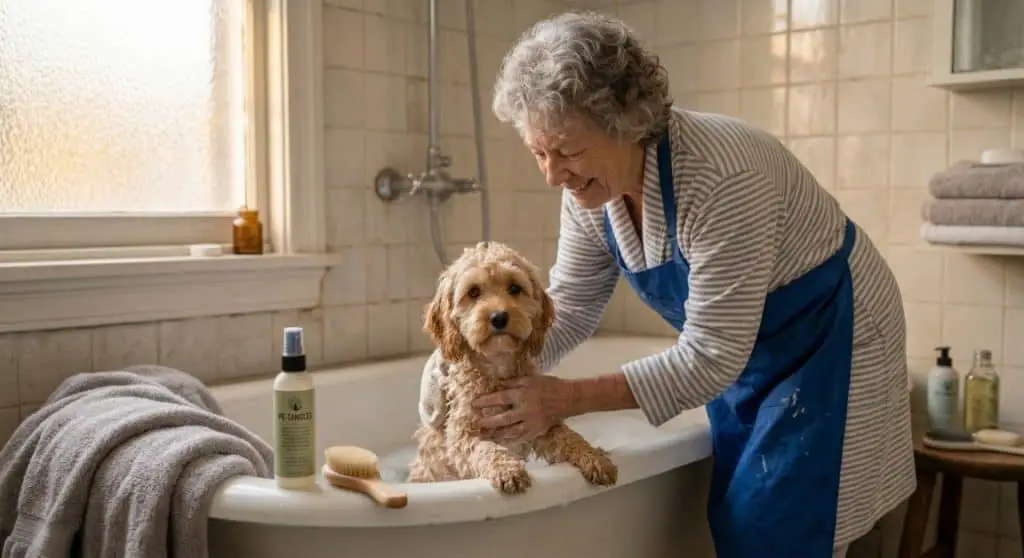
One of the biggest misconceptions in the dog world is that a “hypoallergenic,” non-shedding Doodle is automatically low-maintenance. In reality, a Poodle hybrid’s coat requires an intense amount of physical upkeep that older adults must seriously consider before bringing one home.
Arthritis & Hand Strain
Because Doodles do not shed their hair naturally, dead hair gets trapped in their tight curls, rapidly forming painful mats close to the skin. Preventing this requires a technique called “line-brushing,” which involves parting the hair and brushing from the root outward.
For a senior citizen dealing with arthritis, joint pain, or reduced grip strength, the repetitive wrist motion and manual dexterity required to line-brush a dog for 30 minutes a day can cause severe physical strain. Managing my Standard Poodle, Angus, taught me just how physically demanding a Poodle’s coat can be—and a Doodle’s mixed-texture coat is often even harder to comb through.
The Hypoallergenic Myth & The “Puppy Cut” Solution
It is also vital to understand that no dog is 100% allergy-proof. According to the American College of Allergy, Asthma, & Immunology (ACAAI), pet allergies are triggered by dander (dead skin cells) and saliva, not just hair. To keep dander down and eliminate the physical strain of daily brushing, seniors must take a practical approach to grooming.
The absolute safest and most manageable solution for older adults is the “Puppy Cut.” * The Strategy: Budget for a professional groomer every 6 to 8 weeks.
- The Request: Ask the groomer to clip the dog’s coat uniformly short (usually about 1/2 inch to 1 inch long) all over their body.
- The Benefit: This eliminates the need for deep, physically taxing line-brushing at home, requiring only a light, gentle daily brush with a soft slicker to keep the dog clean and stimulate healthy blood flow.
Frequently Asked Questions (FAQ)
Q: What is the calmest Poodle mix for an elderly person? A: The Shih-poo is widely considered the calmest option. Due to their slightly shortened snouts, they have a very low physical drive, cannot handle overexertion, and are perfectly content to lounge indoors, making them incredibly safe for older adults.
Q: Are small Poodle mixes a fall risk for seniors with walkers? A: Yes. While large dogs are an outdoor leash hazard, toy breeds underfoot are a leading indoor fall risk. It is crucial to teach small “velcro dogs” a strict “place” command—directing them to a specific bed or mat before you stand up or move with a mobility aid.
Q: Which small Doodle is the easiest to potty train indoors? A: The Toy Goldendoodle and the Schnoodle are generally the easiest to train due to their highly eager-to-please nature. For seniors with mobility issues, setting up an indoor grass patch system is a safe, effective alternative to walking outdoors in icy or dark conditions.
Q: What is the best hypoallergenic Poodle mix for seniors? A: The Bidoodle (Bichon Frise and Poodle mix) is the safest bet for severe allergy sufferers. Because both parent breeds are low-dander and non-shedding, this mix provides the highest probability of a truly allergy-friendly coat, though daily brushing is still required.
Q: How often do small Doodle mixes need professional grooming? A: To avoid the physical strain of daily, heavy line-brushing, seniors should budget for professional grooming every 6 to 8 weeks. Requesting a short “puppy cut” minimizes painful matting and is far easier on an older owner’s arthritic hands.
Conclusion: Choosing Safety and Companionship
Welcoming a Poodle mix into your life during your senior years should bring joy, comfort, and a healthy routine—not physical strain or anxiety about falling. By prioritizing a dog’s weight, indoor energy management, and “underfoot” tendencies over just their looks, you can find a companion that perfectly matches your current mobility and lifestyle.
Remember, scaling down from a large breed doesn’t mean sacrificing that brilliant Poodle intelligence. You can easily keep a smaller Doodle mentally sharp and physically safe right from your living room by utilizing indoor puzzle toys and trick training.
If you are still weighing your options, make sure to download my free Small Poodle Mix Matchmaker & Care Guide below to help calculate grooming budgets and map out a safe, trip-free home setup.
To your safe and happy companionship,
Explore More on Poodle Report:
If you are looking for more specific details on the breeds mentioned above, explore our comprehensive guides to find the perfect fit for your home and lifestyle:
- 50 Best Poodle Mixes (2026): Traits, Cognition & Realities
- In-Depth Breed Profile: [The Maltipoo: 2026 Care & Temperament Guide]
- Lifestyle Comparison: [The Best Poodle Mixes for Apartment Living]