
Disclaimer: The information provided on PoodleReport.com is for educational purposes only and does not constitute veterinary medical advice; always consult your vet before changing your dog’s diet. Additionally, this post contains affiliate links. As an Amazon Associate, and other affiliate advertising programs, I earn from qualifying purchases at no extra cost to you.
Choosing a new canine companion is a monumental decision, especially when navigating the modern “Doodle craze.” Poodles and Goldendoodles share 50% of their genetic makeup, yet they offer distinctly different daily ownership experiences.
As a researcher, my journey into canine cognition began with observing the sharp, analytical problem-solving skills of my late Standard Poodle, Angus. That firsthand experience highlighted just how uniquely the purebred Poodle mind operates when compared to the happy-go-lucky, highly social nature of a retriever cross. While a Goldendoodle brings the exuberant, hybrid energy of a Golden Retriever mix, the purebred Poodle offers centuries of standardized predictability.
To make the best decision for your household, it is necessary to look past basic size charts and generic temperament labels. This guide dives deeper into the hidden realities of living with both of these highly intelligent dogs—uncovering the truth about their distinct biomechanics, unique gastric sensitivities, and the actual daily cost of maintaining their coats.
Comprehensive Breed Comparison Chart
When deciding between a purebred and a hybrid, it helps to see the core differences side-by-side. While every dog is an individual, their genetic makeup plays a massive role in shaping baseline traits. Organizations like the American Kennel Club (AKC) meticulously track the standards for purebreds, giving us a highly predictable baseline to compare against the varying traits of a hybrid.
| Trait / Feature | The Standard Poodle (Purebred) | The Goldendoodle (Hybrid) |
| Coat Texture | Single-layer, dense, and tightly curled. | Unpredictable; often a wavy or curly “combination coat.” |
| Shedding Level | Extremely low to non-shedding. | Low to moderate (depends heavily on the generation, e.g., F1 vs F1B). |
| Affection Style | “Velcro Dog” – intensely loyal to a core family unit. | “Social Butterfly” – loves everyone, highly indiscriminate affection. |
| Bite Inhibition | Precise mouth; can be “nippy” during the puppy teething phase. | “Soft Mouth” genetics; very mouthy as puppies but highly gentle. |
| Dietary Habits | Often picky eaters; prone to poultry sensitivities. | Highly food-motivated “vacuum cleaners”; prone to obesity. |
| Structural Risks | Deep-chested; high risk for Gastric Dilatation-Volvulus (Bloat). | Mismatched biomechanics; elevated risk for CCL (knee) tears. |
| Lifespan | 12–15 years. | 10–15 years. |
| Average Cost | $1,000 – $2,500+ | $2,000 – $5,000+ |
Genetic Predictability vs. Hybrid Variance
When evaluating these two dogs, one of the most critical factors is genetic predictability. Selecting a purebred means tapping into centuries of documented lineage. Because the Poodle Club of America maintains strict breed standards, prospective owners have a high degree of certainty regarding a puppy’s adult size, coat texture, and baseline temperament.
Conversely, the Goldendoodle represents a genetic lottery, particularly in F1 (first-generation) litters. While the Poodle parent provides a structural blueprint, the Golden Retriever’s genes can manifest in unexpected ways. A puppy might inherit the Poodle’s intelligence but the Golden’s heavier shedding coat or intense prey drive. For owners who require a specific “type” of dog for strict apartment living or allergy requirements, standardized genetics offer reliable forecasting that a hybrid cannot guarantee.
The “Generational Math” Reality: F1, F1B, and the 75% Paradox
When navigating the hybrid dog market, prospective owners are immediately hit with confusing generational labels like F1, F1B, or F2. Most buyers simply want a dog that doesn’t shed, leading breeders to heavily market the “F1B” Goldendoodle as the ultimate hypoallergenic family pet. However, breaking down the actual genetic math reveals a fascinating paradox.
An F1 Goldendoodle is a direct 50/50 split between a purebred Golden Retriever and a purebred Poodle. Because these first-generation dogs often still shed, breeders create the F1B generation by taking an F1 Goldendoodle and breeding it back to a purebred Poodle.
From a researcher’s perspective, the math here is critical: an F1B Goldendoodle is genetically 75% Poodle and only 25% Golden Retriever.
This creates a highly ironic situation in the designer dog market. Families often pay a massive $3,000 to $5,000 premium for a “hybrid” dog just to guarantee a non-shedding, curly coat, when they are effectively purchasing a dog that is predominantly a Poodle anyway. Furthermore, unless the breeder uses rigorous DNA profiling—such as the comprehensive genetic health panels provided by organizations like Embark Veterinary—buyers are paying a premium for a 75% Poodle that lacks the standardized health clearances and predictability of a purposefully preserved purebred line.
If your primary goal is a non-shedding, highly intelligent dog with a curly coat, the purebred Poodle offers a 100% guarantee of those traits without the hybrid markup.
While the Goldendoodle is the most famous, the designer dog market is vast. Check out our ranking of the 50 top Poodle crossbreeds to see how other hybrids handle shedding and temperament.
Goldendoodle Generational Breakdown Chart
| Generation | Breeding Mix | Genetic Breakdown | Coat & Shedding Reality |
| F1 | Purebred Poodle x Purebred Golden Retriever | 50% Poodle / 50% Golden Retriever | Wavy or loosely curled. Moderate to high shedding is common. |
| F1B | F1 Goldendoodle x Purebred Poodle | 75% Poodle / 25% Golden Retriever | Curly coat. Low to non-shedding. (The most popular hybrid choice). |
| F1BB | F1B Goldendoodle x Purebred Poodle | 87.5% Poodle / 12.5% Golden Retriever | Extremely curly. Nearly identical to a purebred Poodle coat. |
| F2 | F1 Goldendoodle x F1 Goldendoodle | 50% Poodle / 50% Golden Retriever | Highly unpredictable. Can have a flat retriever coat or a curly coat. |
Note: While hybrid registries like the Goldendoodle Association of North America (GANA) establish generational guidelines, physical traits in mixed breeds remain a genetic lottery compared to purebred standards.
Temperament: The “Velcro Dog” vs. The “Social Butterfly”

Most basic breed guides will simply tell you that both of these dogs are “friendly and affectionate.” However, the missing nuance for prospective owners is how they display that affection on a daily basis.
The Poodle’s Loyalty Poodles are classic “Velcro dogs.” They tend to bond intensely with one specific person or a small, core family unit. Because they are highly observant, they often prefer to sit quietly at your feet and assess the room rather than demanding immediate attention from every guest. This analytical nature makes them excellent, discerning watchdogs. They are naturally aloof with strangers until they determine a new person is safe.
The Goldendoodle’s Exuberance The Goldendoodle, heavily influenced by its Golden Retriever lineage, operates quite differently. They often view the entire room as their best friend. They distribute their affection widely and indiscriminately, thriving in highly social, chaotic environments. While this makes them fantastic, outgoing companions for busy households, it also means they are generally poor watchdogs—they are often simply too thrilled to see whoever walks through the door to view them as a threat.
Neurological Arousal Levels and the Missing “Off-Switch”
Standard breed comparisons usually label both the Poodle and the Goldendoodle as “high energy.” However, for a family trying to relax after a long day of work, “high energy” is too vague of a term. The real issue owners face on a day-to-day basis is arousal regulation—specifically, how fast the dog can calm down after being stimulated.
The Purebred “Off-Switch” Purebred working dogs, including the Poodle, were historically bred to have a reliable “off-switch.” A well-bred Poodle can exert intense, focused energy out in the field or during a training session, but once they cross the threshold back into the house, their neurological arousal drops. They understand how to self-soothe, settle quietly, and transition into an “off” state without needing constant direction.
The Hybrid Hyper-Arousal Goldendoodles, however, frequently suffer from mismatched neurological drives. Combining the Golden Retriever’s relentless, all-day retrieving stamina with the Poodle’s high alertness and physical springiness often creates a dog that struggles with hyper-arousal.
Rather than having a “dimmer switch” to gradually calm down, many Goldendoodles operate entirely at 0 or 100. A simple doorbell ring or a brief play session can spike their adrenaline and cortisol, and they lack the genetic off-switch to bring themselves back down to a resting state.
Consequently, Goldendoodle owners frequently have to rely on active management techniques—such as mandatory enforced naps, crate training, and dedicated “place” or mat training—to teach the dog how to self-regulate. For owners navigating these big behavioral swings, resources and certified consultants through the International Association of Animal Behavior Consultants (IAABC) offer invaluable guidance on teaching arousal regulation to highly excitable hybrids.
Leash Reactivity: Visual Trackers vs. Olfactory Scavengers
Most breed guides state that both dogs “require daily walks,” but they fail to explain how fundamentally different walking these two dogs actually is. Many new owners are caught off guard by sudden leash pulling, not realizing that the reactivity stems from entirely different sensory drives.
The Poodle’s Visual Drive Because Poodles were originally bred to scan the surface of the water for downed waterfowl, they are highly attuned visual trackers. As a long-nosed breed, they possess a broad “visual streak” across their retina that makes them exceptionally sensitive to movement.
On a walk, a Poodle is far more likely to react to visual stimuli—a squirrel darting up a tree, a cyclist passing by, or a leaf blowing across the street. When leash training a Poodle, the focus must be on maintaining eye contact and teaching the dog to visually check in with the handler before reacting to environmental movement.
The Hybrid’s Olfactory Focus Golden Retrievers, conversely, are heavily reliant on their world-class sense of smell, frequently utilized in professional search-and-rescue and scent-detection work. A Goldendoodle often inherits this intense olfactory drive. Rather than scanning the horizon, a Goldendoodle is an olfactory scavenger, naturally dropping its nose to the pavement. They are far more likely to abruptly drag an owner into a bush because they smell a discarded food wrapper or the trail of another animal.
Understanding this sensory difference is crucial for successful leash training. While a Poodle needs help managing visual overstimulation, a Goldendoodle often requires specific “scent work” outlets.
Allowing a Goldendoodle dedicated “sniffaris”—where the dog is permitted to lead and process smells—can significantly reduce leash pulling. For owners looking to better understand how dogs process the world through their noses, the American Kennel Club (AKC) provides excellent resources on the physiological differences between canine vision and olfaction.
Puppy Phases & “Soft Mouth” Traits
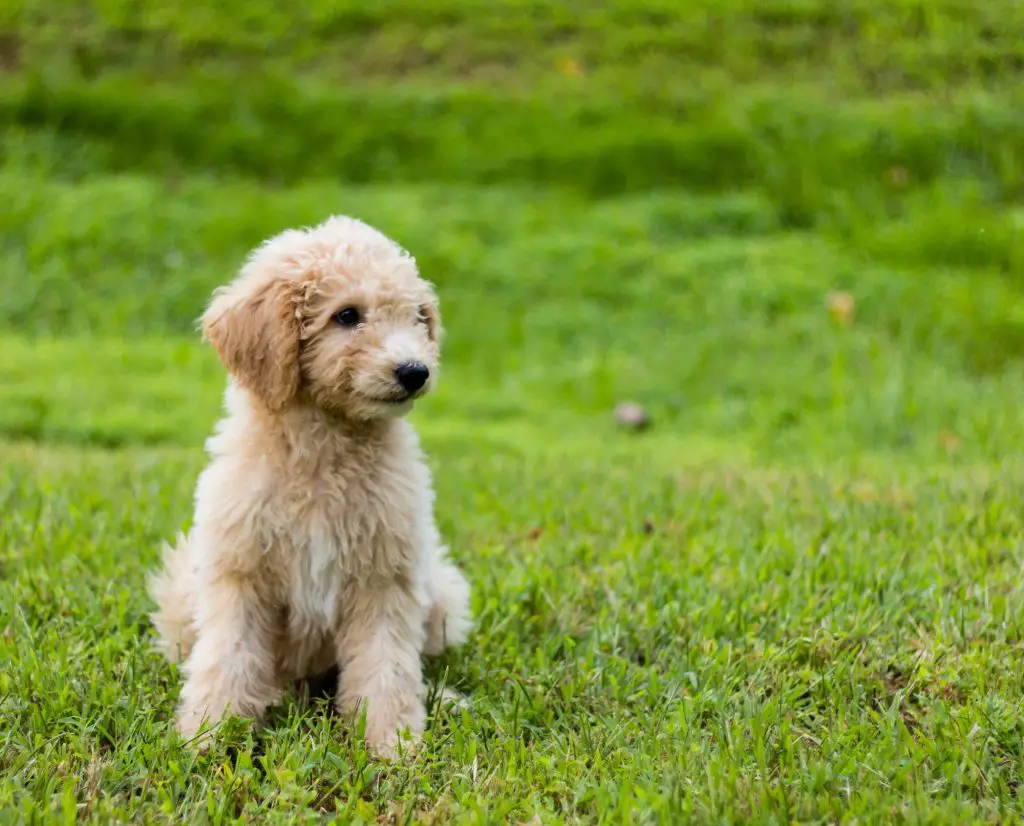
Both of these breeds originate from water-retrieving backgrounds, but their mouth behaviors and play styles differ significantly. Understanding these nuances is vital information, particularly for families with young toddlers who are navigating the puppy teething phase.
The Goldendoodle’s “Soft Mouth” Golden Retrievers were bred specifically to have a “soft mouth”—a high level of innate bite inhibition so they would not damage the waterfowl they were retrieving. Goldendoodle puppies often inherit this trait. While they can be exceptionally “mouthy” (frequently wanting to hold your hands or arms in their mouths as a form of connection), they usually possess excellent natural bite inhibition. They are gentle, even when they are being overtly physical.
The Poodle’s Precision Play Poodles are also historical water retrievers, but their play style is often more precise and, occasionally, more “nippy” during the puppy phase. They use their mouths to explore and negotiate their environment. Because they are highly analytical, they require very consistent, structured redirection training early on to learn firm boundaries with their teeth.
Diet, Digestion, & The “Vacuum” Effect
The day-to-day reality of feeding these two dogs highlights another major divergence in their genetics, heavily impacting daily routines and long-term health management.
Feeding the Poodle Poodles are notoriously picky eaters. It is common for a Poodle to only eat when they are genuinely hungry, sometimes entirely skipping a meal if they feel satisfied. They are also prone to sensitive stomachs, with poultry sensitivities being frequently reported within the breed. They thrive on highly digestible, specialized proteins and often require a bit of coaxing or food rotation to maintain a healthy weight.
Feeding the Goldendoodle Contrast this with the Goldendoodle, which often inherits the Golden Retriever’s famous “vacuum cleaner” appetite. Their high food motivation makes them incredibly easy to train with treats, but it introduces different challenges.
They are far more prone to scavenging non-food items (like socks or children’s toys) and are at a significantly higher risk for canine obesity if their diet isn’t strictly managed. For extensive guidelines on managing portion control to prevent joint stress, resources from the [suspicious link removed] provide excellent baseline feeding practices for highly food-motivated hybrids.
Biomechanics and Hidden Injury Risks
Most breed comparisons mention general “joint issues,” but they often miss the everyday realities of how these dogs are physically built. The structural differences between a purebred and a hybrid play a massive role in their long-term orthopedic health.
The Poodle’s Square Build Standard Poodles are built square. They are incredibly light on their feet, springy, and possess exceptional natural balance. Because their structural genetics have been standardized for centuries, their physical vulnerabilities are highly predictable. Their primary structural risk is their deep chest, which makes them susceptible to Gastric Dilatation-Volvulus (bloat). Preventative care and knowing the signs of bloat are standard parts of Poodle ownership.
The Goldendoodle’s Structural Mismatch Hybrids, on the other hand, often possess mismatched biomechanics. A Goldendoodle might inherit the heavy, rectangular torso and thicker bone density of a Golden Retriever, but end up with the finer, longer legs of a Poodle. This structural inconsistency makes them significantly more susceptible to Cranial Cruciate Ligament (CCL) tears—the canine equivalent of a human ACL tear—when they jump, twist, or play vigorously. For owners looking to understand the mechanics and prevention of these specific joint injuries, the American College of Veterinary Surgeons (ACVS) provides excellent, research-backed resources on canine orthopedics.
The Grooming Paradox: Why “Low-Shedding” Isn’t “Low-Maintenance”
A massive misconception drawing families to the Doodle craze is the promise of a low-maintenance, shed-free coat. In reality, a “low-shedding” hybrid coat is frequently the most labor-intensive option you can bring into your home.
The Predictable Poodle Coat A purebred Poodle possesses a consistent, single-layer curly coat. While it certainly requires a financial commitment—usually professional grooming every six to eight weeks—it is highly predictable. A groomer knows exactly how to clip it, and maintaining a shorter “puppy cut” at home simply requires standard, routine brushing.
The Doodle Combination Coat Goldendoodles frequently inherit what groomers call a “combination coat.” This is a challenging mix of the Poodle’s tight curl and the Golden Retriever’s soft, shedding undercoat. This specific mixture creates a high-friction environment that traps shedding hair against the curls. It is highly prone to “pelting,” a painful condition where tight mats form directly against the skin.
Ultimately, while a Poodle requires reliable professional maintenance, a Goldendoodle demands exhaustive, daily line-brushing at home to prevent severe matting and potential skin infections.
The “Friction Zones” of the Teddy Bear Clip

Everyone talks about the need for daily brushing, but generic breed guides rarely discuss where a dog actually mats. The reality of coat maintenance comes down to anatomical “friction zones.”
The Doodle’s High-Maintenance Silhouette Goldendoodle owners overwhelmingly prefer the fluffy, rounded “teddy bear” clip. This style intentionally leaves the hair long around the armpits, along the chest and harness lines, and behind the ears.
Unfortunately, when you combine a shedding undercoat with a curly outer coat, these specific high-movement areas become massive friction zones. The loose hair sheds, gets trapped in the surrounding curls, and the friction of the dog simply walking or wearing a harness grinds that hair into a solid pelt. Without meticulous, down-to-the-skin line brushing, a Goldendoodle’s combination coat can develop severe, painful mats in these areas within 48 hours.
The Poodle’s Practical Geometry In contrast, purebred Poodle owners traditionally utilize clips that specifically target and eliminate these problem areas. The classic “clean face and clean feet” look—where the snout, paws, and sanitary areas are shaved close to the skin—removes hair from the highest-friction and highest-mess zones entirely.
Understanding this practical grooming geometry is crucial; it can save prospective owners thousands of dollars in emergency dematting fees and grooming interventions. For industry-standard coat care techniques and advice on managing combination coats, consulting guidelines from professional organizations like the National Dog Groomers Association of America (NDGAA) is highly recommended before committing to a high-maintenance hybrid.
Health Data & The “Hybrid Vigor” Myth
The concept of “hybrid vigor” is frequently cited by breeders to suggest that Goldendoodles are inherently healthier than purebred Poodles. Analyzing the data reveals a more complex reality: mixing two breeds does not automatically erase genetic health issues. In fact, without proper parental screening, it can “double-expose” a puppy to the ailments of both bloodlines.
While Poodles must be monitored for breed-specific issues like sebaceous adenitis, Goldendoodles need to be screened for those exact issues plus Golden Retriever-specific risks, such as subvalvular aortic stenosis (a heart condition) and various prevalent cancers.
A well-bred Poodle benefits from a heavily monitored, closed gene pool where hereditary issues are carefully tracked by preservation breeders. A Goldendoodle is only as healthy as the specific screening performed on its parents. Reviewing health clearances through the Orthopedic Foundation for Animals (OFA) is a necessary step for any prospective owner to ensure they are bringing home a structurally sound puppy..
Frequently Asked Questions (FAQ)
What exactly does an F1B Goldendoodle mean? An F1B Goldendoodle is a first-generation (F1) Goldendoodle bred back to a purebred Poodle. Genetically, this means the dog is 75% Poodle and 25% Golden Retriever. Breeders utilize this specific generational math to increase the likelihood of a non-shedding, tightly curled coat, though it still lacks the 100% predictability of a purebred line.
Do Goldendoodles ever calm down? While both breeds are high-energy, Goldendoodles often struggle with hyper-arousal and lack the natural “off-switch” bred into working purebreds like the Poodle. They frequently require active management, such as mandatory crate naps and “place” training, to learn how to self-regulate their adrenaline. Implementing structured relaxation protocols, like those recommended by the American Veterinary Society of Animal Behavior (AVSAB), is highly effective for excitable hybrids.
Why does my Goldendoodle pull on the leash to sniff everything? Golden Retrievers possess a world-class olfactory drive, which they frequently pass down to Goldendoodles. While Poodles are highly visual trackers that scan the horizon, Goldendoodles are “olfactory scavengers” that experience the world through their noses. Allowing your dog to go on structured “sniffaris” to process these scents can significantly reduce leash pulling.
Where do Goldendoodles mat the worst? Because of their “combination coat” (a mix of curly hair and a shedding undercoat), Goldendoodles are highly prone to matting in high-friction zones. The most severe mats, often called “pelting,” occur under the armpits, behind the ears, and along the chest where harnesses rub. Keeping these areas meticulously line-brushed down to the skin is mandatory to avoid emergency shaving.
Are Goldendoodles actually more hypoallergenic than Poodles? No. A purebred Poodle is the gold standard for allergy sufferers because their single-layer coat is highly predictable and does not shed. First-generation Goldendoodles frequently inherit the shedding undercoat of the Golden Retriever parent, circulating dander into the home. For families with severe allergies, reviewing dander management guidelines from VCA Animal Hospitals is crucial before bringing a hybrid indoors.
Conclusion: Finding the Right Fit
Ultimately, neither dog is universally “better.” The right choice depends entirely on a household’s biomechanical, financial, and emotional bandwidth. The purebred Poodle offers an analytical, intensely loyal partnership with highly predictable grooming and structural needs. The Goldendoodle offers an exuberant, highly social presence that thrives in busy environments but requires a heavy commitment to daily coat maintenance and joint protection.
By understanding the true genetic realities of both dogs, you can make an informed, confident decision for your next companion. Not sure if these breeds are right for you, browse my full Poodle mix category for more deep dives into the genetic realities of popular Doodle crosses.
Medical & Veterinary Disclaimer: PoodleReport.com is an informational resource for Poodle owners and enthusiasts. We are not veterinarians. The content on this website is not a substitute for professional veterinary care, diagnosis, or treatment. Always seek the advice of your veterinarian with any questions you may have regarding your pet’s medical condition, diet, or overall health.