
Disclaimer: The information provided on PoodleReport.com is for educational purposes only and does not constitute veterinary medical advice; always consult your vet before changing your dog’s diet. Additionally, this post contains affiliate links. As an Amazon Associate, and other affiliate advertising programs, I earn from qualifying purchases at no extra cost to you.
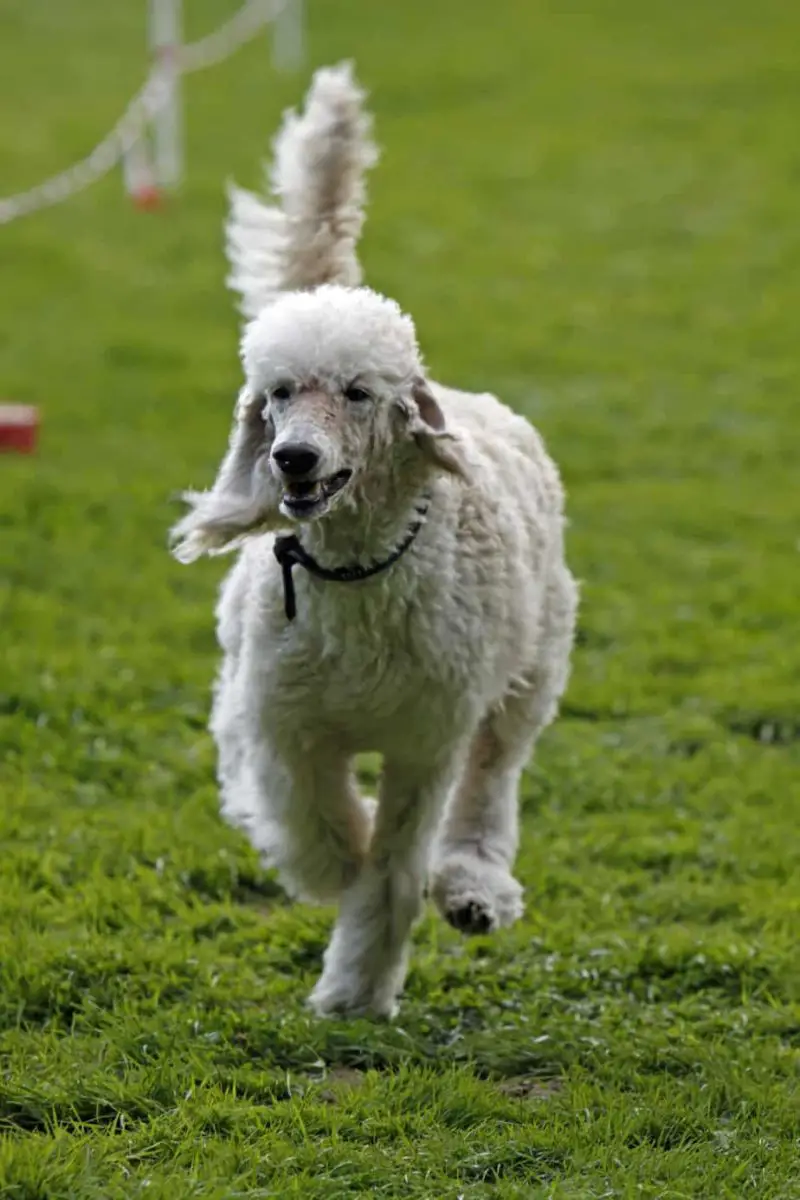
When most people picture a Poodle, they imagine a perfectly groomed, delicate companion resting silently on a velvet pillow. If you actually share your home with one, you know the reality is often a bouncing, high-octane blur of curly hair and boundless energy.
So how to Calm a Hyper Poodle?
To calm a hyper Poodle, owners must shift their focus from physical exhaustion to cognitive fatigue. Because Poodles are highly intelligent working retrievers, simply running them only builds their physical stamina. Instead, utilize 15 minutes of scent work, complex puzzle toys, and the “capturing calmness” training method to mentally exhaust their central nervous system and induce deep, restorative sleep.
Navigating this intense energy requires a fundamental understanding of canine cognition. Through my years of behavioral data analysis and hands-on experience with my own Standard Poodle, Angus, I discovered that calming this breed requires much more than a simple walk around the block.
You must engage their brain before you can relax their body. Poodles are not lap dogs by design; they are highly tactile, fuzzy data scientists navigating a modern world. To truly calm a hyper Poodle, we must bridge the “Cognitive Gap” between their deep-rooted evolutionary needs and their modern domestic lifestyle.
Decoding the Poodle’s Genetic Drive
To fix the hyperactivity, we first have to respect where it comes from. These dogs were not engineered to be idle. Their bodies and brains are hardwired for relentless activity.
The Water Retriever Legacy
Originating in Germany as duck hunters (Pudelhund, meaning “splashing dog”), Poodles of all sizes carry the genetics of a working retriever. They were built with specific physical adaptations: deep chests for lung capacity, webbed toes for swimming, and a dense, moisture-resistant coat. When a dog with the genetic coding to swim through freezing water all day is asked to sit quietly in an apartment for ten hours, that suppressed physical energy morphs directly into frantic, anxious hyperactivity.
The Burden of Intelligence
According to canine psychologist Dr. Stanley Coren’s standardized rankings, Poodles consistently rank as the second smartest dog breed in the world. While this makes them highly trainable, it also means their brains are constantly seeking a “job.” Their neural pathways require complex problem-solving. If you do not provide them with a structured task, they will gladly assign one to themselves—which usually looks like pacing, barking at invisible threats out the window, or bouncing off your furniture. They aren’t trying to be “bad”; they are simply underemployed.
Size Matters: Standard, Miniature, and Toy Hyperactivity
While all Poodles share the same brilliant baseline, their hyperactivity manifests differently based on their size. You cannot treat a Toy Poodle’s anxiety the same way you treat a Standard’s physical frustration.
- The Standard Poodle: Originally bred for heavy-duty water retrieval, a hyperactive Standard usually suffers from a lack of gross motor engagement. Their hyperactivity is highly physical—pacing, jumping, and destructive chewing. They require “heavy work,” such as carrying a dog backpack with water bottles during a walk, to feel physically grounded.
- The Miniature Poodle: Often the most athletic of the three, Minis excel in agility. Their hyperactivity usually looks like manic, repetitive pacing or relentless fetching. They need rapid-fire, complex problem-solving games to tire out their fast-twitch brains.
- The Toy Poodle: Toy Poodles were bred down for companionship, but they retained the massive working brain of their ancestors. Their hyperactivity is often vocal (incessant barking) and neurotic (spinning or shivering). Because they are frequently carried and treated like babies, they suffer from a lack of autonomy. Forcing a Toy Poodle to use their own nose and paws to solve puzzles is the fastest way to build their confidence and calm their nervous system.
Physical Exhaustion vs. Cognitive Fatigue
The most common—and arguably the most disastrous—mistake owners make with a hyper Poodle is trying to run the energy out of them.
The “Canine Athlete” Trap
While a daily game of fetch is important for joint and cardiovascular health, strictly relying on physical exercise will inevitably backfire. Canines, especially working breeds, adapt incredibly quickly to physical stress. If you run them for two miles a day, within a month, their VO2 max and cardiovascular system will adapt, and they will need four miles to feel the same level of fatigue. You are not calming them down; you are simply building a canine Olympian with endless endurance.
The Power of Mental Taxation
To truly calm a Poodle, you must induce cognitive fatigue. The brain consumes roughly 20% of the body’s resting metabolic energy. Mental stimulation exhausts a dog’s central nervous system exponentially faster than physical exertion. Forcing a dog to use their working memory, process new commands, or untangle a puzzle burns high levels of blood glucose. Fifteen minutes of intensive trick training exhausts a Poodle as much as a three-mile run, without building up their physical endurance.
| Activity Type | Energy Burn Rate | Neurological Result | Long-Term Effect |
| Brisk Walking / Running | Moderate | Increased stamina, elevated heart rate | Builds physical endurance. |
| Complex Trick Training | High | Prefrontal cortex activation, focus | Teaches emotional regulation. |
| Scent Work / Sniffing | Very High | Lowered heart rate, dopamine release | Deep, restful, restorative sleep. |
Trigger Stacking: The Hidden Cause of Hyperactivity

Sometimes, a Poodle isn’t naturally hyper; they are just overwhelmed by their environment. When tracking daily arousal levels, we must look at what invisible pressures are building up.
The “Stress Bucket” Analogy
“Trigger stacking” occurs when multiple small stressors accumulate without giving the dog’s nervous system a chance to recover. Imagine your Poodle has a “stress bucket” inside them.
- The mail carrier drops a package at 9:00 AM (adds 2 inches of water).
- A siren wails in the distance at 11:00 AM (adds 2 inches of water).
- A tense interaction with a stray dog happens at 2:00 PM (adds 4 inches of water).
- The kids come home from school yelling at 3:30 PM (adds 3 inches of water).
By 5:00 PM, the bucket overflows. The Poodle is sprinting in circles, panting, and biting the couch. None of these events alone caused the hyperactivity, but stacked together, they pushed the dog over their neurological threshold.
The Cortisol Hangover
In canines, adrenaline spikes and clears in a matter of minutes, but a major spike in the stress hormone cortisol can take up to 72 hours to fully clear from the bloodstream. This means a highly stressful Monday can lead to a hyperactive, unsettled dog on Wednesday. Recognizing these micro-stressors is essential for breaking the cycle of chronic arousal.
Activating the Olfactory System
A dog’s nose is not just for smelling; it is directly tied to the calming centers of their brain. Engaging a Poodle’s olfactory system actively stimulates the parasympathetic nervous system (the “rest and digest” network), acting as a powerful, natural sedative.
The “Sniffari” Walk
Instead of a brisk, highly structured walk at a rigid heel, take your Poodle on a “sniffari.” Allow them to stop and smell every bush, tree, and blade of grass on a long lead. The canine olfactory bulb takes up a massive portion of their brain compared to humans. Processing these complex scents requires massive brainpower and forces the dog to focus on their environment rather than their internal anxiety.
Scatter Feeding
Ditch the standard stainless-steel dog bowl. Throw your Poodle’s daily kibble into the grass (or hide it in small cardboard boxes around the living room) and force them to hunt for it with their nose. This fulfills their working genetics and slows down their eating. If you are struggling to understand your dog’s daily quirks and need more enrichment ideas, I highly recommend exploring our comprehensive Poodle Behavior Guides to tackle these behavioral gaps.
The Art of “Capturing Calmness”

Hyperactive Poodles often believe their designated household job is to constantly patrol, play, or demand your attention. In the realm of operant conditioning, you have to actively teach them that relaxation is a highly rewarding behavior.
Rewarding the “Off Switch”
Many owners only interact with their dogs when the dog is misbehaving (to correct them) or when they are playing. This teaches the dog that action equals attention. To reverse this, keep a jar of small, high-value treats in your pocket. Whenever you notice your Poodle lying down quietly—doing absolutely nothing—calmly walk over and place a treat between their paws.
Avoiding the Arousal Spike
Do not praise them loudly (“Good boy!”), and avoid using a training clicker for this specific exercise, as sharp sounds will instantly break their relaxed state and spike their arousal back up. Simply deliver the treat silently and walk away. By consistently rewarding tranquility, your Poodle will learn that they get “paid” the highest wages for simply existing calmly.
Surviving the “Extinction Burst”
When you first start ignoring your Poodle’s hyperactive demands for attention (like jumping or dropping a toy on your laptop), their behavior will actually get worse before it gets better. In behavioral science, this is called an Extinction Burst.
If your Poodle is used to getting attention by barking, and you suddenly start ignoring the barking, their brain assumes you just didn’t hear them. They will bark louder, jump higher, and act more frantic. Do not give in. If you acknowledge them during an extinction burst, you have just taught them that they simply need to be more hyper to get your attention. Stay completely neutral, wait out the burst, and only reward them the exact second they give up and lie down.
Establishing the “Place” Command
Teaching your Poodle to go to a designated bed or mat on command is an invaluable tool for managing manic energy and establishing spatial boundaries.
Creating a Psychological Boundary
The “Place” command gives a frantic dog a specific, defined job to do. When the doorbell rings, guests arrive, or the dog gets the evening zoomies, sending your Poodle to their Place gives them a physical boundary. It taps into their natural den instinct and removes the burden of decision-making from the dog, which helps them regulate their own emotional arousal.
The Negotiation-Based Approach
For owners dealing with dogs that cannot settle even when given a boundary, you need a structural overhaul of how you communicate. This requires a shift from dominance to a “Negotiation-Based” approach, which is exactly what we cover step-by-step in The Ultimate Poodle Behavior Guide. Additionally, you can find excellent foundational training steps for boundary work through clinical resources provided by the American Kennel Club (AKC).
The Gut-Brain Axis: Diet and Sleep
We cannot expect a Poodle to be calm if their basic biological functions and gut microbiome are out of balance.
The Carbohydrate Sugar Spike
Many commercial kibbles are loaded with simple carbohydrates, corn, and high-glycemic fillers. These cause steep blood-sugar spikes and subsequent crashes—just like a toddler eating too much cake. Transitioning to a high-protein, low-glycemic diet can drastically smooth out a Poodle’s daily energy levels. Furthermore, the gut produces roughly 90% of the body’s serotonin. A healthy, filler-free diet directly supports a calm, well-regulated brain.
Overtiredness vs. Hyperactivity
Evaluate your dog’s sleep schedule. A Poodle that cannot settle down in the evening is often not hyperactive; they are severely overtired and fighting sleep. Enforcing structured crate naps in a dark, quiet room can instantly cure a frantic bout of the zoomies.
Poodle Sleep Requirements by Age:
| Age / Life Stage | Required Sleep (per 24h) | Hyperactivity Risk if Deprived |
| Puppy (0-6 months) | 18 – 20 hours | Extreme (Biting, manic zoomies) |
| Adolescent (6-18 months) | 14 – 16 hours | High (Destructive chewing, pacing) |
| Adult (1.5 – 7 years) | 12 – 14 hours | Moderate (Vocalizing, restlessness) |
| Senior (7+ years) | 16 – 18 hours | Low (Usually results in lethargy) |
The Neurochemistry of a Calming Diet
A calm brain requires specific chemical building blocks. If your Poodle is chronically hyper-aroused, check their diet for these naturally calming compounds:
- L-Theanine: Found naturally in green tea (and available in dog-safe supplements), this amino acid promotes an alpha-brainwave state, signaling relaxation without causing drowsiness.
- Tryptophan: This is the direct precursor to serotonin (the “happy/calm” neurotransmitter). Diets that include turkey or lean pork can help naturally elevate your Poodle’s serotonin levels, taking the edge off their manic energy.
- Probiotics: Because the gut-brain axis controls emotional regulation, a Poodle with an upset stomach will be a hyperactive Poodle. Adding a canine-specific probiotic strain (like Bifidobacterium longum) has been clinically shown to reduce anxiety-driven pacing and barking.
Calming Aids and Environmental Management

When training, cognitive fatigue, and sleep management need a little boost, modifying the dog’s physical environment can help bridge the gap.
Nutritional and Tactile Soothing
- Lick Mats and Chews: The physical act of licking and chewing releases endorphins and lowers cortisol. Smear a silicone mat with plain Greek yogurt or peanut butter and freeze it to give your dog 30 minutes of self-soothing focus.
- Omega-3 Supplements: Extensive clinical reviews on canine behavioral medicine, such as those found in the Merck Veterinary Manual, emphasize that proper brain nutrition (specifically DHA and EPA fatty acids) is vital for cognitive health, reducing neuro-inflammation, and supporting emotional regulation.
Sensory Masking
- Auditory Masking: Poodles are highly alert guarders. Playing brown noise, white noise, or classical music can mask outside auditory triggers (like car doors slamming or distant dogs barking) that keep your dog in a perpetual state of hyper-arousal.
- Visual Masking: If your Poodle spends all day barking at the mail carrier or squirrels through the front window, apply a cheap, frosted window-cling film to the bottom half of the glass. Removing the visual trigger instantly lowers their daily stress load.
The 24-Hour “Calm Poodle” Blueprint
If you are overwhelmed, stop guessing. Here is a researcher-approved daily schedule designed to prevent trigger stacking, induce cognitive fatigue, and guarantee a calm Poodle by 7:00 PM.
- 7:00 AM: Wake up and immediately go outside for a 20-minute “Sniffari” walk on a long lead. No strict heeling allowed. Let the nose work.
- 7:30 AM: Breakfast via Scatter Feeding in the grass, or served inside a Level 3 puzzle toy. No bowls.
- 8:00 AM – 12:00 PM: Enforced nap time. Do not engage. Let the brain process the morning’s data.
- 12:00 PM: Midday potty break followed by 10 minutes of complex trick training (e.g., teaching “Place” or “Spin”).
- 12:30 PM – 4:30 PM: Second enforced nap.
- 4:30 PM: Physical exercise. A 30-minute structured walk or an intense game of fetch.
- 5:30 PM: Dinner served inside a frozen KONG or smeared on a silicone Lick Mat to initiate the dopamine-driven “cool down” phase.
- 6:00 PM – 7:00 PM: Passive social time. The dog is allowed in the living room but receives treats exclusively for Capturing Calmness (lying down quietly).
- 7:00 PM: Lights dimmed, auditory masking (brown noise) turned on. The Poodle is officially “off the clock.”
Frequently Asked Questions (FAQ)
Why is my Poodle suddenly so hyper at night?
This is colloquially known as the “witching hour.” Evening hyperactivity is usually a combination of mental under-stimulation during the day and acute overtiredness. Ensure your dog has had a mentally taxing activity (like scent work or puzzle games) in the late afternoon to prevent this buildup. If they are an adult dog, enforce a quiet hour around 7:00 PM.
At what age do Poodles finally calm down?
Most Poodles begin to settle out of their frantic puppy hyperactivity between 18 and 24 months of age as their prefrontal cortex fully matures. However, their baseline need for mental enrichment and a “job” will remain high throughout their entire adult lives. A five-year-old Poodle still needs daily puzzles.
Can I use CBD oil to calm my hyper Poodle?
Many owners report success using high-quality, lab-tested canine CBD to take the edge off a highly anxious or hyper-aroused dog. However, chemical supplements should never replace proper exercise and behavioral training. I always recommend consulting your veterinarian before introducing any new supplements to ensure they won’t interact with other medications.
Does neutering or spaying calm a Poodle down?
While altering a dog can reduce hormonally driven behaviors (like roaming, marking, or competing for mates), it is not a magic cure for general hyperactivity. A bored, un-stimulated Poodle will remain hyperactive regardless of their reproductive status.
How do I stop my Poodle from jumping on guests when they are hyper?
Hyperactive jumping is usually an inability to manage arousal. Before opening the door, utilize the “Place” command. Leash your Poodle if necessary to prevent them from breaking their command, and only allow them to greet the guest once all four paws are on the floor and their body language is completely relaxed.
Conclusion: Embracing the Brilliant Blur
Calming a hyper Poodle is rarely about running them until their legs give out; it is about outsmarting one of the most intelligent breeds on the planet. When Angus, was in his prime, I quickly learned that trying to exhaust him physically only built a faster, stronger, and more frustrated dog.
Owning a Poodle is essentially living with a highly athletic, fuzzy data scientist. They require a job, clear boundaries, and the right neurochemical balance to thrive. By shifting your focus from physical exhaustion to cognitive fatigue—utilizing scent work, structured naps, and the quiet power of capturing calmness—you can successfully bridge the “Cognitive Gap.”
It takes patience, consistency, and a healthy dose of humor to survive the adolescent zoomies and the inevitable extinction bursts. But once you teach that brilliant, hyperactive brain how to actually relax, you will uncover the deeply intuitive, fiercely loyal companion hiding underneath all that bouncing hair.
Medical & Veterinary Disclaimer: PoodleReport.com is an informational resource for Poodle owners and enthusiasts. We are not veterinarians. The content on this website is not a substitute for professional veterinary care, diagnosis, or treatment. Always seek the advice of your veterinarian with any questions you may have regarding your pet’s medical condition, diet, or overall health.
Poodles are among the most popular breeds in the United States, especially popular as companion or family dogs. Poodl