

Disclaimer: The information provided on PoodleReport.com is for educational purposes only and does not constitute veterinary medical advice; always consult your vet before changing your dog’s diet. Additionally, this post contains affiliate links. As an Amazon Associate, and other affiliate advertising programs, I earn from qualifying purchases at no extra cost to you.
Poodles are often pictured as prim, pampered pets lounging on velvet cushions. However, behind that sophisticated silhouette lies one of the most capable water dogs in the canine world. If you’ve ever wondered if your Poodle will enjoy a dip in the pool or a trip to the lake, the answer is a resoundingly obvious.
Most Poodles absolutely love water. While every dog has a unique personality, the Poodle was originally bred as a water retriever. Their physical build and history make them some of the most capable swimmers in the canine world.
As a long-time dog lover and the creator of Poodle Report, I’ve seen firsthand how a dog’s heritage dictates their behavior. While my late Poodle, Angus, was a natural “water-shredder,” Poodles bring a unique level of grace and athletic power to the water that few other breeds can match.
Ready to decode your dog’s unique communication and behavioral needs? Visit my Poodle Behavior Guide to learn how to confidently manage separation anxiety, conquer reactive barking phases, and select the ultimate training methods for your specific Poodle.
The “Duck Dog” Heritage: Why Poodles are Natural Swimmers
To understand a Poodle’s affinity for water, you have to look at their name. The English word “Poodle” comes from the German Pudelhund.
- Pudel: To splash.
- Hund: Dog.
In France, they are called Caniche, derived from Chien Canard (duck dog). Regardless of the German vs. French origin debate, their historical purpose was singular: water retrieval. Poodles were the elite athletes of the marshlands, bred to dive into icy waters to retrieve downed waterfowl for hunters.
The "Poodle Clip" Myth: Those famous "pompoms" weren't for fashion. Hunters shaved the legs and tail to reduce drag and prevent snagging on underwater debris, while leaving thick tufts of hair over the chest and joints to protect vital organs from freezing water temperatures.
Physical Advantages: Built for the Water
Unlike many breeds that “dog paddle” with effort, Poodles are biologically engineered for aquatic environments.
The Waterproof Coat
Poodles have a dense, curly, single layer of hair rather than the double coat found on most dogs. This hair contains natural oils that repel water. Because they lack a heavy undercoat, they don’t get “waterlogged” as easily as a Golden Retriever or a Newfoundlander, allowing them to stay buoyant longer.
Evolutionary Webbed Feet
While most dogs have some skin between their toes, Poodles possess significant interdigital webbing. These act like natural flippers, providing a larger surface area to push against the water, resulting in a more powerful and efficient stroke.
Poodle Varieties and Water: Standards, Minis, and Toys
While all Poodles share the same DNA, their size affects their swimming profile:
| Variety | Swimming Profile | Safety Note |
| Standard | Elite endurance; handles currents well. | Best for lakes and oceans. |
| Miniature | High energy; very agile in water. | Watch for fatigue in deep pools. |
| Toy | Enthusiastic but tires quickly. | Must wear a life jacket in open water. |
The “Post-Swim” Protocol: Protecting Your Poodle’s Coat and Ears
Many owners think the fun ends once their Poodle shakes off the water and hops into the car. However, for a Poodle, the “post-swim” phase is the most critical time for their health and hygiene. Because of their unique hair and ear anatomy, skipping these steps can lead to expensive grooming “shave-downs” or painful trips to the vet.
1. The Matting Risk: Why Water is the Enemy of Curls
The biggest difference between Poodles and other breeds is their coat. Poodles have hair, not fur. While this makes them hypoallergenic and low-shedding, it also means their coat is prone to extreme tangling when wet.
When a Poodle’s curls get wet and are allowed to air-dry without intervention, the hair fibers shrink and intertwine. This creates “pelting” or tight mats close to the skin. These mats are not just an aesthetic issue; they pull on the skin, causing discomfort and trapping moisture that leads to hot spots.
- The Action Step: Never let your Poodle air-dry completely after a swim. Immediately rinse them with fresh water to remove salt or chlorine. Once they are “damp-dry” (not soaking, but not bone-dry), use a slicker brush and a metal comb to work through the hair.
- Pro Tip: Apply a leave-in conditioner or detangling spray before brushing to provide “slip” and prevent hair breakage.
2. Preventing Ear Infections: The “Drop Ear” Dilemma
Poodles are famously prone to Otitis Externa (ear infections). Their long, heavy, “drop” ears act like a lid over the ear canal, creating a dark, warm, and humid environment—the perfect incubator for bacteria and yeast.
When water enters the ear canal during a swim, it becomes trapped behind that heavy ear flap. If left alone, this moisture can cause an infection within 24 to 48 hours.
- The Action Step: After every swim, use a veterinarian-approved ear-drying solution. These solutions typically contain a drying agent (like salicylic acid or boric acid) that helps evaporate deep-seated moisture.
- How to apply: Gently squirt the solution into the canal, massage the base of the ear for 30 seconds (you should hear a “squelching” sound), and then let your Poodle shake their head. Finish by wiping the outer ear flap with a soft, dry microfiber cloth.
Post-Swim Checklist for Poodle Owners
| Task | Purpose | Tools Needed |
| Fresh Water Rinse | Removes salt, sand, and chemicals | Hose or bathtub |
| High-Velocity Dry | Prevents matting and “wet dog” smell | Pet dryer or microfiber towel |
| Line Brushing | Ensures no knots are hidden at the skin | Slicker brush & metal comb |
| Ear Flush | Evaporates trapped water | Ear drying solution & cotton balls |
Warning: Never use Q-tips to dry your Poodle’s ears. You risk pushing debris and water deeper into the canal or damaging the eardrum. Stick to cotton balls and liquid drying agents.cloth to gently dry the inner flap after every water session.
Water Safety: Pools and Chemicals
Is Chlorine Safe?
While chlorine is not especially harmful in small amounts, it is a chemical that will dry out the skin and strip your dog’s hair of its natural oils . To help avoid this, you can do a quick rinse of your dog after he is done with swimming. This washes away the excess chemicals and chlorine.
To prevent the natural oils from being stripped, spray with a leave-in conditioner before and after he gets out of the water. Adding omega-3 fatty acid supplements to their diet can also help replace the oils they lose while swimming.
- Quick Win: Spray your Poodle with a leave-in conditioner before they jump in. This “seals” the hair shaft so it absorbs less chlorinated water.
Mastering the Waves: Poodles and Ocean Safety
While a Poodle’s powerful stroke makes them great candidates for the surf, the ocean presents unique challenges that backyard pools do not. The primary concern isn’t just the waves—it’s saltwater poisoning (hypernatremia).
The Danger of Saltwater Ingestion
Because Poodles are active and vocal when playing, they often swallow large amounts of seawater while fetching toys or biting at waves. This high salt intake draws water out of the blood and into the intestines, leading to:
- “Beach Diarrhea”: A sudden, liquid-like bowel movement caused by osmotic imbalance.
- Dehydration: Rapid loss of fluids that can lead to lethargy and disorientation.
- Salt Toxicity: In severe cases, this can cause eye irritation, vomiting, tremors, or even seizures.
Proactive “Beach Rules” for Poodle Owners
To ensure your Poodle’s beach day doesn’t end in a vet visit, follow these three golden rules:
- The 15-Minute Freshwater Break: Poodles can get so focused on the game that they forget to drink. Force a “time out” every 15 minutes to offer fresh, cool water. A fully hydrated dog is much less likely to lap up the salty ocean water out of desperation.
- The Post-Beach Rinse: A Poodle’s hair is like a sponge for salt and sand. If left to dry, salt crystals can irritate their sensitive skin and cause the coat to mat painfully. Always hose them down thoroughly before they dry off.
- Respect the Rip Current: Even the strongest Poodle can’t outswim a riptide. Stick to dog-friendly beaches with shallow entries and monitor surf heights. If the waves are too high for a toddler, they are likely too high for your Poodle.
Life-Stage Safety: Puppies, Seniors, and Boating
Even though the Poodle is a natural-born swimmer, their ability to navigate the water changes throughout their life. One size does not fit all when it comes to water safety.
Age Matters: Puppies vs. Seniors
- For Puppies: Young Poodles often have more “go” than “know.” They may jump into deep water without realizing they lack the muscle endurance to get back out. Always use a life jacket during their first year of swimming.
- For Seniors: Older Poodles may suffer from arthritis or vision loss. They can become easily exhausted or disoriented in the glare of the sun. A pet-friendly pool ramp is a non-negotiable for senior dogs, as it allows them to walk out of the water rather than struggling to find a vertical ladder or high ledge.
Boating and Deep Water Security
When you move from the shore to a boat, the stakes get higher. If a Poodle falls overboard, even a champion swimmer can panic in the wake.
- The Life Jacket Rule: On a boat, a life jacket is a must—regardless of swimming skill. Choose one with a sturdy handle on the back so you can hoist them back onto the deck safely.
- Specialized Boarding: Investing in a doggy boat ladder or a “water ramp” is essential. These tools reduce the strain on your dog’s joints and prevent them from scratching the boat (or you) while trying to climb back aboard.
Final Safety Check: Always keep a collapsible bowl and at least two liters of fresh water in your beach bag. Preparation is the difference between a great memory and a dangerous afternoon.
Poodle Safety: Your “Pre-Splash” Checklist
Even though Poodles are natural-born swimmers, a safe day at the water requires more than just a life jacket. Because of their unique hair type and deep-set ear canals, Poodles have specific needs that other breeds don’t.
To help you keep your Poodle safe, I’ve put together The Ultimate Poodle Swimming Safety Checklist. This covers everything from protecting their curls from chlorine to identifying the signs of water fatigue.
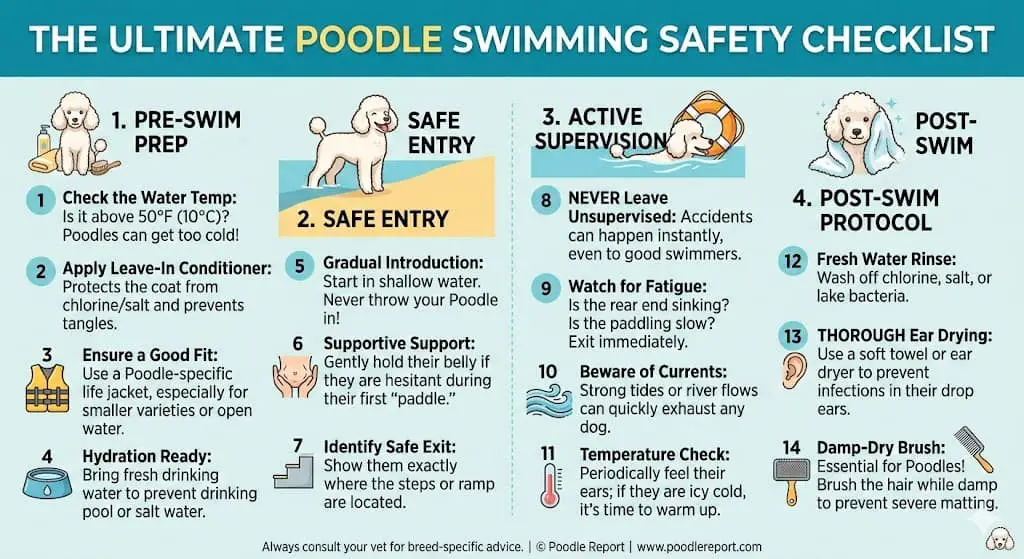
How to Use This Checklist
- For New Swimmers: Focus on Phase 2 (Safe Entry). Poodles are highly intelligent but can be cautious; a positive first experience is key to a lifetime of aquatic confidence.
- For Pool Owners: Pay close attention to Phase 4 (Post-Swim). The combination of chlorine and air-drying is the “perfect storm” for coat matting.
- For Open Water Adventurers: If you’re heading to the beach or a lake, ensure Phase 1 (Pre-Swim) is complete—specifically the hydration and life jacket checks to prevent saltwater ingestion or exhaustion.
Pro-Tip: I recommend saving this image to your phone or printing it out to keep in your “doggy beach bag.” Having these steps handy ensures you don’t forget the most critical part of a Poodle’s swim: the ear-drying and damp-brushing that prevents infections and mats later that evening.
How to Teach a Hesitant Poodle to Swim: Step-by-Step
Even though Poodles are historically water retrievers, some individuals may feel “water shy” due to a lack of early exposure or a cautious personality. Never force or throw a hesitant Poodle into the water, as this can create a lifelong phobia. Instead, use this gradual, confidence-building approach.

Step 1: The “Low-Stakes” Shallow Entry
Start in an environment where your Poodle feels in control. A plastic kiddie pool in the backyard or a sloped, sandy beach entry is ideal.
- The Goal: Get them comfortable with the sensation of water on their paws without the pressure of swimming.
- Pro Tip: Toss some kibble or treats into an inch of water to encourage them to step in voluntarily.
Step 2: Lure with High-Value Rewards
Once they are comfortable standing in shallow water, increase the “stakes” by moving deeper. Use high-value treats (like freeze-dried liver) or their absolute favorite floating toy.
- Encourage them to follow the toy or treat just far enough that their chest touches the water.
- Praise every small movement forward with an upbeat voice to reinforce that the water is a “reward zone.”
Step 3: Provide Physical Support (The “Belly Lift”)
As your Poodle transitions from standing to paddling, they may feel a moment of panic when their back legs lift off the ground.
- The Technique: Place one hand gently under their abdomen to provide “buoyancy support.” This mimics the feeling of a life jacket and prevents their rear end from sinking.
- If they start “splashing” with their front paws (the “doggie paddle” panic), keep your hand steady until they level out their body and begin using all four legs.
Step 4: Monitor for “The Sink” (Fatigue Signs)
Poodles are athletic, but swimming uses muscle groups they don’t use on land. A tired Poodle is a high-risk Poodle.
- Watch the Tail: A tell-tale sign of fatigue is when a Poodle’s rear end begins to tilt downward or their tail stops wagging and starts to sink.
- The Cue to Stop: If you see their breathing become heavy or their “paddling” become frantic and vertical, end the session immediately. Positive reinforcement works best when the session ends on a high note, not an exhausted one.
Summary: Poodle Swimming Safety Gear
| Gear Item | Purpose |
| Dog Life Jacket | Essential for confidence; the handle allows you to guide them easily. |
| Long Training Lead | Keeps them close in open water without restricting their movement. |
| Floating Fetch Toy | Provides a “job” for the Poodle to focus on, reducing anxiety. |
Frequently Asked Questions About Poodles and Swimming
Can Poodles swim naturally?
Yes, Poodles are natural-born swimmers. Historically bred as water retrievers (or “duck dogs”), they possess physical traits specifically for the water, including a water-resistant coat and significant webbing between their toes that acts like flippers. While most take to water instinctively, some may still require a gradual introduction to feel confident.
Do Toy Poodles like water as much as Standard Poodles?
While the instinct to swim is present in all three varieties, Toy Poodles often tire much faster than Miniature or Standard Poodles due to their smaller size. Because they have less muscle mass to fight currents or waves, Toy Poodles should always wear a life jacket in open water and be monitored closely for fatigue.
Why does my Poodle hate the water?
Even though their DNA says “water dog,” individual Poodles can be hesitant due to a lack of early socialization, a negative past experience (like a scary bath), or simply a cautious temperament. If your Poodle is water-shy, never force them; instead, use a gradual, treat-based introduction in a shallow kiddie pool to build positive associations.
How do I stop my Poodle’s hair from matting after a swim?
Poodle hair is highly prone to “wet-matting.” When the curls get wet and air-dry, they shrink and intertwine into tight knots. To prevent this, always rinse your Poodle with fresh water after a swim, apply a detangling spray, and brush them thoroughly while the hair is still damp. Never allow a Poodle to air-dry completely without a brush-through.
Are Poodles prone to ear infections from swimming?
Yes. Because Poodles have heavy, “drop” ears, they easily trap moisture inside the ear canal. This damp, dark environment is a breeding ground for yeast and bacteria. To prevent “swimmer’s ear,” always use a veterinarian-approved drying solution after any water activity to evaporate trapped moisture.
Is chlorine bad for a Poodle’s coat?
Chlorine can strip the natural, protective oils from a Poodle’s hair, leading to a dry, brittle coat and itchy skin. You can protect their hair by spraying them with a leave-in conditioner before they jump in (to “seal” the hair shaft) and rinsing them thoroughly with fresh water immediately after they exit the pool.
Conclusion: Making a Splash with Your Poodle
Whether you’re heading to the local lake or just splashing around in the backyard pool, it’s clear that the Poodle is far more than a “fashion dog.” They are world-class athletes with a historical soul that belongs in the water.
By understanding their unique physical needs—from protecting those webbed paws to maintaining that famous water-resistant coat—you ensure that every swim is both safe and exhilarating.
Remember, every Poodle is an individual. While their DNA says “duck hunter,” your specific pup might need a little extra encouragement and a few extra treats to find their sea legs. Take it slow, keep the brush handy for those post-swim curls, and enjoy watching your Poodle reconnect with their natural heritage.
Discover the Poodle Behavior Resource Hub
Unlock your dog’s keen intellect and solve complex communication hurdles with training strategies developed specifically for the Poodle mind. Head over to our [Poodle Behavior & Training Manual] for research-based routines and cognitive solutions, or explore these curated topics:
- 2026 Poodle Behavior Guide: Proven Research-Based Training
- How to Get a Poodle to Stop Barking: The Ultimate Guide [2026 Update]
- How Long Can Poodles Be Left Alone? [2026 Guide to Timing & Anxiety]
- Do Poodles Howl? The Cause, It’s Meaning, and When to Worry
Medical Disclaimer & Veterinary Consultation
Important Safety Note: While this guide provides researched nutritional insights, it is not a substitute for professional medical advice. Every dog’s biological profile and digestive sensitivity is unique. You must always consult your veterinarian before introducing cheese or any new human foods into your Poodle’s routine. Your vet is the only resource capable of determining if a specific treat is safe for your dog’s unique health history, ensuring their diet remains balanced, healthy, and free from risk.