

Disclaimer: The information provided on PoodleReport.com is for educational purposes only and does not constitute veterinary medical advice; always consult your vet before changing your dog’s diet. Additionally, this post contains affiliate links. As an Amazon Associate, and other affiliate advertising programs, I earn from qualifying purchases at no extra cost to you.
If you share your home with a Poodle, you already know that their brilliant minds are often paired with incredibly sensitive stomachs. A sudden change in kibble, a stressful car ride, or sneaking a piece of dropped food off the kitchen floor can quickly lead to a bout of digestive upset. For my Standard Poodle, Angus, keeping a can of pureed pumpkin in the pantry was my go-to holistic remedy whenever his stomach was feeling off.
If you are standing in the grocery aisle wondering which can to buy, here is the quick, definitive answer:
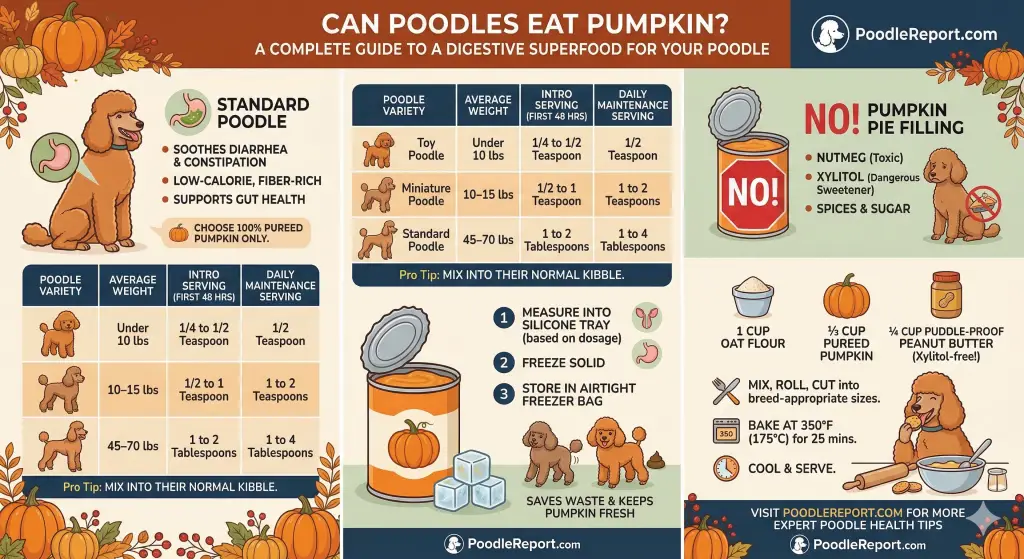
Yes, Poodles can safely eat 100% plain pumpkin puree. When fed in moderation, it is an excellent, low-calorie source of soluble fiber that helps regulate a Poodle’s sensitive digestive system, soothing both diarrhea and constipation. However, you must strictly avoid “pumpkin pie filling,” which contains toxic spices like nutmeg and dangerous artificial sweeteners like Xylitol.
However, as I continued researching canine nutrition to better understand our breed, I realized that while pumpkin is frequently praised as a digestive superfood, it isn’t completely foolproof. Feeding a Toy, Miniature, or Standard Poodle the wrong type of pumpkin—or even the wrong amount—can actually make their digestive issues much worse. Before you reach for that orange can in the back of your cupboard, we need to look at exactly how this squash interacts with a Poodle’s unique digestive tract.
While pumpkin is a fantastic supplement, it is only one piece of the dietary puzzle. If you are navigating the complexities of a sensitive stomach, I recommend browsing our full Poodle Food & Nutrition Guides. There, I’ve compiled my research on breed-specific caloric needs, safe ingredient lists, and feeding schedules tailored for Toy, Miniature, and Standard Poodles
The Poodle Stomach: Why Pumpkin Works
While digging into the science of canine digestion, I learned that plain pumpkin is essentially nature’s perfect regulatory mechanism. Poodles of all sizes are notorious for having sensitive stomachs that can react poorly to stress, travel, or minor dietary changes.
Pumpkin works so effectively for our breed because it is densely packed with soluble fiber. This specific type of fiber acts like a gentle sponge inside your Poodle’s intestines. If your dog is suffering from diarrhea, the fiber absorbs excess water in the digestive tract, helping to firm up the stool. Conversely, if your Poodle is constipated, that exact same fiber adds necessary bulk and moisture, stimulating a natural, comfortable bowel movement. It is a holistic, dual-action remedy that helps stabilize their system without relying on harsh medications.
The Poodle Digestion Troubleshooting Matrix
| Your Poodle’s Symptom | The Pumpkin Protocol | ⚠️ When to Stop & Call the Vet |
| Mild Diarrhea (stress, new food) | Feed the standard daily dose mixed with bland food (like boiled chicken) for 24–48 hours to absorb excess water. | Stool contains blood, diarrhea is explosive, or lasts longer than 48 hours (risk of severe dehydration in Toys/Minis). |
| Mild Constipation | Feed the standard daily dose with extra drinking water to add moisture and bulk to the stool. | No bowel movement for more than 48 hours, or the dog is actively vomiting and lethargic (signs of a blockage). |
| Anal Gland Scooting | Feed the standard daily dose consistently to firm up stools and naturally express the glands. | Scooting persists, or the area is visibly red, swollen, or bleeding (requires manual expression or antibiotics). |
| Always Hungry / Weight Gain | Replace 10% of their daily kibble volume with plain pumpkin to add low-calorie, filling volume to their bowl. | Dog is gaining weight despite calorie restriction, which could indicate a thyroid issue. |
Toy & Mini Poodles: The Anal Gland Solution
While Standard Poodles like my Angus occasionally deal with an upset stomach, Toy and Miniature Poodles face a unique, breed-specific anatomical challenge: impacted anal glands. As a researcher, I find this to be one of the most overlooked, highly valuable benefits of feeding pumpkin.
Smaller Poodle varieties often struggle to naturally express their anal sacs. According to veterinary experts at VCA Animal Hospitals, these small internal glands are designed to empty themselves automatically when a dog passes a firm, healthy stool. However, when a Toy or Mini Poodle has consistently soft stools, the glands do not empty. This leads to painful impactions, secondary infections, and that dreaded “scooting” behavior across your living room rug.
By adding a strict, daily measurement of plain pumpkin to their diet, the soluble fiber creates a consistently firmer, bulkier stool. This naturally presses against the internal glands during bathroom breaks, keeping them clear and saving you an uncomfortable (and expensive) trip to the vet for manual expression.
Poodle Safety Tip: Pumpkin is a digestive powerhouse, but do you know which fruits are hidden toxins? Check out our Safe vs Toxic Fruits Guide to keep your Poodle’s snack rotation 100% vet-approved.
Plain Puree vs. Pie Filling: The Toxic Difference
When your Poodle is suffering from an upset stomach, it is easy to rush to the baking aisle of the grocery store and grab the first orange can you see. However, making the mistake of purchasing “pumpkin pie filling” instead of “100% pure pumpkin puree” can turn a minor digestive issue into a life-threatening emergency.
I cannot stress enough how critical it is to read the label. Pure pumpkin contains only one ingredient: pumpkin. Pie filling, on the other hand, is pre-mixed with a dangerous cocktail of sugars, preservatives, and spices that a Poodle’s sensitive system cannot process.
The most immediate threat hidden in pie filling is nutmeg. According to the ASPCA Animal Poison Control Center, nutmeg contains a toxin called myristicin.
Even in relatively small doses, myristicin can cause severe disorientation, increased heart rate, high blood pressure, and dangerous seizures in dogs.
Furthermore, many “sugar-free” or “diet” pumpkin pie fillings replace traditional sugar with Xylitol (sometimes labeled as birch sugar). Xylitol is catastrophically toxic to Poodles, causing rapid hypoglycemia (a deadly drop in blood sugar) and acute liver failure. Always double-check the ingredient list to ensure you are feeding your dog pure, unseasoned squash.
Finding the right baseline diet is just as important as knowing which treats are safe. If your dog struggles with consistent digestive upset, review our full breakdown of the Best Foods for Poodles to ensure their daily kibble isn’t the root of the problem…
Serving Sizes: The Toy, Mini, and Standard Guide
While pumpkin is a fantastic natural remedy, it is entirely possible to have too much of a good thing. As a researcher, one of the most common mistakes I see owners make is assuming that because pumpkin cures diarrhea, feeding a massive bowl of it will cure the problem faster. In reality, suddenly introducing a massive amount of soluble fiber into a Poodle’s digestive tract will actually cause explosive diarrhea and painful cramping.
Because Poodles have such a drastic size variance, a serving that gently settles a 60-pound Standard Poodle’s stomach will completely overwhelm a 5-pound Toy Poodle’s system. When I was managing my own Standard Poodle’s diet, I learned to always start with the smallest possible measurement and monitor the results for 24 hours before offering more.
Use the chart below as a strict baseline for introducing 100% plain pumpkin puree to your dog.
Chart 1: Poodle Pumpkin Serving Guide
| Poodle Variety | Average Weight | Daily Serving for Digestion |
| Toy Poodle | 4–6 lbs | 1/2 to 1 Teaspoon |
| Miniature Poodle | 10–15 lbs | 1 to 2 Teaspoons |
| Standard Poodle | 45–70 lbs | 1 to 2 Tablespoons |
The “Spoilage Trap”: Freezing Pumpkin for Small Poodles

One of the most practical issues I hear from Toy and Miniature owners isn’t about whether pumpkin works—it is about the math. A standard grocery store can of pure pumpkin puree is usually 15 ounces. If your 5-pound Toy Poodle only needs half a teaspoon a day to regulate their digestion, you will barely make a dent in that can before it expires.
Once opened, canned pumpkin only lasts about three to four days in the refrigerator before it begins to spoil and grow unseen mold. Falling into this “spoilage trap” is incredibly common, and accidentally feeding your Poodle expired puree will instantly trigger the exact gastrointestinal distress you were trying to cure in the first place.
To prevent waste and protect your Poodle’s stomach, I highly recommend using the Ice Cube Tray Hack. It takes five minutes and ensures you always have a safe, perfectly portioned digestive remedy on hand.
The Ice Cube Tray Hack:
- Measure the Portions: Spoon the fresh puree into a silicone ice cube tray. For smaller Poodles, purposely measure out exactly one teaspoon per slot.
- Freeze Solid: Place the tray in the freezer overnight.
- Bag and Store: Pop the solid pumpkin cubes out and store them in a labeled, freezer-safe ziplock bag. Frozen pumpkin retains its nutritional fiber for up to six months.
- Thaw and Serve: When your Poodle has an upset stomach, simply pull out one pre-measured cube, let it thaw in a small bowl, and mix it directly into their kibble.
Functional Pumpkin Recipes for Poodles
When I am not actively researching canine nutrition, I love finding practical ways to apply it in the kitchen. Giving your Poodle plain pumpkin straight from a spoon works in a pinch, but creating functional treats can solve multiple breed-specific issues at once. Here are three simple, highly effective recipes I use to keep digestion on track.
1. The “Tummy Soother” Frozen Kong (For Digestion & Anxiety) This is my absolute favorite trick for a Poodle with an upset stomach or one that eats their kibble too fast.
- The Mix: Combine 1 part 100% plain pumpkin puree with 1 part plain, non-fat Greek yogurt (which introduces healthy, gut-soothing probiotics).
- The Method: Stuff the mixture into a durable puzzle toy like a Kong and freeze it solid. The frozen texture forces your Poodle to lick it slowly, preventing them from gulping air and further upsetting their stomach, while keeping their active minds highly stimulated.
2. The “Tooth Scraper” Pumpkin Carrot Bite (For Dental Health) Toy and Miniature Poodles are genetically predisposed to rapid plaque buildup and periodontal disease. This treat acts as a low-calorie, edible toothbrush.
- The Mix: Take a handful of raw, washed baby carrots and toss them in a bowl with just enough plain pumpkin puree to lightly coat them.
- The Method: Lay the coated carrots on a parchment-lined baking sheet and freeze them. The pumpkin provides the digestive fiber and an enticing flavor, while the frozen, fibrous carrot safely scrapes against the gumline to remove soft plaque.
3. The 3-Ingredient Poodle Digestive Biscuit Store-bought dog biscuits are often loaded with cheap fillers and artificial preservatives that trigger Poodle stomach issues. This baked alternative is incredibly gentle on their system.
- The Mix: * 1 cup of Oat Flour (a highly digestible, gluten-free alternative to wheat)
- ⅓ cup of 100% plain pumpkin puree
- ¼ cup of [Internal Link: safely vetted, 100% Xylitol-free peanut butter]
- The Method: Mix the ingredients into a dough, roll it out, and cut it into small, breed-appropriate sizes. Bake at 350°F (175°C) for about 25 minutes until crunchy. These store perfectly in an airtight container for up to a week.
Can Poodles Eat Pumpkin Seeds?
During the fall, one of the most common questions I see is whether owners can share the leftovers from carving a fresh pumpkin. The short answer is yes, Poodles can safely eat pumpkin seeds, but they require specific preparation to avoid becoming a hazard.
Pumpkin seeds are actually packed with beneficial fatty acids and antioxidants. However, you cannot simply scoop them out of a raw gourd and hand them to your dog. Raw seeds spoil quickly, and the tough outer shells can be a severe choking hazard—especially for a tiny Toy or Miniature Poodle. To serve them safely, the seeds must be thoroughly cleaned, roasted in the oven without any oils or salt, and ideally shelled to prevent them from causing an intestinal blockage.
While the seeds and the inner flesh are perfectly safe, other parts of the squash are strictly off-limits. If you are dealing with a whole fresh pumpkin, use the chart below to ensure you are only feeding the safe components.
Chart 2: Safe vs. Unsafe Pumpkin Parts
| Part of the Pumpkin | Safe for Poodles? | Preparation Required |
| Flesh / Puree | ✅ Yes | Must be 100% plain, cooked, and unseasoned. |
| Seeds | ✅ Yes | Must be cleaned, roasted, plain, and fed sparingly. |
| Skin / Rind | ❌ No | Choking hazard; causes severe intestinal blockage. |
| Stem / Leaves | ❌ No | Prickly, indigestible, and severely upsets the stomach. |
Weight Management and Protecting Poodle Joints
While most owners reach for pumpkin to cure an immediate bout of diarrhea, its long-term benefits for weight management are often entirely overlooked. Through my research for PoodleReport.com, I’ve found that pumpkin is one of the most effective “satiety hacks” available for our breed.
Because pumpkin is incredibly dense in water and soluble fiber, it takes up a significant amount of physical space in the stomach. If you have a Poodle that constantly acts hungry or begs for more kibble after finishing their bowl, adding a measured spoonful of plain pumpkin makes them feel completely stuffed. Best of all, because 100% pure pumpkin is extremely low in calories and virtually fat-free, you are bulking up their meal without adding weight.
Keeping your Poodle lean isn’t just about aesthetics; it is a critical preventative health measure for their joints. Our breed’s unique anatomy comes with specific orthopedic vulnerabilities. Toy and Miniature Poodles are highly genetically predisposed to Luxating Patella (a painful condition where the kneecap slips out of place). Meanwhile, Standard Poodles face a higher risk of Hip Dysplasia as they age.
Every single extra pound of fat your Poodle carries puts exponential strain on these fragile joints. By using plain pumpkin as a healthy, low-calorie dietary filler, you can keep them at an ideal, lean weight, drastically reducing the wear and tear on their knees and hips so they stay active well into their senior years.
Skin & Coat Health: The Vitamin A Factor

I’ve found that a poodle’s iconic curly coat requires much more than just a slicker brush and regular grooming—true coat health starts from the inside out. Unlike most breeds that shed fur, Poodles have continuously growing hair. If their underlying skin barrier is compromised, the coat quickly becomes brittle, dull, and highly prone to severe matting.
This is where a spoonful of plain pumpkin offers a surprising secondary benefit. Beyond regulating their sensitive digestion, pumpkin is densely packed with essential nutrients, most notably Vitamin A and Zinc. These specific vitamins are the foundational building blocks for cellular turnover and a resilient canine skin barrier.
For our breed, maintaining skin health is critical. Poodles—particularly Standard Poodles—have a known genetic predisposition to Sebaceous Adenitis (SA), an inflammatory disease that attacks the sebaceous glands responsible for lubricating the hair follicles.
While a scoop of pureed pumpkin is not a medical cure for genetic autoimmune conditions, consistently providing a holistic diet rich in natural Vitamin A and Zinc helps support skin hydration, minimizes flaking dander, and gives your Poodle the nutritional foundation they need to maintain their signature soft, dense curls.
Frequently Asked Questions (FAQ)
regularly see the same specific questions pop up from owners trying to soothe their dog’s stomach. Here are the most common questions regarding Poodles and pumpkin:
Can Poodle puppies have pumpkin? Yes, but you must be incredibly cautious with the portion size. A Poodle puppy’s gastrointestinal tract is still developing and is highly sensitive to sudden increases in fiber. If your Toy or Miniature puppy has mild diarrhea, start with just a dab (less than ¼ teaspoon) of 100% plain puree mixed into their wet food.
How fast does pumpkin work for a Poodle’s upset stomach? Because the soluble fiber acts quickly to absorb excess water, you should begin to see a firmer stool within 24 to 48 hours. However, Toy and Miniature Poodles are highly susceptible to rapid dehydration. If the diarrhea is explosive, contains blood, or lasts longer than 48 hours despite the pumpkin, you need to contact your veterinarian immediately.
Can I use pumpkin powder instead of canned puree? Yes! For owners of smaller Poodles who constantly struggle with the “spoilage trap” of half-empty cans, 100% pure organic pumpkin powder is a fantastic alternative. It is completely shelf-stable. You simply rehydrate a small pinch of the powder with a few drops of warm water whenever your Poodle needs a digestive boost, ensuring nothing goes to waste.
Conclusion: Stocking the Poodle Pantry
It is clear why so many of us keep a can of this orange superfood in our cupboards. Whether you are managing a Standard Poodle’s temporary stomach upset or proactively preventing a Toy Poodle’s anal gland impaction, pumpkin is a highly effective, natural remedy.
Just remember the three golden rules of stocking your Poodle’s pantry:
- Always read the label: Only purchase 100% pure pumpkin puree, and completely avoid toxic, Xylitol-loaded pumpkin pie fillings.
- Strict portion control: Stick to the sizing guide to avoid overwhelming their digestive tract with too much fiber at once.
- Use the freezer hack: Portion out leftovers into an ice cube tray to prevent the puree from spoiling before your Poodle can finish it.
Medical & Veterinary Disclaimer: PoodleReport.com is an informational resource for Poodle owners and enthusiasts. We are not veterinarians. The content on this website is not a substitute for professional veterinary care, diagnosis, or treatment. Always seek the advice of your veterinarian with any questions you may have regarding your pet’s medical condition, diet, or overall health.