
Disclaimer: The information provided on PoodleReport.com is for educational purposes only and does not constitute veterinary medical advice; always consult your vet before changing your dog’s diet. Additionally, this post contains affiliate links. As an Amazon Associate, and other affiliate advertising programs, I earn from qualifying purchases at no extra cost to you.
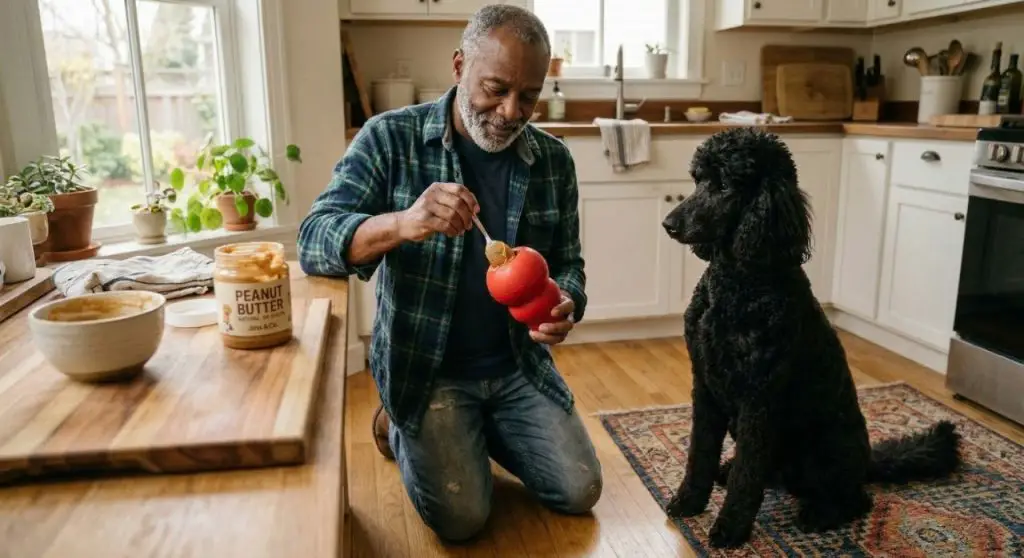
If your house is anything like mine, simply twisting the lid off a jar of peanut butter summons a very attentive, curly-haired shadow to the kitchen. My Standard Poodle, Angus, considered peanut butter the ultimate high-value reward, and it was always my go-to for stuffing his puzzle toys.
However, while digging into canine nutrition specific to our breed, I quickly learned that what is a harmless snack for other dogs can trigger severe health issues in a Poodle’s sensitive digestive system. This led me to ask the ultimate question:
Can my Poodle eat peanut butter?
Yes, Poodles can safely eat peanut butter as long as it is unsalted and 100% free of the toxic artificial sweetener Xylitol. While it provides healthy fats and vitamins, Poodles are genetically prone to pancreatitis, so extreme moderation is critical. Peanut butter should never exceed 10% of their daily calories—which means a maximum of ½ teaspoon for Toy Poodles and up to 1 tablespoon for Standard Poodles.
As a researcher dedicated to canine nutrition, I advise treating peanut butter as an occasional indulgence because not all jars are created equal. Before you let your pup lick the spoon, be aware that veterinary guidelines published by the American Kennel Club (AKC) warn of commercial brands containing hidden sweeteners, excessive sodium, and stabilizing oils that can quickly turn a healthy snack into a veterinary emergency. Let’s break down exactly how to read a label to protect your Poodle from these hidden toxins.
The Xylitol Danger: A Non-Negotiable Label Check
Before you even consider the fat or calorie content of a peanut butter brand, there is one critical ingredient you must scan for: Xylitol. Recently, many food manufacturers have also started listing this ingredient under the names “birch sugar” or “birch bark extract.” It is a natural sugar substitute gaining massive popularity in “diet,” “keto,” and “sugar-free” human foods, including many artisanal peanut butters.
As a researcher reviewing canine toxicology, I cannot stress this enough: while perfectly safe for humans, xylitol is incredibly lethal to dogs.
When a Poodle ingests even a tiny amount of xylitol, their body confuses it with real sugar. According to the FDA’s veterinary warning on xylitol, this confusion triggers the pancreas to release a massive, rapid spike of insulin. This results in a sudden and severe drop in blood sugar known as hypoglycemia, which can occur within 10 to 60 minutes of ingestion.
If untreated, xylitol poisoning quickly progresses to:
- Staggering or loss of coordination
- Lethargy and vomiting
- Seizures
- Acute liver failure
- Death
The Golden Rule for Poodle Owners: Never assume your usual brand hasn’t changed its recipe. You must read the ingredient label every single time you buy a new jar. The only ingredients in a truly Poodle-safe peanut butter should be “roasted peanuts” and, optionally, a small amount of “salt.” If you see xylitol, birch sugar, or any artificial sweetener, keep that jar completely out of your dog’s reach.
Poodles and Pancreatitis: The Breed-Specific Fat Risk

While peanut butter is celebrated for its high protein content, it is also exceptionally dense in fat. For many robust dog breeds, a high-fat treat is easily digested. However, as a researcher focusing on breed-specific health markers, I must highlight a critical vulnerability in the Poodle’s biology: Poodles—particularly the Miniature and Toy varieties—are statistically among the breeds at the highest risk for developing pancreatitis.
The pancreas is an organ responsible for releasing enzymes that help break down food. When a dog consumes a sudden, concentrated “fat dump” (like a large, heaping spoonful of peanut butter), the pancreas can become overworked and severely inflamed. This condition, known as acute pancreatitis, is incredibly painful and can be life-threatening if not treated promptly by a veterinarian.
Because Poodles have sensitive gastrointestinal tracts, feeding too much fat at once can trigger an episode. If you give your Poodle peanut butter, you must monitor them closely over the next 24 hours.
Watch for these classic signs of canine pancreatitis or severe digestive distress:
- The “Praying” Position: Hunched posture with the front end down and rear end up, indicating severe abdominal pain.
- Repeated Vomiting: Inability to keep food or water down.
- Lethargy and Weakness: Refusal to move, play, or go on walks.
- Loss of Appetite: Complete disinterest in their normal kibble or other high-value treats.
- Diarrhea or Greasy Stools: A sign that the fat is not being processed correctly.
If your Poodle has a documented history of digestive issues, irritable bowel syndrome (IBS), or a previous bout of pancreatitis, it is best to avoid peanut butter entirely. Instead, opt for low-fat, high-value rewards like the fresh apple slices or blueberries we discussed in our previous guides. For healthy Poodles, strict portion control (which we will cover in a little later) is your absolute best defense against a pancreatic flare-up.
The Hidden Laxative: Why Palm Oil is a Problem for Poodles
When you browse the natural foods aisle, you will likely see jars proudly labeled as “no-stir.” While convenient for us, these products achieve their uniform texture by adding palm oil as a stabilizer. For a Poodle, this seemingly harmless additive can be a recipe for disaster.
As a researcher analyzing canine dietary triggers, I frequently see palm oil flagged for causing severe gastrointestinal distress. In a dog’s digestive system, palm oil acts as a powerful laxative. Because Poodles naturally possess sensitive stomachs, even a small amount of this stabilizing oil can lead to explosive diarrhea and rapid dehydration.
Furthermore, palm oil is incredibly high in saturated fats, which circles back directly to the heightened pancreatitis risk we discussed in Section 3.
The absolute safest choice for your Poodle is traditional, 100% natural peanut butter where the peanut oil naturally separates and sits at the top of the jar. A great rule of thumb to remember at the grocery store: if you don’t have to stir it, you probably shouldn’t feed it to your Poodle.
Roasted vs. Raw: Sodium and Your Poodle’s Heart Health
When evaluating peanut butter options, the distinction between roasted and raw peanuts often comes down to one critical hidden factor: sodium content. Most commercial peanut butters use roasted peanuts that have been heavily salted to appeal to the human palate. While a tiny lick of salt isn’t immediately toxic, chronic high sodium intake is a silent, long-term danger for the breed.
monitoring the longevity and health markers of Poodles is the core of what I do, I pay close attention to cardiovascular health. Aging Poodles, particularly the smaller Toy and Miniature varieties, are susceptible to acquired heart conditions. According to veterinary nutrition guidelines from Tufts University’s Cummings School of Veterinary Medicine, excessive dietary sodium can exacerbate underlying heart issues by increasing blood pressure and causing dangerous fluid retention.
If you are using peanut butter regularly—such as stuffing it into a daily puzzle toy—that hidden sodium quickly adds up, placing unnecessary strain on an aging cardiovascular system.
To protect your Poodle’s heart, always look for “raw” or “unsalted roasted” varieties. The ingredient label should literally just say “peanuts”—with absolutely no added salt. If you only have salted, heavily processed peanut butter in the pantry, it is best to skip the treat entirely rather than risk the sodium overload.
Poodle Owner’s Peanut Butter Label Checklist: Safe vs. Unhealthy Ingredients
By now, you understand that selecting the right jar is not just about choosing “creamy” or “crunchy.” To protect your Poodle’s unique biological sensitivities—specifically their high risk for pancreatitis and cardiac strain—you must become an expert at decoding the ingredient label. Before you ever offer a smear of peanut butter, run the jar through this final safety check derived from standard veterinary toxicological guidelines and breed health research.
| Ingredient to Look For | Poodle Health Impact | Status |
| Roasted Peanuts | The only necessary ingredient. Provides healthy protein, niacin, and Vitamin E. | ✅ BEST |
| Raw Peanuts | A natural, single-ingredient alternative. Lower fat, but higher aflatoxin risk. | ✅ ACCEPTABLE (Stuff KONG toys, but limit use) |
| No Added Salt / Unsalted | Essential for preventing cardiac strain in aging Poodles. | ✅ MANDATORY |
| Added Sugar (e.g., Cane Sugar, Corn Syrup) | Adds empty calories, increasing risk of obesity and contributing to systemic inflammation. | ⚠️ AVOID |
| Palm Oil / Mono- and Di-Glycerides | Used as “no-stir” stabilizers. Can act as a severe laxative on a Poodle’s sensitive digestion. | ⚠️ AVOID (Circle back to the pancreatitis risk) |
| Sulfur Dioxide / Preservatives | While sometimes safe, preservatives are unnecessary and can cause general digestive upset in sensitive dogs. | ⚠️ AVOID |
| Hydrogenated Vegetable Oil (Soybean, Cottonseed) | Adds saturated and potentially trans fats, directly increasing the risk of triggering a pancreatitis flare-up. | ⚠️ AVOID |
| Aflatoxin Testing / Certification | The gold standard for ensuring long-term liver health over your Poodle’s long lifespan. | 🌟 OPTIMAL (Look for boutique/dog-specific brands) |
| Xylitol / Birch Sugar / Birch Bark Extract | A catastrophic lethal toxin according to the FDA. Causes rapid hypoglycemia, seizures, liver failure, and death. | ❌ DANGEROUS (Do not allow a Poodle near this jar) |
Serving Sizes: The Toy, Mini, and Standard Guide
Even when you select a perfectly safe, Xylitol-free, and unsalted peanut butter, you must act as the strict gatekeeper of your dog’s daily calories. Peanut butter is incredibly calorie-dense, averaging about 90 to 100 calories per single tablespoon.
As a researcher monitoring canine obesity trends, I strictly adhere to the veterinary standard known as the 10% rule. According to guidelines from the American Kennel Club (AKC), treats should never make up more than 10% of your Poodle’s total daily caloric intake. Because Poodles come in three distinct sizes with vastly different metabolic needs, a “safe” amount for a Standard Poodle will easily cause massive weight gain and severe stomach upset in a Toy Poodle.
To take the guesswork out of portion control, use this breed-specific serving guide to ensure your Poodle gets the flavor they love without the dangerous caloric overload:
| Poodle Variety | Average Weight | Recommended Max Serving | Approximate Calories |
| Toy Poodle | 4–6 lbs | 1/2 Teaspoon | ~15 Calories |
| Miniature Poodle | 10–15 lbs | 1 Teaspoon | ~30 Calories |
| Standard Poodle | 45–70 lbs | 1 Tablespoon | ~90 Calories |
The Researcher’s Insight: Aflatoxins and Liver Health
When evaluating canine nutrition, it is essential to look beyond the immediate caloric impact and consider long-term toxicity. One of my primary concerns with regular peanut butter consumption is the presence of aflatoxins.
Because peanuts are legumes that grow underground in moist, warm soil, they are highly susceptible to a specific type of mold known as Aspergillus flavus. This mold produces aflatoxins, which are naturally occurring toxic compounds and well-documented carcinogens.
Poodles are a remarkably long-lived breed, with many Toys and Miniatures living 15 years or more. Chronic, low-level exposure to these toxins can accumulate over a dog’s lifetime, putting continuous stress on their liver. According to the FDA’s veterinary guidelines on aflatoxin poisoning, while acute poisoning is rare from commercial human food, long-term hepatic (liver) damage from chronic low-dose exposure is a silent threat you must actively manage.
To protect your Poodle’s liver health, never feed them raw, unroasted peanuts or cheap, bulk-bin peanut butter, as these carry the highest risk of mold contamination. Instead, always opt for premium, human-grade brands that are subject to strict national testing standards. If you want to be exceptionally cautious, look for boutique, dog-specific peanut butter brands that explicitly state “Aflatoxin-Tested” on their packaging—this is the absolute gold standard for canine safety.
Skin Health: The Omega-6 Balance
While we often focus on digestion, it is equally important to consider how treats affect your Poodle’s luxurious, curly coat. Peanut butter is packed with Omega-6 fatty acids (specifically linoleic acid). While this fat is an essential nutrient for maintaining a healthy skin barrier, it only tells half the nutritional story.
In canine nutrition, balance is everything. An overabundance of Omega-6, without a counterbalancing amount of Omega-3, can create a pro-inflammatory state in your dog’s body. As a researcher, I must highlight that Poodles—especially Standard Poodles—are genetically predisposed to inflammatory skin conditions like Sebaceous Adenitis, an immune-mediated disorder that attacks the hair follicles and oil glands.
If you use peanut butter frequently as a high-value training reward, you must ensure your Poodle is also receiving a robust source of anti-inflammatory Omega-3 fatty acids (like EPA and DHA from high-quality fish oil) in their regular meals. To learn exactly how to balance these essential fats and keep your dog’s coat shining, explore our complete archive of Poodle Food and Nutrition Guides.
The “Pill Pocket” Hack for Smart Poodles
Poodles are notoriously intelligent, which makes them incredibly frustrating to medicate. As a researcher, I have heard from countless owners who struggle with Poodles that expertly eat around a pill and spit the medication out on the floor. Fortunately, the sticky texture and overpowering aroma of peanut butter make it the ultimate natural “pill pocket”—if you use the correct psychological approach.
According to veterinary guidance from the American Veterinary Medical Association (AVMA) on medicating pets, successfully hiding a pill requires masking both its bitter scent and its chalky texture. However, simply handing a smart Poodle a glob of peanut butter with a pill inside usually results in them dissecting it.
Instead, you need to use the “Rapid-Fire Sandwich Technique” to outsmart them:
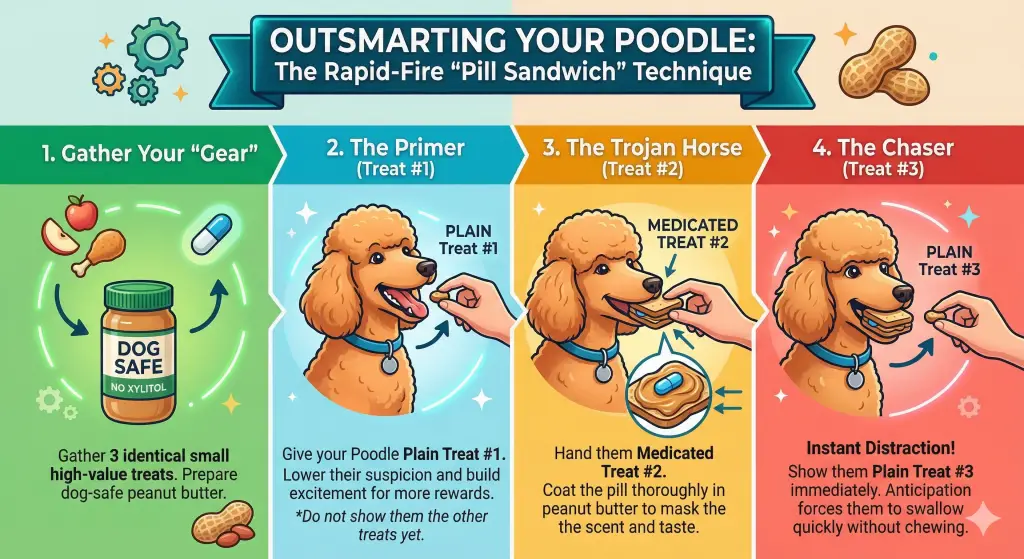
- Prepare three identical base treats: Grab three small, high-value items, such as tiny pieces of plain bread or fresh apple slices (with seeds removed, as discussed in our safe fruits guide).
- Hide the pill: Coat the pill completely in a thin layer of Xylitol-free peanut butter and stick it firmly to the second piece of bread or apple.
- The Primer: Feed your Poodle the first “plain” treat to lower their suspicion and get them excited for more.
- The Trojan Horse: While they are still swallowing the first piece, immediately hand them the second, medicated treat.
- The Chaser: Instantly show them the third “plain” treat. Anticipating the next bite forces the Poodle to swallow the medicated treat quickly without pausing to chew or investigate the texture.
By using peanut butter as the “glue” in this rapid-fire sequence, you can turn a stressful medical routine into a fun, rewarding game for your Poodle.
Frequently Asked Questions (FAQ) About Poodles and Peanut Butter
Can Poodle puppies eat peanut butter? While technically safe if free of xylitol, it’s highly recommend holding off. Poodle puppies have extremely delicate, developing digestive systems. The rich fat content in peanut butter is a notorious trigger for severe puppy diarrhea and stomach cramping. It is best to wait until your Poodle is at least six months old and has a fully stable adult digestive tract before introducing tiny, pea-sized tastes.
Is crunchy peanut butter safe for Poodles? Yes, the “crunch” simply comes from crushed peanuts, which are safe. However, for Toy and Miniature Poodles, creamy peanut butter is vastly superior. Creamy varieties completely eliminate any minor choking hazards for tiny throats and are much easier to spread thinly into puzzle toys or lick mats to enforce portion control.
What about PB2 or powdered peanut butter? Powdered peanut butter can be a fantastic, low-fat alternative, provided you read the label with extreme caution. You must ensure it is 100% pure pressed peanut flour. Many commercial powdered brands add sugar, salt, artificial sweeteners, or even toxic cocoa powder for flavor. If you find a pure brand, reconstituting it with water creates a much safer, low-fat paste that is ideal for Poodles prone to pancreatitis.
My Poodle ate a peanut butter and grape jelly sandwich. Should I panic? Yes, this requires immediate action. While the peanut butter is not the issue, the grape jelly is a critical veterinary emergency. According to the ASPCA Animal Poison Control Center, grapes and raisins (and their juice or jelly derivatives) are highly toxic to dogs and can cause rapid, irreversible acute kidney failure. If your Poodle consumes grape jelly, contact your veterinarian or a pet poison hotline immediately.
Conclusion: The Verdict on Poodles and PB
Ultimately, peanut butter gets a cautious but enthusiastic green light. It is a phenomenal, high-value tool for training, masking medication, and providing essential mental stimulation. Watching a clever Standard Poodle methodically work through a peanut butter-stuffed puzzle toy is a perfect reminder of how enriching this simple treat can be when used correctly.
However, it is not a free-for-all. As we have explored, the Poodle’s genetic predisposition to pancreatitis and sensitive digestion means you must act as the strict gatekeeper of their diet.
To safely feed your Poodle peanut butter, always remember to:
- Verify it is 100% Xylitol-free every single time you buy a new jar.
- Choose natural, single-ingredient brands to avoid palm oil, aflatoxins, and excess sodium.
- Strictly adhere to the 10% caloric rule, utilizing the breed-specific serving sizes to prevent dangerous fat dumps.
By following these research-backed guidelines, you can confidently share this protein-packed reward with your companion while protecting their long-term health and vibrant coat.
While peanut butter is a great treat, nutrition starts with the right kibble. To ensure you are meeting all your dog’s unique breed requirements, check out our Guide to the Best Food for Poodles.
Medical & Veterinary Disclaimer: PoodleReport.com is an informational resource for Poodle owners and enthusiasts. We are not veterinarians. The content on this website is not a substitute for professional veterinary care, diagnosis, or treatment. Always seek the advice of your veterinarian with any questions you may have regarding your pet’s medical condition, diet, or overall health.