

Disclaimer: The information provided on PoodleReport.com is for educational purposes only and does not constitute veterinary medical advice; always consult your vet before changing your dog’s diet. Additionally, this post contains affiliate links. As an Amazon Associate, and other affiliate advertising programs, I earn from qualifying purchases at no extra cost to you.
In the discerning world of Poodle ownership, the “broccoli question” frequently surfaces as a point of nutritional intrigue. It represents a fascinating collision between human wellness trends—where this vegetable is hailed as a cancer-fighting superfood—and the biological reality of a breed with a highly specialized, carnivore-centric gut. This intersection of modern nutrition and ancestral physiology leads many owners to wonder: is this green crunch a functional fit for the Poodle’s unique internal chemistry?
Yes, Poodles can eat broccoli in moderation. It is a non-toxic, nutrient-dense treat providing Vitamin K and fiber. However, broccoli contains isothiocyanates, which can cause gastric irritation if it exceeds 10% of a dog’s daily diet. For deep-chested Poodles, the gas-producing nature of cruciferous vegetables is a specific concern; serving small, steamed portions helps mitigate the risk of abdominal distension and bloat.
The Poodle—whether Toy, Miniature, or Standard—possesses a refined internal chemistry that doesn’t always play well with complex plant fibers. To decide if this green floret earns a permanent spot in the treat rotation, we must look past the “crunch” and analyze the molecular compounds at play within the canine intestinal tract.
Benefits of Broccoli for Poodles
While the Poodle is biologically calibrated for a protein-centric diet, integrating specific botanical elements can serve as a sophisticated micronutrient delivery system. When managed correctly, these green additions function like a “multivitamin in a crunch,” offering a dense array of minerals without the caloric baggage of processed treats. When we examine the data behind the treetops, the physiological benefits for a Poodle’s skeletal durability and immune response are remarkably evident.
Bone Density and Vitamin K
Poodles are famously active athletes, often excelling in agility and dock diving. Maintaining bone density is paramount to prevent stress fractures and age-related degradation. Broccoli is exceptionally high in Vitamin K, a fat-soluble vitamin that plays a critical role in bone mineralization. This is an essential consideration for aging Poodles who may face joint issues or bone thinning as they move into their senior years.
Digestive Efficiency and Fiber
The fibrous nature of broccoli stalks provides significant roughage. For Poodles with inconsistent bowel movements or those prone to anal gland issues, the insoluble fiber in broccoli helps move waste through the colon effectively by increasing stool bulk. This “sweeping” effect is a natural way to support gut health without always needing synthetic supplements. A balanced gut often leads to a more vibrant coat and higher energy levels.
Antioxidant Support and Sulforaphane
Broccoli contains sulforaphane, a sulfur-rich compound that has been studied for its anti-inflammatory properties. These antioxidants help bolster the immune system by neutralizing free radicals, providing a defensive layer against the cellular stress that active breeds encounter daily. For long-lived breeds like the Poodle, who often stay active for 15+ years, maintaining cellular integrity is a high priority.
While broccoli is a standout for its sulforaphane content, it is just one component of a broader botanical spectrum. To see how it ranks against other garden staples, consult my definitive guide on my 2026 safe vegetables for Poodle’s guide.
Risks of Broccoli

Broccoli is a “conditionally safe” snack that requires a measured approach. The risk lies in the chemical friction between isothiocyanates and a sensitive gut. Without strict portioning, this green crunch quickly shifts from a healthy garnish to a gastric liability.
Isothiocyanate Irritation
The most significant chemical risk in broccoli is isothiocyanate. This compound is found in the “treetops” or florets and serves as the plant’s natural defense against being eaten by insects. While it offers health benefits to humans, in the canine stomach, it can act as a potent irritant. If broccoli exceeds 10% of the total daily diet, the concentration of isothiocyanates can lead to severe nausea, gas, and diarrhea, as highlighted in the WSAVA nutrition guidelines.
The Bloat Connection (GDV)
Standard Poodles are anatomically deep-chested, making them prime candidates for Gastric Dilatation-Volvulus (GDV), or bloat. Cruciferous vegetables like broccoli are notorious gas producers because they contain complex sugars that ferment in the large intestine. While gas itself is a byproduct of fermentation, excessive abdominal pressure is a known stressor. In my time living with my Standard Poodle Angus, I learned that minimizing gas-producing treats is a small but vital step in bloat prevention, as a distended stomach is more likely to twist.
Oxalates and Kidney Health
Broccoli contains small amounts of naturally occurring oxalates. While usually harmless in healthy dogs, for Poodles with a history of bladder stones or renal issues, these can contribute to the formation of calcium oxalate crystals in the urinary tract. It is a subtle risk, but one that is emphasized for breeds already predisposed to urinary tract concerns. If your Poodle has a history of “crystals,” broccoli should be avoided in favor of lower-oxalate vegetables.
Managing these small variables is a cornerstone of a healthy lifestyle; for a deeper dive into the technical aspects of breed-specific meal planning, my well researched guides on Poodle food and nutrition offers a comprehensive overview of caloric and macro-nutrient balance.
Portion Sizes by Poodle Variety
To ensure safety, we must turn the “10% rule” into actionable measurements. A Toy Poodle’s digestive capacity is a tiny fraction of a Standard’s, meaning “one floret” isn’t a universal measurement.
| Poodle Variety | Daily Caloric Estimate | Max Broccoli Portion | Frequency |
| Toy Poodle | 250–350 kcal | 1/2 tsp (minced) | 1x weekly |
| Miniature Poodle | 500–700 kcal | 1 small floret | 2x weekly |
| Standard Poodle | 1,100–1,500 kcal | 2–3 small florets | 2x weekly |
Caloric Displacement
When adding broccoli, you should account for the calories. While low (about 34 calories per 100g), they aren’t zero. For a Toy Poodle, even a few extra calories daily can lead to weight creep over time. It is helpful to “displace” an equivalent amount of kibble to ensure your dog remains at a healthy weight.
The Angus Benchmark
Using a Standard Poodle like Angus as a benchmark, we see that 2-3 florets provide enough crunch for satisfaction without triggering the excessive fermentation that leads to discomfort. For a dog of his size, this portion represents a tiny percentage of total calories but a high percentage of sensory engagement.
Frequency vs. Volume
It is generally better to feed smaller amounts more frequently than a large amount all at once. This keeps isothiocyanate levels at a baseline that the Poodle’s system can easily process. Think of it as a micro-dose of vitamins rather than a side dish.
Nutritional Analysis per 100g
Understanding exactly what is inside the floret helps justify its inclusion in a Poodle’s bowl. Broccoli is a complex matrix of water, fiber, and micronutrients.
| Nutrient | Amount (per 100g) | Primary Benefit for Poodles |
| Vitamin K | 101.6 mcg | Bone health & blood clotting |
| Vitamin C | 89.2 mg | Immune system & antioxidant |
| Fiber | 2.6 g | Digestive regularity |
| Potassium | 316 mg | Heart & nerve function |
Micronutrient Bioavailability
Steaming the broccoli increases the bioavailability of these nutrients. Raw cellulose is difficult for dogs to break down because they lack the specific enzymes required to rupture plant cell walls. By lightly cooking the vegetable, you do the “pre-digestion” work for them, ensuring they actually absorb the Vitamin K.
Water Content
Broccoli is approximately 89% water. This makes it a hydrating snack, which is particularly beneficial during the summer months or for Poodles who are reluctant drinkers. High water content also contributes to a feeling of fullness, which is useful for Poodles on a weight-loss plan.
Low Sugar Profile
Unlike many fruits (such as apples or bananas), broccoli has a very low sugar profile. This makes it a great choice for Poodles with diabetic tendencies or those on a strict diet. It provides the “treat experience” without the sugar spike.
Red Flags of the Green Crunch: Recognizing Poodle Digestive Distress
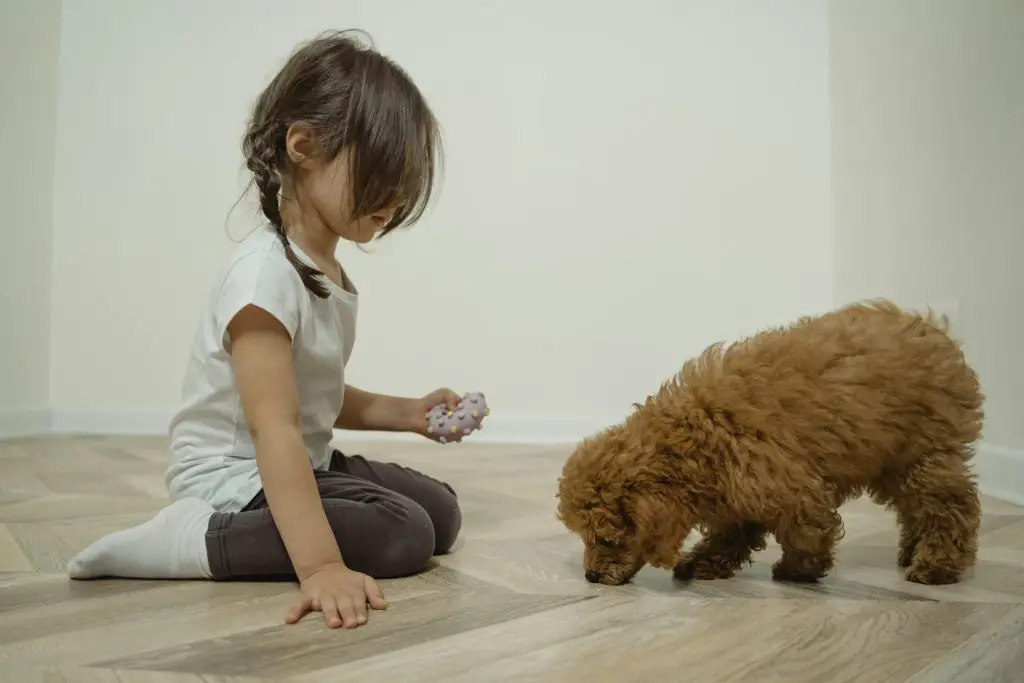
Physical Symptoms of Distress
If your Poodle consumes a large quantity of broccoli, monitor for vomiting or a distended abdomen. According to PetMD, signs of gastric irritation usually manifest within 2 to 6 hours. This timeframe is critical for early intervention if the dog is experiencing severe irritation or a massive gas buildup.
Behavioral Shifts
Watch for restlessness or “pacing.” A Poodle in gastric pain will often be unable to find a comfortable lying position. If they are stretching in the “play bow” position frequently without an invitation to play, it may be a physical attempt to relieve pressure from gas in the stomach or an early warning sign of bloat.
Obstruction and Choking
Because broccoli stalks are extremely fibrous, they do not break down easily if swallowed whole. This is particularly dangerous for Toy Poodles, whose esophagi are narrow. If your Poodle is pawing at their mouth, gagging, or drooling excessively, a stalk may be lodged.
Beyond the Bowl: Correcting Frequent Preparation Pitfalls
The Danger of Seasonings
The most common mistake owners make is sharing broccoli that has been prepared for people. Salt, butter, and especially garlic are off-limits. Garlic and onions are strictly toxic to dogs and can cause life-threatening damage to red blood cells.
Bulk Feeding Raw Stems
While raw broccoli provides the best “crunch,” the stalks are nearly indigestible for many dogs. Feeding a large, raw “stump” is an invitation for an intestinal blockage. If you choose to feed raw, it must be minced into tiny, kibble-sized pieces.
Overestimating the “10% Rule”
We often assume “healthy” means “limitless.” However, even nutrient-dense vegetables can throw off the mineral balance of a Poodle’s primary diet. High-quality dog food is already precisely balanced; adding too much broccoli can dilute the effectiveness of those formulations.
Preparation Methods Comparison
Not all cooking methods are created equal when it comes to preserving the integrity of the vegetable for a canine consumer.
| Method | Nutrient Retention | Digestibility | Best For |
| Raw | Highest | Lowest | Standard Poodles (Crunch) |
| Steamed | High | Highest | All Poodles (Bioavailability) |
| Boiled | Low | High | Poodles with sensitive teeth |
| Frozen | Moderate | Moderate | Summer cooling treats |
The Steaming Advantage
Lightly steaming for 2-3 minutes is the “gold standard.” It softens the fibers just enough to aid digestion while retaining the majority of the Vitamin C and K. It also reduces goitrogens, which can interfere with thyroid function if consumed in massive, raw quantities.
Washing and Pesticides
As a researcher, I must emphasize that commercial broccoli is often treated with pesticides due to its complex surface area. A thorough rinse in a water-vinegar solution is a non-negotiable step to prevent the ingestion of chemical residues that could disrupt a Poodle’s delicate system.
Pureeing for Toy Poodles
For the smallest Poodles, pureeing steamed broccoli and mixing it into their kibble is the safest way to provide nutrients. This eliminates the risk of choking on the fibrous stalks and ensures that even a tiny Poodle gets a consistent, digestible dose of greens.
Comparative Veggie Analysis
How does broccoli stack up against the other usual suspects in the vegetable drawer? Each vegetable has a unique biochemical profile.
| Vegetable | Risk Factor | Major Benefit | Caloric Density |
| Broccoli | Gas / Isothiocyanates | Vitamin K / Fiber | Low |
| Carrots | High Sugar | Beta-carotene | Moderate |
| Green Beans | Minimal | Weight loss filler | Very Low |
| Spinach | High Oxalates | Iron / Calcium | Low |
The Carrot Comparison
Carrots are often the go-to treat because they lack isothiocyanates. However, they are much higher in sugar than broccoli. If your Poodle is overweight or has trouble with sugar regulation, broccoli is often the superior choice for a crunchy snack.
Green Bean Efficiency
Green beans are arguably the safest vegetable for Poodles. They offer similar fiber benefits to broccoli with almost none of the gas risks. Many people suggest a 50/50 mix to balance the profile—getting the nutrients from the broccoli and the safety of the beans.
The Spinach Caution
While spinach is nutrient-dense, it is much higher in oxalates than broccoli. For Poodles, who are already at a baseline risk for urinary crystals, broccoli is generally considered the “safer” green option for long-term, occasional feeding.
Psychology of the Crunch: Why Poodles Love It

Texture Sensitivity and Reward
Poodles are highly intelligent and often motivated by “novelty.” The specific “snap” of a raw broccoli stalk provides a sensory reward that a soft treat cannot. This tactile feedback—the sound and the resistance—is often why they seem so enthusiastic about vegetables in the kitchen.
Cognitive Enrichment
Using frozen broccoli florets as a “puzzle” treat—placing them inside a rubber toy—provides mental stimulation. For a breed that requires constant brain exercise, “working” for a piece of broccoli can be as rewarding as a short walk.
Caloric Displacement for Weight Loss
Poodles who feel “forever hungry” can often be satisfied by the bulk of broccoli. By replacing a small portion of their high-calorie kibble with high-fiber broccoli, you can help them feel full while maintaining a caloric deficit. This is a popular method in canine weight management.
FAQ: Frequently Asked Questions
Can Poodle puppies eat broccoli?
It is not recommended. Puppies have incredibly sensitive GI tracts and are still developing the enzymes needed to process complex fibers and compounds. Stick to a balanced puppy food until they reach maturity.
Does frozen broccoli have the same nutrients?
Yes. Flash-frozen broccoli retains most of its Vitamin K and C. It can be a cooling treat in the summer, provided the pieces are cut small enough to prevent a choking hazard, as noted by Purina.
How often can my Poodle eat it?
Once or twice a week is the “sweet spot.” This allows them to gain the benefits of antioxidants without risking the cumulative effects of isothiocyanates or oxalate crystals.
Will it help with tear stains?
There is no data to suggest broccoli affects tear stains. Stains are generally a result of tear duct anatomy or pH levels in water, as noted in various VCA Animal Hospital guides.
Is organic broccoli necessary?
While not strictly necessary, it reduces the risk of pesticide exposure, which is always a plus for an owner who wants to minimize the toxic load on their dog’s liver.
What if my Poodle eats the whole bag?
Contact your vet immediately. A large quantity can lead to severe gastrointestinal obstruction or chemical irritation that may require professional intervention.
Conclusion: The Verdict
Broccoli is a “high-performance” vegetable that suits the high-performance nature of the Poodle, but it must be handled with care. The benefits of Vitamin K and sulforaphane are significant, yet they are gated by the risks of isothiocyanates and gas distension.
By observing the strict 10% rule and favoring steamed, finely diced portions over raw stumps, you can safely integrate this superfood into your Poodle’s life. My experience with Angus proved that while they may beg for the whole head, the best treat we can give them is a well-measured portion.
Medical & Veterinary Disclaimer: PoodleReport.com is an informational resource for Poodle owners and enthusiasts. We are not veterinarians. The content on this website is not a substitute for professional veterinary care, diagnosis, or treatment. Always seek the advice of your veterinarian with any questions you may have regarding your pet’s medical condition, diet, or overall health.