
Disclaimer: The information provided on PoodleReport.com is for educational purposes only and does not constitute veterinary medical advice; always consult your vet before changing your dog’s diet. Additionally, this post contains affiliate links. As an Amazon Associate, and other affiliate advertising programs, I earn from qualifying purchases at no extra cost to you.
Welcome to the most critical stage of your Poodle’s life. In my time researching and raising these highly intelligent dogs, I’ve found that feeding a Poodle puppy isn’t just about meeting basic caloric needs. You are actively fueling the rapid brain development of the “Einstein of dogs” while laying the biological foundation for their unique, continuously growing hair coat.
The best food for Poodle puppies is a size-specific, WSAVA-compliant, grain-inclusive kibble formulated for their unique growth rates. Toy Poodles require high-calorie diets to prevent hypoglycemia, while Standard Poodles need strictly controlled calcium-to-phosphorus ratios to prevent rapid-growth joint disease.
Navigating the complex, often misleading dog food marketing landscape in 2026 can be incredibly overwhelming for new owners. While our guide on the best foods for poodles covers adult maintenance, this specific guide dives deeply into the strict biological requirements of their first 12 to 18 months. If you want to explore broader dietary topics down the road, you can always check out my full poodle food and nutrition category.
The Size Matrix: Why One Kibble Does Not Fit All
The most dangerous mistake generic pet blogs make is lumping all Poodle puppies into a single category. Biologically speaking, a 4-pound dog and a 60-pound dog do not process fuel the same way.
Toy Poodles (Under 10 lbs): The Metabolic Sprint
Toy Poodles have incredibly fast metabolisms combined with tiny stomach capacities. The primary medical risk during their puppyhood is hypoglycemia—a sudden, dangerous drop in blood sugar that can cause lethargy or even seizures. To prevent this, Toys require a highly calorie-dense, small-bite kibble. Because they burn through energy so quickly, they should be fed three to four small meals a day to keep their blood sugar levels perfectly stable.
Standard Poodles (Over 40 lbs): The Skeletal Marathon
Standard Poodles face the exact opposite biological challenge. With large breeds, the goal is actually to grow them slowly. Feeding a Standard puppy a calorie-dense “all life stages” or small-breed kibble can cause their bones to grow faster than their supporting soft tissues. This rapid growth is a primary catalyst for devastating orthopedic issues like Hip Dysplasia.
To ensure safe skeletal development, Standard Poodles must be fed a large-breed specific diet with a strictly controlled calcium-to-phosphorus ratio. When evaluating brands for a Standard, it is highly recommended to cross-reference the manufacturer with the World Small Animal Veterinary Association (WSAVA) Global Nutrition Guidelines to ensure their mineral ratios are backed by board-certified veterinary nutritionists.
Miniature Poodles (10–15 lbs): The Middle Ground
Miniature Poodles sit comfortably in the middle of the spectrum. They typically avoid the extreme hypoglycemic risks of Toys and the rapid-growth joint dangers of Standards. However, they are highly food-motivated and prone to early-onset obesity if their portions aren’t measured. A standard, high-quality small-breed puppy formula works best for this variety.
Poodle Variety Nutritional Needs Comparison (2026 Data)
| Poodle Size | Target Caloric Need | Primary Nutritional Risk | Recommended Feeding Frequency (Puppy) | Ideal Formula Type |
| Toy | Very High (per pound) | Hypoglycemia (Low blood sugar) | 3 to 4 times daily | Small-Breed / Toy Puppy |
| Miniature | Moderate | Early-onset obesity | 2 to 3 times daily | Small-Breed Puppy |
| Standard | Controlled | Skeletal Growth (Hip Dysplasia) | 2 to 3 times daily |
The First 48 Hours: Breeder Transitions and Stress Colitis
When you first bring your Poodle puppy home, their gastrointestinal tract is incredibly vulnerable. The excitement, travel, and anxiety of leaving their littermates to enter a new environment create a profound biological shock. This sudden shift often disrupts their gut microbiome, resulting in a condition known as stress colitis—the primary cause of that highly common, panic-inducing first-week puppy diarrhea.
Many new owners make the mistake of assuming the breeder was feeding the puppy a “bad” kibble and immediately swap it out for a new, premium brand. In my research into canine digestion, this is the worst possible reaction. An abrupt change in diet—even to a higher-quality food—compounds the stress on an already inflamed digestive system.
Instead, you must implement a strict transition protocol. Even if you plan to switch to one of our top-rated 2026 formulas, you must start by feeding the exact kibble the breeder provided. According to the American Kennel Club (AKC) guidelines on transitioning dog food, you should blend the old and new food over a carefully monitored 7-to-10-day period.
Start with 75% of the breeder’s kibble and 25% of your new kibble. Monitor their stool, and only shift the ratio to 50/50, then 25/75, once their digestion remains stable. Patience here protects their fragile GI tract and saves you a trip to the vet.
The “Unknown” Diet Connection: Tear Stains and Porphyrins
If you are bringing home a white, cream, or apricot Poodle, there is a specific dietary side effect most owners don’t anticipate until it’s too late: tear staining. Those persistent reddish-brown streaks aren’t just “dirt.” They are caused by porphyrins—iron-rich molecules produced when the body breaks down red blood cells. While all dogs produce porphyrins, they are excreted through tears, saliva, and urine. On a light-colored Poodle, these tears oxidize when exposed to sunlight, creating that stubborn “rust” look.
How the Food Bowl Dictates Eye Clarity
From a researcher’s perspective, tear staining is often an external symptom of an internal dietary trigger. To minimize staining, we have to address three specific areas:
- Low-Grade Inflammation: Cheap fillers or “mystery meat” by-products can cause low-grade systemic inflammation. This often alters the pH of the puppy’s tears, making them more reactive and likely to stain.
- Protein Sensitivities: Poodles are frequently sensitive to chicken or beef. These sensitivities can cause excessive tearing, providing more “raw material” for stains to form.
- Mineral Content & Tap Water: High iron or magnesium content in tap water or low-quality kibble contributes directly to the volume of porphyrins excreted.
Researcher Action Plan: The “Clear Eye” Protocol
- Switch to Filtered Water: This is the easiest way to reduce mineral-heavy porphyrin production.
- Choose High-Quality Proteins: Opt for diets with named protein sources (e.g., “Deboned Salmon” rather than “Poultry Meal”) to reduce allergic inflammation.
- Avoid Artificial Dyes: Dyes used in cheap treats can exacerbate the discoloration of the hair around the muzzle and eyes.
Researcher Tip: If your puppy’s tear stains have a distinct “corn chip” or “sour” smell, it likely indicates a secondary yeast infection thriving in the damp hair. In this case, a diet change is helpful, but a veterinary visit is required to clear the infection.
Fueling the Poodle Coat: Hair vs. Fur Biology
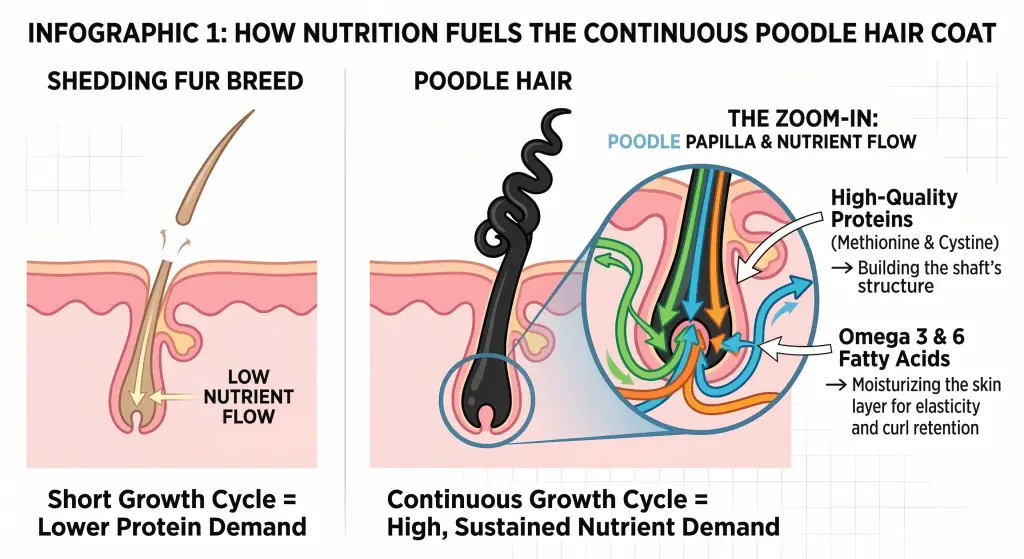
One of the defining characteristics of the Poodle is their dense, curly coat. However, a common misconception is treating their coat like standard dog fur. To understand why your puppy’s diet is so critical, you have to look at the cellular level: Poodles have hair, not fur.
Comparison: Hair vs. Fur Nutritional Demands
| Feature | Standard Fur (Labrador, Husky) | Poodle Hair (Einstein Variety) |
| Growth Cycle | Preset length; dies and sheds out. | Continuous growth; rarely sheds. |
| Protein Demand | Moderate/Seasonal. | Constant & High. |
| Key Nutrients | General vitamins. | Methionine & Cystine (Sulfur-based aminos). |
| Energy Drain | Low. | Up to 30% of daily protein is used for skin/coat. |
The Amino Acid Connection
Because a Poodle’s hair is in a state of continuous growth, your puppy demands a massive, uninterrupted supply of high-quality amino acids to fuel the “factory.” Specifically, their diet must be rich in sulfur-containing amino acids like Methionine and Cystine. These are the fundamental building blocks of strong hair shafts.
Without these—alongside a balanced ratio of Omega-3 and Omega-6 fatty acids—a Poodle puppy will struggle to develop the thick, coarse texture required for their adult coat. A nutritional deficit during the first year often results in brittle, wispy hair and dry, flaky skin that is prone to irritation.
Preventing Adult Diseases Starting at the Puppy Bowl
When evaluating the best food for Poodle puppies, it is crucial to look beyond the immediate goal of weight gain. The nutritional choices and feeding mechanics you establish during their first year directly dictate their susceptibility to life-threatening diseases as adults.
The Boutique Diet Trap: Heart Health and DCM
In the modern pet food landscape, marketing often outpaces science. The trend of feeding grain-free, boutique, or exotic-protein diets has been closely studied by veterinary researchers due to its link to Dilated Cardiomyopathy (DCM)—a fatal, diet-associated heart condition.
For a Poodle puppy, building a strong heart means prioritizing proven science over trendy packaging. The 2026 veterinary consensus strongly recommends grain-inclusive diets formulated by brands that conduct rigorous feeding trials and meet WSAVA guidelines. Unless your veterinarian diagnoses a specific, severe grain allergy (which is exceedingly rare in Poodles compared to standard poultry or beef allergies), healthy grains like brown rice, oats, and barley provide vital nutrients for long-term cardiac health.
Gastric Dilatation-Volvulus (Bloat) in Standard Poodles
If you are raising a Standard Poodle, the most dangerous medical emergency they face as deep-chested adults is Gastric Dilatation-Volvulus (GDV), commonly known as bloat. This occurs when the stomach rapidly fills with gas and twists on its axis. While bloat primarily strikes adult dogs, the mechanical habits of how your dog eats are permanently cemented during puppyhood.
This chart provides the essential safety habits established in puppyhood that prevent fatal Gastric Dilatation-Volvulus (bloat) later in life.
| Approach | Recommended Action | Scientific/Veterinary Reasoning |
| SAFE (DO) | Use slow-feeder bowls or snuffle mats. | Paces consumption speed, drastically reducing the amount of air the puppy swallows while eating. |
| SAFE (DO) | Enforce a strict 60-minute rest period post-meal. | Allows the digestion process to begin calmly and prevents the weighted stomach from shifting. |
| SAFE (DO) | Divide daily food allowance into 3-4 smaller, frequent meals. | Minimizes the sudden expansion of the stomach (reducing “stomach load”) compared to one massive feeding. |
| DANGEROUS (DON’T) | Use elevated or raised food bowl stands. | Modern veterinary consensus (2026 data) indicates elevated bowls increase the risk of air swallowing and torsion in deep-chested breeds. |
| DANGEROUS (DON’T) | Allow high-intensity exercise (zoomies, fetch, running) right after eating. | Strenuous physical activity dramatically increases the likelihood of the stomach twisting on its axis. |
| DANGEROUS (DON’T) | Overfeed a single large “all-day” portion. | Rapid stomach expansion caused by excessive food volume is a primary catalyst for acute bloat. |
By establishing these strictly regulated feeding protocols early on, you are not just ensuring immediate digestive comfort; you are actively extending your Standard Poodle’s healthy lifespan.
Managing the “Poodle Brain”: Picky Eaters vs. Boredom
A quick search through any Poodle owner forum in 2026 will reveal the same desperate question: Why is my puppy such a picky eater? In my behavioral research into the breed, I’ve found that true clinical “pickiness” or a genuinely sensitive stomach is actually quite rare in these situations. Instead, what owners are usually experiencing is the “Poodle Brain” in action.
The Intelligence Trap
Poodles are exceptional problem solvers. A clever Poodle puppy will quickly deduce a simple cause-and-effect relationship: If I stare blankly at this bowl of premium kibble and sigh, my human will panic and replace it with boiled chicken, cheese, or wet food.
They are not necessarily bored of their food; they are holding out for a better negotiation. Constantly switching kibble brands or piling on rich human foods to entice them actually creates a chronically fussy eater. Worse, introducing a constant barrage of rich fats and varied proteins often leads to the exact gastrointestinal upset owners are desperately trying to avoid.
The Researcher’s Protocol for Toppers
To break this cycle, you must establish firm feeding boundaries while still acknowledging their high cognitive need for variety. According to veterinary behaviorists at the AKC, a healthy dog will not voluntarily starve itself. Implement a strict 15-minute window: put the bowl down, and if the puppy walks away or refuses to eat within 15 minutes, pick it up until the next scheduled mealtime.
If you want to provide sensory enrichment to satisfy their intelligent brains without ruining their gut biome, use a calculated “Rotation Strategy” with safe, low-calorie toppers. Keep your base, WSAVA-compliant kibble exactly the same, but rotate one of these safe additions every few days to change the aroma and texture:
- Plain 100% Pumpkin Puree: (Ensure it is not spiced pie filling). This adds a novel, wet texture to dry kibble and provides excellent dietary fiber to naturally firm up puppy stools.
- Dog-Safe Bone Broth: A small splash of canine-specific bone broth—strictly free of toxic onions, garlic, and high sodium—changes the smell of the meal entirely, tricking the dog into thinking they are getting a brand new food.
- Freeze-Dried Single Proteins: Instead of adding whole treats to the bowl, crush a single piece of freeze-dried salmon or beef liver into a fine dust and shake it over the kibble. This coats the entire meal in a high-value scent without adding significant calories or unbalancing the diet.
While the puppy phase is full of growth, it is also a time of high digestive sensitivity—if your pup’s stomach is having a minor ‘disagreement’ with their new kibble, you might consider the clinical benefits of a bland addition. Read our Poodle rice safety guide and digestion tips to learn how to properly introduce grains without upsetting their delicate gut biome.
The Training Calorie Conundrum: Balancing the 10% Rule
Because Poodles are widely considered one of the most intelligent breeds in the world, your puppy is going to require intense mental stimulation and obedience training from the moment they step paw into your home. Potty training, crate training, and puppy kindergarten all require positive reinforcement, which usually means one thing: an endless stream of treats.
Herein lies a massive, often-ignored nutritional trap.
The Nutritional Imbalance
High-quality puppy kibble is formulated in a laboratory to provide a highly specific, mathematically perfect ratio of calcium, phosphorus, vitamins, and minerals. When you feed a 10-pound Miniature Poodle puppy three handfuls of commercial training treats throughout the day, you are not just adding empty calories—you are actively destroying the mineral balance of their diet.
Furthermore, over-treating is the number one cause of the “picky eater” syndrome discussed earlier. If a puppy fills up on high-fat, high-sodium training treats, they will naturally refuse their balanced, nutrient-dense kibble at dinnertime.
The 10% Solution and Smart Treating
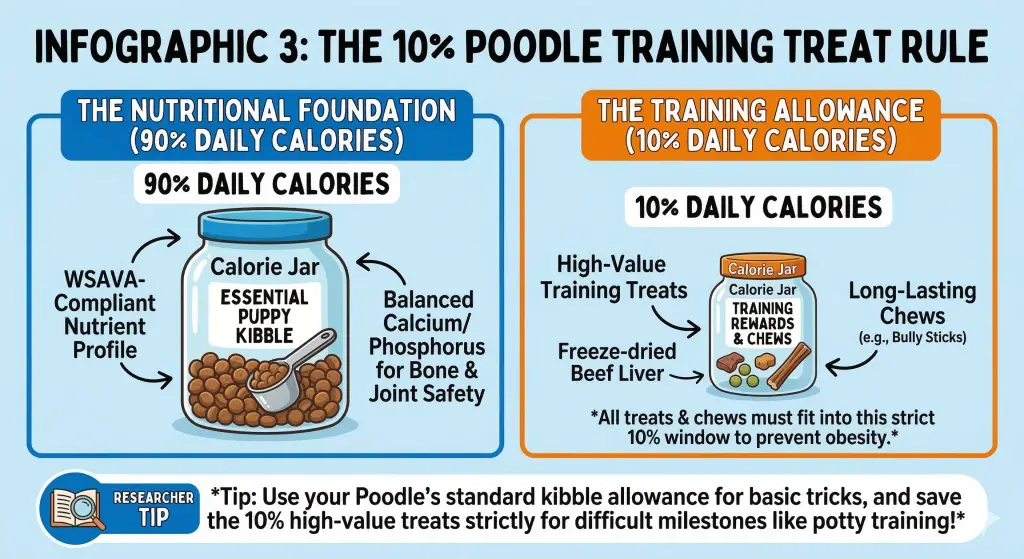
To maintain the integrity of their diet while still successfully training your brilliant puppy, veterinary nutritionists universally rely on the 10% Rule: treats and toppers should never make up more than 10% of your dog’s total daily caloric intake.
To practically apply this rule with a highly trainable Poodle, you must change how you view their daily food allotment:
- Treat from the Bowl: In the morning, measure out your puppy’s total daily kibble allowance into a container. Take a handful of that exact kibble and put it in your training pouch. Use their standard food for basic repetitions like “sit,” “stay,” and leash walking.
- Micro-Sizing High-Value Rewards: Save the truly high-value treats (like freeze-dried liver or plain boiled chicken) strictly for difficult milestones, such as successful outdoor potty trips or emergency recall. When you do use them, cut them into microscopic pieces—no larger than half a pea. A Poodle puppy’s brain registers the frequency of the reward, not the volume.
- Factor in the Chews: Remember that long-lasting enrichment items like bully sticks or stuffed Kongs count heavily toward that 10% daily limit. If your puppy spends an hour working on a high-calorie chew, you must reduce their dinner portion slightly to compensate.
Top 2026 Veterinarian-Backed Food Recommendations
As a researcher evaluating the saturated 2026 pet food market, my recommendations are strictly limited to brands that meet the rigorous guidelines set by the World Small Animal Veterinary Association (WSAVA). These companies employ full-time, board-certified veterinary nutritionists, conduct peer-reviewed feeding trials, and maintain strict quality control to prevent the nutritional deficiencies that lead to conditions like DCM or Hip Dysplasia.
To make your decision easier, I have compiled this “At-a-Glance” summary based on my research into breed-specific clinical data.
Quick Comparison: Top Picks for Poodle Puppies
| Poodle Size | Top Recommended Brand | Key Benefit (2026 Standard) |
| Toy | Royal Canin Poodle Puppy Dry Dog Food | Tailored kibble size & Hypoglycemia prevention |
| Miniature | Purina Pro Plan Small Breed | Optimal protein-to-fat ratio for active growth |
| Standard | Hill’s Science Diet Large Breed | Precision minerals for safe skeletal development |
The Researcher’s Deep Dive: Why These Brands?
If you want to dive deeper into how veterinary professionals evaluate pet food labels, the Clinical Nutrition Service at Tufts University (Petfoodology) is an invaluable resource for cutting through modern marketing hype. Based on these clinical standards, here is the breakdown of why these specific formulas lead the market in 2026:
Best Foods for Toy and Miniature Poodle Puppies
For these smaller varieties, the focus is on high caloric density and an ultra-small kibble size that prevents choking.
- Royal Canin Poodle Puppy: This is a standout for researchers because they formulate at the microscopic breed level. The kibble is custom-engineered for a Poodle’s straight muzzle, making it easier to chew. It is also fortified with specific Omega-3s (EPA and DHA) to support that continuous hair growth we discussed.
- Purina Pro Plan High Protein Small Breed Puppy: Widely considered a gold standard, this formula uses a nutrient-dense kibble mixed with softer, shredded protein pieces. This varied texture is exceptionally effective for the “Poodle Brain”—keeping highly intelligent Toy and Miniature puppies engaged with their bowl.
- Hill’s Science Diet Small Paws Puppy: This is a data-heavy favorite that prioritizes a balanced mineral baseline. It includes high-quality fish oil to fuel brain and eye development during the critical socialization window (8–16 weeks).
Best Foods for Standard Poodle Puppies
For Standards, the absolute priority is a slow, steady skeletal marathon. These diets strictly limit calcium and phosphorus to prevent the bones from outgrowing the joints.
- Hill’s Science Diet Large Breed Puppy: Known for its precise, scientifically backed mineral ratios, this diet is my top pick for Standard owners. It avoids the dangerously high calcium levels found in many “boutique” or “all life stages” brands, keeping your Standard Poodle’s hips safe as they mature.
- Purina Pro Plan Large Breed Puppy: This formula is meticulously balanced to keep Standards lean during their massive first-year growth spurt. It also includes guaranteed levels of live probiotics, which is crucial for the sensitive stomachs and stress colitis risks common in the breed.
- Eukanuba Large Breed Puppy: Highly favored among working dog researchers, this brand features concentrated DHA for the intense cognitive development required by a large, highly trainable retriever variety like the Standard Poodle.
10. Frequently Asked Questions (FAQ)
Navigating a Poodle’s first year of nutrition brings up a host of highly specific questions. As a researcher, these are the most common inquiries I see regarding their dietary development and transition timelines.
When do I transition my Poodle puppy to adult food?
The timeline depends entirely on their biological size. Switching too early deprives them of the nutrients needed for growth, while switching too late risks severe obesity and joint stress.
- Toy Poodles: 9 to 12 Months
- Miniature Poodles: 10 to 12 Months
- Standard Poodles: 12 to 18 Months (Wait until their long bones stop growing). Always use a 7-day blending period (mixing the old and new food) to avoid gastrointestinal upset when making the switch.
| Poodle Variety | Age to Transition to Adult Food | The 7-Day Blending Guide (Old/New) |
| Toy Poodles | 9 to 12 Months | Days 1–2: 75% Puppy / 25% Adult |
| Miniature Poodles | 10 to 12 Months | Days 3–4: 50% Puppy / 50% Adult |
| Standard Poodles | 12 to 18 Months | Days 5–6: 25% Puppy / 75% Adult |
| (Note on Standards) | Wait until long bones stop growing. | Day 7: 100% Adult Kibble |
Is a raw diet safe for my Poodle puppy?
From a strict research and veterinary standpoint, feeding a raw diet to a developing puppy is highly discouraged. The American Veterinary Medical Association (AVMA) explicitly warns against raw feeding due to the risk of bacterial contamination (like Salmonella and Listeria). A puppy’s immature immune system cannot easily fight off these pathogens. Furthermore, getting the calcium-to-phosphorus ratio wrong on a homemade raw diet is a leading cause of irreversible skeletal deformities in growing dogs.
Does grain cause allergies in Poodles?
No. The idea that grains are the primary driver of canine allergies is a pervasive marketing myth. When a Poodle exhibits signs of a food allergy, the culprit is almost always the main protein source. Beef, dairy, and chicken are the most common documented allergens in dogs. Whole grains like oats, barley, and brown rice are highly digestible for Poodles and provide the essential nutrients needed to prevent diet-associated heart conditions.
What are the actual signs of a food allergy in a Poodle puppy?
While true food allergies are less common than environmental allergies, they do occur. In Poodles, a food allergy typically presents as dermatological or gastrointestinal distress. Look for chronic ear infections (especially yeast buildup in their floppy ears), relentless chewing or licking of their paws, severe reddish-brown tear staining, or chronic soft stools. If you notice these symptoms, consult your vet about conducting an elimination diet trial using a hydrolyzed protein or novel protein kibble.
Should I free-feed my Poodle puppy (leave food out all day)?
Free-feeding is highly discouraged for Poodles of all sizes. For Toy Poodles, leaving food out makes it impossible to monitor their exact intake, increasing the risk of missing a meal and triggering hypoglycemia. For Miniature and Standard Poodles, free-feeding removes the structure needed to prevent obesity and disrupts potty training schedules. Always feed your puppy measured meals on a set daily schedule.
How much water should I add to my puppy’s kibble?
Adding a few tablespoons of warm water to your Poodle puppy’s kibble is an excellent practice, especially during their first six months. It increases hydration, which flushes their kidneys and helps prevent urinary tract issues. During the intense teething phase (between 4 and 6 months), their gums are incredibly sore; softening the kibble makes eating much more comfortable. Warm water also releases the fats and aromas trapped in the dry kibble, which is a highly effective, calorie-free way to entice a “picky” Poodle to eat.
Conclusion: Building a Lifetime of Health
Choosing the right nutrition for your Poodle puppy in 2026 is about more than just filling a bowl; it is about establishing a biological foundation for a long, vibrant life. By following research-backed feeding protocols, you are actively preventing common breed-specific issues before they begin.
Key Takeaways for Poodle Owners:
- Prioritize Science: Stick to WSAVA-compliant brands that use rigorous feeding trials rather than boutique marketing trends.
- Size Matters: Follow the specific calorie and calcium requirements for your Poodle’s variety (Toy, Miniature, or Standard).
- Safety First: Implement mealtimes rules—like slow feeders and mandatory rest—to mitigate the risk of bloat in larger Poodles.
- Train the Brain: Use the 10% treat rule to keep your highly intelligent puppy motivated without compromising their nutritional balance.
While the “Poodle Brain” might try to negotiate for table scraps, staying disciplined now ensures your companion has the cardiac, skeletal, and cognitive health they need for the years ahead. Trust the data, consult your vet, and enjoy the journey with your new best friend.
Medical & Veterinary Disclaimer: PoodleReport.com is an informational resource for Poodle owners and enthusiasts. We are not veterinarians. The content on this website is not a substitute for professional veterinary care, diagnosis, or treatment. Always seek the advice of your veterinarian with any questions you may have regarding your pet’s medical condition, diet, or overall health.